
There’s a TikTok filter that ages you by 40 years. Hold your face up to the camera and within seconds you’re confronted with wrinkles, sagging skin, grey hair. It’s you, just older. It’s unsettlingly realistic and a blunt reminder of what’s coming for us all.
It will surprise no one that financial institutions are experimenting with similar technology. The evidence suggests that it works — when people see an aged version of themselves, they save more, contribute more to pensions and think more long-term.
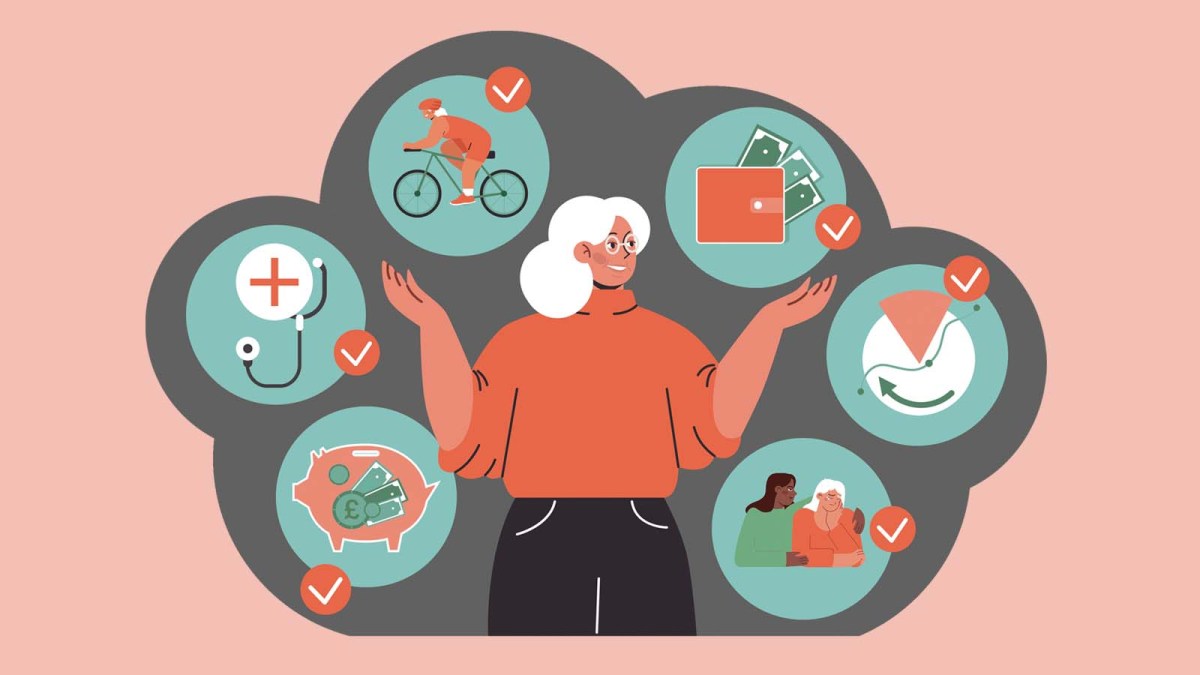
But surely there’s something missing here. Because we’re not just saving for our future selves, but for our children, potentially our parents, maybe even our grandchildren, all with a level of uncertainty around jobs, housing, education and care that feels unprecedented.
Maybe put the whole family through the 40-year filter? In an ageing society where retirement is long and care costs should be expected, and in a culture where parental and grandparent support is now assumed to underwrite young adulthood, the demands on our money are building up faster than our investment pots. How do we prioritise what we are saving for?
‘‘Retire well” once meant paying basic bills, a reasonable standard of living and not being a burden on your children— and maybe some leisure time after years of hard slog. By the beginning of the 21st century, the script had flipped.
Baby boomers have democratised what was once the preserve of the aristocracy: inheritance. Lifetime giving is the strategy, all carefully timed around the seven-year inheritance tax rule. It is hard to overstate how new, and yes, how unequal this is. For the boomers, mass homeownership, rising asset values and professional financial planning have converged to make the passing on of wealth intentional rather than incidental, but for how much longer?
We talk about this quietly, of course. In contrast to the US, where “building generational wealth” is spoken of openly and with pride, Britons are more reticent. Partly this is a cultural discomfort about money, but there’s also something else. What is being built here is not so much wealth but security against the challenges that older generations can see their children, and grandchildren, are facing. The aim is not to help them climb higher but simply to help them stand still.
The expectations and pressures on Gen X parents, who lack the property and pension wealth of boomers, are immense. What Gen X parents are expected to fund stretches far beyond university fees or a deposit. Young adults may need support through university, help through their early career, paying the rent, helping with childcare — the list goes on as wages stagnate and costs rise.
• The sandwich generation survival guide
Downsizing now means carving up the proceeds into a smaller home for yourself, two house deposits for children, possibly four nursery fees for grandchildren.
And then there are us millennial parents: still in the throes of what feels like an extended adolescence, with multiple economic shocks under our belt; potentially the first generation likely to still be paying off our own student loans while underwriting our children’s; and often still reliant on parents to help. This overlap — millennials still dependent yet already responsible — has also reshaped what retirement has looked like for our parents.
Retirement was once considered a low-spending, winding-down phase. But today boomers are arguably keeping large parts of the economy afloat. Visit any theatre, bookshop, museum or restaurant and the silver pound is on display. And they are no longer just paying for themselves. Forget paying for cruises for two — think Italian villas for ten.
Retirement comes in two distinct phases: first, the active years when you can look after yourself; then, the less dignified stretch when you cannot. If you are fortunate, the latter is brief.
Social care is hardly a topic that financial advisers relish raising, for the simple reason that no one wants to hear that all those decades of salary sacrifice may ultimately be gobbled up by a private care home that’s more expensive than Eton. Few families plan for it and neither, frankly, do our politicians, who continue to defer meaningful reform. Only 3 per cent of us reportedly believe people should pay all their own care costs, yet many will end up doing exactly that.
• The £1 million care lottery you don’t want to win
So what is the answer to all this? For some, it is simply to work longer. About half a million over 65s are “retirement resisters” still working full-time: some by choice, many by necessity. Paradoxically, though, the most secure are those with family safety nets and a sense of reciprocal obligation, especially when it comes to care. Because financial resilience is easier when you take care out of the equation.
Wealth rests not just on assets but on family proximity and solid relationships, which is not straightforward in the era of blended and dispersed families. The inequality isn’t just between those with intergenerational wealth and those without, but also those without the buffer of family at all. This inclused those living alone, divorced women with fragmented work histories, and the self-employed, of whom only 18 per cent have a private pension.
In an inheritance economy, security flows through families. The real risk is for those who have none to lean on.
So perhaps the ageing filter asks the wrong question. It prompts us to imagine our future selves. But the real challenge is that our savings are no longer just about one person, one retirement. They are expected to stretch across generations, across care, housing, education and uncertainty.
Eliza Filby is the author of Inheritocracy: It’s Time to Talk About the Bank of Mum and Dad
• Visit Times Money for personal finance news, guides and expert columnists