
Back to Article List
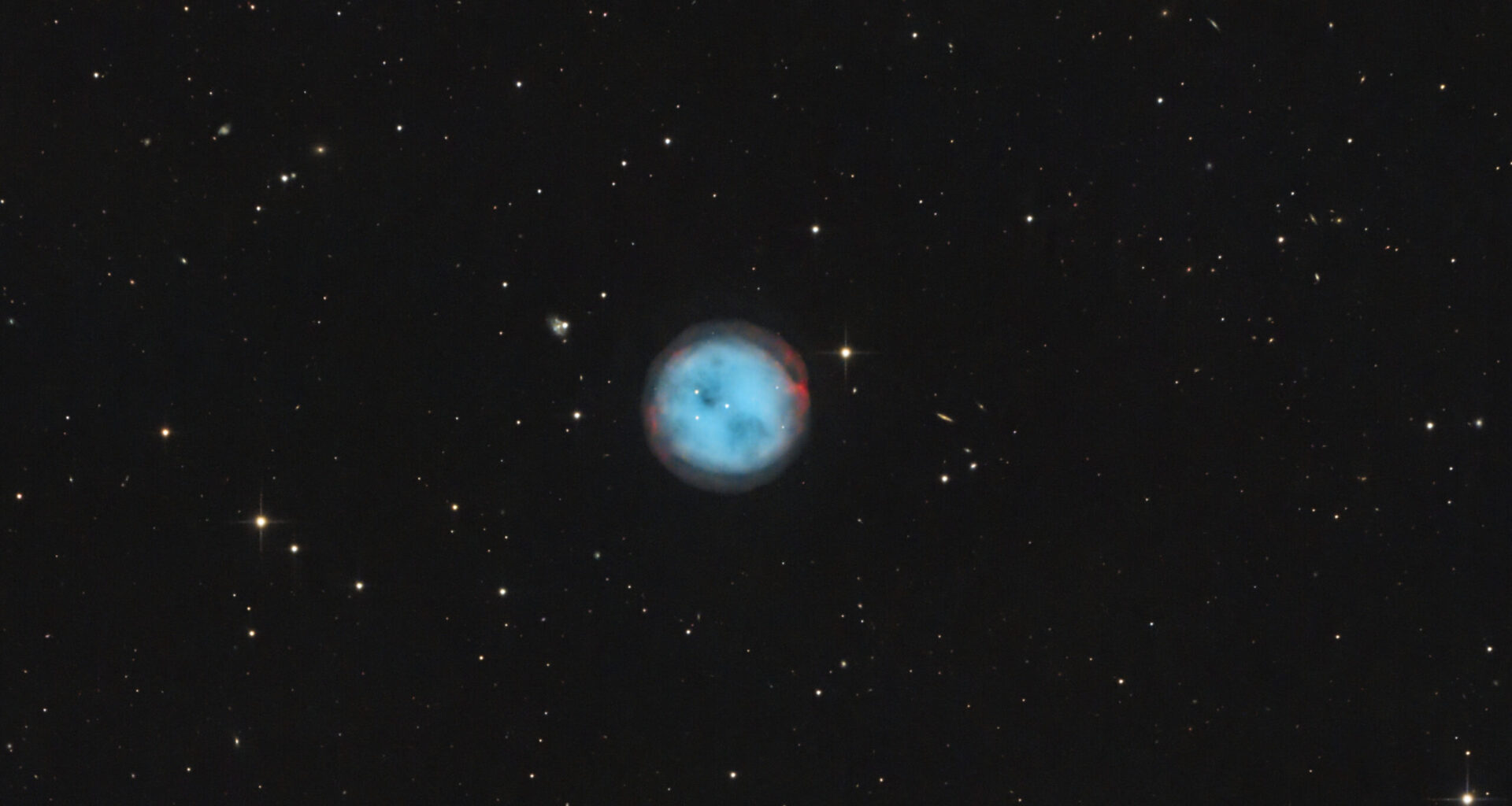
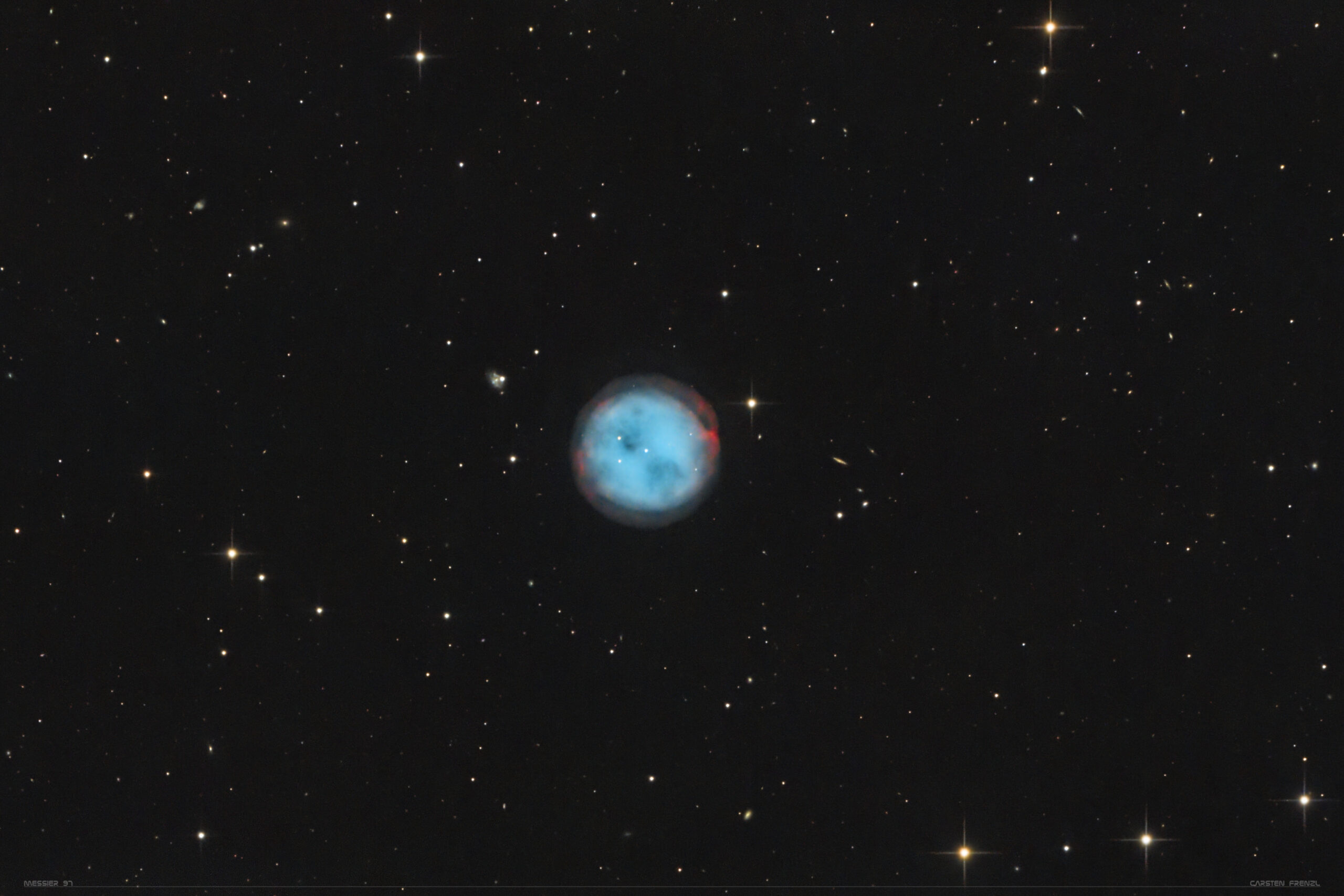
The Owl Nebula, located in Ursa Major the Great Bear, is one of four planetary nebulae on Messier’s list.
Looking for a sky event this week? Check out our full Sky This Week column.
March 12: Europa and its shadow cross Jupiter
Look north this evening for Ursa Major the Great Bear, whose back half is best known as the Big Dipper. The two stars on the far end of the cup from the handle are called the Pointer Stars: These are Merak (Beta [β] UMa) and Dubhe (Alpha [α] UMa). Merak is the southernmost of the two, farther from Polaris, the star these two pointers lead to. Once you’re centered on Merak, it’s a short jaunt 2.3° southeast to land on M97, a planetary nebula also known as the Owl Nebula.
Glowing at 10th magnitude, the Owl is relatively large (3’) so its overall surface brightness is low. Nonetheless, it is visible in small telescopes, though more detail emerges in medium scopes (6 inches) or larger. An Oxygen-III filter will further enhance the view if you have one. With a mid to large size scope, you have a better chance of spotting the Owl’s “eyes” — two dark areas within the larger overall disk.
Messier’s catalog contains only four planetary nebulae. These are the death throes of Sun-like stars, which puff up and then blow off their outer layers. This gas is then lit up by the white dwarf core within. The Owl’s central white dwarf glows at 16th magnitude, visible in larger scopes under good conditions.
Sunrise: 7:15 A.M.
Sunset: 7:05 P.M.
Moonrise: 4:23 A.M.
Moonset: 1:23 P.M.
Moon Phase: Waning crescent (25%)
*Times for sunrise, sunset, moonrise, and moonset are given in local time from 40° N 90° W. The Moon’s illumination is given at 10 P.M. local time from the same location.