
Your support helps us to tell the story
From reproductive rights to climate change to Big Tech, The Independent is on the ground when the story is developing. Whether it’s investigating the financials of Elon Musk’s pro-Trump PAC or producing our latest documentary, ‘The A Word’, which shines a light on the American women fighting for reproductive rights, we know how important it is to parse out the facts from the messaging.
At such a critical moment in US history, we need reporters on the ground. Your donation allows us to keep sending journalists to speak to both sides of the story.
The Independent is trusted by Americans across the entire political spectrum. And unlike many other quality news outlets, we choose not to lock Americans out of our reporting and analysis with paywalls. We believe quality journalism should be available to everyone, paid for by those who can afford it.
Your support makes all the difference.Read more
From the moment Cillian Murphy’s Tommy Shelby first sauntered through a Birmingham slum on horseback in 2013, ash pouring down to the strains of Nick Cave’s doom-and-gloom sermon “Red Right Hand”, it was obvious that Peaky Blinders was different. A post-First World War gangster drama set in a working-class area of Brum, backlit by factory flames and driven by a brooding, anachronistic soundtrack, it felt impossibly cool, stitching itself into the cultural zeitgeist like a razor blade in the peak of a flat cap.
There was the imperious Shelby, his ice-blue eyes scything down men with a sniper’s precision. Then there was the haircut – shaved back and sides, mop on top – the tweed three-piece suits, the themed pubs, the Monopoly set, the clothing line. Snoop Dogg was a Peaky fan; so, too, was David Bowie, who sent a photograph of himself in the signature flat cap to series’ creator Steven Knight. Nobody predicted it would be such a phenomenon, least of all Knight himself. Six series later, having garnered more than six million viewers in its prime, it’s striding into cinemas and onto Netflix with a long-awaited film, Peaky Blinders: The Immortal Man, set in 1940, with Tommy grieving his daughter alone in a remote country pile.
And yet two of its newest stars have barely watched any of it. Tim Roth – who joins alumni such as Tom Hardy, Adrien Brody and Anya Taylor-Joy – agreed to The Immortal Man after Murphy himself texted, asking him to take on the role of John Beckett, treasurer of the British Union of Fascists. “I was a bit nervous about telling him I hadn’t seen it,” he says. “But he laughed – which is typical Cillian.” Rebecca Ferguson, who plays Kaulo Chirklo, Queen of the Palmer Witches, the purportedly supernatural woman determined to lure Tommy back from his self-imposed exile, fared only marginally better. She watched one series. “It’s six bloody seasons,” she laughs. “It’s a lot.”
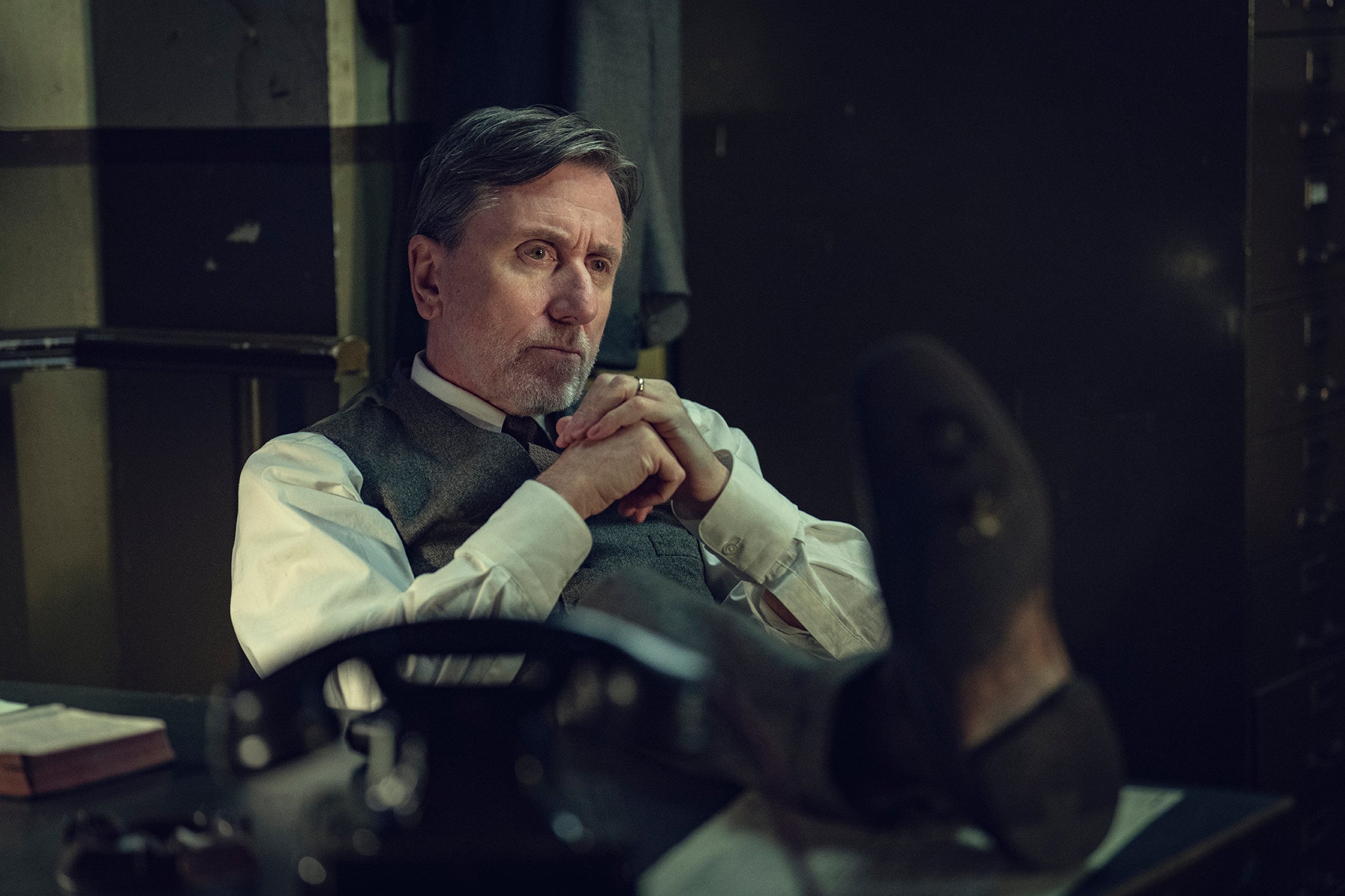
Although Roth was tempted to swot up on the show, he decided against it. “Come in totally fresh, come into their world,” he recalls thinking. Ferguson agrees. If you over-research, she explains, the performance can lose that rawness, that frisson of unpredictability – “I would turn into something that has already been created.” Roth had a more specific problem to solve. If Beckett is to infiltrate the Peaky Blinders – by approaching Duke Shelby (Barry Keoghan), Tommy’s illegitimate son and successor, with a scheme to spread Nazi counterfeit currency across Birmingham – he cannot arrive as a posh emissary from the establishment, as Knight had originally written him. “That posh t*** wouldn’t be able to communicate with these people,” Roth says. So he suggested making Beckett working-class. Knight agreed. Just as well, really. As Beckett, Roth is a study in compressed malice: reptilian and calculating, a Tarantino villain reconfigured as a Whitehall traitor.
Someone who’d never watched the series could approach this as a standalone
Cillian Murphy
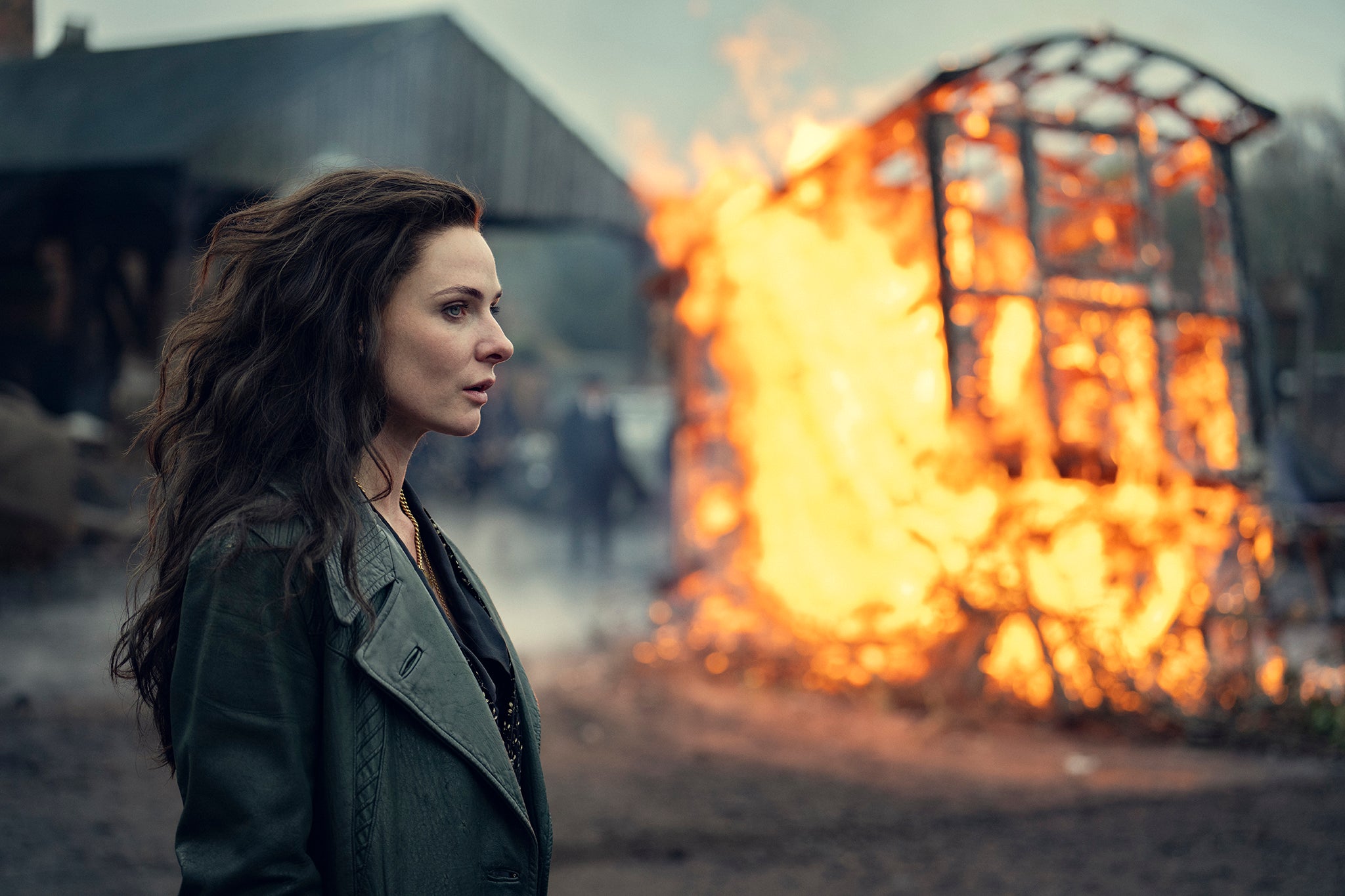
Equally impressive is Ferguson. She is at once luminous and glacial, with genuine menace – a Lady Macbeth in Romany silk. The aunt of Duke Shelby, Kaulo has a tantalising ambiguity: is she genuinely a conduit to the dead, or is it the grift of a master manipulator? Tom Harper, the film’s director, was dazzled by her “mercurial” performance, in which she gives so little away. “She’s smart and she’s complicated and she’s got a plan,” he says. “Different things about her can be true.” Knight agrees.
If Roth and Ferguson are the new blood, Murphy is still Peaky Blinders’ unquiet heart. The film, picking up six years after the series ended, finds him greyer and hollowed out by grief – so lost to solipsism that the world has had to come and find him. Grace, his first wife. Ruby, his daughter. Arthur and John, his brothers. Polly, the family matriarch (played by the late Helen McCrory, memorialised in the film as a picture in Tommy’s manor). All gone. Just as William Munny, Clint Eastwood’s retired outlaw in the 1992 western Unforgiven, is dragged back into violence by forces that refuse to let him go, so Tommy is the haunted gunslinger who cannot outrun his past. The parallels were intentional, says Knight. “I love that film, and what I love about it is that he doesn’t pull the trigger – he doesn’t become the person everybody wants him to become until probably 10 minutes from the end.”
open image in gallery
Compressed malice: Tim Roth as John Beckett (Netflix)
No matter how many times he’s inhabited Tommy, Murphy says, preparing for the role is always a conscious effort – the reading, the conditioning. “But after a certain point, there is a sort of a blurring of lines between me and him,” he tells me. “It doesn’t happen instantaneously. But it’s deeply satisfying.”
The Oscar he won for Oppenheimer in 2024 changed nothing, Murphy insists. “That was this wonderful, crazy, sort of hallucinogenic moment,” he tells me. “But my taste and my values had remained the same.” Harper sees a different story. “He has a power now,” the director says. “If someone comes in for a day and finds themselves opposite Cillian playing Tommy Shelby, you can see they’re absolutely terrified. It always takes a minute just for them to catch their breath.”
That power is put to the test by Knight’s plot, which – as ever with Peaky Blinders – mines an obscure piece of history. Operation Bernhard: the Nazi scheme to forge £320m of British currency at Sachsenhausen concentration camp, the notes so meticulous that even bank experts couldn’t tell the difference. The Bank of England withdrew £10 notes during the war because of it; after the surrender of Germany, they changed the design entirely. “True events are like nails,” Knight says. “You can hold things up with them.” The bombing of the BSA factory in Birmingham – another real event, in which 53 workers were killed – also features. Knight’s mother worked there and wasn’t present the night the bomb fell. “It was basically the idea,” he says of Operation Bernhard, “that we can win the war with money.”
open image in gallery
A Lady Macbeth in Romany silk: Rebecca Ferguson as Kaulo Chirklo, Queen of the Palmer Witches (Netflix)
Whether a beloved television series can survive the leap to cinema is another matter. The graveyard is well-populated: Dad’s Army squandered one of Britain’s most beloved comedies in a single afternoon; Luther tried to go large; Sex and the City gave its devotees what they wanted and critics a punching bag. Knight is clear-eyed about the challenge. “Long-form television is like a novel,” he says. “A film is a short story. You have to have a very definite beginning, middle and end. You have to pay things off.” The Immortal Man, he and Murphy insist, welcomes uninitiated viewers. “Someone who’d never watched it could approach this as a standalone,” Murphy says. “Which I think is the beauty of it.”
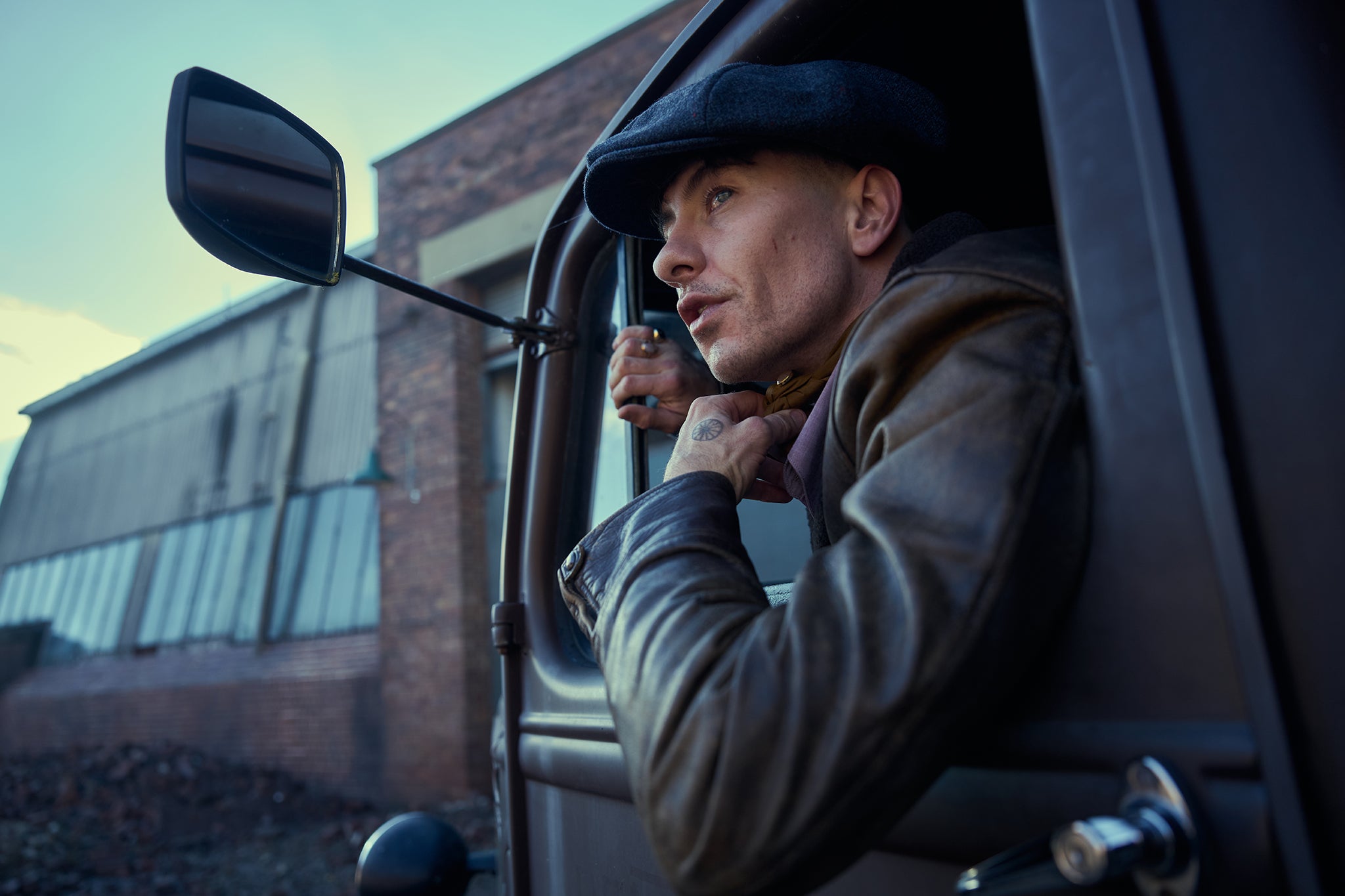
The someone most likely to draw them in is Keoghan. As Duke Shelby, the Dubliner is perfectly cast, exuding a scuzzy, live-wire nihilism that conceals a quiet frailty. There’s a longing for his father’s love and respect that the 33-year-old – who has spoken about his tumultuous childhood, which included parental addiction and years in foster care – doesn’t so much perform as carry Duke in his bones. Of the Bafta-winning star of The Banshees of Inisherin and Saltburn, Murphy notes: “He has that thing where you just put a camera on him, and he’s instantly interesting. He has a sort of dangerous quality to him on camera, but he also has this vulnerability. They are sort of contradictory traits, but he has them all.” Knight is similarly full of praise: “It’s just a gift from him,” he says. “Totally.”
open image in gallery
Live-wire: Barry Keoghan as Duke Shelby in ‘The Immortal Man’ (Netflix)
Keoghan’s trajectory from Summerhill, one of Dublin’s most deprived neighbourhoods, is like a story told in the show. Peaky Blinders was born from Knight’s parents’ tales of Small Heath, where the series is set. It has always been, beneath its besuited, smoke-wreathed mythology, a drama about the cost of being working class. Murphy is clear that this should be reflected in who gets to make it in film. “It certainly should not in any way be the case that this is an industry exclusively for privileged kids,” he says. “That would be a terrible reflection on the type of stories we’re trying to tell.” He thinks for a moment. “Youth drama, youth clubs and libraries – if those places get shut down and kids get locked out, then where do they go? It’s super important that there is an avenue for kids to think that this isn’t an impossibility. That’s the bedrock of it.”
Roth came up through pub theatre at a moment when Ken Loach, Alan Clarke and Mike Leigh – artisans of kitchen-sink realism – were remaking British TV from the inside. “It coincided with Granada Television and pre-Channel 4,” he says. “And all these women, too, were quietly making it happen behind the scenes.” He cites Margaret Matheson, the producer of skinhead drama Made in Britain (1983), Roth’s own television debut.
open image in gallery
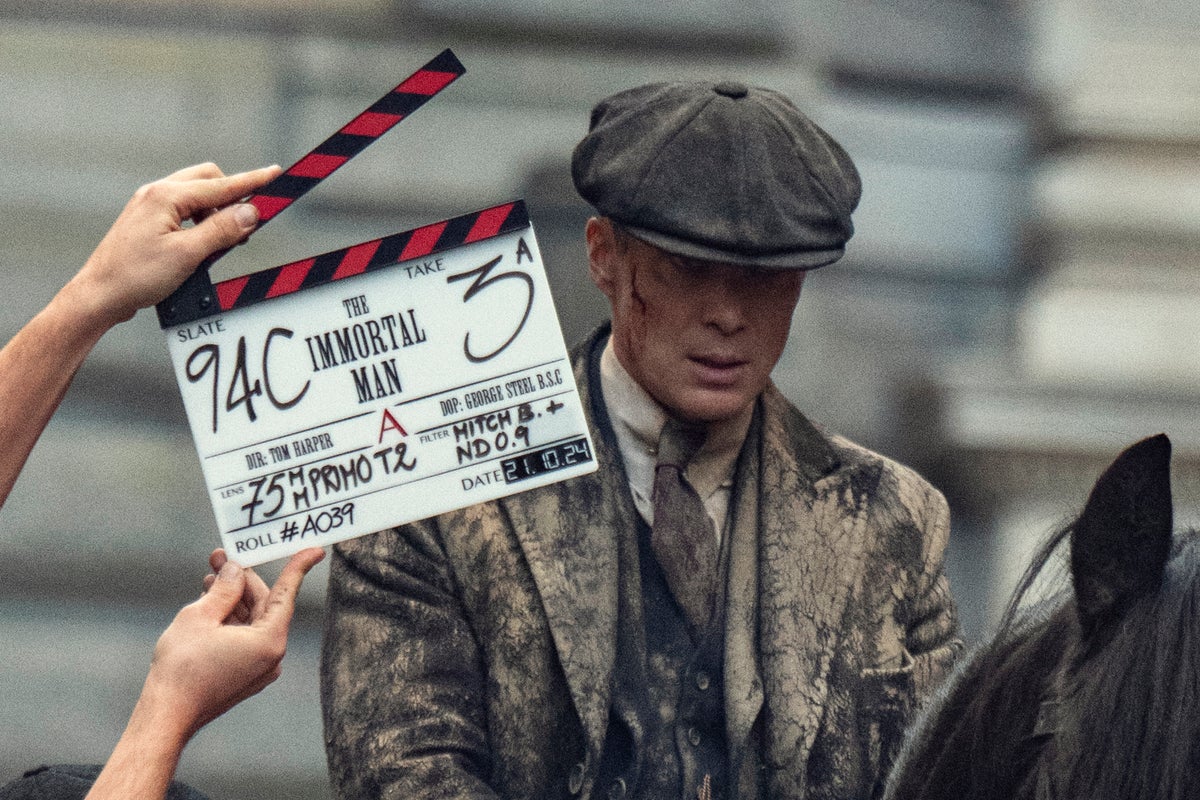
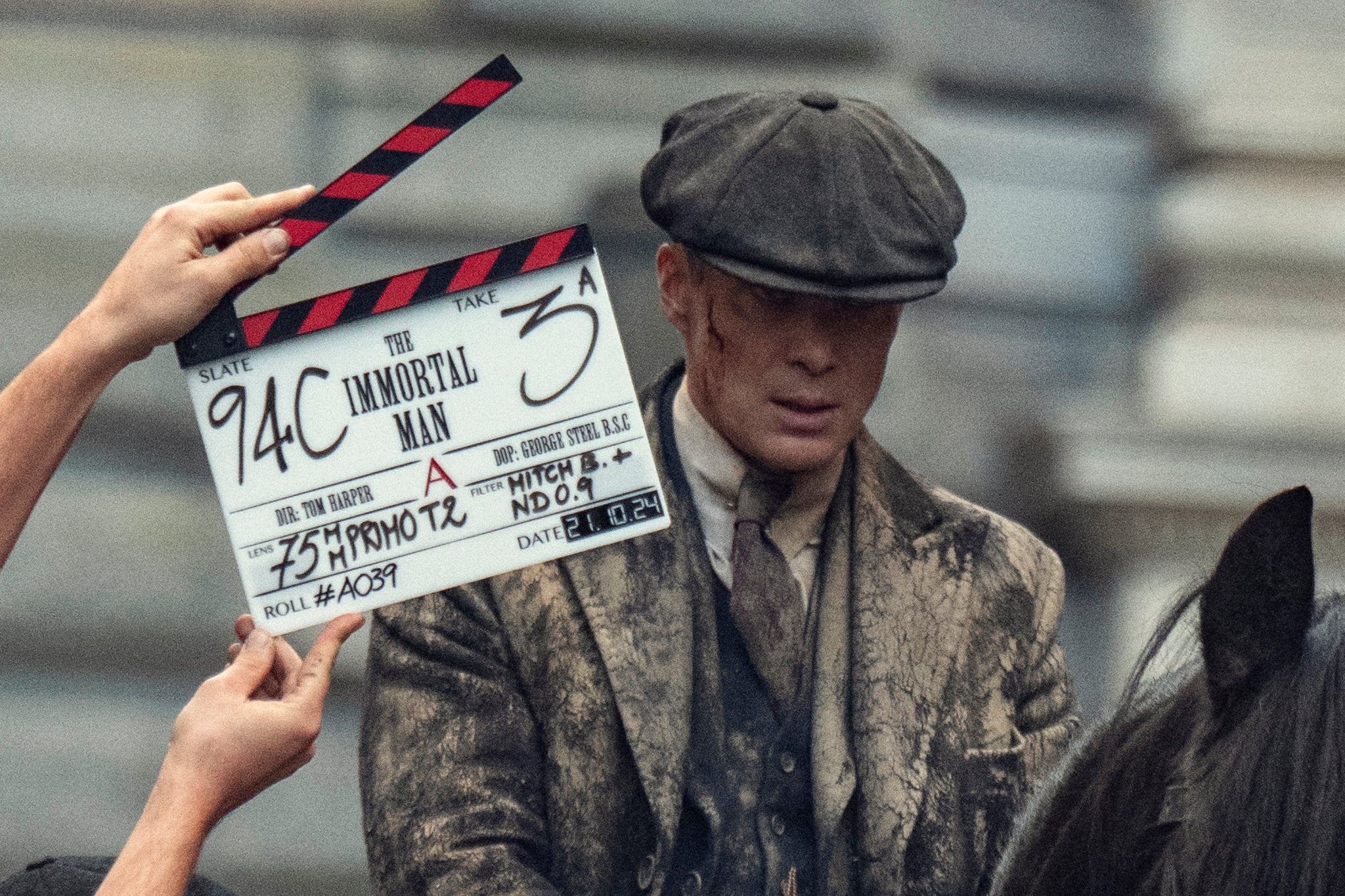
Back in the saddle: Cillian Murphy on the set of the Netflix film ‘Peaky Blinders: The Immortal Man’ (Netflix)
The Immortal Man couldn’t be more timely. The far right is on the march again. In America, in Europe, in Britain. Set against the actual rise of British fascism in the Forties, the film feels less like a period drama than a dispatch from the present. “Sadly, it’s a very topical subject,” Knight says. “Good for the film, not good for the world. The political climate is like the weather – you can’t not know about it, because when you’re sitting there, it’s coming against your window.” Roth needs no prompting. “Watch your back,” he remembers his father saying of the fascists. “They’re coming for real.”
It turns out Knight, who is also writing Bond 26 for Denis Villeneuve and Amazon MGM, has already finished the new Peaky series – set this time in 1953 – with shooting beginning soon. The Immortal Man, then, is not an ending but a hinge – the point at which Tommy Shelby stops being a television character and becomes something larger. A reluctant king, as Harper puts it: “The magnetism of the world is pulling him back in and there is no escape.”
‘Peaky Blinders: The Immortal Man’ is in cinemas now and is on Netflix from 20 March