
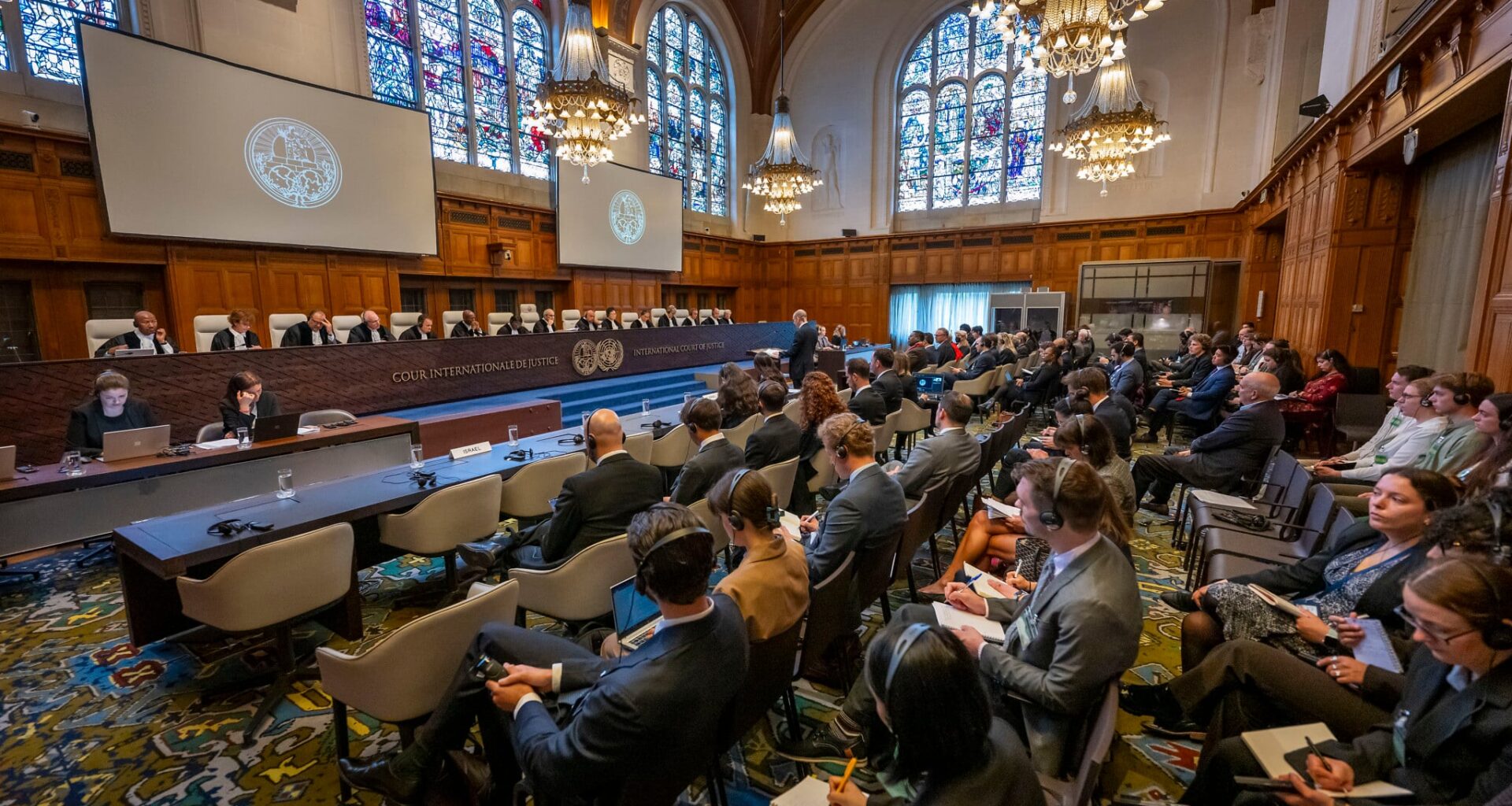
THE HAGUE, Netherlands — The United States will intervene in the genocide case against Israel brought at the United Nations’ highest court by South Africa, arguing that the accusations are false and warning that a ruling against Israel could undermine international law.
Since late 2023, the International Court of Justice has been considering whether Israel’s military operation in Gaza, launched in response to the Hamas-led onslaught of October 7, 2023, amounts to genocide under a treaty drawn up after World War II.
Israel, which was founded in the aftermath of the Holocaust, has vehemently denied the allegations, saying it makes efforts to protect non-combatants. It has accused Hamas of fighting from within civilian population centers and of using civilians as human shields.
The war ended with a US-backed ceasefire that took effect in October, though clashes between Israel and Hamas still occur regularly. Gaza is effectively split between Israeli and Hamas control.
In a filing obtained on Thursday by The Associated Press, the US says that the accusations are part of a “broader campaign” against Israel and the Jewish people, to justify or encourage terrorism against them.
Get The Times of Israel’s Daily Edition
by email and never miss our top stories
By signing up, you agree to the terms
Any party to the 1948 Convention on the Prevention and Punishment of the Crime of Genocide can intervene to contribute its assessment of the legal questions in the case. In 2023, over 30 countries backed Ukraine in a separate case it brought against Russia.
More than a dozen other countries have filed interventions in the Israel case, including Spain and Ireland. Many take a different view from that of the United States. Iceland and the Netherlands both said this week that they would intervene in the case.
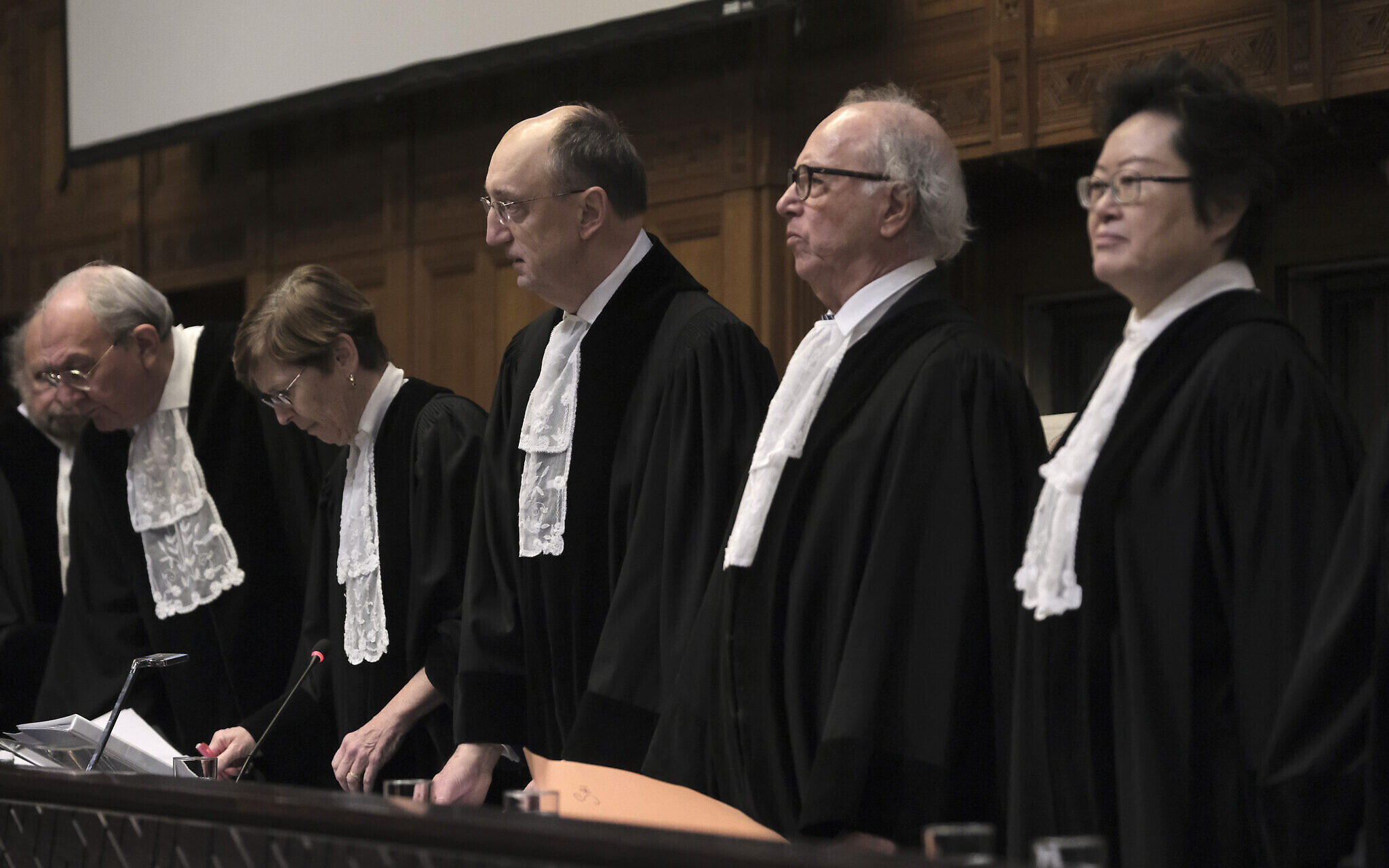
Judges start a hearing at the International Court of Justice in The Hague, Netherlands, January 12, 2024. The United Nations’ top court opened hearings Thursday into South Africa’s allegation that Israel’s war with Hamas amounts to genocide against Palestinians, a claim that Israel strongly denies. (AP/Patrick Post)
In its declaration of intervention, the Netherlands said: “The Court should take account of starvation or the deliberate withholding of humanitarian aid for the purpose of establishing specific intent, in particular when this occurs based on a concerted plan of a consistent pattern of conduct.”
Israel halted the entry of aid into Gaza for 11 weeks in 2025, but has denied a plan to cause systematic starvation there and has highlighted its efforts to ensure a flow of humanitarian supplies to the Strip. It has accused Hamas of stealing humanitarian aid.
The current ceasefire has led to more humanitarian aid and other supplies entering the enclave, though restrictions have been reimposed during the ongoing US and Israeli attacks against Iran.
The US filing stresses that a finding of genocide requires a “specific intent” to commit the crime and cautions the court, which sits in The Hague, against “lowering the standard.”
“Civilian casualties, even widespread civilian casualties, are not necessarily probative of genocidal intent, particularly when they occur in the context of an armed conflict involving urban combat,” the US argues in the filing.
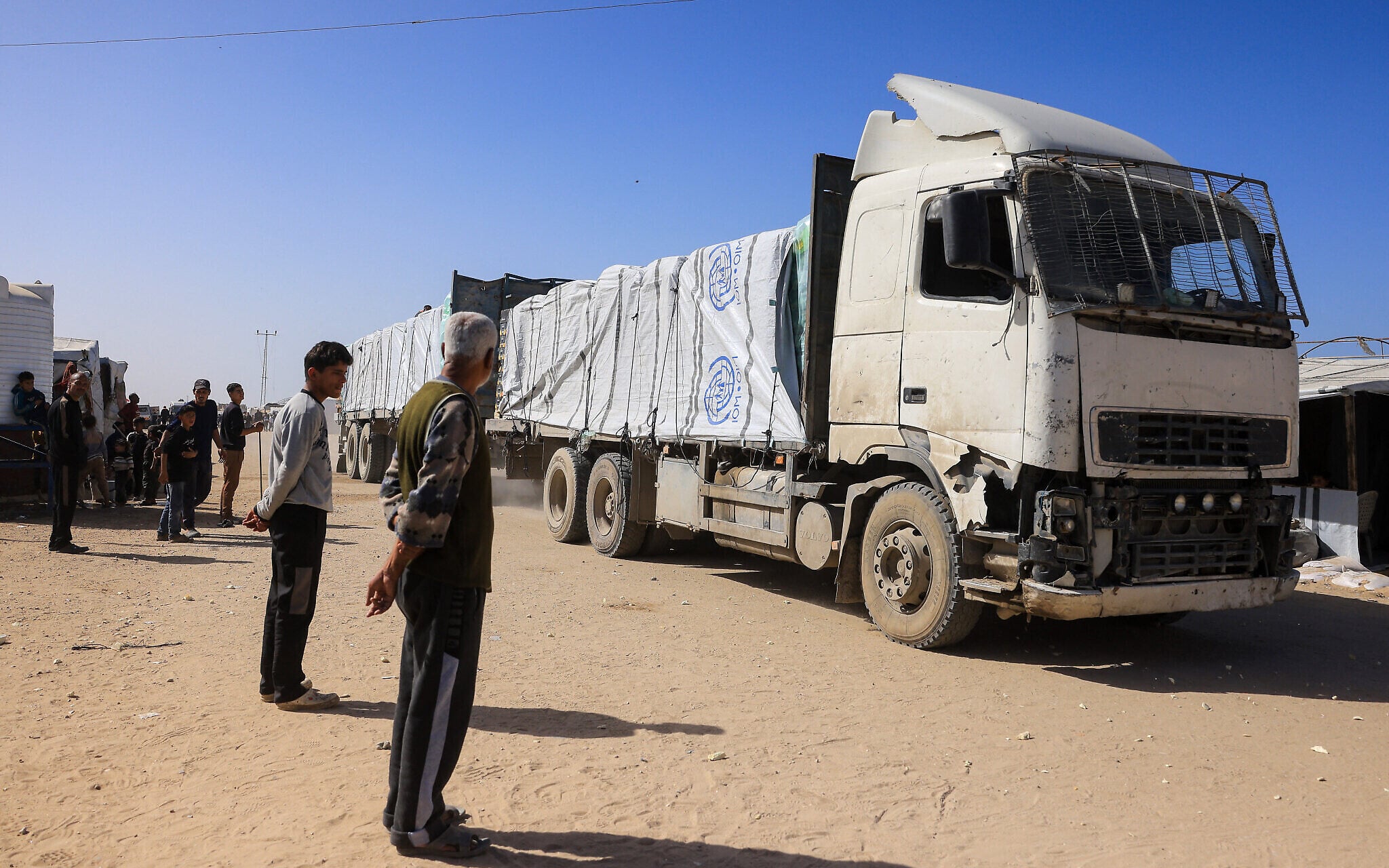
Palestinians look on as trucks carrying humanitarian aid arrive in Khan Younis in the southern Gaza Strip on February 1, 2026. (Bashar Taleb / AFP)
Reed Rubenstein, a legal adviser at the State Department who represents the US, said that a finding against Israel would be a “radical repudiation” of the court’s precedent.
Such a decision would “feed the perception that the court is simply just one more tool in the ongoing pro-Hamas lawfare campaign” against Israel, Rubenstein told the AP.
The ICJ has issued a series of orders concerning Israel’s conduct in Gaza since South Africa filed its case, including telling the country to do all it can to prevent death, destruction and any acts of genocide.
In separate proceedings, the court has said that Israel must allow the UN aid agency in Gaza, known as UNRWA, to provide humanitarian assistance to the Palestinian territory. Israel has enacted laws banning UNRWA and has accused it of ties to Hamas, including alleging that some of its members took part in the October 7 attack.
Separately, the International Criminal Court issued arrest warrants for Israeli Prime Minister Benjamin Netanyahu and his former defense minister Yoav Gallant in 2024 in connection with the Gaza war. The ICC said there was reason to believe the pair used “starvation as a method of warfare” by restricting humanitarian aid and intentionally targeting civilians.
The Trump administration responded by sanctioning ICC officials, including nine judges and top prosecutors. Israel also adamantly denies the charges.
You appreciate our wartime journalism

You clearly find our careful reporting of the Iran war valuable, at a time when facts are often distorted and news coverage often lacks context.
Your support is essential to continue our work. We want to continue delivering the professional journalism you value, even as the demands on our newsroom have grown dramatically during this ongoing conflict.
So today, please consider joining our reader support group, The Times of Israel Community. For as little as $6 a month you’ll become our partners while enjoying The Times of Israel AD-FREE, as well as accessing exclusive content available only to Times of Israel Community members.
Thank you,
David Horovitz, Founding Editor of The Times of Israel