
Get your daily dose of health and medicine every weekday with STAT’s free newsletter Morning Rounds. Sign up here.
A crucial question for you on this Friday morning: How long would you last on Survivor?
Unrelated, but just as important: What’s the link between surrealism and dementia? Scroll down and find out.
Can the White House steer away from vaccine skepticism?
Health secretary Robert F. Kennedy Jr. spent his first year in office overhauling the federal government’s approach to vaccines. White House officials are trying to get him — and his Make America Healthy Again allies — to stop.
Some Trump administration officials are eager to distance themselves from a topic they see as relatively unpopular in a key election year, pointing to a December poll which found strong bipartisan support for the childhood vaccine schedule in key congressional districts. “We’re just kind of done with the vaccine issue,” said one White House official.
But MAHA diehards aren’t going down without a fight. Read STAT’s Daniel Payne and Chelsea Cirruzzo with a deep dive into the brawl brewing between Trump and Kennedy’s respective movements.
Will the FDA authorize new vape flavors?
The Food and Drug Administration released draft guidance this week suggesting the agency may soon authorize additional vape flavors for sale.
The news has rankled public health experts, who worry the new flavors — including coffee, mint, and cinnamon — will attract children and undo the progress the U.S. has made reducing youth e-cigarette usage. The guidance isn’t finalized.
Adding flavors to the market isn’t a simple question, since experts acknowledge that incorporating flavored products can help adults move away from more dangerous cigarettes. And the FDA’s newest guidance steers clear of the sweet flavorings like candy and fruit to avoid the options that fueled youth vaping in the late 2010s. Who benefits from more vaping flavors? And what evidence will manufacturers have to show to get their flavors on the market?
Read more from STAT’s Sarah Todd.
‘Barfing’ cancer cells and the promise of an anomalous protein
The discovery of an unusual protein on the surface of cancer cells may provide scientists with an ideal immunotherapy target for solid tumors, according to a study published yesterday in Science.
Most immunotherapies work by drawing the immune system to a particular marker on the surface of a cancer cell in order to destroy those cells. This strategy doesn’t work as well for solid tumors, since nearly all of the cell surface proteins are shared with the healthy cells of vital organs. Src, a protein that is typically associated with cancer cells, could act as one such marker for potential medications.
It’s not a therapeutic silver bullet, but it is an exciting discovery. STAT’s Angus Chen has a great roundup on the study, including researchers’ best guess as to why cancer cells “barfed” Src from the cell’s interior to its outer membrane.
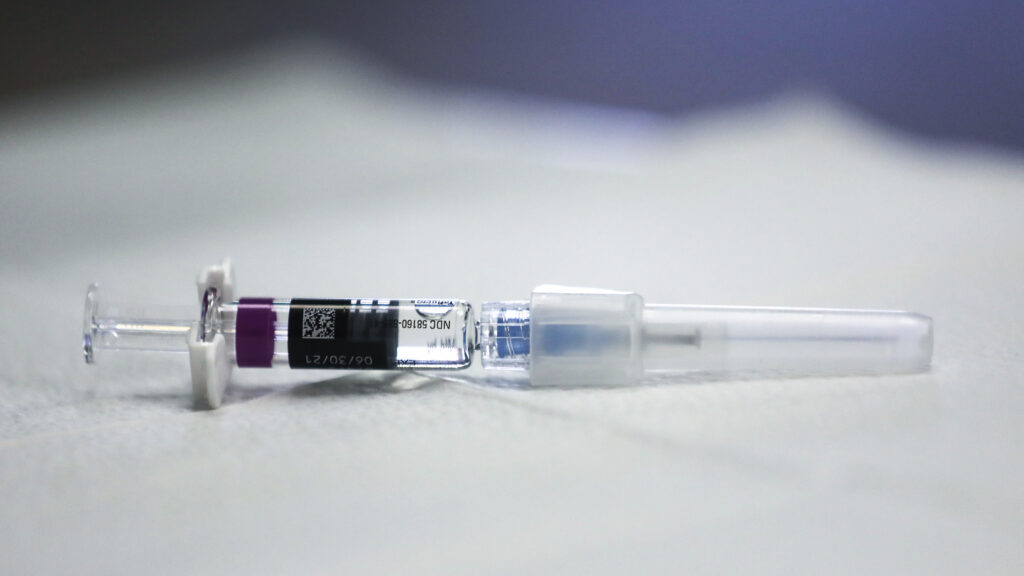
Make next year’s flu shots, says FDA committee
Vaccine experts on an FDA advisory committee said Thursday the agency should instruct flu vaccine manufacturers to make next winter’s shots using the strains recommended by the World Health Organization.
Vinay Prasad, the outgoing head of the FDA’s Center for Biologics Evaluation and Research, previously suggested he would require flu vaccine manufacturers to conduct effectiveness trials before licensing updated shots — a demand experts insist isn’t feasible, given the tight turnaround. But there was no discussion of that idea at the Vaccines and Related Biological Products Advisory Committee meeting.
In related news, the committee heard a report on how well flu shots appear to be working this winter. Though there was significant concern that the late emergence of a new strain of H3N2 would seriously undermine the effectiveness of this year’s shot, the CDC reported (in its online MMWR journal) that the vaccines were moderately protective against hospitalization — for those people vaccinated. But a representative of the manufacturers who supply flu shots to the U.S. noted that number is steadily shrinking, with 40 million fewer doses supplied to the market in 2025-2026 than four years ago. — Helen Branswell
Americans credit Trump over Biden for trying to lower drug prices
The Trump and Biden administrations have both made lower drug prices a priority. But Trump is getting more credit for his efforts, according to a new poll by KFF.
TrumpRx is the centerpiece of the president’s efforts to lower drug prices, and he’s touted the site extensively at White House events. It’s paid off: 41% of Americans say it is likely the Trump administration’s policies will lower their prescription drug costs, though the responses broke unsurprisingly along party lines, with 79% of Republicans, and 11% of Democrats agreeing.
Only 31% of respondents were aware of Biden’s law directing Medicare to negotiate lower prices, which also limits annual drug price increases, caps seniors’ monthly spending on insulin, and caps individuals’ annual out-of-pocket drug spending in Medicare Part D.
Read more from STAT’s John Wilkerson, who has the full rundown of the poll and a fun quote from Mark Cuban about why Democrats don’t get credit for their policies.
How surrealism helps us make sense of and live with dementia
Surrealism, a 20th century aesthetic and artistic philosophy, could be the solution to a vexing debate in dementia care, writes Jason Karlawish, a professor of medicine, medical ethics, health policy, and neurology at the University of Pennsylvania’s Perelman School of Medicine.
People living with dementia, particularly advanced-stage dementia, often struggle to distinguish between what is real and what is not. Surrealism rejects that binary, using various techniques and media such as collage, painting, and photography to instead disrupt and question our tightly-held conceptions of “the real.”
Read more from Karlawish about how exquisite corpses and André Breton can help caregivers make sense of their patients’ dementia.
What we’re reading