
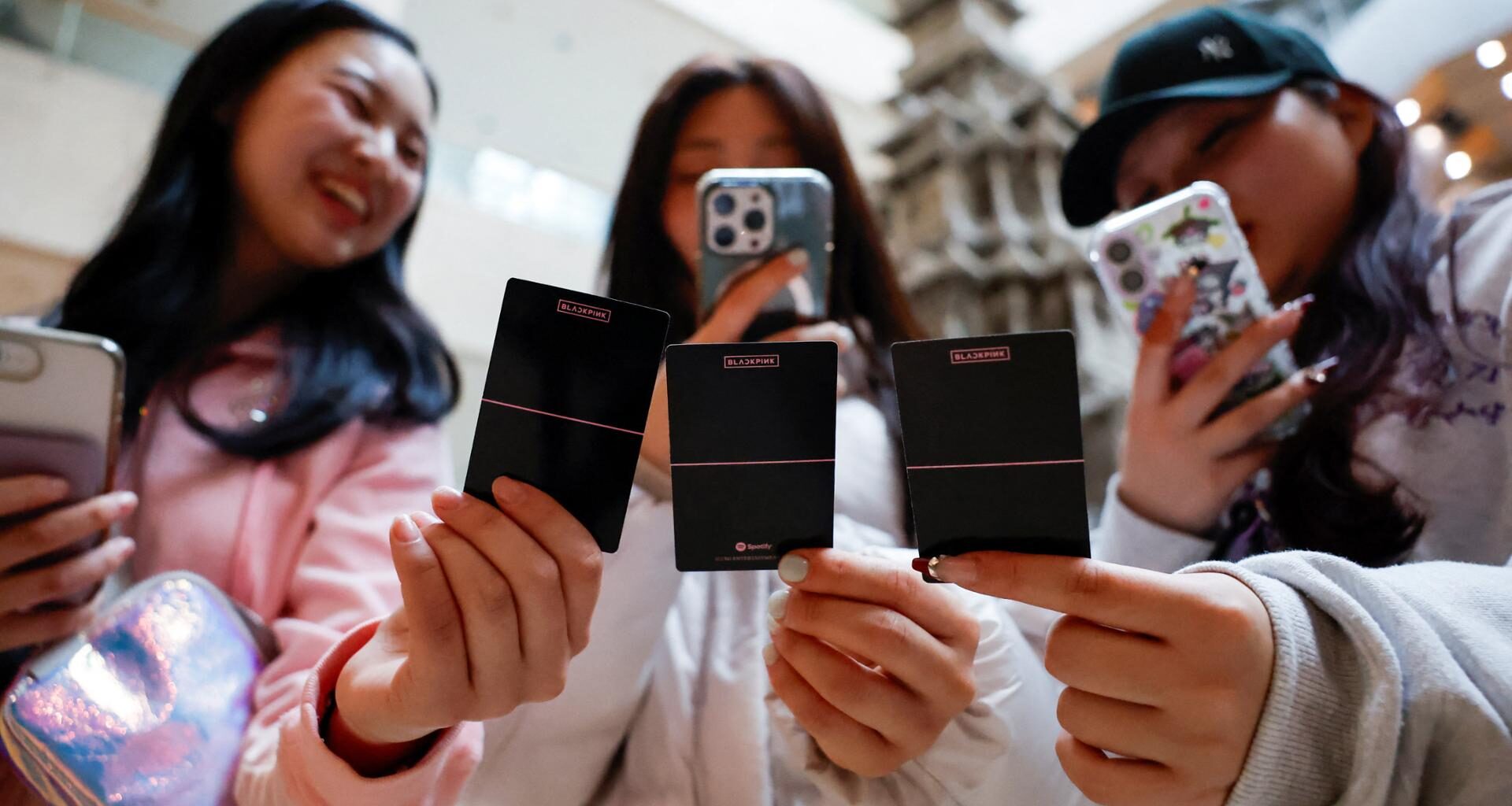
Fans of K-pop band BLACKPINK take a picture of cards related to the band’s new EP “DEADLINE,” at the listening zone of the National Museum of Korea in Seoul, Feb. 27. Reuters-Yonhap
When recent online disputes between Southeast Asian and Korean netizens were reposted on Chinese social media, Irene Jin felt a sense of deja vu. For the longtime K-pop fan, the arguments echoed a wave of anti-Korean sentiment she remembered well from years earlier — one that had put K-pop fandom in the crossfire.
“During the COVID-19 pandemic, there was a wave of large-scale criticism of Korean idol groups over cultural appropriation,” said Jin, who has followed K-pop for more than a decade. “Many groups used elements associated with traditional Chinese culture in their content — such as Chinese knotting and folding screens — but often described them broadly as ‘Oriental style.’”
The disputes have played out repeatedly. In 2020, stage outfits worn by girl group Mamamoo drew criticism from Chinese netizens who argued that the designs drew too heavily from Hanfu, China’s traditional clothing. They rejected the group’s characterization of the costumes as a modernized take on hanbok, Korea’s traditional attire, framing them instead as an appropriation of Chinese cultural motifs.
Two years later, when IVE’s Jang Won-young attended Paris Fashion Week and described her phoenix motif hairpin as “very Korean-style,” the remark ignited fresh debate online, with many Chinese users arguing that the phoenix is a symbol rooted in ancient Chinese mythology, not Korean culture.
Koreans, however, largely see these elements as their own — part of a cultural heritage shaped by centuries of exchange and adaptation across East Asia. That gap in perception is where the friction begins.
BLACKPINK, the group Jin followed most closely at the time, was among those targeted.
“People were calling Korean idols ‘thieves’ of Chinese culture, which made me feel conflicted,” she said. “I’m not an expert in cultural studies, so I wasn’t sure how to judge the cultural appropriation debate, and I didn’t want to criticise the idols I liked. But at the same time, it was hard not to be influenced by those discussions about Korean groups using things that originated in China without giving credit.”
However, the internal struggle did not make Jin abandon her enthusiasm for K-pop. Instead, she eventually learned to treat it simply as a source of entertainment.
Billion-dollar market defies friction
Jin is far from alone. Despite recurring tensions between Beijing and Seoul, from the deployment of the Terminal High Altitude Air Defense system in 2017 — after which Beijing imposed unofficial restrictions on the presence of Korean artists in mainland China — to periodic disputes over cultural authenticity, K-pop has remained popular in China.
In 2025, China was the second-largest destination for K-pop album exports, with sales reaching $69.7 million, according to the Korea Customs Service.
Last year, the phrase “Seoul Syndrome” also gained traction on Chinese social media, with many users posting about how they missed the city after returning from trips there, describing Seoul as offering a utopia-like escape from the routines of daily life.
On Chinese social media platform Weibo, hashtags related to K-pop idols frequently appear on the trending lists.
“K-pop’s resilience in China is rooted in a three-decade-long cultural foundation that has created a deep-seated emotional bond with the Chinese public, far outlasting any single political dispute,” said Choi Jung-kiu, a partner at Boston Consulting Group Singapore and author of “Almost Everything You Need to Know About K-pop.”
According to Choi, the popularity of K-pop in China dates back to the 1990s, and pioneers such as singers Kim Wan-sun and Park Nam-jung. After its foundation was solidified by first-generation idol groups like H.O.T., K-pop has continued to strengthen its presence over the years, in part because China’s domestic pop culture often faces what he described as a “censorship bottleneck.”
“Part of K-pop’s appeal lies in the creative constraints facing China’s own entertainment industry, which operates under strict content regulations that limit the range of stories it can tell,” Choi said.
Apart from the diversity and appeal of K-pop content itself, Choi said it is also common for fans to treat cultural consumption as a “private sanctuary” separate from political discourse, which helps explain K-pop’s resilience amid political tensions.
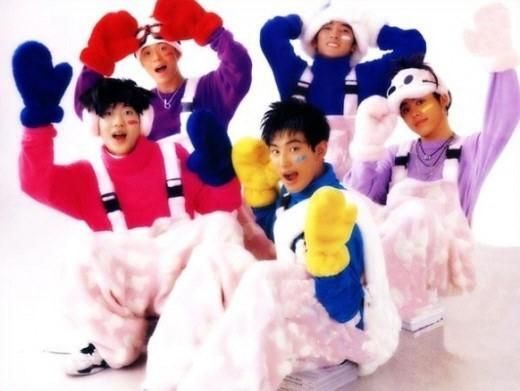
H.O.T., a first-generation K-pop group popular in China / Courtesy of SM Entertainment
Fandom, nationalism and middle ground
Yet fans do not exist entirely outside political debates. A study by Wang Shiqi and Liu Hailong of Renmin University of China published last year found that many Chinese K-pop fans adopt a quieter form of nationalism when responding to online disputes between China and Korea. Rather than taking the hardline stance often seen in political debates online — such as declaring that “when national interests are at stake, idols no longer matter,” a slogan that frequently appears on Chinese social media during these disputes — many K-pop fans instead try to navigate a middle ground.
Some view cultural controversies involving idol groups as misunderstandings rather than deliberate affronts to China. Others emphasise the positive role of cultural exchange between the two countries in public discussions or argue that China should instead strengthen its own cultural influence. In doing so, fans try to balance their identity as Chinese citizens with their enthusiasm for K-pop, according to the research.
“For many Chinese people, K-pop culture combines a sense of modernity often associated with the West with values that still feel culturally familiar in Asian societies,” according to the research paper. “Many fans engage with it critically — enjoying the music and entertainment while also drawing their own cultural boundaries. Through this process, fans reshape how they think about national identity.”
The researchers also point to cultural proximity as a factor that makes these kinds of disputes more likely.
“Due to the geographical proximity between China and Korea, as well as their long-standing cultural exchanges in areas such as Confucian traditions and folk customs, K-pop products — when strategically drawing on historical and cultural traditions — would trigger accusations from Chinese netizens that they are ‘borrowing’ or even ‘appropriating’ elements of traditional Chinese culture more frequently,” they said.
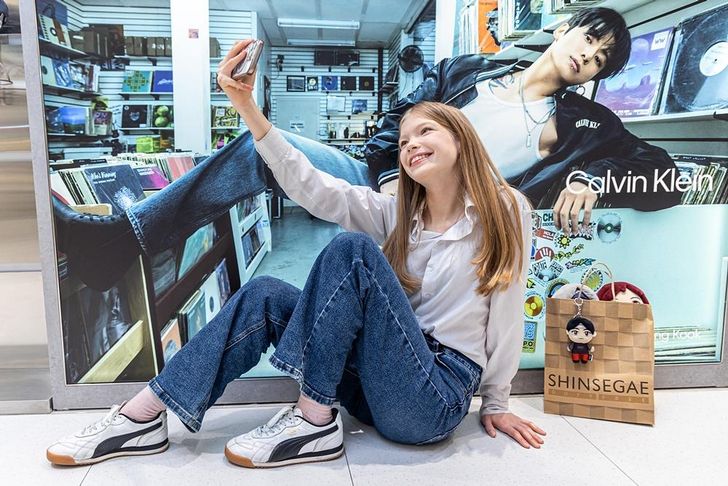
A girl takes a selfie at the K-WAVE Zone featuring K-pop merchandise at Shinsegae Duty Free Myeongdong in downtown Seoul, March 11. Yonhap
Some observers place the pattern within a broader shift in how Korean and Chinese cultures interact on the global stage.
Seo Kyoung-duk, a professor at Sungshin Women’s University known for his efforts to promote Korean culture globally, said the pattern reflects a dual attitude common among Chinese K-pop consumers.
“Chinese fandoms that consume K-pop tend to display a dual attitude, enjoying and consuming Korean popular culture while reacting differently when cultural issues arise,” he said. “They actively engage with K-pop and Korean dramas, yet when elements they perceive as connected to their own cultural heritage appear, they are quick to raise concerns and amplify them through social media. Motifs or symbols seen as having been taken from Chinese culture are often framed as issues of cultural appropriation and spread rapidly online.”
Seo believes this tension is inseparable from K-pop’s growing global footprint. As Korean cultural content has risen in international prominence, a sense of cultural unease has emerged in China.
“In the past, many Western audiences tended to view Chinese culture as the central cultural reference point in Asia. As the perceived cultural center shifts toward Korea amid the global success of K-pop and Korean dramas, a form of backlash or cultural insecurity may be emerging online. In this sense, the online criticism can be interpreted as a reaction to changing cultural influence rather than a rejection of Korean pop culture itself,” he said.
“Efforts to protect one’s own cultural identity are understandable, but framing cultural exchange in exclusively nationalistic terms risks overlooking the complexity of shared regional heritage.”
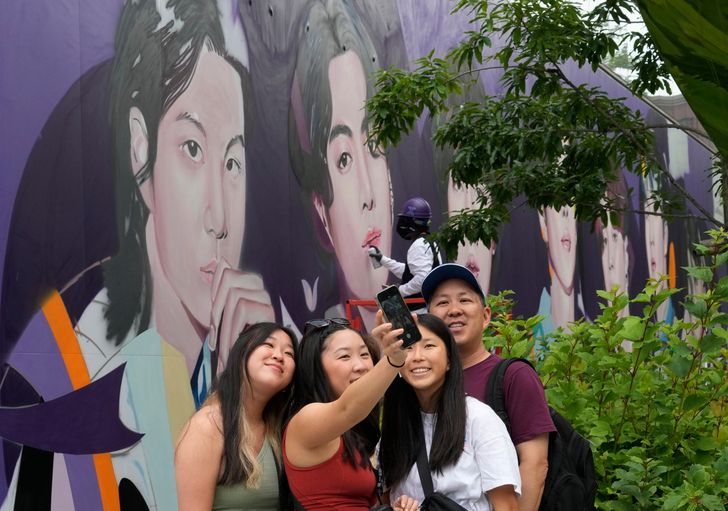
Foreign tourists take a selfie in front of a mural of K-pop band BTS members on the outer wall of a building in Seoul, in this June 14, 2023, file photo. AP-Yonhap
K-pop, a window into Korea
Eloise Liu, who has followed the K-pop idol group Monsta X for two years, said it is a common stereotype in China that fans of Korean idols are also blind supporters of Korea as a country. In her view, however, the two are not necessarily connected.
“I try not to link my fandom to politics or ideology. For me, it’s just for fun,” she said.
“Even if relations between China and Korea come under strain, like what has happened between China and Japan, I wouldn’t deliberately pay less attention to Korean idols. I like them for who they are as people.”
Beyond simple entertainment, Liu said being a K-pop fan has given her a deeper understanding of Korea and other aspects of its culture, including how Korean women practice feminism — a topic that is also widely discussed on Chinese social media.
Jin said her years of following K-pop eventually drew her toward Korean films, literature and history. The experience, she said, has enabled her to compare the development paths of China and Korea and gain a deeper understanding of both countries, influencing her own values in the process.
“Despite all the criticism of K-pop and Korea on China’s social media, it has become an important part of my cultural life and I’ve learned a lot from it,” Jin said. “Koreans are very willing to reflect on their own history, and that kind of critical thinking was something I felt I lacked.”
Alice Li is a reporter with the South China Morning Post. She is currently based in Seoul, writing for both The Korea Times and the South China Morning Post under an exchange program.