
BEIRUT
Israel has rebuffed an historic offer of direct talks from Lebanon, deeming it “too little too late” from a government that shares its goal of disarming Hezbollah but cannot act against the heavily-armed Lebanese group without risking a civil war.
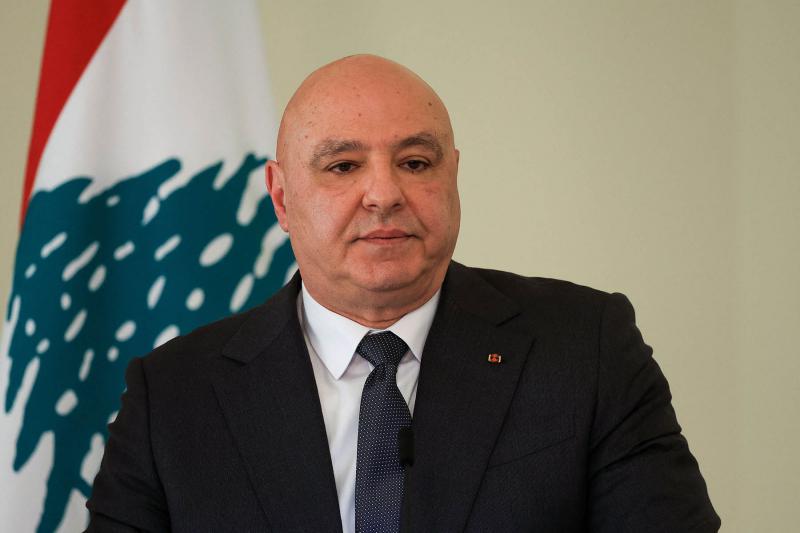
Lebanese President Joseph Aoun expressed the state’s willingness to begin direct negotiations with Israel this week, seeking to secure an end to the conflict that erupted on March 2 when Hezbollah entered the regional war in support of its patron Iran. Sources familiar with Aoun’s position said he has begun appointing a negotiating delegation and in some private meetings, he went as far as to say he was ready to move toward normalising ties. “Everything is on the table,” a third source familiar with his position told Reuters, when asked about normalisation. The Lebanese state’s stance reflects unprecedented levels of domestic opposition to Hezbollah’s status as an armed group: the government last week banned the group from military activities.
But with Hezbollah still wielding a powerful arsenal and backed by a significant segment of Lebanon’s Shia Muslim community, carrying out the order is easier said than done for a fragile Lebanese state now facing one of its most precarious moments since the 1975-90 civil war.
On Friday, Aoun told United Nations Secretary General Antonio Guterres that he had not received a response to his offer, according to a statement from the presidency.
Just a few years ago, such an offer from a Lebanese president would have been a major diplomatic overture, and a chance for the United States to claim success in ending nearly 80 years of hostilities between the two countries.
But Aoun’s proposal generated little interest from either Israeli or American officials, according to the two sources, a Lebanese official and two foreign officials.
The sources all said Lebanon’s inability to rein in Hezbollah over the last year and prevent the group’s March 2 attack left Beirut with little credibility and nothing tangible to offer at a negotiating table.
Israel’s Foreign Minister Gideon Saar told the Times of Israel this week that his country was ready for dialogue with the Lebanese government to normalise ties.
“But the current problem is that dialogue with the Lebanese government cannot stop the fire from Lebanese territory,” he said.
Israel’s ambassador to the United Nations Danny Danon told the UN Security Council this week that Israel could not negotiate with Lebanon “while rockets are flying into our northern border.”
“The time has come to decide: will Lebanon stick to declarations or actually act?” he said.
Lebanon’s presidency, the US State Department, Israel’s foreign ministry and the office of Israeli Prime Minister Binyamin Netanyahu did not immediately respond to requests for comment.
Over the past year, Lebanese authorities have been treading carefully to confiscate the group’s weapons in the country’s south.
The moves would have been unimaginable just a few years ago, when Hezbollah was at the zenith of its power and exercised immense sway over Lebanon’s multi-sectarian political system.
But the measures have had mixed results. Hezbollah was still able to spend months re-arming, even stationing new rockets in southern Lebanon as the Lebanese army said it had secured full operational control of the area.
After the new war started, Lebanese authorities detained around 50 people for carrying arms without a licence in southern Lebanon and near Beirut, Lebanese security sources told Reuters, saying the detained men were suspected of being Hezbollah members.
But several were swiftly released after paying a small fine, the sources said.
When Lebanon tried to reach out to US officials this week to make the offer on negotiations, they were rebuffed, a Lebanese official said.
“They said that 2025 was our window to confront Hezbollah and we didn’t, so there’s nothing they can do now,” the official said.
Sources familiar with US policymaking on the Middle East told Reuters that Washington also had little bandwidth to deal with Lebanon given its current war on Iran, and was allowing Israel to deal with Lebanon as it saw fit.
Israel still wants to see Lebanese troops dismantle Hezbollah’s rocket and drone launch sites and seize the group’s weapons, Dannon told the Security Council. The army has avoided directly confronting Hezbollah, worried about inflaming tensions with the Shia Muslim community and fracturing the army, which split during Lebanon’s 15-year civil war.
“That is the problem: Lebanon cannot deliver. And I understand that. This is a multi-sectarian society and Lebanon cannot afford to declare war on a community,” the Carnegie Middle East Centre’s Michael Young said.