
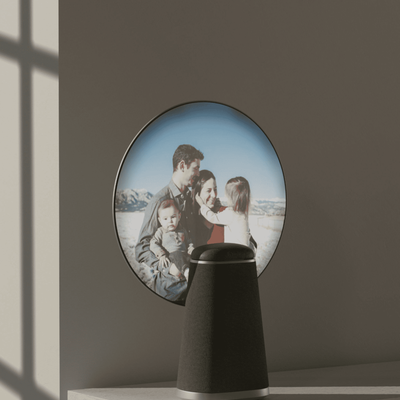
Memoria is a connected assistive device system designed to support people living with Alzheimer’s disease and dementia. It helps users reconnect with personal memories, daily context, and loved ones through a calm, tangible physical interface, without relying on complex screens or mobile apps.
The system combines a primary home device with a wearable companion, integrating display technology, RFID-based spatial recognition, and a digital memory platform into a single dignified product. Dignity and emotional continuity were placed at the centre of every design decision, from the rounded form language to the interaction logic adapted for cognitive accessibility.
Design Team
Futurewave
The Challenge
Dementia and Alzheimer’s disease progressively strip individuals of their ability to recognise their surroundings, recall meaningful memories, and maintain a sense of personal identity. The condition does not affect everyone in the same way or at the same pace, some individuals in early stages retain significant cognitive capacity, while others require more constant support. Existing assistive solutions on the market often feel clinical, infantilising, or technologically overwhelming, creating friction and anxiety for users who are already navigating a profoundly disorienting experience.
Caregivers and families face an equally difficult challenge. They want to maintain emotional connection with their loved ones, share memories, and provide reassurance, but the tools available to them are either too complex for the patient to use independently or too passive to create meaningful interaction. The gap between what technology could offer and what was actually available in the assistive care space represented both a human problem and a design opportunity.
The challenge set before Futurewave was to design an assistive product system that would feel emotionally resonant, aesthetically considered, and technically robust, one that could support people at various stages of memory loss without requiring complex interaction, specialist knowledge, or constant caregiver involvement for basic daily use. The product needed to work for the user, not just for the people around them.
Design Philosophy
From the earliest stages of the project, Futurewave established dignity and aesthetics as non-negotiable design principles. The product had to avoid anything childish, clinical, or invasive. Too many assistive devices signal their purpose through visual language that stigmatises the user, oversized buttons, hospital-grade plastics, or screen interfaces that feel borrowed from institutional software. Memoria had to be different.
The physical object needed to integrate naturally into a home environment, feeling like a considered and personal possession rather than a medical tool. The interaction language had to be calm and predictable, reducing cognitive friction rather than adding to it. Every design decision, from the form of the enclosure to the logic of the firmware, was evaluated against a single question: does this help the user feel safe, oriented, and connected?
Futurewave approached Memoria as a full product architecture challenge. This was not simply an interface design problem or a piece of consumer electronics. It required hardware engineering, industrial design, electronics development, embedded software, and interaction design to work as a single integrated system, each discipline informing and constraining the others throughout the development process.
The Primary Device
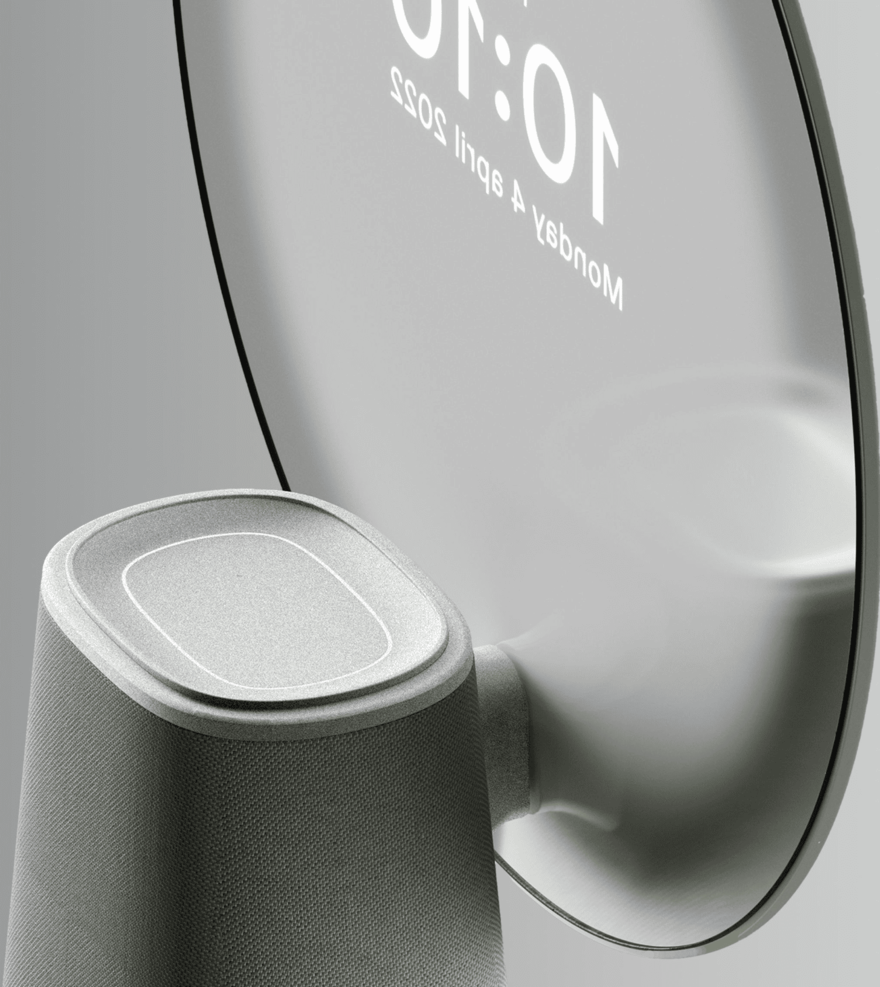
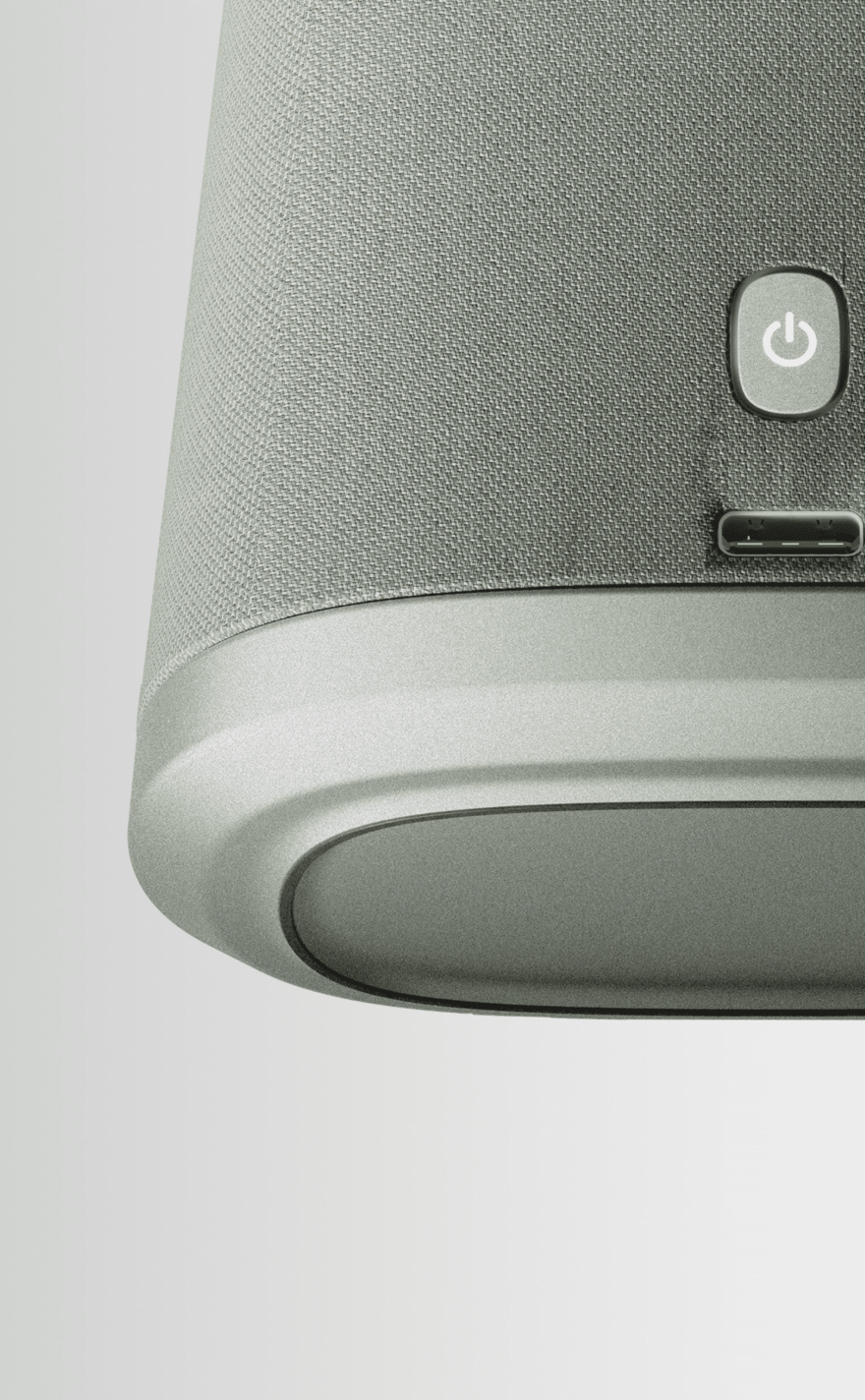
The core Memoria device is a home-based object designed to sit naturally within a living space. It integrates a flexible display, speakers, a tilting mechanism, a charging coil, a custom PCB, and a battery into a single refined enclosure. The form language prioritises warmth and familiarity, rounded, calm, and considered rather than technical or imposing.
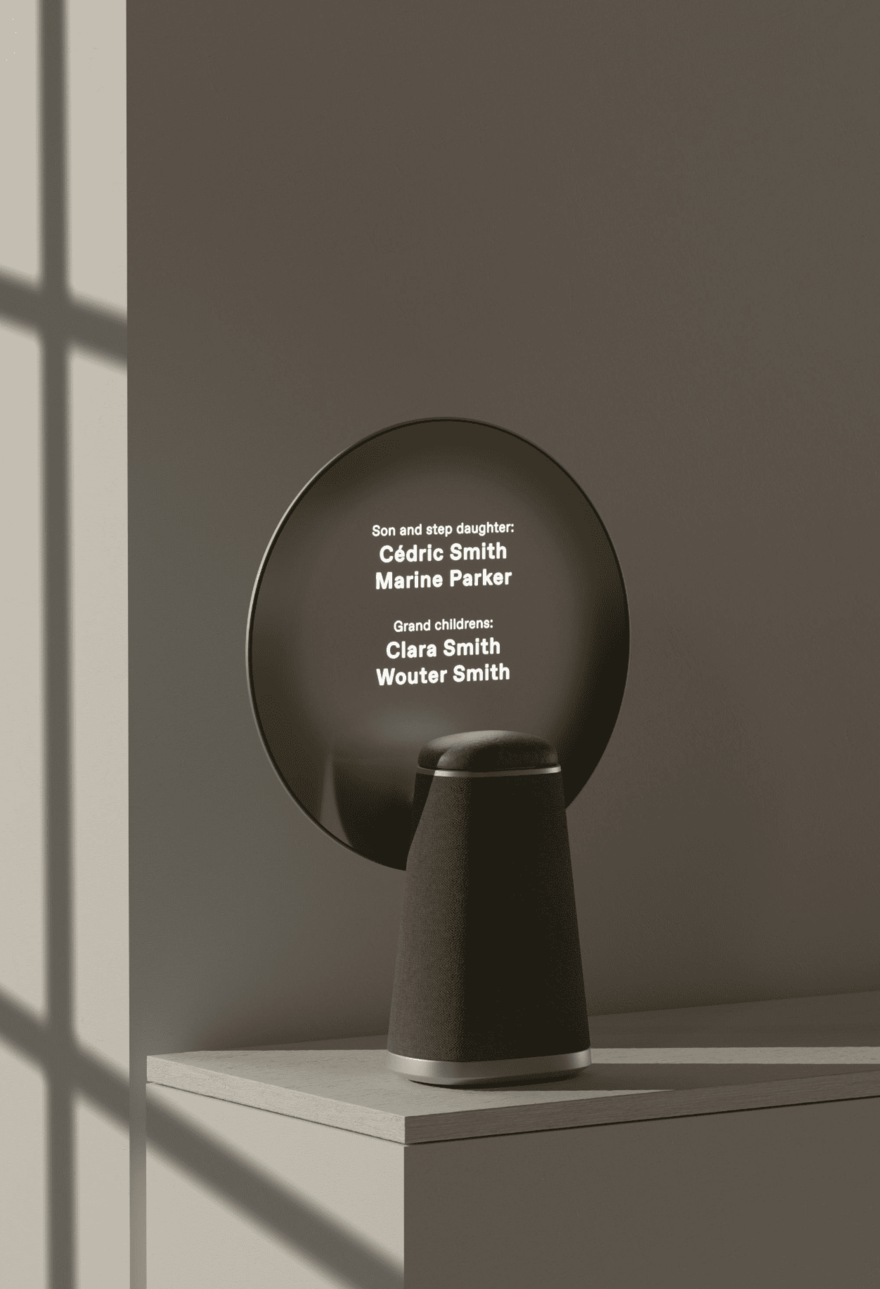
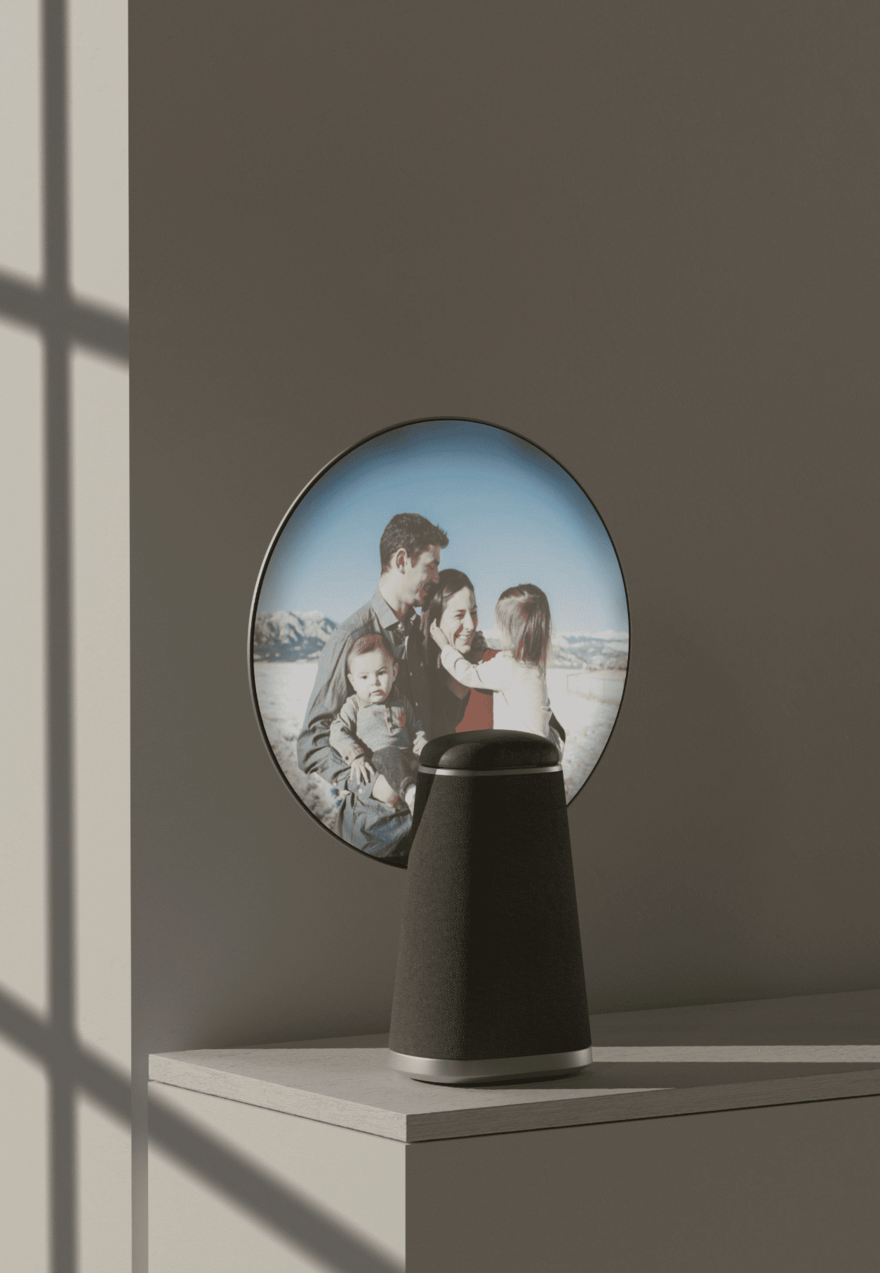
The device connects to a secure digital platform where families and caregivers can store and curate personal memories, photographs, recorded stories, familiar voices, names of loved ones, and contextual information about the user’s daily environment. This digital library becomes the backbone of the system, continuously updated and maintained by the people around the user while remaining invisible and effortless from the user’s perspective.
Through its screen and speakers, Memoria engages users in gentle cognitive activities and memory recall interactions. Content is presented in a simple, emotionally supportive format, never overwhelming, never demanding. The flexible display adapts to varying lighting conditions throughout the day, optimising legibility and visual comfort in different rooms and at different times. The tilting mechanism allows the device to adjust its orientation to suit the user’s position, whether seated at a table, resting in a chair, or moving through a room.
The interaction logic embedded in the firmware was designed specifically for cognitive accessibility. Steps are minimised. Decision points are reduced. Responses are calm and consistent. The system is designed to reward gentle engagement and never to punish hesitation or error, recognising that the users interacting with it may experience confusion, frustration, or disorientation as part of their daily reality.
The Wearable Companion
Complementing the primary device is a portable wearable component that extends the Memoria system into the user’s physical environment. The wearable can be worn as a bracelet or necklace, attaching magnetically to allow easy dressing and removal without fine motor complexity. Its form is compact and unobtrusive, designed to be worn throughout the day without drawing attention or causing discomfort.
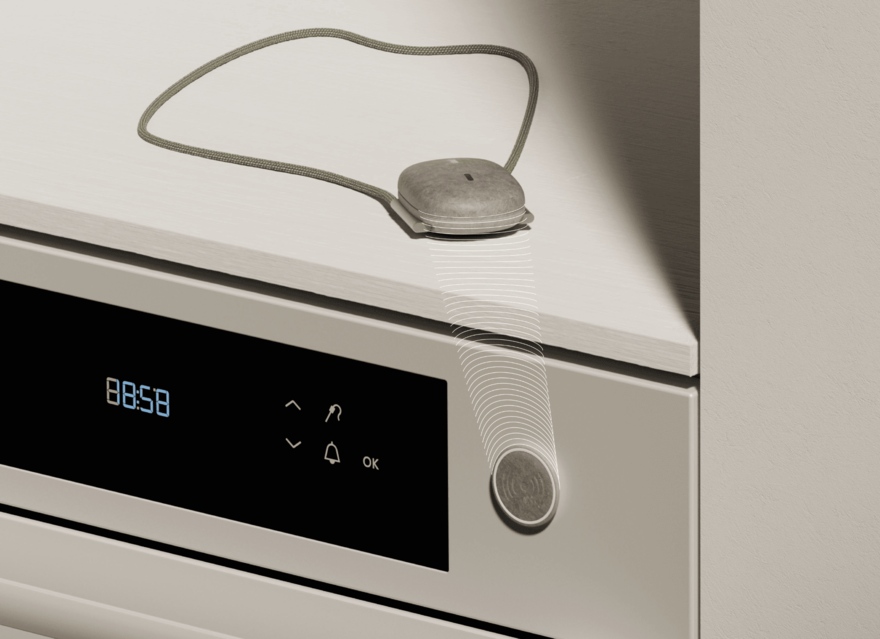
Inside, the wearable integrates an RFID antenna, a custom PCB, a battery, and a charging coil. The RFID system communicates with small chips strategically placed throughout the user’s living space, attached to familiar objects, positioned near doors, embedded in key locations around the home. When the user approaches or interacts with a tagged element, the wearable detects the chip and triggers relevant contextual information on the primary device.
This transforms the entire home into an intelligent, responsive memory support environment. A chip near the front door might remind the user where they are and who lives with them. A chip on a favourite cup might display a familiar memory associated with morning routines. A chip near a family photograph might trigger a story or a recorded voice. The system meets the user where they are, in their physical space, rather than requiring them to seek out a screen.
The result is a distributed assistive system that operates continuously and passively, reducing the cognitive effort required from the user while maximising the moments of recognition, comfort, and connection that the product is designed to create.
Electronics and Embedded Software
Custom electronics were developed for both the primary device and the wearable component. This included full PCB design for both form factors, power architecture suited to each device’s usage pattern, wireless communication systems, and the integration of the RFID infrastructure. The electronics had to meet strict requirements around reliability, power efficiency, and physical robustness, particularly for the wearable, which needed to withstand daily use in a home environment across a range of conditions.
Embedded firmware controls all device behaviour, from display rendering and speaker output to interaction logic, RFID event handling, and platform synchronisation. The software architecture was designed to remain stable and predictable under all operating conditions, with no complex setup, no update prompts visible to the user, and no failure modes that could cause confusion or distress.
The connection between the physical devices and the digital memory platform was engineered to be seamless from the user’s perspective — content appears, updates, and responds without any action required from the person using the system.
Outcome
Memoria demonstrates how technology can meaningfully support cognitive care and emotional continuity without sacrificing aesthetic integrity or human dignity. It is a product that exists at the intersection of hardware engineering, interaction design, and deeply human need, requiring Futurewave to operate across every discipline simultaneously and to hold the user’s experience as the constant reference point throughout development.
The result is a manufacturable assistive product system, comprising a home device and a wearable companion, that bridges physical interaction with a personalised digital memory platform. It helps people living with Alzheimer’s and dementia reconnect with meaningful moments, maintain a sense of orientation and identity, and remain emotionally present within the spaces and relationships that matter most to them.
Learn More About This Projectx