
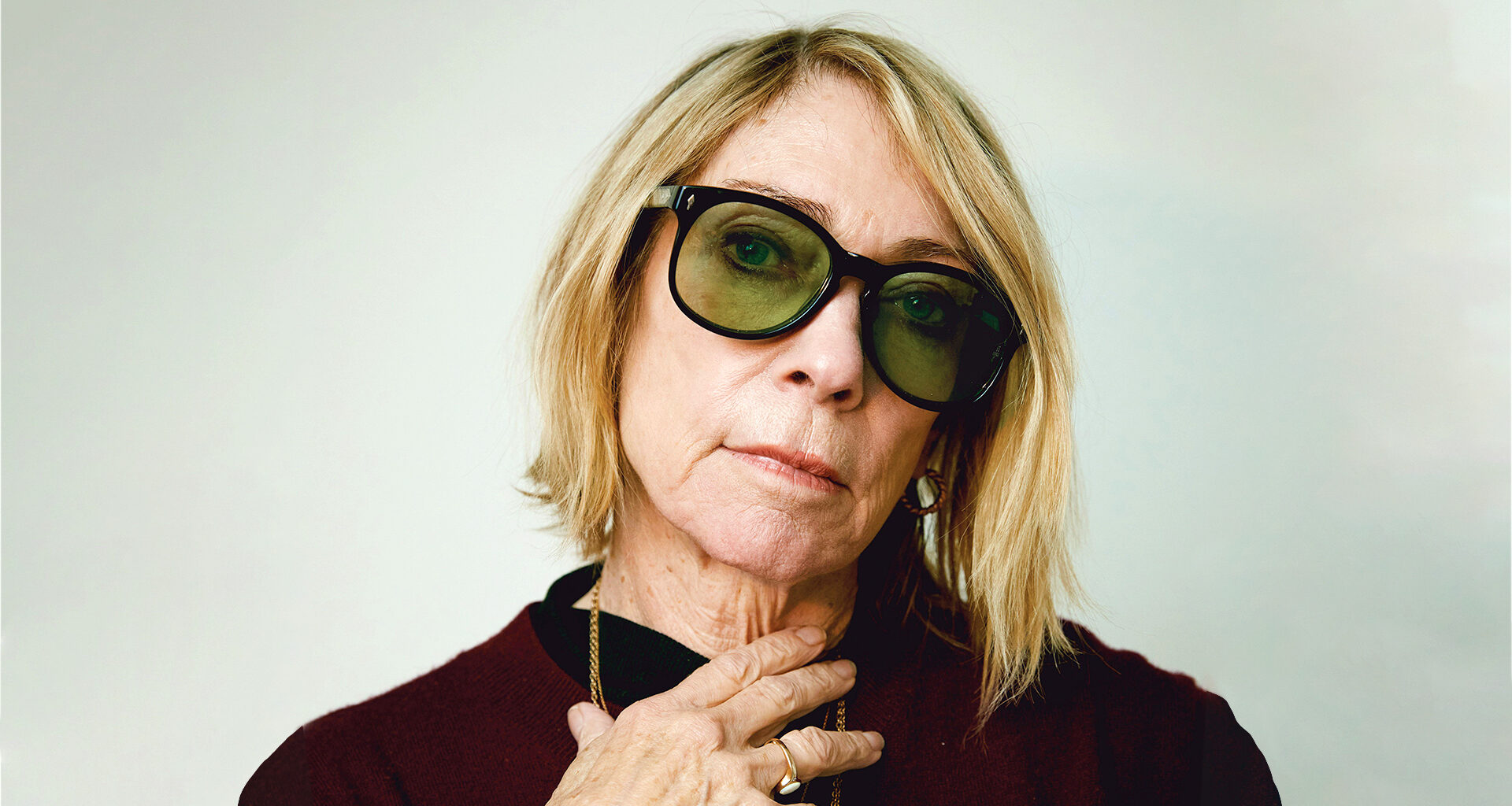
I did a couple things outside of school that really saved me. One of them was taking art classes, and the other was taking Martha Graham [modern dance teacher who developed a revolutionary technique] classes. I just always liked making art, from the time I was five. There was a gym class in high school which I turned into a modern dance class. I was the only one who knew anything about dance. The teacher let us do what we wanted, and we would make up kind of absurd dances. It was the most fun class.
At that time, I was listening to a lot of ’60s and ’70s music – a lot of Neil Young, Bob Dylan, Buffalo Springfield and Pink Floyd. And I listened to a lot of free jazz in the ’70s, like Miles Davis’s Bitches Brew. My dad had a jazz record collection, so I grew up listening to his records, but then got turned on to some more free jazz by friends and musicians.
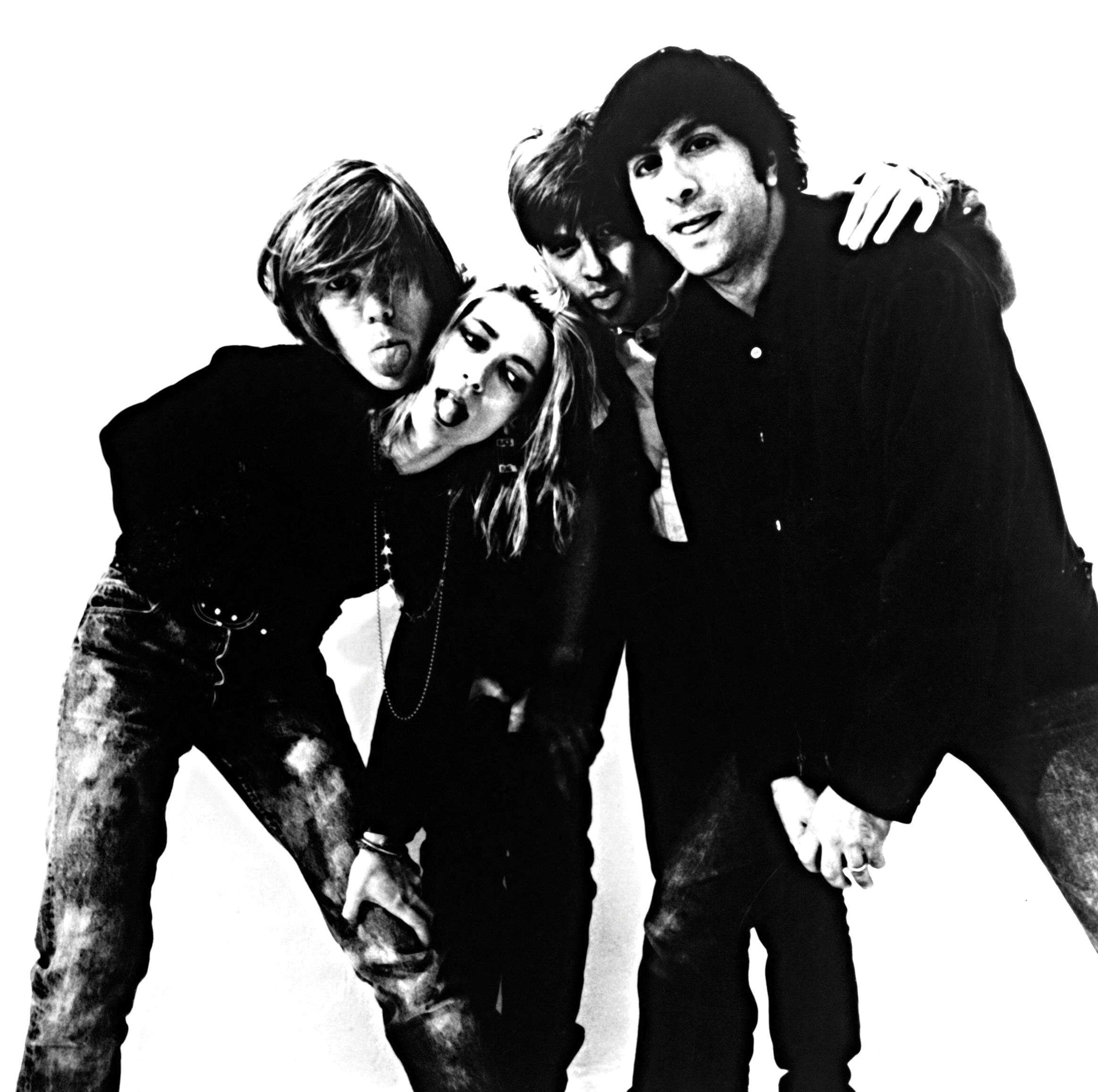 1988: Sonic Youth (from left) Gordon’s then-husband Thurston Moore, Kim Gordon, Steve Shelley and Lee Ranaldo. Image: Everett Collection Inc / Alamy
I was a bit of a dreamer. I would listen to music in my bedroom and make art a lot. I was shy, introverted. I wasn’t close to my parents. I mean, I liked my parents, even though I was sort of rebelling, I did think they were good people. They were liberal, they had friends that were kind of bohemian, as well as documentary filmmakers. But I wasn’t particularly close to them. They were the generation of parents who believed in hands-off parenting. So I didn’t really confide in them, and they didn’t fully know what was going on; that we were smoking pot.
Read more:
I had an older brother who was quite eccentric, he smoked a lot and he became a schizophrenic later. It’s hard to say whether pot affected him but it seems like it kicked off something, though he might have had the propensity for it. He also caused a lot of chaos and unpleasantness in the house. He was really argumentative with my parents. I was close to him, and I really looked up to him, even though I was kind of afraid of him and he sort of bullied me. He made me feel like I was stupid. He was really smart, he was a Shakespeare scholar, and he was always reciting Shakespeare poems. We would do things like turn off all the lights in the living room and listen to a recording of Macbeth. Later, after he moved back home, he was living in this trailer in my parents’ driveway, and we would smoke hash and read.
I think if you met the teenage Kim maybe you’d find her a little bit mysterious. On the one hand, I’m basically the same person I always was, but just a bit more confident. She probably wouldn’t have any idea what her future might bring. I kind of fell into playing music after punk, like a lot of people. I moved to New York to do art, but I also used to subscribe to a dance magazine, so I read about avant garde dance and the whole street scene, and that really intrigued me. And even though I never became a dancer, I have done some performances with a choreographer. So, the dance aspect shows up in different ways.
Advertising helps fund Big Issue’s mission to end poverty
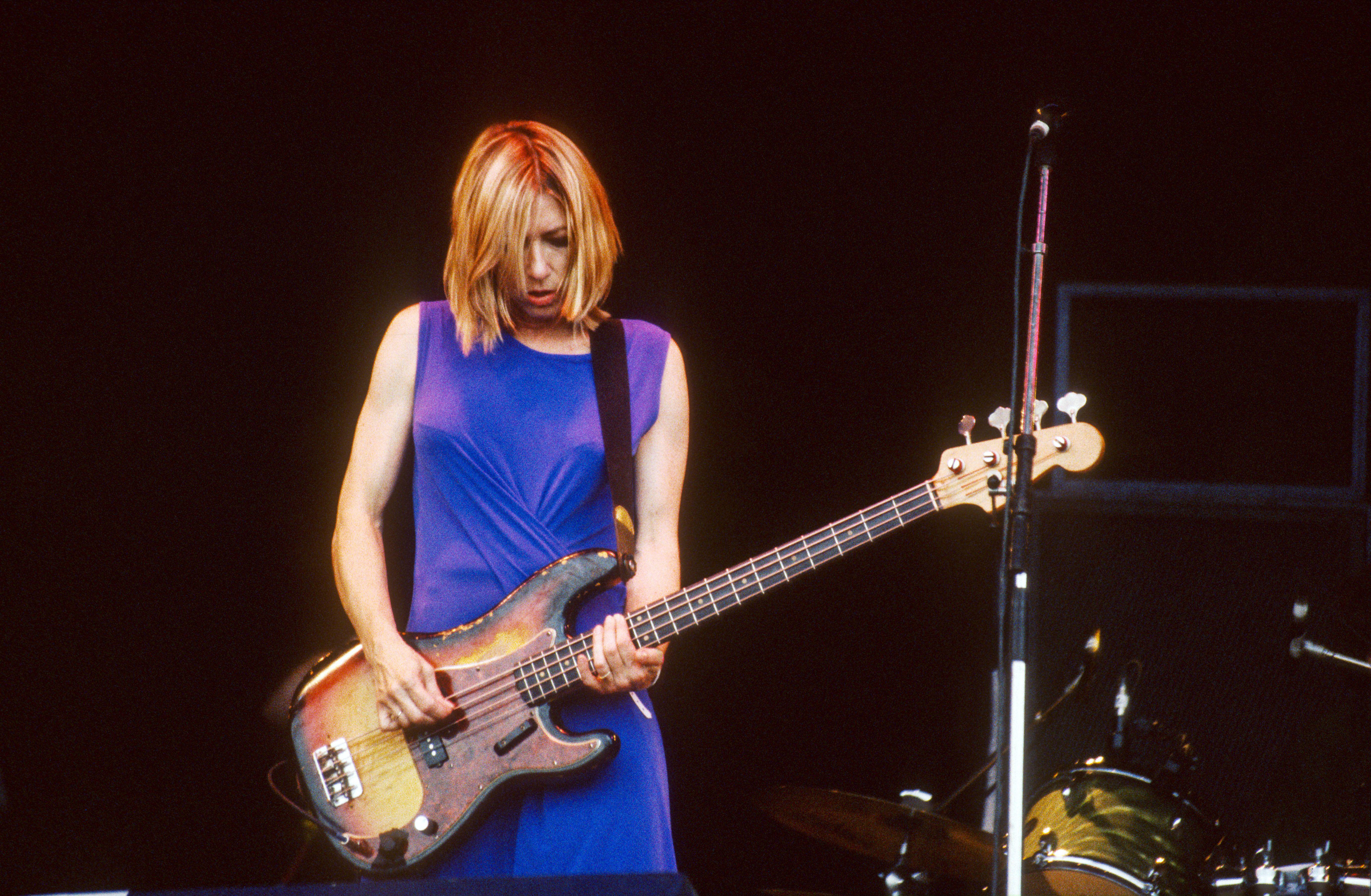 1998: Performing with Sonic Youth at Glastonbury. Image: Edd Westmacott / Alamy
The first time I played music was in Toronto. We formed this band for our media class. It was these two Chilean cousins who were escaping from the dictatorship [General Pinochet ruled Chile from September 1973 to March 1990], and my friend from LA. He was a percussionist. We were a garage noise band. We just played a couple times. And then when I moved to New York, this artist friend of mine, Dan Graham, had this performance piece called Performer, Audience, Mirror. He would stand in front of this huge mirror and he would describe the audience and their self-conscious gestures, and then he would turn around and describe himself looking at the audience.
Dan wanted to do this piece with an all-girl band, because he was writing about punk and feminism and The Slits and Kleenex. So, he introduced me to this girl, Miranda [Stanton], and we formed this band with Christine Hahn. He wanted us to, individually, have some interaction with the audience, which we didn’t exactly do. Then I met Thurston [Moore] through Miranda. She was also playing with him. That’s kind of how it started.
Thurston was playing with this keyboardist, and we had different names we played under. Eventually he came up with the name Sonic Youth. At the same time, we didn’t want to play with a keyboardist any more, and so we asked Lee [Ranaldo] to play with us. We’d seen him playing around. And that’s basically the beginning of Sonic Youth.

Those early years were a slog. Our first gigs, we did benefits for different things, and then we asked for a gig at CBGB, so we did that. We were just constantly trying to get gigs. We were also playing with this composer, Glenn Branca, and we were influenced by his quasi-orchestral pieces with a lot of guitars all tuned the same way. We managed to get a tour of Europe and in different parts of the US with Swans, among others.
I began to think I could really stick at music when we got signed. Glenn had this label called Neutral Records, and he asked us if we wanted to put out a record. So we made two records with them, and then, maybe through Lydia [Lunch], we sent a cassette to Paul Smith [founder of record label Blast First], who I think was helping Cabaret Voltaire. He decided to form Blasphemous to put out our record.
I don’t remember when I stopped having some kind of day job, but by the time we got to Daydream Nation [1988] I felt we were really on it. And our audience was steadily growing the more we left New York and toured. The only way you could really get on the map of the indie music world was to go out and play. I didn’t really enjoy touring. Sitting in a room for hours and then having to soundcheck and play a gig. I mean, the playing was fun, but it was hard.
Advertising helps fund Big Issue’s mission to end poverty
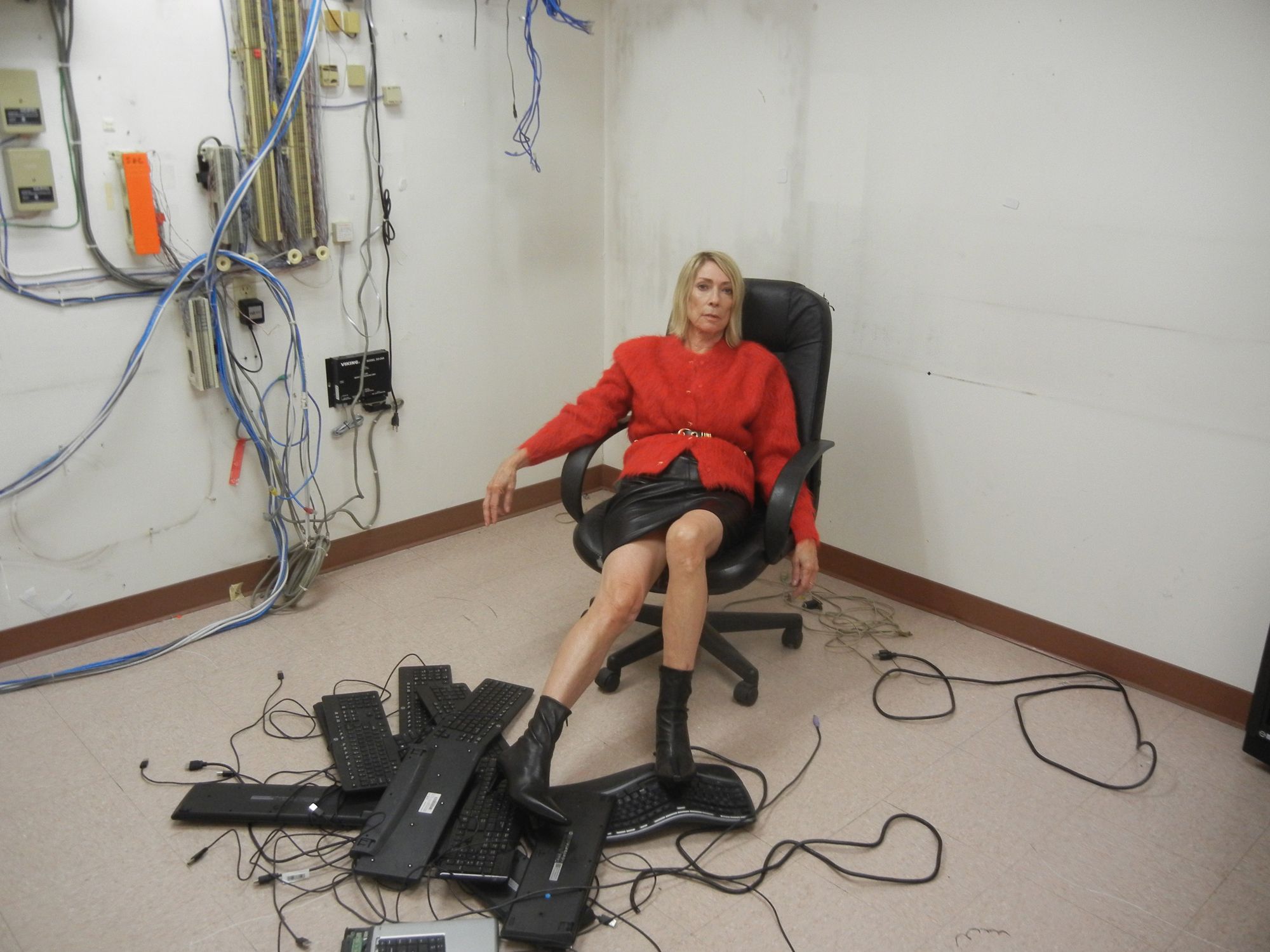 2026: Pictured for the release of her new the release of her new album, Play Me. Image: Moni Haworth
If I could have one more conversation with anyone, it would probably be my mother, because she couldn’t talk the last few years of her life. She had been in a terrible car accident, and she had to have a tube in her stomach. Her mind was all there, but she couldn’t talk. She was kind of mysterious to me, I always had the feeling she wished she was doing something else, something creative. She was a seamstress, but I always had the feeling she wanted a different kind of life.
If I could relive any day, it would probably just be a day when I was recording this new record. It was so fun and I’d leave the studio feeling just so, so excited. I was writing about the political landscape, as well as songs from a more interior, emotional point of view. Do I worry about America? Yes, I worry about the whole fucking world. I worry about what AI is gonna do to the world. Trump? I feel like he’s done most of the damage, and hopefully he’ll just keel over and die.
Kim Gordon’s new album Play Me is out on 13 March on Matador
Do you have a story to tell or opinions to share about this? Get in touch and tell us more.
Change a vendor’s life this winter.
Buy from your local Big Issue vendor every week – and always take the magazine. It’s how vendors earn with dignity and how we fund our work to end poverty.
Advertising helps fund Big Issue’s mission to end poverty
You can also support online with a vendor support kit or a magazine subscription. Thank you for standing with Big Issue vendors.