

One of the most popular business topics around the world is to guesstimate what traditionally human-performed jobs will begin to be replaced by artificial intelligence (AI) technology. It is a fair question because, like the personal computer and calculator before it, AI is a powerful labor-saving and problem-solving set of technologies. The world is both correctly curious and concerned about the impact new labor-saving capabilities will have on careers and jobs that, until recently, have required paying a human to perform. In this article, I would like to examine the likely impact of AI on the luxury and high-end timepiece industries in the coming years. I do not approach this topic as a proponent or opponent of AI, nor do I have a particular agenda for discussing this topic. I come from the perspective of a new-technology enthusiast and curious futurist who generally celebrates emergent technologies. At the same time, I am mindful to dismiss novel trends until they mature, and I also have nearly 20 years of experience working within and studying the global luxury industry. My goal, perhaps, is to temper concerns within the luxury industry space about the “threat of AI,” and to also articulate the practical considerations why consumers do business with luxury firms and why I believe most consumers are emotionally and intellectually seeking a human experience when spending their disposable income.
Note that, unlike many technology companies that have been around for years or perhaps decades, a large number of high-end watch companies and luxury firms have been around for much longer (and, in some instances, for hundreds of years). These longstanding brands are companies that have survived a number of major consumer and industrial changes over the years, including wars, plunging economies, and a number of disruptive manufacturing and competitor technologies. Yet select firms that produce expensive objects for the wealthy remain stubbornly relevant – despite entirely contradictory social trends across the masses or technological obsolescence.
There is a distinctly irrational element to the consumption and production of luxury goods and experiences. I posit that this irrationality is distinctly human and something that today’s artificial intelligence systems may only be able to mirror, but can ultimately not understand or effectively synthesize. Luxury is about waste, and programming is about speed and resource efficiency. These values are diametrically opposed. A machine will produce a luxury experience only if humans specifically demand it, and will not understand the intended outcome. Any machine interested in efficiency or calculated outcomes would never choose to take part in a luxury endeavor because it involves human preferences AI can only vaguely understand, because it can only mirror and not process the mindset which we call the human experience.
AI tools may have introduced some truly novel tricks to technological tools, but at their heart, large language models are just another tool to help humans perform tasks more quickly. The various industrial revolutions that the commercial world has been exposed to throughout history have all hinged on the fact that new technology was aiding or replacing once human-led manual labor tasks. In almost all instances, the people who performed the labor jobs felt threatened, and production managers felt liberated. When it comes to products that are made in large scale, the world has generally embraced labor-saving technology and automation to replace dangerous, redundant, low-intelligence-requiring human labor. This has allowed labor pools, if properly realigned, to focus on entirely new tasks and opportunities thanks to the new availability of automated or discounted labor. Human labor is more expensive than programmed labor, so it allows factories to get larger, make more goods, and also create a vastly more complicated network of specialized parts and components.
Even in today’s push for automation, humans still perform several tasks that, in theory, a machine could replace. Oftentimes, humans still perform these tasks because it is ultimately cheaper for people to do them than to create and maintain a machine for the task. The outcome of the industrial revolution, extending to today’s AI age, is not really humans being replaced by machines. Rather, it is humans working alongside machines to create more productive outcomes that neither machine nor human could achieve on their own. Manual laborers will simply be given new AI-operated tools to remove some of the worst parts of the job (though I suspect humans will be cheaper maintenance workers and janitors than machines for the foreseeable future). This is not me speaking as an optimistic futurist. It is the natural outcome of what has happened throughout thousands of years of human history, each time major new tools have been created.
Consider this anecdotal example. As a society, we often like to conveniently forget that until relatively recently, we simply used forced human labor (with the accompanying culture of dehumanizing “the help”) to get a number of unpleasant labor tasks done. While slavery is an unabashedly ugly thing, it had an important labor-saving purpose. Whether it was building or digging, cooking or cleaning, the human race has, for eons, used compelled human labor to free up other people to focus on things like art, civics, and war. If there is anything that today’s popular “survive in nature” television entertainment has taught us, it is that merely staying alive is a full-time job. People cannot study math for years to become engineers, or practice performance art and create culture when their waking hours are spent cleaning the home and clothing, and gathering sustenance. Only when someone else (human or machine) can take over those many small tasks, can the parts of human culture that we celebrate emerge. The intellectual development of human culture is directly related to its embracing methods, offsetting labor to various third parties. Anything which can further free up human time and effort will simply allow us to focus on other, more complicated and potentially paradigm-changing tasks. This is all a long way of me saying that I mostly embrace the promise of AI (even if, circa 2026, the technology still has limited utility (and reliability) for many people and purposes.

The Luxury Industry Has Already Encountered Automation And Moved Past It
The luxury industry has often adopted labor-saving technology, and will continue to do so where it matters. Like any other industry, it wants to save money and increase consistency through implementing manufacturing audits and retoolings designed to make production faster and more efficient. It was actually the United States that introduced the Swiss watch industry to assembly lines, more universal use of interchangeable parts, and the idea that if you made more high-quality watches at a lower price, you could sell to a much larger market of customers. The manufacturing boom was introduced to the watch industry by the fact that buying a wristwatch became a mainstream need. Watchmakers went from boutique operations producing small parts that various assembly experts would put together in sellable form, to large multi-national factory-run businesses designed to supply the world with millions of watches a year. The luxury side of the watch industry benefited greatly from this, as it allowed small watchmakers to use properly machined parts from machines they never previously had access to. The push for automation in the watch industry yesterday led to the ability to make much higher-quality watches in larger numbers. The industrialization and growth of efficiently made watches in the 20th century evolved into what the luxury watch industry is today. There is a very important lesson here that can be easy to miss.
Automation did not cause people to lose their watchmaker jobs, but rather created a far richer ecosystem of watchmakers and assembly technicians that did not exist before. Automation, therefore increase the number of people the watch industry was able to hire. Anytime automation, such as AI, allows a business to reduce friction points that exist when relying on human labor and focus, it will probably end up creating more (not fewer) opportunities for humans to be creative and free them up to experiment. This is also why high energy prices constrain creativity and risk-taking. Like friction from trying to motivate human capital, if things like electricity costs are too high, companies will simply choose to be less productive or experimental on account of worrying about the negative outcome of unaffordable energy costs. Humans are a similar type of cost when it comes to the application of labor and effort. Anytime we can automate this, it helps humans do what they prefer to do, which is to use their imagination and try new things.
Such an ability to inject art and emotion into manufactured items is the hallmark of what a luxury good is. Luxury goods aren’t just standard objects because they are intended to be “better than necessary.” Ordinary objects are imbued with extra functionality or decoration that allows them to be functional as well as beautiful. Machines aren’t capable of this type of imagination or experimentation. This is not a technological hurdle but rather at the core of how AI works. Both humans and AI machines are designed to look for patterns in data, but similarities often end there. Most AI systems are built of large language models that are designed to “train” them on patterns that humans often see. The LLMs are fed large amounts of information that, at their core, are hints and tips on how humans make associations between bits of information. The more data an LLM has, the more examples of human associations it has. The software can then blend all this together and sample the outcomes for human users. Some outcomes are grotesque, and we reject them. Other outcomes are surprisingly pleasant, and people respond well to them. AI tools use this information as part of its feedback loop to reinforce or correct its understanding of how humans respond to various data-point associations. Everything AI outputs, whether it is text or a picture, is a blending of various data points. By itself, AI doesn’t really understand if any of these blended ideas mean anything to humans. It has to then learn that through various forms of experiences with humans. My point is that AI tools can neither create nor predict culture. They can be trained to simulate the human culture it has ingested by processing via data points. They cannot create human culture by themselves. AI might be able to simulate the look and feel of an existing luxury brand, but it cannot create the type of novel personality and experience that defines the luxury brands that have lasted for decades. Often, these surviving companies have been exposed to automation and replacement technology multiple times. Luxury firms trade on complicated emotions and the creation of culture through experimentation and engineered indulgence. None of these outcomes is meaningfully possible when you consider how today’s artificial intelligence tools operate. The basic needs of luxury brands continue to require human decision-making and experimentation.

Luxury Consumers Like To Purchase Things Made Using Human Effort
One of the most powerful selling points you can make when selling a luxury timepiece is how many human hours it took to create it. Humans are impressed by objects that require a lot of labor. Precise numbers of how long each luxury watch actually requires are notoriously difficult to calculate (because it really depends on how you define human effort and labor), but mere estimations are usually sufficient to impress consumers. The watch industry is replete with media of watchmakers sitting at desks carefully attending to one of hundreds of tiny parts splayed out in front of them. What takes even more time is the process of decorating or polishing watch parts. An entirely different team of workers often beautifies the parts that later make up a wristwatch prior to their assembly. This can range from spending hundreds of hours performing a miniature painting on a watch dial to hand-selecting and setting hundreds of precious stones on a case.
The most exclusive objects in the luxury space are those that are “naturally limited.” Meaning that their creation is so time-consuming or challenging that only a few of them can even exist. The human barrier to their construction is an appeal unto itself. Many watch lovers are impressed not merely with how something looks, but that most humans, despite their best efforts, cannot replicate what a master artisan can accomplish when they push themselves. I often like to suggest that wearing a nice wristwatch is often tantamount to wearing a totem of human labor and dedication. That someone with a high level of training spent tens or even thousands of hours on one object for you is an intoxicating level of materialistic arousal. This is why the rich spend heavily on human-made goods. It isn’t that they can’t get alternatives, but rather that part of the purchase process is their desire to buy copious amounts of human labor. In fact, the moment even suspects a good requires less, or less skilled human labor to manufacture, it is often immediately devalued in their mind. The opposite is also true. When a consumer learns about how a service or product requires an unexpected level of human labor, most people often immediately associate a higher value with that good.
It might even be said that the most relevant reason a consumer might purchase a luxury watch is the idea that it was designed, crafted, assembled, and tested by an actual person. The more perceived human effort, the more a consumer is often willing to pay for it. Even mundane products can be desirable if there is a story about how humans made them. A great example of this is the craft beer industry. A major part of the success of the independently run small-output beer brewery operation was the idea that a bunch of beer lovers spend a lot of personal time and effort focusing on ingredients, taste, and correct production. Consumers liked the idea that a beer wasn’t just designed to be cheap to make and easy to bottle, but rather that a bunch of people passionate about beer have checked the quality of the beverage before they ever take a sip. While minute repeater watches are not craft beers, they both benefit from the human effort perceived as being necessary and responsible for their creation.
It can also be said that sometimes the desire for a luxury good comes from the creator, as opposed to the good itself. This is a radically complicated notion that requires AI not to predict how culture will respond, but to actively seed culture and adapt to evolving conversations and sentiments. AI tools might be able to perceive what goods the market might want, but it has no idea of how to make such goods appealing tomorrow. Many luxury firms are headed by strong human personalities who connect with fans prior to their goods. You might call this the emergence of art celebrity and horology, but the idea is that consumers flock first to a personality, and second to the item that that personality is making. Ownership of the good is less about the utility provided in that good, but rather a signal that you are part of a community of people who identify with the values and aspirations of the art celebrity at the helm of the brand or its creations. This concept mystifies accountants and financial planners who see business as numbers on paper as opposed to humans following other humans. Numeric tools might tell you on paper what it requires to make a desirable product, but they cannot invent human personalities that other humans want to first connect with.
More so than human effort, luxury is often defined by human intention. A luxury good should exist to satisfy the exacting expectations of one picky human being. The more precise the specifications, the more difficult and exclusive the product will be to produce. Other consumers are often impressed not merely by the human effort, but by the intended outcome. Why does this craftsperson or artist spend so much time on this object? It is because it becomes the most beautiful? Or the best performing as a result. Human culture is fascinated with the intention behind luxury goods as much as the objects themselves. Only humans can have human goals and outcomes. Luxury brands, products, and designs are thus of the distinctly human variety. They don’t just represent human effort and labor, but the pursuit of an ideal that is intimately connected to the shared experience of being a human. This is something that AI can only observe and measure. It cannot participate in the pursuit of human needs and desires.
Luxury Consumers Prefer to Purchase Goods From Other Humans
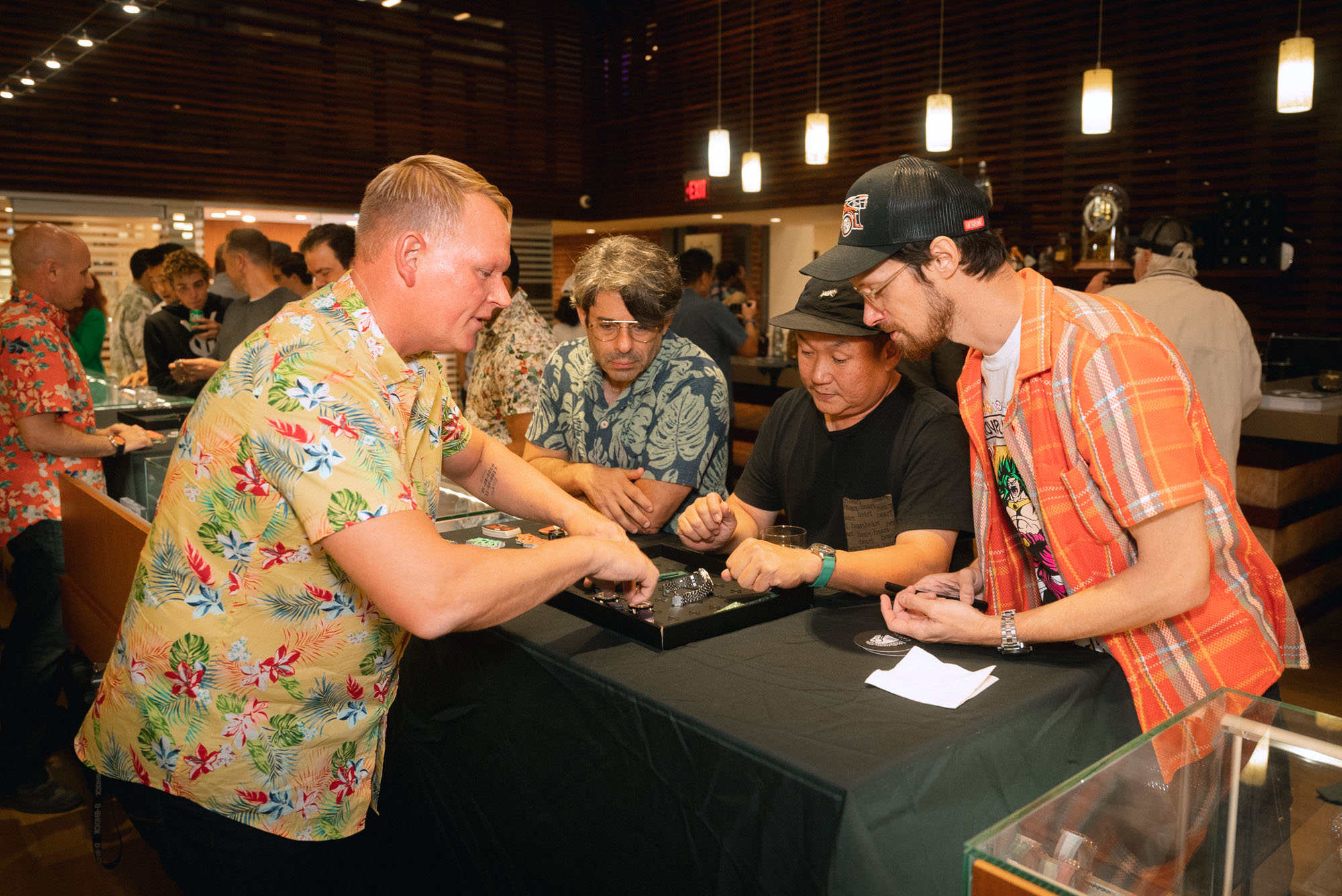
Luxury consumers approach AI-powered website chatbots with near universal scrutiny. “Let me see if I can mess with it,” is a common response to being greeted by an obviously automated welcome line in a pop-up chatbox. Many luxury brands and retailers have launched persistent windows on their websites that invite consumers to interact with an AI sales bot. The utility of these services is mixed, but everyone seems to agree that they are nothing more than a conflated search feature. Since the dawn of the internet, the luxury watch industry has dreamed of websites that are like automated selling points for consumers. Managers dreamed that luxury brand websites would be like shoppable catalogs that would increase sales and decrease the cost of marketing. It didn’t work out that way. Even if you can purchase a luxury watch online with ease, many people still prefer to do the interaction in person, with a human being in front of them. Even online, a lot of luxury watch buyers would rather get on the phone with a retailer as opposed to performing a cold remote transaction online. This is especially true with companies that a buyer has not yet done business with in the past. What is at the core of consumers wanting to engage with a person?
People generally want to buy expensive objects from other people. There are times when the transaction itself has therapeutic, even romantic value. Consumers might want to be seen splashing down a lot of money, or might enjoy the reassurance from another human that the luxury item flatters them and sends the correct social signal. The wonderful diversity of luxury goods that perform the same task allows these items to perform a self-expression task. That you wear a watch signals that you like to know the time. Which watch you choose to perform this task speaks a lot more about you. If you went out of your way to acquire an entirely impractical and expensive means of telling the time, then such details evoke an even deeper and more compelling story about the wearer. Wristwatches are easy to imbue with a huge volume of social meaning, and the variety out there allows wearers to signal very nuanced social and status signals depending on the particular watch they choose to wear. Oftentimes, this delicate psychology between humans begins at the purchase point.
Imagine the following situation, which in one form or another occurs in the wristwatch retail settings frequently. A man is browsing a luxury watch store and is being helped by a human sales staff member. The salesperson is an engaging and probably attractive woman in this example. He selects something to try on, and upon sampling the watch on his wrist, the salesperson says to the customer, “Oh, I really like that one on you. It makes you look good.” Whether or not the statement is authentic, it can have a profound effect on the man. Often, at the point when a man can afford an expensive watch, he is also technically past his reproductive prime. The statement by the salesperson addresses his insecurity about getting worse-looking with age. He wants to retain a degree of sex appeal. He is looking for ways to enhance a waning sense of personal confidence. Maybe that is why he is browsing for a luxury watch in the first place. If wearing this object can increase his appeal with women like that, it is certainly worth the cost he deduces. The flattery, whether fabricated or earnestly spontaneous, is cemented in the man’s mind. He not only associates the watch with feeling more attractive now, but he can also specifically remember the compliment he received from a woman while wearing it.
You might argue that in a synthetic sense, AI tools can easily replicate such an interaction. That’s true, but only in a synthetic, remote sense. Humans want compliments and to be noticed by other humans. Machines may simulate that process, but a compliment from software will always feel like empty calories. A few bites might get you by for a bit, but ultimately, you will starve if you rely on synthetic emotional satisfaction. Humans are designed to need it from other humans. Until a machine can convincingly replicate the above salesperson and customer scenario in the real world, no virtual instance of flattery will reliably be enough to stimulate ongoing luxury purchase behavior. I think this is an important point to make because sales firms will promise business leaders that the exact opposite is true. Technology firms will attempt to convince businesses that sales can and should be outsourced to AI, and that LLMs can navigate complicated sales processes and challenges better than humans. In some limited instances, they might be right, but I suspect that most of the time, humans will “ferret out” the presence of AI and demand authentic human interactions.
AI Luxury Customer Service Features Will Need To Remain Hidden & Deceptive
This leads me to the next point, which is that the inevitable experimentation with AI for customer services and sales purposes will have to remain discreet and deceptive. The appeal of having AI do what a paid human might otherwise do is too compelling for businesses not to try. There will be no shortage of “digital messiah” firms that promise retailers can increase their sales performance while lowering their cost of doing business (while also being able to sell 24 hours a day). Many watch brands and companies in the online luxury retail space are already experimenting with them. My belief is that they will only succeed when they trick humans into thinking they are talking with another human. Luxury is the industry known for consumers who want to travel to distant high street stores in foreign cities, just to sit and drink champagne while a staff member puts on white gloves prior to showing them sparkling treasures.
Humans who spend a lot of money on an experience want other human witnessing or take part in that experience. Perhaps not all of the time, but enough of the time that suspected AI intrusion will be seen as an unwelcome violation of the luxury purchasing experience. It is not contested that the rich purchase luxury goods to feel good as opposed to increasing their functional capabilities. That luxury supercar isn’t being purchased because the driver can get a lot more done in a day by driving 200 mph from point A to point B. Similarly, a very expensive watch does not necessarily keep you on better time than a modestly priced luxury watch. The reason why someone purchases these objects is to feel good with and around other humans. Or perhaps to simply feel good as a human themselves. For the most part, the introduction of an automated system designed to replace an actual human will probably be rejected by the human buyers because it removes from the experiential goals they have when buying or owning luxury objects.
It will be interesting to see how far AI sales technology will go to trick humans, but trick humans it must in order to get their attention in a luxury sales environment. I think the more reasonable result to expect is that luxury retailers will quickly experiment with AI and then dismiss it. They will not want AI tools talking to humans. Rather, they will adopt AI as an information and strategy tool for sales staff. Salespeople will be able to receive real-time suggestions and information shares wit them via AI tools to help enhance their otherwise human conversations with customers. This is more than likely where AI will see impact in the luxury sales process. It will enhance sales efforts as opposed to replacing the human dynamic, which is at the heart of it.
Luxury Media Revolves Around Human Choices & Taste
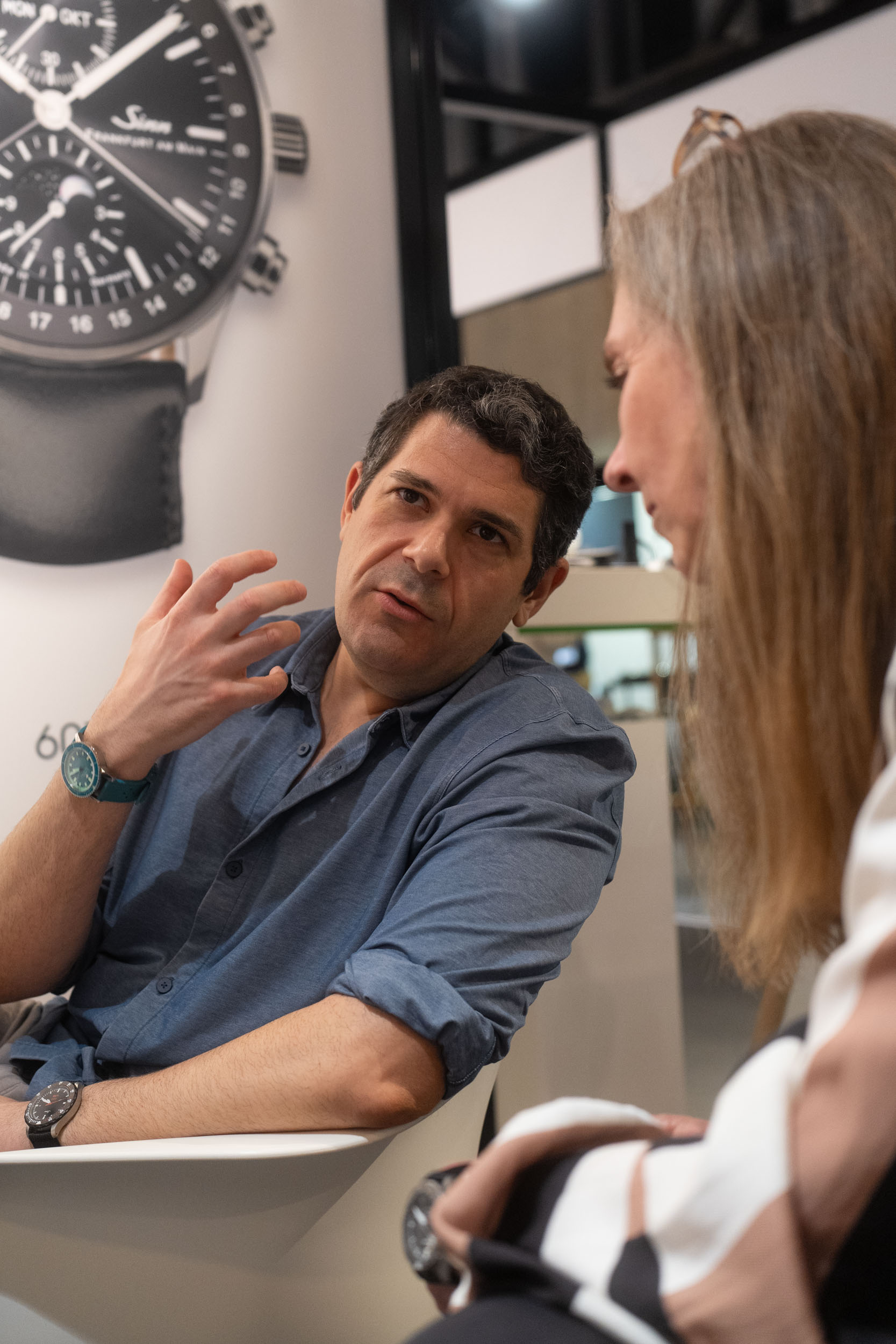
I’ve often said that while AI can probably describe a wristwatch better than a human can, it can’t tell you why you could share about that watch in the first place. Only humans can seem to do that. The watch-collecting hobby is really about people coming together to agree on why watches are cool or what makes them attractive. It isn’t about requiring specific tools that perform in a specific way. Artificial intelligence can parrot back why it thinks humans feel a particular way about a watch or any other object, for that matter, but the analysis ends there. Show AI an entirely new creation, and it will not have a human reaction; it will not make complex associations between aesthetics and the current state of human culture, nor will it render a taste-based opinion that combines the intellection with the emotional experience. Just as people want to wear watches made by people and sold to them by people, they want to get excited about watches in the first place from other people.
That requires a degree of perspective and curation. Human-led media is not just valued because of the authenticity of voice, but because of how it can sort and classify a subject area like wristwatches. Humans draw connections between watches and culture that are actually relevant and based on their perception of popularity and politics. Machines simply cannot do this right now because they have few tools to understand what associations are intellectually and aesthetically relevant to diverse human populations out in the world. Only niche, localized media can do that with any reliability.
The watch industry’s first foray with AI-powered media was the Instagram feed. Watch collectors heavily use Instagram and, at first, attempted to use it to introduce them to new watches, brands, and ideas. The opposite happened. The Instagram algorithm is designed to reinforce existing popularity. If something appears to be popular with an audience, the algorithm simply shares more of that with them. The problem is that humans look at media for novelty and variety. Reinforcement eventually begins to become hollow and boring. In my experience, enthusiasts of a topic use media to be exposed to new ideas and even challenged. The media should expand your understanding of a topic while introducing you to things that you may not like at first. The Instagram algorithm ended up showing people the same small number of Rolex and other watch models over and over again. It not only didn’t help introduce people to enough new watches, but it also made the incredibly large hobby of wristwatch collecting seem overly narrow.
Most other experiments with AI-powered watch media have been equally unimpressive. The logic makes sense. If people want watches designed by and created by humans, sold to them by humans, and to be worn around other humans, then it tracks that these same people would also want to learn about and discuss those watches with other humans. AI may provide powerful tools to help collectors understand how watches work, their history, and their features, but AI will not replace the practice of explaining which watches are worth paying attention to and the conversations enthusiasts should be having about them. Truly, only dedicated humans who spend years on this topic are capable of doing that.

AI Design For Luxury Goods Will Always Need A Human Filter
In my opinion, the biggest impact AI currently has on the watch and luxury industry is design. It isn’t that AI is replacing humans, but rather that human designers are increasingly relying on AI and automated systems to do a lot of the heavy lifting of design and experimentation. There are both positive and negative outcomes of this experimentation – that is to be expected. There is simply no going back when it comes to generative AI being a standard tool for all types of designers. AI provides creatives the quick ability to imagine new things and see how they look or make the designer feel. In theory, a human designer should experiment with AI tools for inspiration only. That inspiration then gives the human designer a more concrete direction for human design to take place. Again, that is the ideal scenario.
The danger is when the human designer offloads too much of the design work to AI. Generative image software is great at creating suggestions and ideas, but there are moral implications of having AI do all the work and also select the outcome. Designers aren’t wise to let AI do all the work, but rather lazy. AI just offers examples in an attempt to satisfy the human user. The software has no taste or concept of what culture wants tomorrow. That is a distinctly human choice to make. At the least, consumers have the expectation that a human behind the scenes is making such decisions, and not software that effectively chooses randomly. Humans thus provide a curation element that we are wisely not comfortable trusting AI with.
AI is particularly good at mash-up designs and combining unrelated worlds. This is actually an area of extreme relevance and interest for the watch space. Watch companies must often blend their design DNA with that of other companies, and consumers often like products that combine the appeal of multiple genres. AI is actually excellent when it comes to experimenting on these levels because it is the perfect blender. In that sense, I actually encourage humans to experiment with generative AI when it comes to designing watches for a variety of interesting commercial needs. With that said, there is a huge danger if brands remove the human from the process. This is probably a good point to mention a previous April Fool’s Day article where I contemplate how a modern luxury watch brand might use AI.
Generative AI is not for all designers or ideas. It is, however, an empowering technology that will likely have a very positive impact on watch design practices now and into the future. It will be just as impactful as the presence of AI on the logistics and manufacturing side of the watch industry. My hope is that using AI will help increase efficiency and thus decrease the cost of running a luxury watch company. That will at least help brands feel more comfortable about an uncertain future when global demand for luxury watches and other goods remains factious and historically unstable.
In summary, I believe that the luxury industry has very little to worry about when it comes to AI disruption, but that it should also reject the idea that humans can be replaced with AI. Consumers do business with luxury brands specifically out of a desire to be seen by other humans and to communicate with them. Tools that help staff do their job better will be welcome. Tools that seek to remove humans from the customer experience will be rejected and will ultimately hurt the reputation of firms that overly rely on them. AI is a definite part of the future, but it will not change too much of the fundamentals of what it means to manufacture, sell, or wear a watch.