
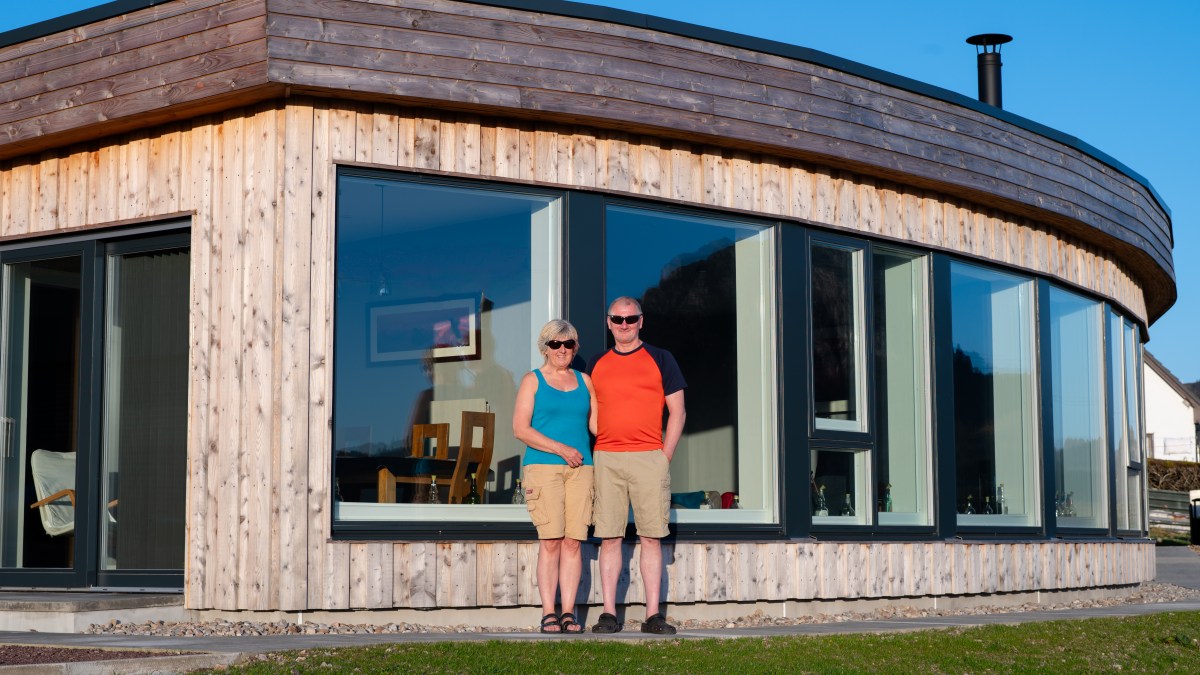
Anne Buchan and her partner, Jim Williamson, had always dreamed of retiring to the west coast of Scotland. The couple previously lived in a semi-detached home in Peterhead, an east coast hub for the oil and gas industry in Aberdeenshire, where Buchan worked as a civil engineer and Williamson as a rope access specialist, painting and replacing pipework while hanging in the air. Four times a year they would go west and indulge in their passion: cold-water scuba diving. “It’s so scenic, and the weather is better over here,” Buchan explains.
Contrary to popular perception, scuba diving on Scotland’s west coast provides underwater scenery to rival the tropics. “It’s not dark, miserable and grey, it’s absolutely stunning,” Buchan, 64, says. “The fish you see, it’s not just cod, haddock, sole. You’ve got a variety of things that are quite colourful, like lumpsuckers, scorpion fish, pipefish. We get nudibranchs, which are little slugs, lobsters, a variety of different types of crabs, crayfish, dead man’s fingers [a type of coral] and anemones. We get maerl too, which is a coral-like seaweed. You could be in the Red Sea, with all the different colours.”

“Finding a plot of land on the west coast is quite hard, because almost everybody wants to live there”
ROB WILKINSON/BOB TEDDY IMAGES
As working from home became the norm during the pandemic, the couple accelerated their plans to move west and in 2020 started looking for a plot to build on. “Finding a plot of land on the west coast is quite hard, because almost everybody wants to live there since Covid — it’s become very popular,” Buchan says.
She scoured local authority portals to see where planning permission had been granted in principle or where applications had been renewed but not yet built on. “I’d contact the applicant and ask if the build was going ahead, or if the plot was possibly for sale. I’d indicate we were interested. So if something did come up, they would remember me.”
In 2021, a solicitor contacted her about a croft comprising two half-acres of land for sale on the Lochcarron estate, near the village of Plockton, due east from Skye and about two hours northwest of Fort William by car. Under crofting rules, however, the buyer would have to either keep animals or grow vegetation — and although you could build a house there, the land was never yours; the estate owner could take it away any time if you hadn’t complied with the regulations. “Obviously we weren’t too keen on that,” Buchan says.
• 16 of the most beautiful places in Scotland
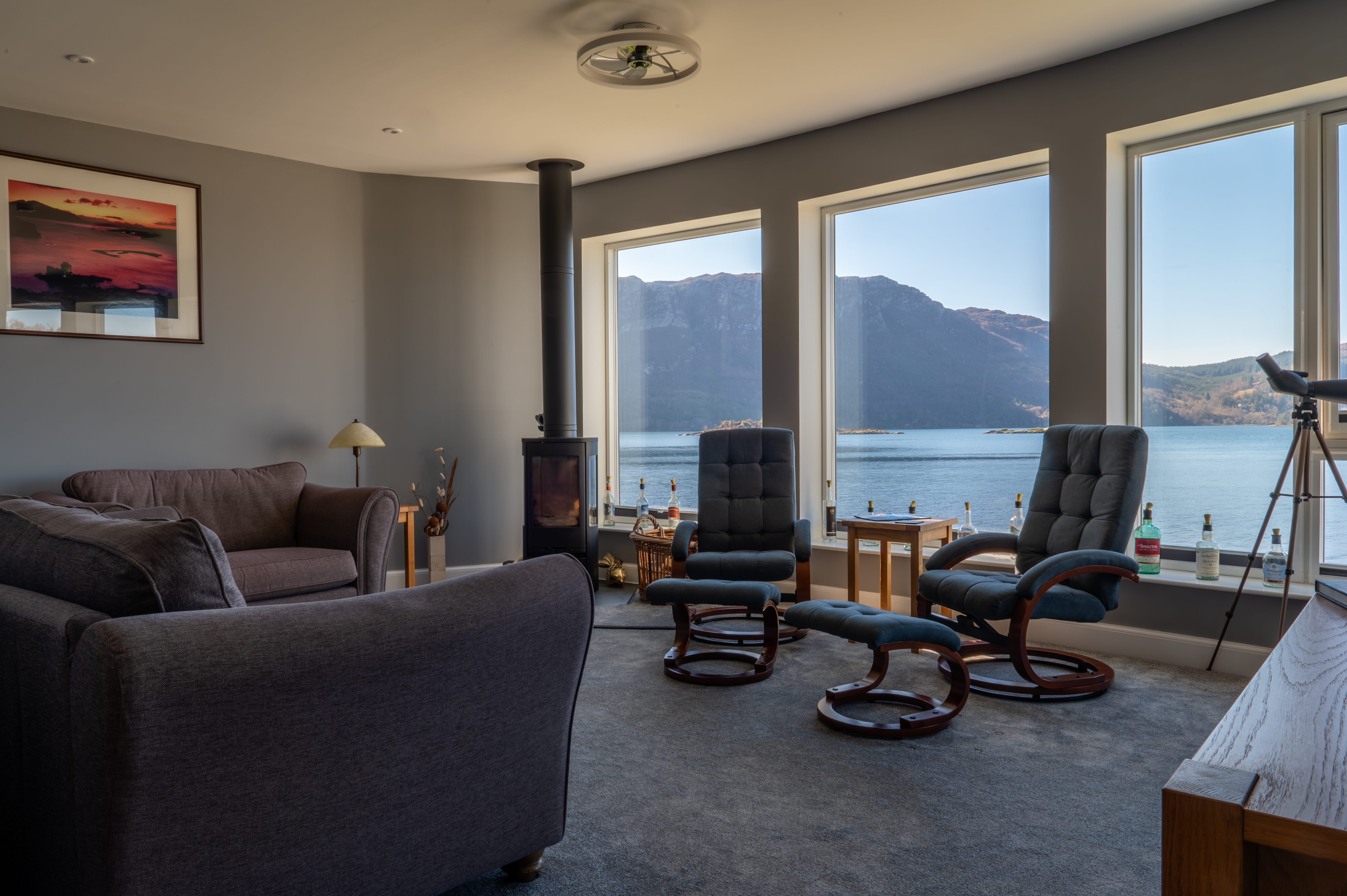
The couple’s cosy home has a wood-burner, underfloor heating, triple-glazed windows and ground-mounted solar panels
ROB WILKINSON/BOB TEDDY IMAGES
The couple declined. But six months later, the solicitor contacted her again and said he had found a buyer for one of the two plots: a crofter with livestock. If they “decrofted” the other half of the land on the shore, would she be interested? “We were delighted,” Buchan says.
They paid £100,000 for the land, which had planning permission for a four-bedroom, 1,600 sq ft stone house with a turf roof and a bow-fronted window. The couple then approached the Highlands-based architect Fraser Stewart and asked if he could alter the plans to make the house smaller — two bedrooms, a home office and 1,200 sq ft — and to rearrange the layout so the main bedroom had a loch view, as well as the living and dining room.
Buchan wasn’t keen on a turf roof — she preferred sedum (aka stonecrop), which is more colourful. And to save money, the couple requested the cladding be changed from stone to Scottish larch.
The project started in September 2022. They first built a garage, which housed the infrastructure for the electricity and water supply. They then built a two-bedroom log cabin to live in during the build. “I didn’t want to put a caravan there, as I think they look ugly,” Buchan says.
• My weekend in a billionaire’s wild Scottish playground
“We watch the sunrise in the morning, and sit in the lounge and watch the sunset in the evening”
ROB WILKINSON/BOB TEDDY IMAGES
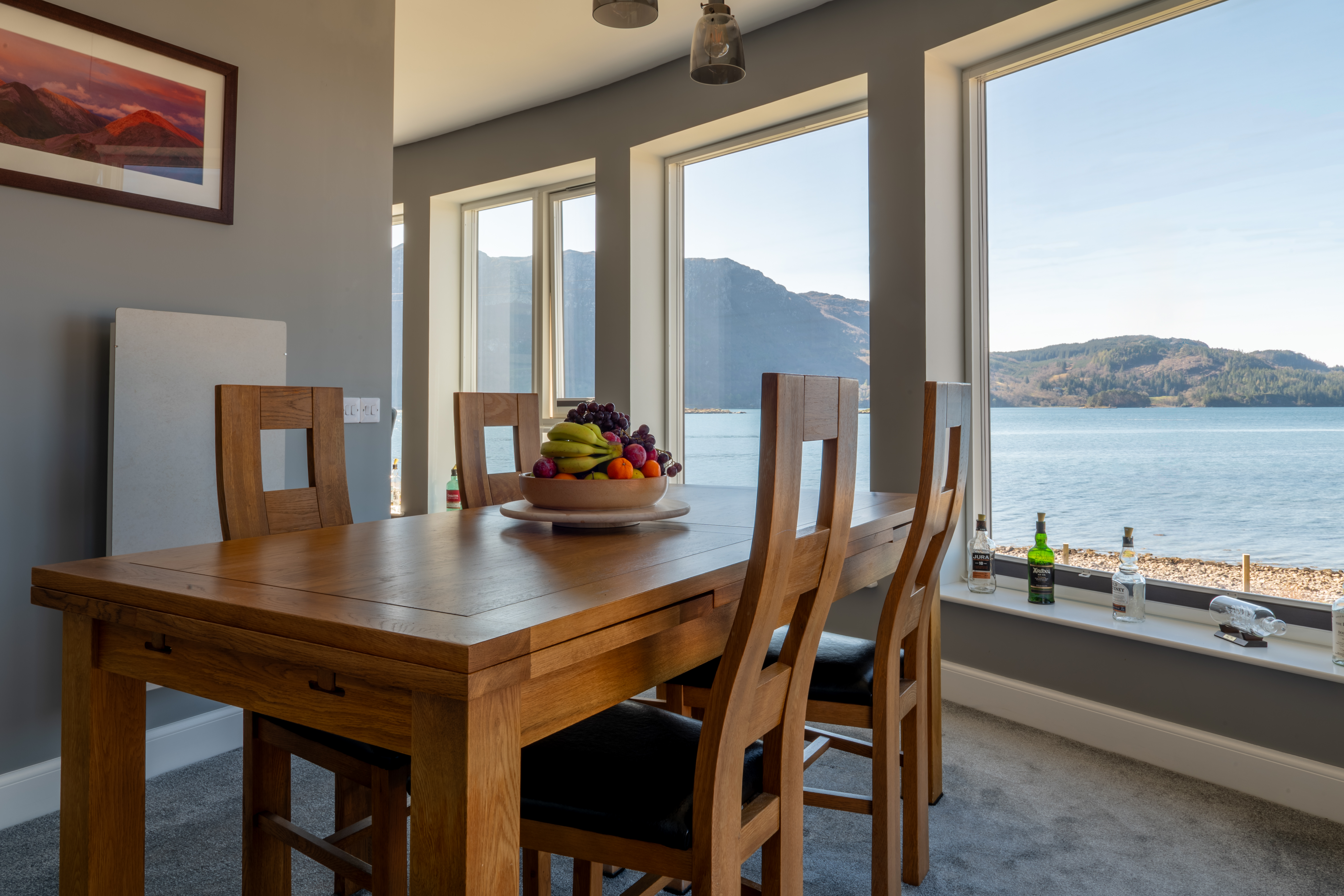
“Although the house isn’t big, having the large windows and panoramic view makes it feel very open”
ROB WILKINSON/BOB TEDDY IMAGES
The prefab timber-frame house, delivered in January 2024, was supplied by Fleming Homes, who made it windtight and watertight in three weeks. The rest of the house was completed by September 2024. The budget came to £330,000. Buchan reckons they saved £15,000 by buying the bathrooms from B&Q and doing all the painting and decorating themselves.
The house is toasty, thanks to a wood-burner, underfloor heating, triple-glazed windows and ground-mounted solar panels keep the energy bills down. “Often the house is 25C inside with no heating at all, [just] from the solar gain,” Buchan says.
But surely it rains all winter on the west coast? “It does when you’re in Fort William, Oban or Glasgow. But not in Plockton,” Buchan adds.
• ‘We left our Essex housing estate for a lochside life in Scotland’
Plockton is warmed by the Gulf Stream and dotted with palm trees. “It’s renowned for its microclimate,” Buchan says. “While the whole country was in darkness over January and a lot of February, we were getting sunshine most days. I think it has some of the best weather in Scotland. All the bad weather comes off the Atlantic and hits Skye first before it gets to us. Very often it’s blown out by the time it gets here.”

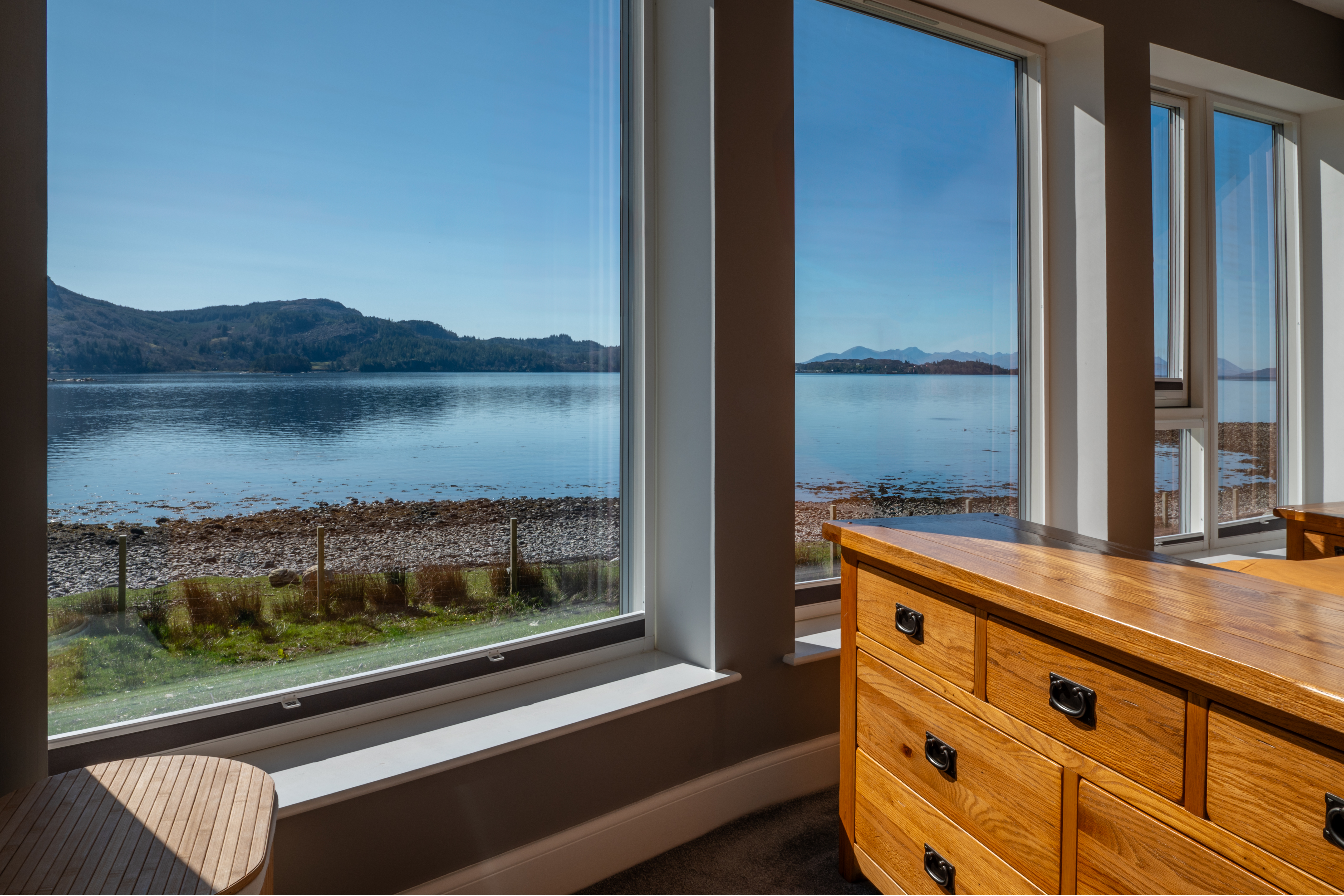
The property looks out across Loch Carron
ROB WILKINSON/BOB TEDDY IMAGES
How does it feel now that they’re settled? “It’s paradise,” Buchan says. “Although the house isn’t big, having the large windows and panoramic view makes it feel very open. We can lie in bed and watch the sunrise in the morning, and sit in the lounge and watch the sunset in the evening.”
Buchan has retired since moving from east to west. Before she did, she found her job a lot less stressful, staring at the loch and watching the wildlife. “The other day I just got my kayak and went out on the water for a couple of hours. We get otters here. There was a humpback whale and dolphins around. I go swimming and diving all year. The diving community is really tight. Friends who I haven’t seen in ages come up here to dive because it’s so pretty.”
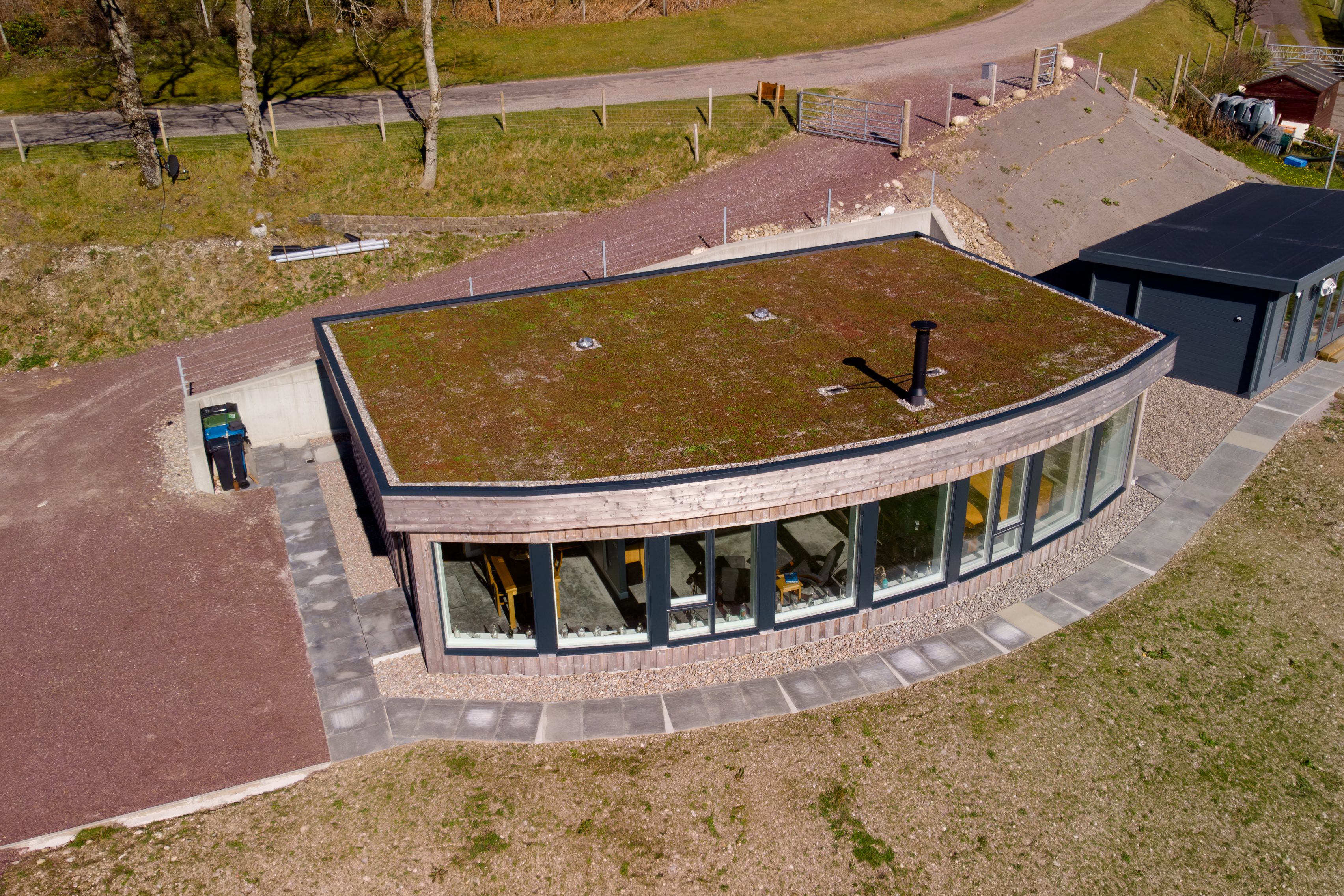
An aerial view of Buchan and Williamson’s home
ROB WILKINSON/BOB TEDDY IMAGES
Williamson, 56, has switched jobs since the move. “In Peterhead, his work was hard going. He was often working at quite a height exposed to the elements. He works as a HGV driver now. His health has improved. He actually enjoys his work most of the time, because he’s driving around really scenic areas — Skye, Plockton, Glenelg — and meets people. They’re generally friendlier on the west coast.”
Although the couple’s new home is remote, it has a strong sense of community: they invited neighbours for Hogmanay and had 30 in the house. “In the nine years I lived in Peterhead we only knew the names of three of our neighbours and rarely spoke to them. Here we know everyone’s name.”
To borrow a phrase from the Village People: go west, life is peaceful there.
The next National Homebuilding & Renovating Show is on March 19-22 at the NEC, Birmingham. Free tickets for Times readers here: homebuildingshow.co.uk/the-times