
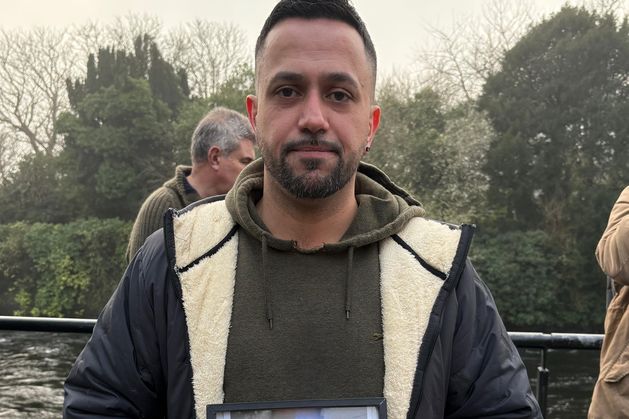
Joe Loughnane, brother of the late Adam Loughnane, asked the Public Petitions Committee to implement ‘Adam’s Protocol’
Joe Loughnane, the brother of Adam Loughnane who died by suicide in Galway in February 2025, presented a detailed report to the Oireachtas Public Petitions Committee calling for the establishment of dedicated Mental Health services in Emergency Departments and 24/7 crisis centres.
Galway man Adam Loughnane died by suicide on February 11, 2025 after walking away from the emergency department at University Hospital Galway (UHG), where he had sought help.
“I wish I wasn’t here,” Mr Loughnane told members as he opened his presentation. “I wish instead that I was reading some long, whimsical text from Adam, sent into the family group chat.”
The 67-page report, forming the basis of a campaign called Adam’s Protocols, outlines the days and hours leading up to Adam’s death. It also includes current hospital data, financial information on mental-health provision, international comparisons, campaign objectives, and details of the HSE external review into Adam’s case.
Adam’s Protocols, he said, reflect more than a decade of public demand for improved mental-health supports.
“There were consistent calls across all stakeholder groups – people with lived experience, HSE staff, NGOs, advocates and professionals – that Emergency Departments are not appropriate settings for those in a mental-health crisis, and that Mental Health A&Es and 24/7 Crisis Care Centres are essential,” the report states.
It isn’t the first time families have braved the seats of the committee to share how services failed their loved one, Mr Loughnane told the Irish Independent.
“The actual thing we’re proposing, this idea of a dedicated space for people in a mental health crisis, is not new and has been proposed previously in Ireland by other campaign groups and by families bereaved by suicide.”
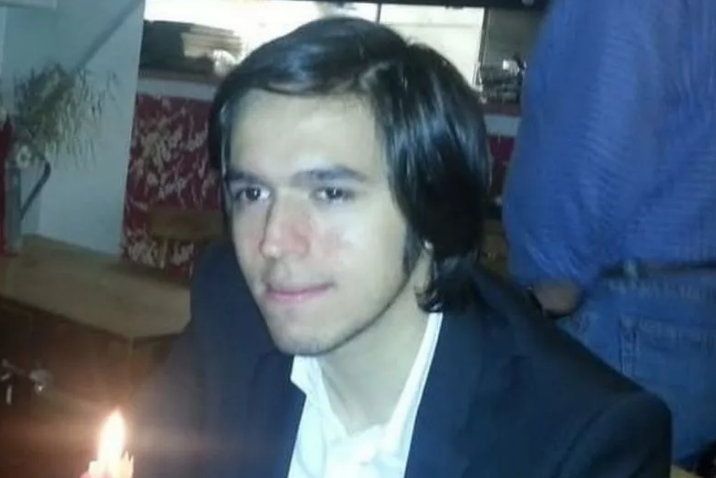
The late Adam Loughnane.
Additionally, Mr Loughnane argued that those in acute distress require environments designed to minimise triggering, chaotic or traumatising experiences, not general A&E units already under severe pressure.
“Our campaign has pointed out that Adam’s death was not the fault of any one staff member; the system failed him,” he said. “The medical professionals who tried to help Adam are overworked, underpaid and understaffed.”
Before the committee, he described several “errors” in Adam’s care on the night he attended A&E, which he was advised to go to by clerical staff.
Triage waiting times were 50–60 minutes, and more than 100 patients were in the department when Adam, categorised as “Category 2 – very urgent”, was asked to wait in the general area.
Staffing shortages meant the Psychiatry Liaison Team, responsible for managing suicidal presentations across departments, was not available. Additionally, Adam’s departure from the department was not formally recorded.
“Adam’s absence from the ED remained undiscovered and only became apparent when had been brought back to the ED by ambulance,” Mr Loughnane said. “The nursing staff tried, unsuccessfully, to enter his details on their registration system and found the information already logged.”
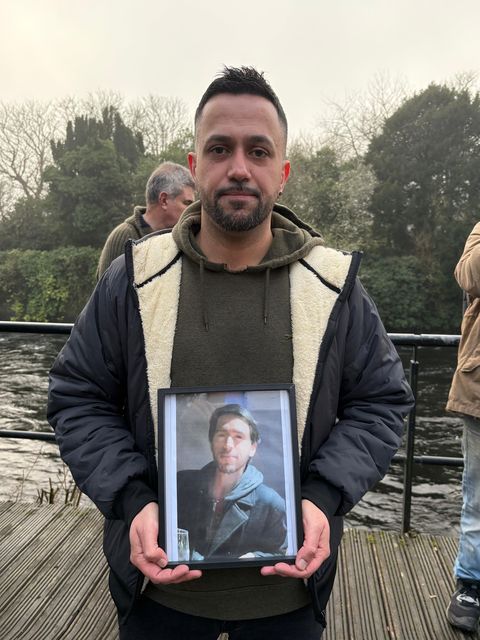
Joe Loughnane with a photo of his late brother Adam.
Galway East TD Albert Dolan expressed support for the campaign’s financial proposal, which estimates that only €120 million would be required to establish a designated mental-health A&E in every county.
Committee members asked few questions, with the Cathaoirleach saying there was “fundamental agreement” on the need for reform and a destigmatisation of mental health.
Also addressing the committee was Professor Louise Doyle, head of mental-health nursing at Trinity College Dublin, who has spent two decades researching suicide, self-harm, and crisis-care experiences.
Her early research found that patients presenting with acute psychological distress often endured long, distressing waits in noisy, crowded environments. “Many expressed a desire to leave before being seen, especially those who attended alone,” she said.
She noted that privacy concerns, negative staff interactions and unclear post-discharge supports further underscored the need for specialist, co-located mental-health emergency units.
“The emergency department will always form part of the mental-health crisis landscape,” she said. “But it should not be the only door. And, crucially, when people do walk through that door, the experience must be safe, compassionate and responsive.”
“However, for many, the healthcare responses in the emergency department were suboptimal.”
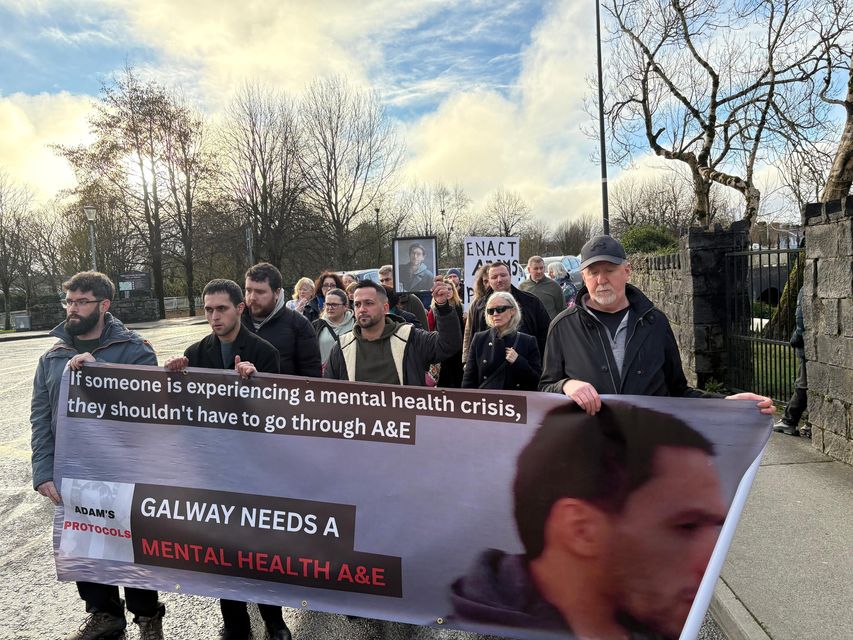
At a demonstration in Feburary 20025, the crowd gathered in front of UHG before making their way towards the canal, which was Adam’s last walk.
“Co-location is the best scenario because there is almost always going to be a requirement for a medical assessment, medical triage, first but it is then a quick follow-up into a mental health specialist unit.”
Earlier this year, Sinn Féin brought a motion before the Dáil Éireann calling for dedicated mental-health emergency rooms, 24/7 specialist psychiatric care, and properly funded community-based supports. The motion passed, with calls for clear implementation timelines.
As Mr Loughnane’s hearing concluded, sitting Cathaoirleach Dublin Fingal West TD Louise O’Reilly said the committee would write to the Health Minister seeking answers to the outstanding questions.
In response, he told the Irish Independent: “We’ve already had stock responses back from the HSE and from the ministers about the range of services that are currently available for people who are in suicidal distress.”
“I don’t want it to be them going back saying we have these other services in place already and hopefully in the future we can get around to what you’re proposing.”
“It needs to be done now.”
Funded by the Local Democracy Reporting scheme.