
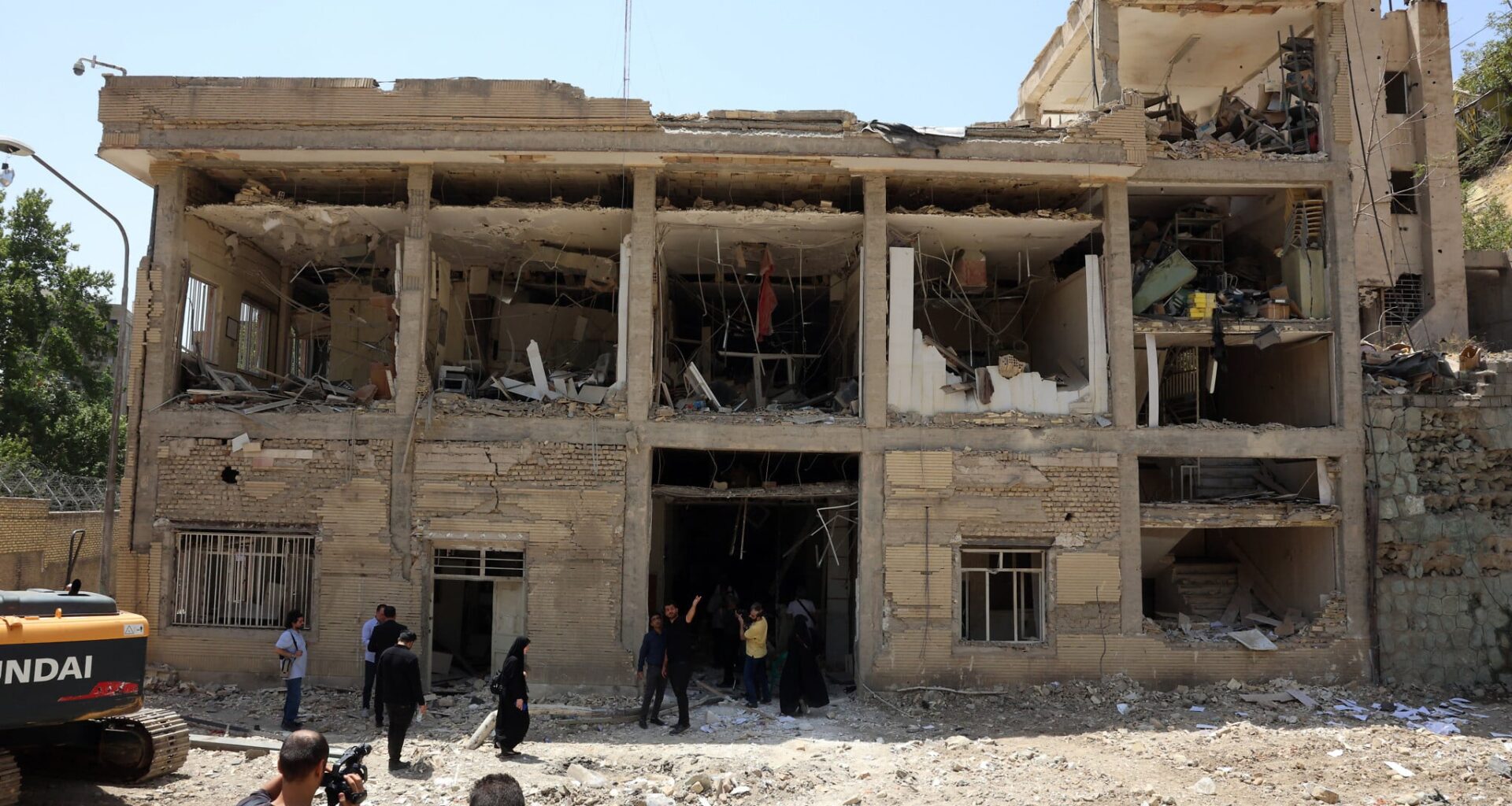
The head of a UN investigation said on Monday that an Israeli airstrike on a notorious Iranian prison last year was a war crime, and warned of risks of further repression by the Islamic Republic in response to the ongoing military campaign by Israel and the US.
Israel carried out what it said was a targeted strike at Tehran’s Evin prison last June during an air war with Iran. Iranian authorities have said more than 70 people were killed. The death toll could not be independently verified.
The prison, which is located in northern Tehran, is known for housing political prisoners and foreigners in harrowing conditions.
It has reportedly been further damaged by nearby strikes in the current round of fighting, raising fears for the detainees.
“We found reasonable grounds to believe that, in carrying out the airstrikes on Evin Prison, Israel committed the war crime of intentionally directing attacks against a civilian object,” Sara Hossain, chair of the Independent International Fact-Finding Mission on Iran, told the UN Human Rights Council on Monday.
Get The Times of Israel’s Daily Edition
by email and never miss our top stories
By signing up, you agree to the terms
Hossain’s report was based on interviews with victims and witnesses, satellite imagery and other documents.
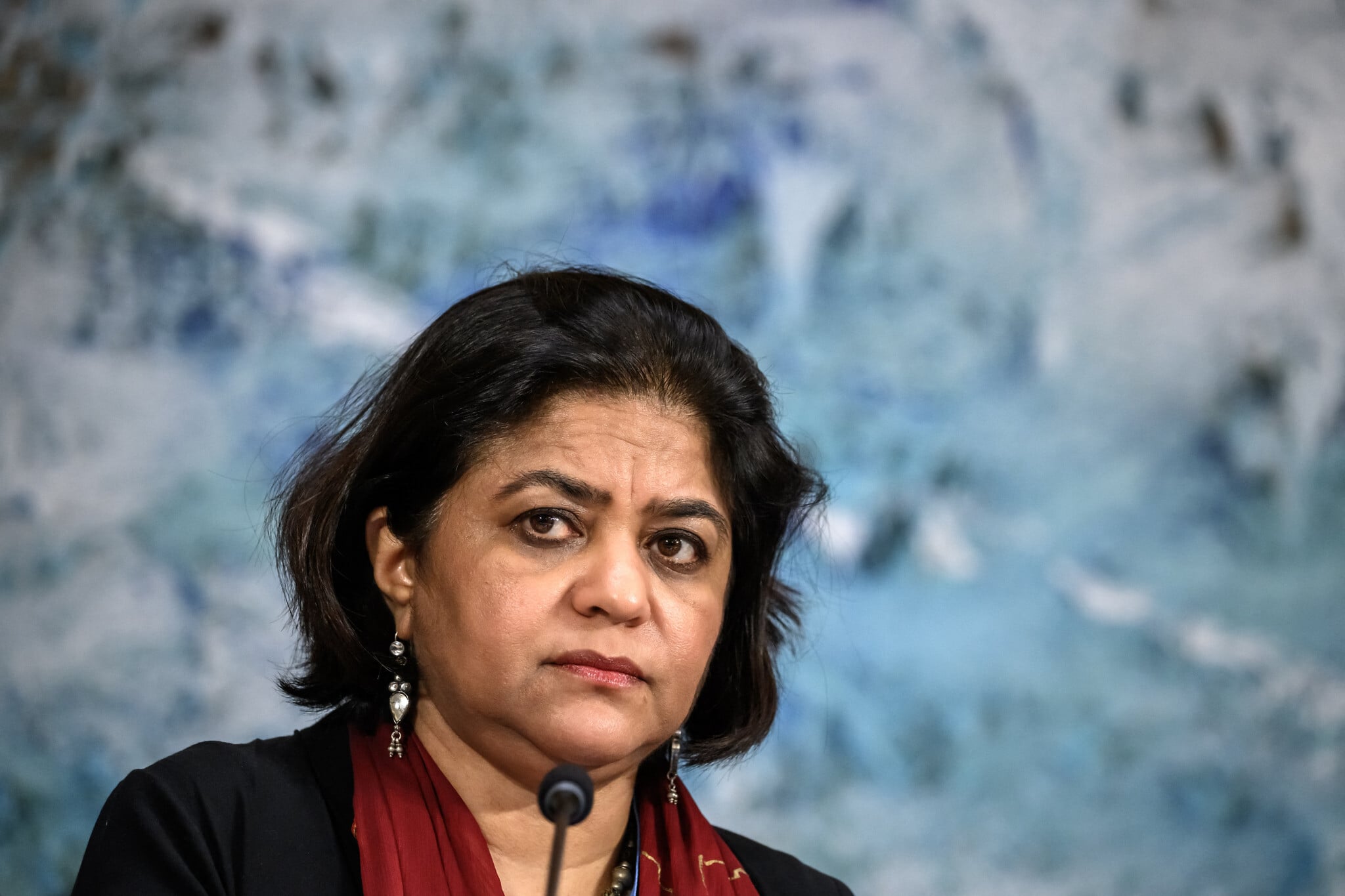
Chair of the United Nations’ Independent International Iran Fact-Finding Mission Sara Hossain after delivering her speech before delegates at the UN Human Rights Council on March 16, 2026. (Fabrice COFFRINI / AFP)
The Israel Defense Forces said in a statement to Reuters on Tuesday that it carried out the 2025 targeted strike on the facility where, it said, intelligence operations were taking place against Israel, including counter-espionage.
“The strike was carried out in a precise manner to mitigate harm to civilians imprisoned within the prison to the greatest extent possible,” the IDF said.
In August, Human Rights Watch alleged that the Israeli strike was “an apparent war crime,” while also accusing Tehran of harming and disappearing prisoners after the attack.
Human Rights Watch said the attack was “unlawfully indiscriminate” and that there was no evidence of an advance warning or a military target before striking the prison complex, which held an estimated 1,500 prisoners.
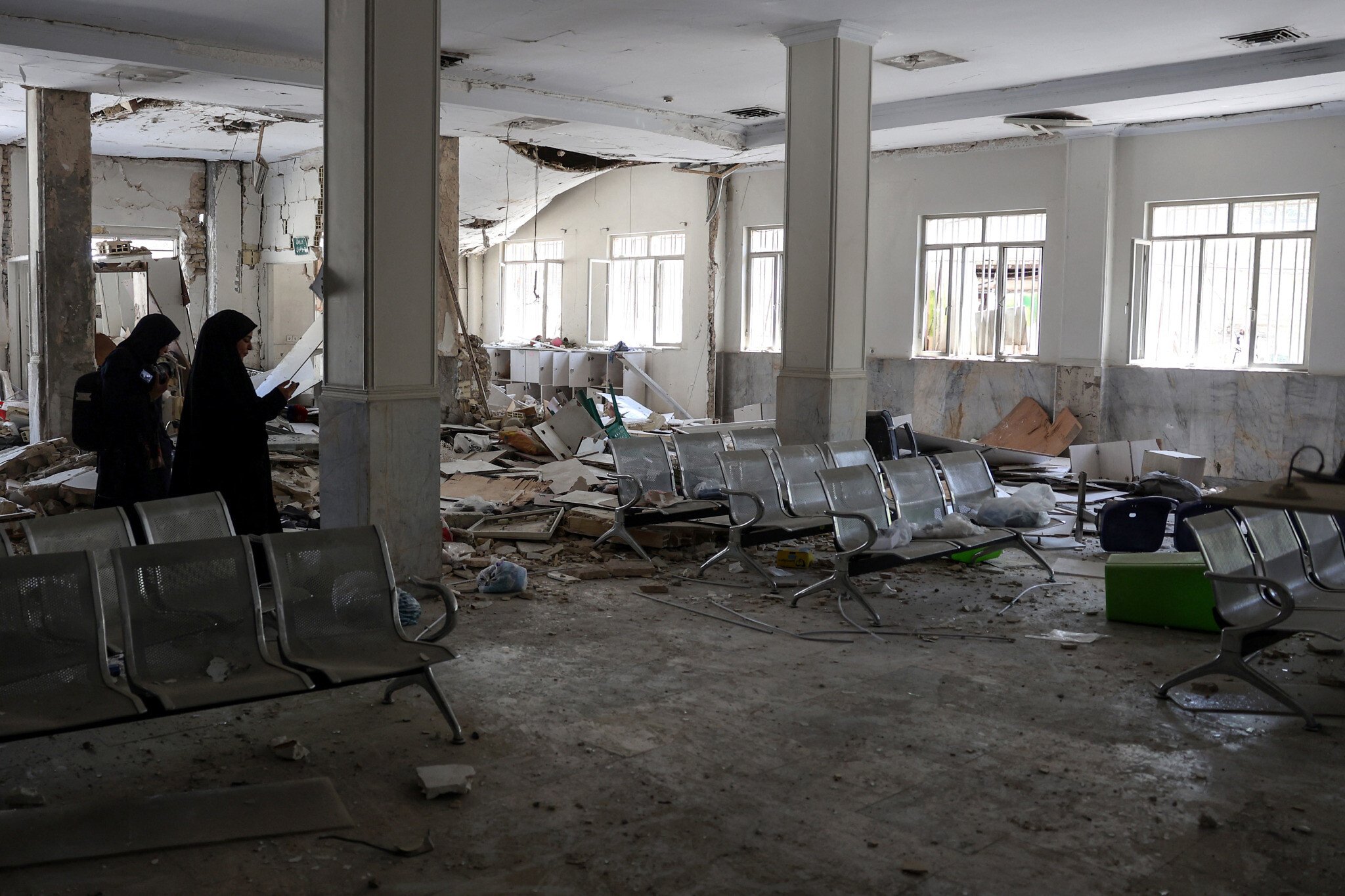
Two women walk amidst debris at the Evin prison’s visitor room after Israeli air strikes the previous month, in Tehran, on July 1, 2025. (AFP)
Evin Prison, located in an upscale neighborhood on Tehran’s northern edge, held men and women in its general wards, as well as hundreds of others believed to be in its secretive security units under interrogation or in solitary confinement, according to activists.
The prisoners include protesters, lawyers, and activists who have campaigned for years against Iran’s authoritarian rule, corruption, and religious laws.
The strikes hit Evin during visiting hours, causing shock and panic among families of the prisoners, who were left scrambling to determine their loved ones’ fates.

Rescuers search through the rubble of a damaged section of Evin Prison following an Israeli strike the day before, in Tehran, Iran, June 24, 2025. (Mostafa Roudaki/Mizan News Agency/AP)
Visiting halls, the prosecutor’s office, and several prisoner wards were heavily damaged, according to rights groups and relatives of prisoners. One missile hit the prison entrance, where prisoners often sit waiting to be taken to hospitals or court.
At the time, Defense Minister Israel Katz said only that a missile was fired at the prison gates amid a wave of strikes on “regime targets and governmental repression bodies.”
IDF Spokesman Brig. Gen. Effie Defrin said the same day that the strike was carried out “in a pinpoint manner, to avoid harm to those uninvolved.”
Potential for further crackdown
Hossain also condemned mounting civilian deaths in Iran amid the current conflict, and voiced concerns that the US-Israeli bombing campaign could lead Iran to crack down even harder on dissent, pointing to an increase in executions after last year’s strikes.
“The core lesson drawn from our investigations in this context is clear: external military action does not provide accountability or bring meaningful change. Instead, it risks intensifying domestic repression,” she said.
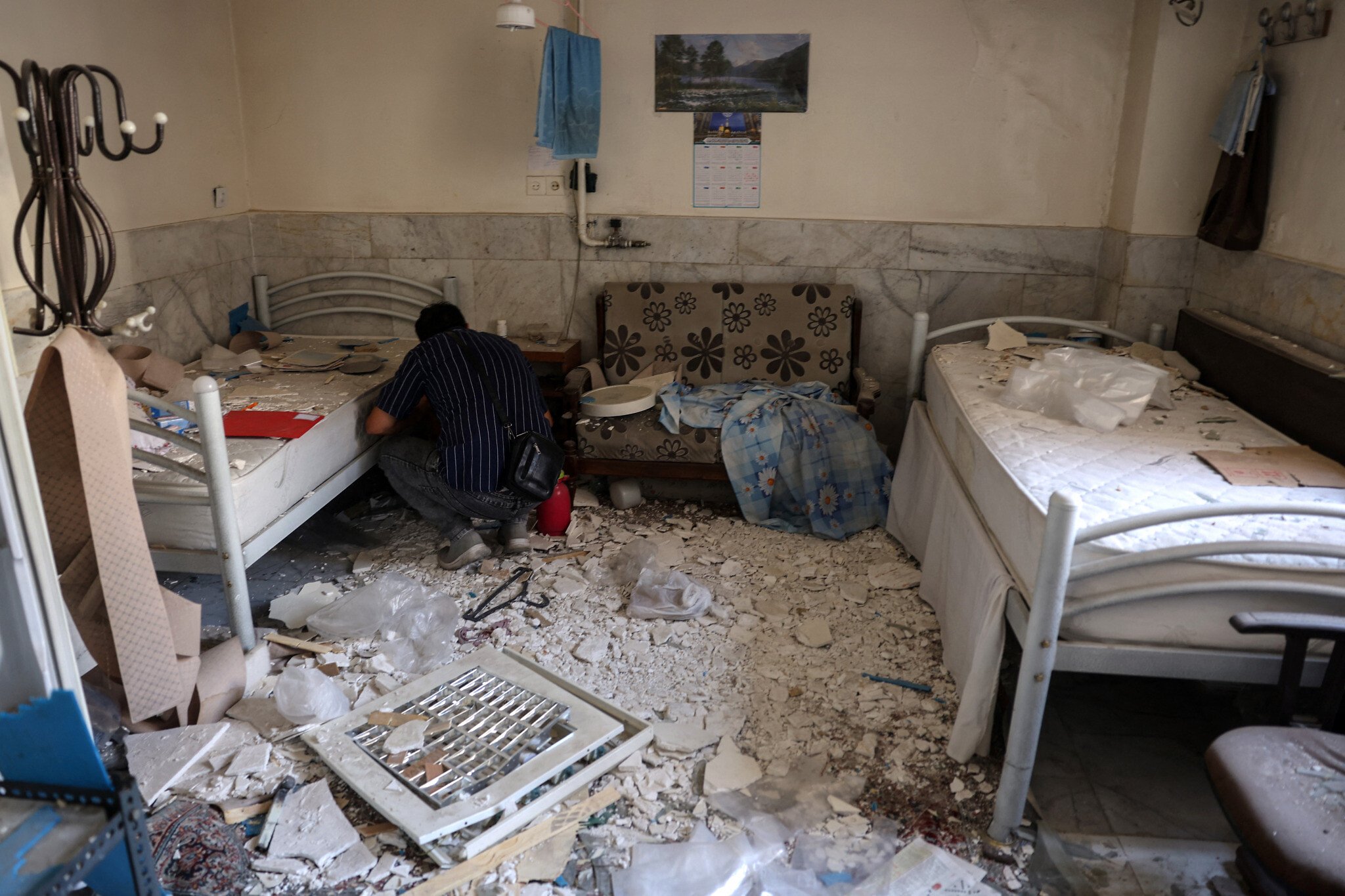
A man checks the debris at a room of Evin Prison’s hospital, after Israeli air strikes the previous month, in Tehran, Iran, on July 1, 2025. (AFP)
Mai Sato, a UN-appointed rights expert on Iran, also voiced concern about detainees, including those rounded up during mass protests in January.
Families have not been able to contact relatives, and food and medicines are in increasingly short supply in prisons, she said.
Iran’s ambassador to the UN, Ali Bahreini, called for condemnation of the US-Israeli strikes, which he said had killed more than 1,300 people in Iran.
Israel is not currently a member of the UNHRC but, like all United Nations member states, has informal observer status and a seat in the council meeting chamber. However, last year it announced it was halting engagement with the council, accusing it of “protecting human rights abusers” while “demonizing” Israel and “propagating antisemitism.”
You appreciate our wartime journalism

You clearly find our careful reporting of the Iran war valuable, at a time when facts are often distorted and news coverage often lacks context.
Your support is essential to continue our work. We want to continue delivering the professional journalism you value, even as the demands on our newsroom have grown dramatically during this ongoing conflict.
So today, please consider joining our reader support group, The Times of Israel Community. For as little as $6 a month you’ll become our partners while enjoying The Times of Israel AD-FREE, as well as accessing exclusive content available only to Times of Israel Community members.
Thank you,
David Horovitz, Founding Editor of The Times of Israel