
TEHRANI/JERUSALEM
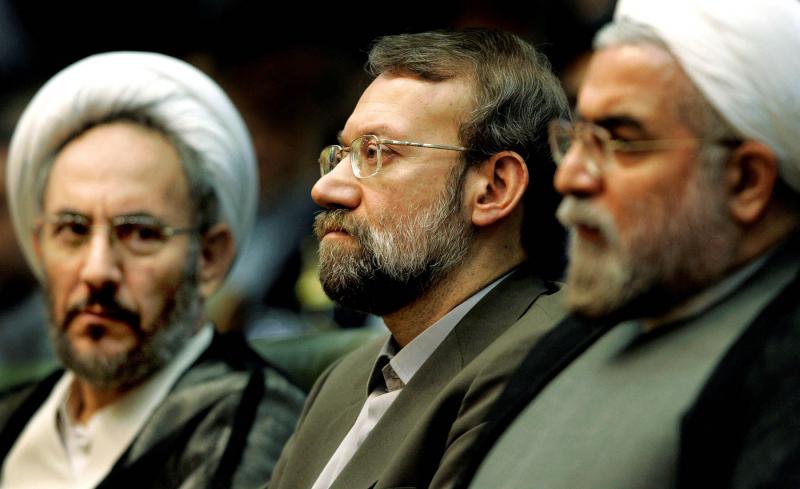
Iran’s security chief Ali Larijani was killed by Israel, the government confirmed on Tuesday while the war raged with no prospect of de-escalation in sight.
Larijani was the most senior figure targeted since the US-Israeli war started. He was widely viewed as one of Iran’s most powerful figures and a confidant of slain Supreme Leader Ayatollah Ali Khamenei and his son and successor, Mojtaba.
In 2025, after Iran’s last war with Israel and the US, he was appointed head of Iran’s top security body, the Supreme National Security Council coordinating defence strategies and overseeing nuclear policy.
He later became increasingly visible in the diplomatic arena, travelling to Gulf states as Tehran cautiously engaged in nuclear negotiations that were ultimately scuppered by the war.
“Larijani is a true insider, a canny operator, familiar with how the system operates,” said Ali Vaez, the International Crisis Group’s project director for Iran, said before the Middle East war began.
His death was confirmed by Iran’s Supreme National Security Council, which Larijani led as secretary. Larijani’s son as well as his deputy, were also killed in Israel’s attack on Monday night, the council said.
The targeted killings came more than three weeks into the US-Israeli war on Iran, which has quickly become a regional conflict that shows no signs of abating.
Seeming to be at an impasse, US President Donald Trump has castigated allied countries in recent days for their cool response to his requests for military help to restore the passage of oil tankers through the Strait of Hormuz.
Iran has also effectively closed the Strait of Hormuz at the entry to the Gulf where 20 percent of the world’s s oil and liquefied natural gas flow, raising energy prices and fears of inflation.
American critics say the US president is paying the price for having joined Israel’s side without a mandate, or consulting either Congress or his other global allies.
Richard Haass, president emeritus of the Council on Foreign Relations, said in a recent newsletter that “while the United States initiated this conflict on its own, it will require both Israel and Iran to sign on to stopping it.”
“The longer this war goes on, the more the balance between its costs and benefits shifts toward the former,” Haass, a former US diplomat in George W Bush’s administration, added.
For the United States, beyond weakening Iran over the long-term, victory means resuming maritime traffic in the Strait of Hormuz to restore global oil supplies, and an end to Tehran’s attacks on its neighbours.
Many observers say this will not be possible through military force alone.
“There are no clean options at this point, only less bad ones,” said Sina Toossi, a senior fellow at the Centre for International Policy.
“The most realistic path is a negotiated de-escalation that allows all sides to save face. The US can claim it degraded Iran’s capabilities, while Iran claims it absorbed the pressure and demonstrated it can retaliate,” Toossi said.
In the meanwhile, Iran and Israel are still opposed to de-escalation.
Foreign Minister Gideon Saar said Israel “had, in effect already won the war”, but gave no indication of when the conflict might end, saying only that the campaign would continue until its objectives were achieved.
Speaking at a news conference, Saar said Israel was seeking to remove “existential threats”, but did not say how the government would determine when those goals had been met. “One must be patient,” he said, speaking on the 18th day of a war that has killed more than 2,000 people, most of them in Iran and Lebanon, but also in Israel, Iraq and across the Gulf.
Saar and other Israeli officials have said the aim is to significantly weaken Iran’s ability to carry out attacks against Israel over the long term, while creating conditions inside Iran that could ultimately enable Iranians to overthrow their rulers.
But Saar on Tuesday also acknowledged that “the regime” in Iran could only be toppled by the Iranian people, an apparent acknowledgement that an uprising does not look imminent.
Mojtaba Khamenei, Iran’s new supreme leader, rejected proposals conveyed to Iran’s foreign ministry for “reducing tensions or ceasefire with the United States,” according to a senior Iranian official who asked not to be identified.
Khamenei, attending his first foreign-policy meeting since his appointment, said it was not “the right time for peace until the United States and Israel are brought to their knees, accept defeat, and pay compensation,” according to the official.
In the Monday strike, Israel also killed another top official, Gholamreza Soleimani, who led the volunteer Basij militia, which plays a major role in domestic security.
In a video posted on social media, Israeli Prime Minister Binyamin Netanyahu pulled a small card out of his suit jacket pocket and said: “Today I erased two names on the punch card, and you see how many more to go on this batch.”
Iranian state television reported that Tehran had targeted Tel Aviv with missiles carrying cluster munitions in what it said was retaliation for the assassination of Larijani. Cluster munitions disperse into multiple smaller explosives mid-air, spreading over a wide area and making them more difficult to intercept.
The US-Israeli war with Iran has thrown the region into upheaval, with Israel now also fighting Iran-backed Hezbollah in Lebanon, and Tehran carrying out strikes on Gulf Arab states.
Gulf Arab states, including the UAE, have faced more than 2,000 missile and drone attacks on US diplomatic missions and military bases as well as oil infrastructure, civilian facilities such as ports, airports, ships and residential and commercial buildings.
Mona Yacoubian, the Middle East programme director at the Centre for Strategic and International Studies, said the region is “currently living their ‘nightmare scenario.’”