
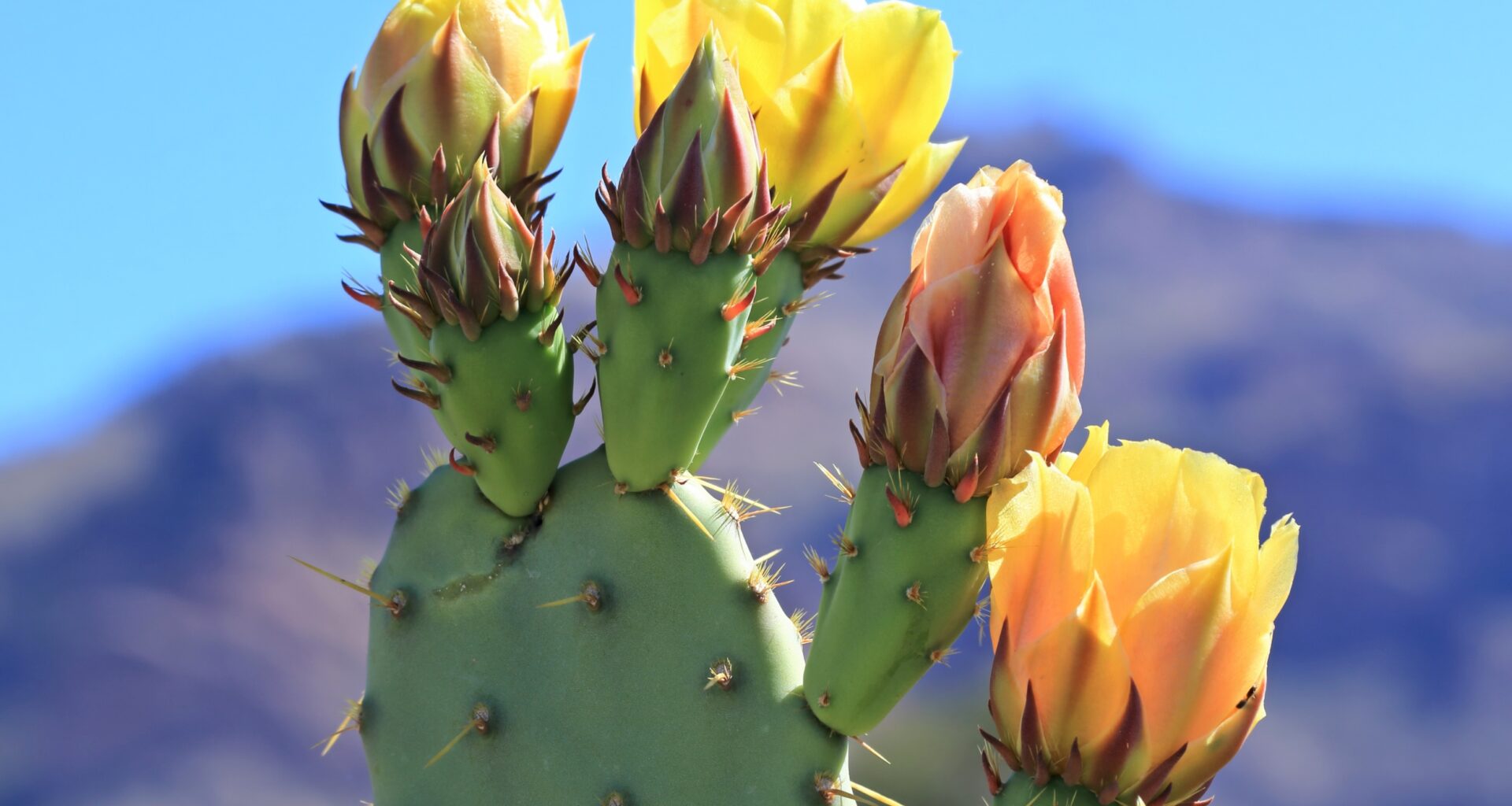
A cactus on a windowsill feels like the definition of patience: slow growth, little change, just quietly doing its thing. But a new study argues that the cactus family is anything but slow in evolutionary terms.
Researchers at the University of Reading say cacti can be surprisingly fast at forming new species, and the key seems to be how quickly their flowers change shape – not how big the flowers are, and not which animals pollinate them.

The work takes a long-running idea in plant evolution – one that traces back to Charles Darwin – and gives it a twist.
The old assumption
For a long time, biologists have leaned on a common story about plants: specialized flowers evolve to match specialized pollinators, and that tight relationship helps drive speciation.
Darwin famously studied orchids and argued that unusual flower forms and pollinator interactions could help create new species over time.
The team expected to see something similar in cacti. The prediction seems reasonable: longer, more specialized flowers might restrict who can pollinate them, splitting populations into smaller groups and encouraging new species to form.
But when the researchers tested that idea across hundreds of cactus species, flower size basically didn’t explain speciation rates at all.
Flowers that are rapidly evolving
The team analyzed flower length data for more than 750 cactus species. The size range they captured is huge, from flowers just 2 millimeters long to blooms stretching 37 centimeters.
That’s a 185-fold difference in length – enough that you’d expect it to matter a lot if “bigger and more specialized” were the main evolutionary driver. And yet, it barely moved the needle.
Instead, the researchers found that the cacti most likely to split into new species were those whose flowers were evolving most rapidly in shape.
That link held across both recent and deep evolutionary time, suggesting it isn’t just a short-term pattern or a quirk of modern cactus lineages.
The real driver seems to be speed
According to lead author Jamie Thompson, if you’re trying to understand why cacti diversify so quickly, focus less on how elaborate a flower looks and more on how fast it’s changing.
“People may think of cacti as tough, slow-growing plants, but our research shows that the cactus family is one of the fastest-evolving plant groups on Earth.”
“Knowing how fast cacti evolve reveals that deserts, often seen as harsh and unchanging, are actually hotbeds of rapid natural change.”
“We expected cacti with longer, more specialized flowers to be the ones creating the most new species. Instead, flower size made almost no difference. What matters is how quickly flowers change shape.”
“Cacti whose flowers evolve rapidly are far more likely to split into new species than those whose flowers stay the same, however elaborate they are.”
It’s a nice flip of intuition. A cactus doesn’t need the biggest or weirdest flower to diversify fast. It needs a flower that can keep shifting over time, potentially creating new reproductive barriers and new species.
Why this matters for conservation
Cacti aren’t only evolutionarily interesting. They’re also in trouble. The article notes that nearly a third of cactus species are threatened with extinction, and climate change is adding more pressure.
Thompson argues that the study has practical implications here. If evolutionary “pace” helped generate cactus diversity over millions of years, it might also help scientists guess which species are most vulnerable now.
“This result has real implications for conservation. Since flower evolution has helped generate cactus species over millions of years, evolutionary pace should become part of conservation efforts,” he explained.
“Although being able to rapidly evolve does not guarantee resilience, especially as the planet is changing faster than most cacti can keep up, it could help predict which species need the most help.”
“Rather than searching for a single trait that predicts which cacti are most at risk, conservationists may need to look at how fast a species is evolving instead.”
That’s a subtle but important point. A species can be “fast-evolving” in the long run and still be fragile in the face of today’s rapid habitat loss and climate shifts.
But knowing which lineages tend to change quickly might still help conservationists prioritize monitoring and protection.
The cactus family tree
Cacti are one of the most rapidly expanding plant families on Earth, with around 1,850 species. The group spread across the Americas over the last 20 to 35 million years.
That’s not ancient by plant-evolution standards, yet the family has exploded in diversity.
The study’s results feed into a broader idea: deserts aren’t evolutionary dead zones. They can be places where rapid change happens, even if the landscape looks stable from a distance.
A new database that made this possible
This research also leans on a major new resource: an open-access database called CactEcoDB. Thompson created it with ten coauthors across three continents, including six collaborators at the University of Reading.
The database represents seven years of work compiling cactus traits, habitats, and evolutionary relationships.
It was published this month in Nature Scientific Data, and the team frames it as a shared tool for researchers worldwide. This is especially important because cactus conservation work has often been scattered across regions and institutions.
With CactEcoDB, scientists can more easily compare cactus species at large scale, track biodiversity patterns, and study how these plants might fare under future climate change.
The evolution of new cactus species
Cacti may grow slowly, but their evolution doesn’t. This study suggests their rapid speciation isn’t mainly about flower size or even pollinator “specialization” in the way people often imagine.
It’s more about tempo: the cactus lineages whose flowers change shape quickly are the ones most likely to split into new species.
And if that evolutionary tempo helped build the cactus family in the first place, it may also become an important clue for protecting it – especially now, when many cactus species are being pushed faster than they can adapt.
The study is published in the journal Biology Letters.
—–
Like what you read? Subscribe to our newsletter for engaging articles, exclusive content, and the latest updates.
Check us out on EarthSnap, a free app brought to you by Eric Ralls and Earth.com.
—–