
The brand-new science fiction movie “Project Hail Mary” hinges on an alarming scenario. The story imagines a strange cosmic phenomenon that drains our sun’s energy, causing the temperatures on Earth to plummet toward an ice age within a few decades. Ryan Gosling portrays a scientist who travels light years in search of a cure for the problem.
In reality, our sun has quite a few years of stable life left — more than 5 billion, said Virginia Tech astrophysicist Nahum Arav.
“The Sun is a 4.6-billion-year-old star containing 99.9 percent of the total mass of the solar system,” Arav said. “It will continue to shine similarly to now for another 5 billion years.”
However, should human society exist on Earth 5 billion years in the future in some form similar to now, those people will face a situation at least as dramatic as the one posited in “Project Hail Mary,” he said.
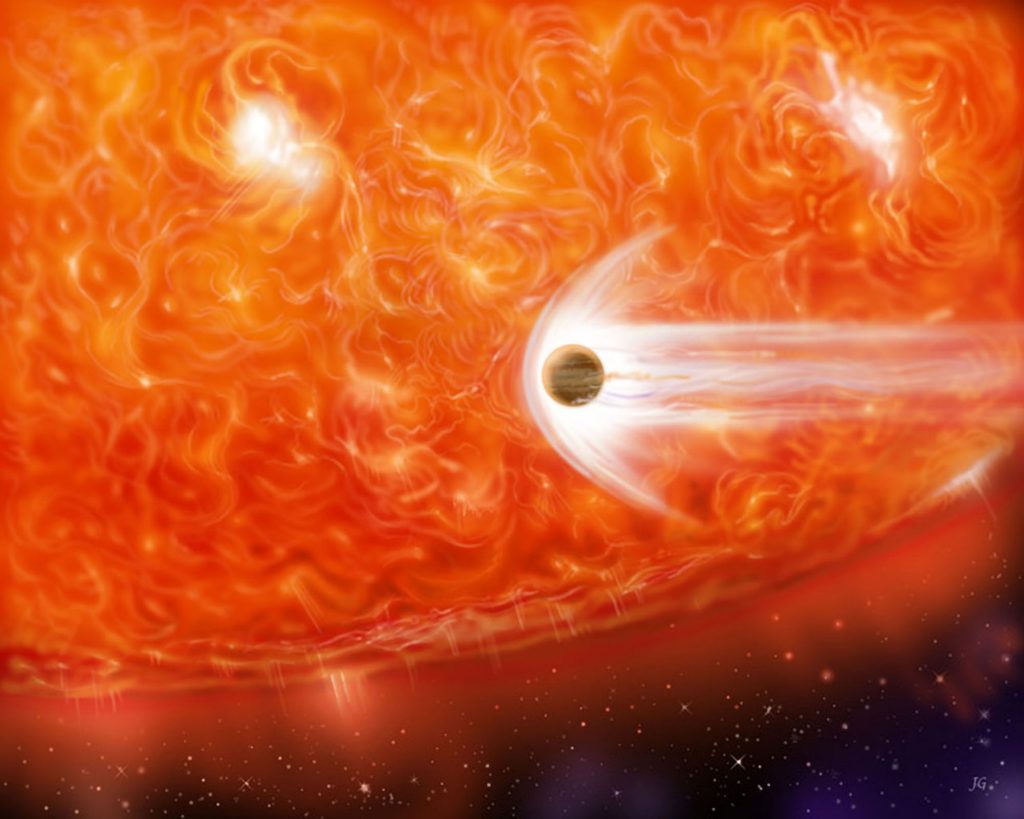
“Our sun will then become a red giant and will expand in circumference to almost the Earth’s orbit,” Arav said. “That expansion will be followed by our sun shedding of all its outer layers, producing a brief planetary nebula. Afterward a tiny, extremely dense white dwarf will be left over, and that’s the state the sun will stay in for billions more years.”
Arav added, “When our sun swells to the size of a red giant, the Earth will either be swallowed by the star or heated until it’s an uninhabitable cinder. Luckily, we have a long time to figure out what to do about it.”
About Arav
Nahum Arav is an astrophysics professor in the Virginia Tech Department of Physics where he specializes in determining the influence of super massive black holes on structure formation in the universe.
Schedule an interview
To schedule an interview, contact Mike Allen in the media relations office at mike.allen@vt.edu or 540-400-1700.