
1h agoThu 19 Mar 2026 at 3:47amMarket snapshotASX 200: -1.6% to 8,506 points
Australian dollar: +0.4% to 70.47 US centsWall Street: Dow Jones (-1.6%), S&P 500 (-1.4%), Nasdaq (-1.5%)Europe: FTSE (-1%)Asia: Nikkei (-2.6%), KOSPI (-1.6%), Hang Seng (-1.5%)Spot gold: +0.8% to $US4,856/ounce
Spot silver: +0.9% to $US75.97/ounceOil (Brent crude): +3.9% to $US111.62/barrelIron ore: +0.2% at $US106.50/tonneBitcoin: flat at $US71,244
 ASX 200: -1.6% to 8,506 points
 Price current around 2:47pm AEDT
Live updates on the major ASX indices:
3m agoThu 19 Mar 2026 at 5:19amAustralian miners whacked despite iron ore stands firm: analyst
The eerie calm that held over the ASX 200 earlier this week has been shattered today, IG market analyst Tony Sycamore has said, with the index plunging by 1.8% to a 10-day low.
“If the targeting of energy infrastructure continues unchecked, it will most definitely push an already tricky global economic situation over the edge into a dire one,” Mr Sycamore said.
Coming home, the ASX200 Materials sector fell sharply, down 4.9% today — more than 19% off from its March highs, he said.
“This puts it perilously close to a 20% fall — the technical line between a correction and bear market territory.
“Leading its falls, the big iron ore miners were punished, despite the price of iron ore holding relatively firm near $US107.00 per tonne.”
Mineral Resources dumped 5.8% to $51.14, Fortescue slumped 3.4% to $19.1, BHP slid -3.4% to $48.40, and Rio Tinto dropped 3.3% to $151.29.
“While the jump in the unemployment rate is a concern against the backdrop of Middle East uncertainty, it’s worth noting the unemployment rate is only back at the top of the 4.1%—4.3% range it has spent 11 of the past 12 months in,” Mr Sycamore added.
12m agoThu 19 Mar 2026 at 5:10am
🎥: More sellers turning a profit than at any other time in the past 15 years
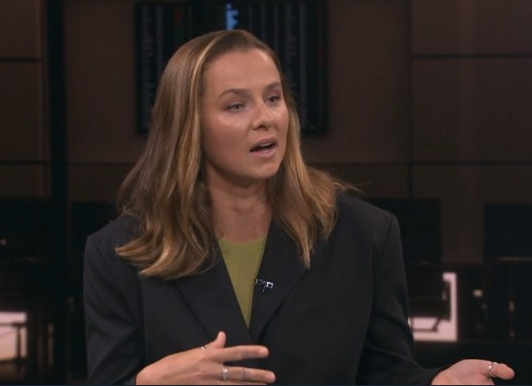
More sellers of residential houses and units in capital cities are turning a profit than at any other time in the past 15 years, according to Domain.
Catch up on the interview with business presenter Kirsten Aiken:
Loading…
23m agoThu 19 Mar 2026 at 4:59am
Aussie households and small businesses could see lower electricity prices, AER says
Households and small businesses on the Default Market Offer (DMO) could see lower electricity prices next financial year under the Australian Energy Regulator’s draft determination for 2026–27, according to the Australian Energy Regulator (AER).
The draft decision proposes reductions in DMO prices across all regulated regions — New South Wales, South East Queensland and South Australia — driven largely by lower wholesale electricity costs and reduced environmental and retail operating costs, AER says.
If adopted in the final determination, DMO annual prices for residential customers would fall by between 1.3% and 10.1%, while small business prices would decrease by between 7.6% and 21.2%, depending on the region.
AER chair Clare Savage said the proposed price reductions reflect easing electricity costs and a shift to an efficient price framework under new government regulations.
“This draft decision points to the potential for some welcome relief for households and small businesses after several years of rising energy costs following Russia’s invasion of Ukraine,” Ms Savage said.
“Retailers have also reported lower retail operating costs, while reductions in the cost of environmental schemes have also had a positive impact on reducing prices.
“We’ve worked to ensure consumers have access to a trusted, fair, and reasonably priced Default Market Offer that, come 1 July, is locked in for the next 12 months, providing consumers who can’t or won’t shop around that important safety net.”
You can read more on the AER website.
33m agoThu 19 Mar 2026 at 4:49amEnergy continues to outperform
The Energy sector has extended its gains, soaring by 4.6%.
Among companies, Viva Energy is the top performer, up 15.4%, followed by Yancoal Australia and Woodside Energy, up 7.5% and 6.7%, respectively.
Meanwhile, Ora Banda Mining is trading at the bottom, down 12.9%, followed by Westgold Resources, down 12.8%, and Ramelius Resources, down 11.3%.
40m agoThu 19 Mar 2026 at 4:42am
Bank of Sydney delays increase in loans
Bank of Sydney has confirmed it will delay a 0.25% increase to its standard variable lending rates for all new and existing home and business lending loans until April 14, 2026.
Huw Bough, chief banking officer at Bank of Sydney, says the decision reflects the bank’s focus on supporting customers through changing economic conditions.
“We recognise that rising rates can place added pressure on households and small businesses.
“By allowing a little breathing room before this change takes effect, we’re aiming to help customers plan and adjust with greater confidence.”
All affected customers will receive a direct notification outlining their new interest rate and repayment details, according to the bank.
It has also announced that the interest rates on savings accounts, including the BOS Saver Account, Business Saver Account, and Controlled Money Trust Accounts, will increase by 0.25% from April 1.
51m agoThu 19 Mar 2026 at 4:31amTrump says no more attacks by Israel on Iran gas field as Qatar bashed ‘unfairly’
US President Donald Trump has ruled out Israeli attacks on Iran’s major gas field unless Iran retaliates.
Mr Trump said his country did not have advance knowledge of Israel’s attack, adding that Qatar had not been involved.
“Israel, out of anger for what has taken place in the Middle East, has violently lashed out at a major facility known as South Pars Gas Field in Iran,” Mr Trump posted on social media.
“Unfortunately, Iran did not know this, or any of the pertinent facts pertaining to the South Pars attack, and unjustifiably and unfairly attacked a portion of Qatar’s LNG Gas facility.
“NO MORE ATTACKS WILL BE MADE BY ISRAEL pertaining to this extremely important and valuable South Pars Field unless Iran unwisely decides to attack a very innocent, in this case, Qatar.
“In which instance the United States of America, with or without the help or consent of Israel, will massively blow up the entirety of the South Pars Gas Field at an amount of strength and power that Iran has never seen or witnessed before.”
1h agoThu 19 Mar 2026 at 4:22am
QatarEnergy LNG facilities hit by more missiles
State-owned QatarEnergy has confirmed its LNG facilities were hit by missiles about an hour ago.
This came after extensive damage to the site of QatarEnergy’s core LNG processing operations due to previous attacks in Ras Laffan Industrial City on Wednesday.
The country accounts for about 20% of global LNG exports, according to IEA, all of which transit the Strait of Hormuz.
Reuters also reported a vessel was hit by an unknown projectile 4 nautical miles east of Qatar’s Ras Laffan, citing United Kingdom Maritime Trade Operations (UKMTO).
All crew were reported safe, UKMTO added.
1h agoThu 19 Mar 2026 at 4:08amAustralia’s population grows 1.6pc in September 2025
Australia’s population grew by 1.6% in the 12 months to September 2025, according to the latest figures released by the Australian Bureau of Statistics (ABS).
Phil Browning, ABS head of demography, said the population grew to 27.7 million, up 423,600 from September 2024.
“This was made up by natural increase, which is the number of births minus those who died, and overseas migration,” he said.
Natural increase added 112,600 people, with births up by 1.9 per cent and deaths down by 1.4%, the ABS data has shown.
Net overseas migration added 311,000 people over the year.
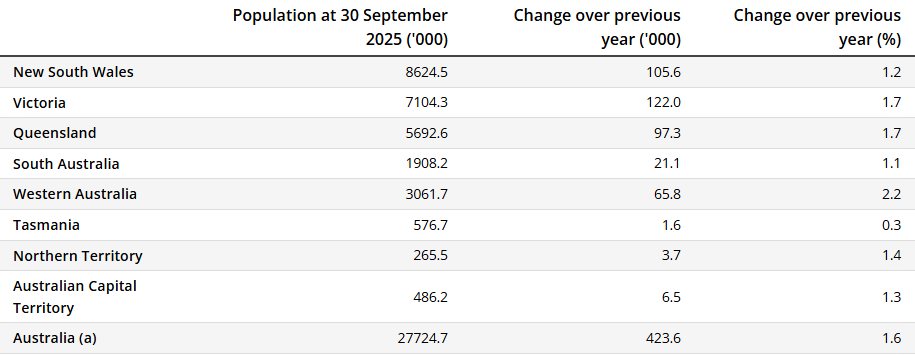 Annual population change by state and territory (Australian Bureau of Statistics)
“Western Australia was the fastest growing state, with a population rise of 2.2%,” Mr Browning add.
“Victoria and Queensland grew by 1.7%.”
Tasmania had the slowest growth over the 12-month period, with a 0.3% population increase, said the ABS.
1h agoThu 19 Mar 2026 at 3:54am
Economists say inflation will remain a concern despite rise in unemployment rate
Reserve Bank governor Michele Bullock has refused to rule out a recession to bring inflation down, when asked whether unemployment had to increase to help bring down inflation.
We’re digging a bit deeper to break down what today’s unemployment rate means.
My colleague Emily Stewart has done some legwork for you.
1h agoThu 19 Mar 2026 at 3:38am
‘Unemployment to peak at just shy of 4.6pc in early 2027’: analyst
The labour market has shown early signs of slowing down in February, according to Harry McAuley, an economist for Oxford Economics Australia.
Here’s what Mr McAuley has to say:
“The number of unemployed jobseekers rose notably from January, largely reflecting an uptick in the participation rate.
“Based on Tuesday’s rate decision and the ongoing conflict in the Middle East, we have bumped up our unemployment forecasts.
“We now expect near-term unemployment to rise slightly faster through 2026 and peak at just shy of 4.6% in early 2027.
“The key risk to the outlook is the severity and length of disruptions to key oil and gas routes in the Middle East — a sustained period of high energy costs may require a stronger policy response from the RBA, which would resonate through the employment figures.”
2h agoThu 19 Mar 2026 at 3:22amBitcoin holds up better than expected: analyst
Josh Gilbert, a market analyst at eToro, has said bitcoin has held up far better than most people expected during the Middle East conflict.
“Sitting around 45% below October’s all-time highs, the drawdown is still significant, but the fact that bitcoin has consolidated within a US$65,000 to US$76,000 range through surging oil prices, a stronger dollar, and elevated uncertainty rather than falling apart at the seams is a sign of the asset continuing to mature.”
Mr Gilbert said what was interesting appeared to be the comparison with gold.
“Gold initially rallied on safe haven demand when the conflict began but then pulled back as the US dollar strengthened and bond yields rose.
“Bitcoin has actually outperformed gold, the S&P 500, and the Nasdaq over the duration of the conflict.
“There is also a case for exhaustion on both sides.
“Gold has had an extraordinary run this year and bitcoin entered this conflict already beaten down. That differential helps explain why bitcoin has held up better than expected while gold has given back some of its gains.”
Bitcoin was trading at $71,183, down 0.1%, as of 1:47pm AEDT.
2h agoThu 19 Mar 2026 at 3:13amJapan keeps interest rate on hold
The Bank of Japan has kept interest rates steady and maintained its assessment that the economy was recovering moderately, even as an escalating Middle East conflict clouded the outlook.
As widely expected, the central bank left its short-term policy rate unchanged at 0.75% at a two-day meeting that ended on Thursday.
Board member Hajime Takata dissented to the decision, instead calling for a hike to 1.0%.
Reporting with Reuters
2h agoThu 19 Mar 2026 at 3:06am
Uncertainty over long-term direction of productivity
More from my colleague Holly Tregenza on the treasurer’s stand up.
Mr Chalmers says there is now more uncertainty about long-term productivity growth than there has been in the past.
He says while Treasury will retain its long-term productivity assumption of 1.2% in next month’s federal budget, it will make some near-term adjustments.
“For example, previously, it expected productivity to return to trend within two years,” Chalmers says.
“Now it expects that convergence to take closer to five, in line with other key long-run assumptions.”
2h agoThu 19 Mar 2026 at 3:00am
Iran conflict is “intensifying uncertainty”
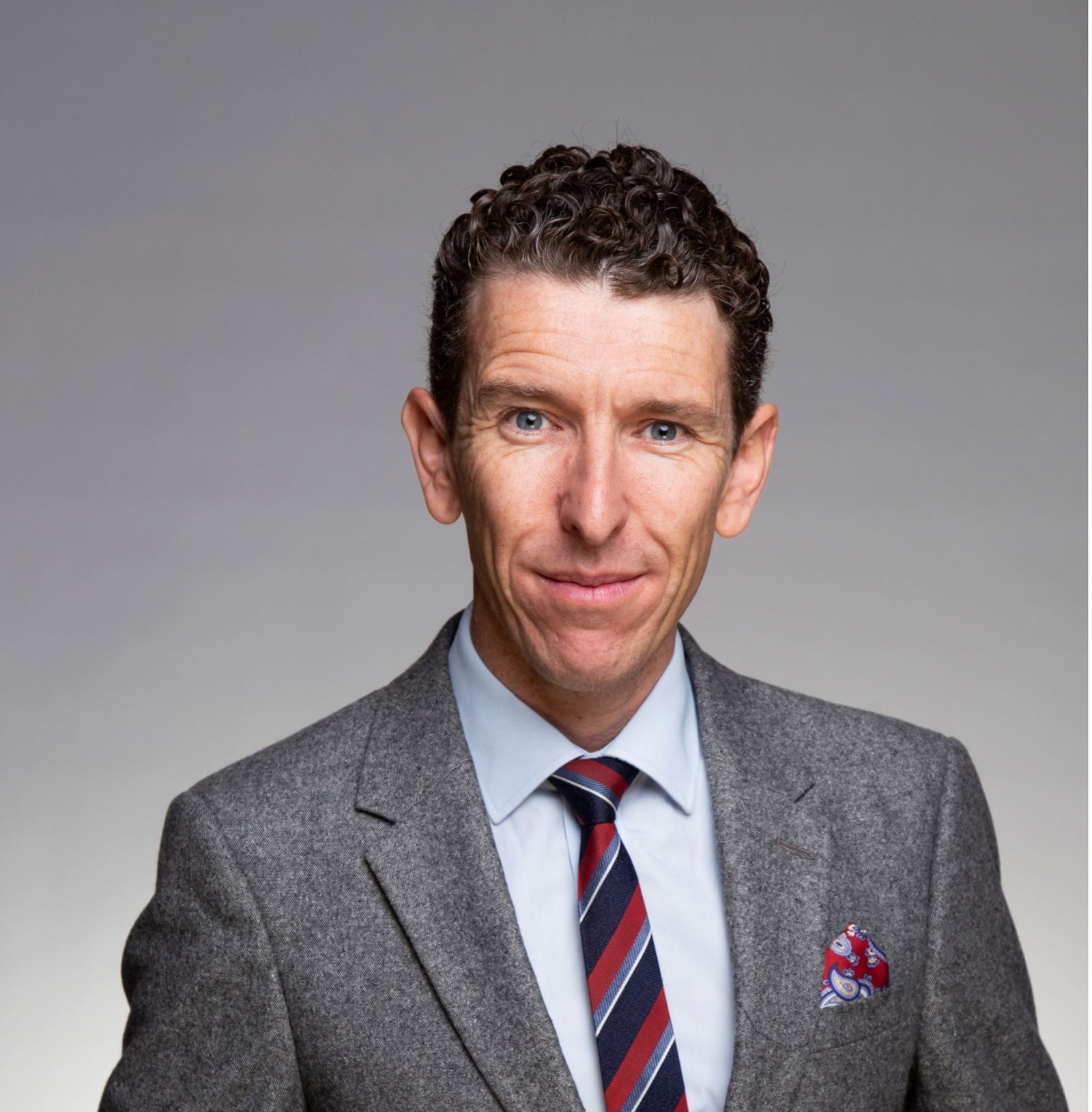
Treasurer Jim Chalmers has just finished his prepared remarks and is now taking questions. We’ve had questions on increased spending, AI and supply chains.
One of the key takeaways from the speech, this summary at the end:
“This [Iran] conflict is a reminder of how fast things can change … all of this uncertainty is a reason for more reform, not less.”
I added the emphasis there.
The question it raises is, will the government do so at budget time in May?
2h agoThu 19 Mar 2026 at 2:58amWar exasperates existing challenges to budget, Chalmers says
The Treasurer Jim Chalmers says while the war in the Middle East is the most pressing problem confronting the global economy, it reinforces — rather than replaces — the key pressures on the federal budget.
“Let me be blunt,” he says.
“Before this war, inflation was already too high.”
He says the war is straining productivity capacity when it was already “close to its limit” and has added to “intensifying uncertainty”.
2h agoThu 19 Mar 2026 at 2:44am
‘Jobs data unlikely to dampen RBA rate expectations’: analyst
Wee Khoon Chong, an APAC macro strategist from BNY says Australia’s February labour market report is mixed.
“Overall, the release is unlikely to dampen near-term RBA tightening expectations,” he says.
“If anything, the relatively hawkish signal from the US Federal Reserve overnight provides additional room for the RBA to proceed with further policy tightening.
“Markets are currently pricing in another full 25bp rate hike by June, with the terminal rate seen around 4.56%.
“Risks remain firmly skewed to the upside, particularly as rising commodity prices are expected to sustain upward pressure on inflation, potentially driving a more aggressive rate path than currently priced.”
The US Federal Reserve held interest rates steady at 3.50%—3.75% at its March meeting.
2h agoThu 19 Mar 2026 at 2:33amJim Chalmers standing up to talk in Melbourne
“I can’t tell you today what the final design of the budget will be … it isn’t finished yet.”
Treasurer Jim Chalmers opens with a bit of a dampener as he stands up to speak at the Australian Business Economists event in Melbourne.
I’ll bring you the best of what he has to say, and I will be throwing some questions his way.
2h agoThu 19 Mar 2026 at 2:28am
How do Middle East war and AI become major risks for economy?
My colleague David Chau has delved into the latest Financial Stability Review published today.
Read more about what he has found.
3h agoThu 19 Mar 2026 at 2:16am
KPMG says labour market outlook starts to look tenuous
Dr Brendan Rynne, KPMG Australia chief economist, has said the latest labour force data shows a continued robustness of the Australian economy despite an uptick in the unemployment rate.
“Employment growth was more than double what had been anticipated by the market, notwithstanding the fact that much of that growth was part-time employment, rather than full-time,” Dr Rynne said.
“We recognise that the labour market outlook is starting to look tenuous.
“With a higher interest rate environment and higher cost of living outlook due to increased petrol prices, it seems people are looking to secure their household budgets by increasing their participation in the labour market.”