
News
Ozempic manufacturer Novo Nordisk says children with obesity could benefit from the drugs, but the college warns holistic care will be replaced and health budgets blown.
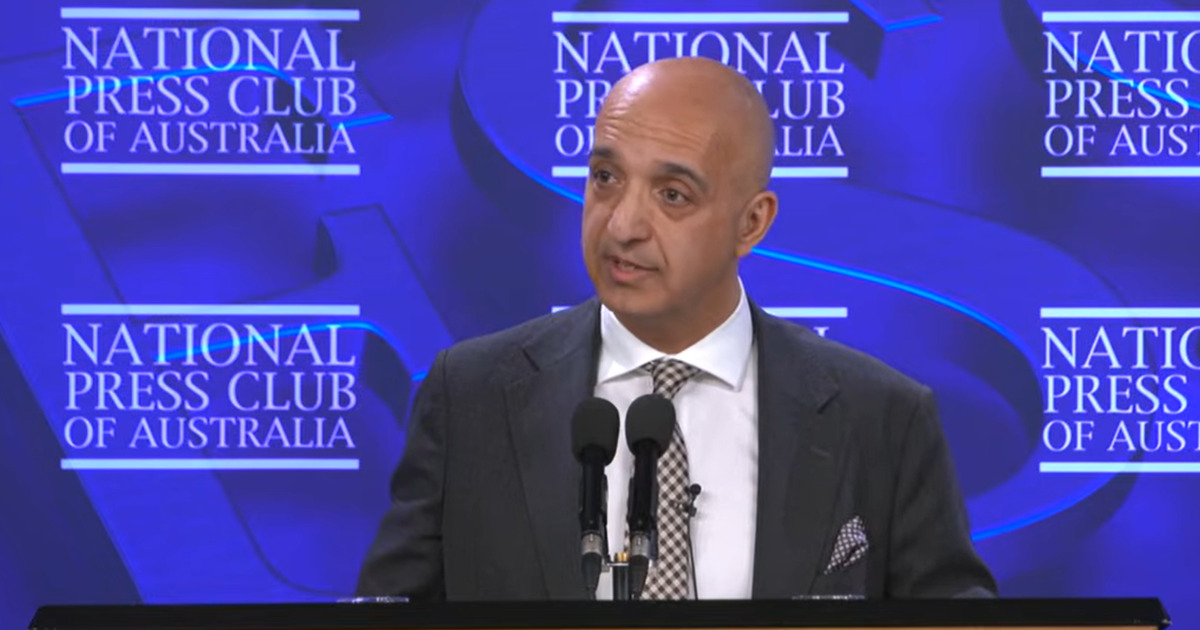
Mike Doustdar, President and CEO of Ozempic manufacturer Novo Nordisk, addressing the National Press Club on Monday.
Ozempic’s manufacturer has called on the Federal Government to consider expanding weight-loss drugs’ use for children with obesity.
But the RACGP says this proposed portion of health budget spending should instead be steered into general practice, where better first-line treatment options for weight loss are supported.
At a National Press Club address on Monday, the President and CEO of pharmaceutical giant Novo Nordisk, Mike Doustdar, gave an overview of the rising obesity epidemic to back his calls for the Government to expand the already popular medicine’s availability.
Australia ‘has what it takes to tackle obesity’, according to Mr Doustdar, who claims his proposal will not only treat the condition, but prevent it.
‘It’s a ticking bomb that our children and adolescents are right now becoming more and more obese across the world and we need to find solutions,’ he said.
‘The first and foremost solutions are … healthier environments, healthier school, taking care of exercise and food intake.
‘But we are also making sure that our products are being tested and tried on adolescents and making sure that they are safe, so if support and help is needed on that front it’s available.’
The proposed ‘Australian-made model’, which Mr Doustdar said he is currently discussing with Federal Health and Ageing Minister Mark Butler, focuses on two key platforms.
‘Prevent today – to expand access to treatment,’ he said. ‘This means actively reforming the PBS, eliminate the average wait time of 466 days to access innovative medicine. It also means proposing a dedicated health budget for obesity, separate from the PBS.
‘We also need to protect tomorrow – ensure the next generation never faces a similar crisis again.’
Considered blockbuster medicines, GLP-1s, including Ozempic, are experiencing a huge rise in popularity for weight-loss, with an estimated 50,000 Australians using the drugs.
In Australia, Wegovy has Therapeutic Goods Administration approval for use in adolescents aged 12 and over for weight loss, while the Product Information for Ozempic states the safety and efficacy for those aged under 18 have not been studied.
Novo Nordisk says better health outcomes can be achieved with early intervention, ‘before patterns are entrenched’ and conditions like obesity ‘takes hold’.
But RACGP President Dr Michael Wright warns that more evidence is needed before children are prescribed these drugs, with many other appropriate first-line options available.
‘These medications are still new, we’ve got some evidence of them being very effective with diabetes and for some people in reducing weight, but we really need to look at them as one of a number of things people can do to help them maintain a healthy weight,’ he told newsGP.
‘Weight loss isn’t just an injection, it is holistic care that GPs are best placed to provide advice on – about diet, exercise, nutrition.
‘Even when people are on these medications there are side effects, and patients will need regular monitoring. So there’s some complexity to providing this medication, which is what GPs are trying to deal with.’
Cost is another key factor that needs to be considered, Dr Wright says, with Ozempic only currently PBS subsidised for type 2 diabetes, patients using it for weight loss alone potentially face costs of hundreds each month.
‘If we spend a billion dollars more on these medications, that’s a billion dollars less than we’re able to spend elsewhere,’ Dr Wright said.
‘We know the complexity of our care is growing and that what we really need is to properly fund people to have more time with their GP – that’s a better return on investment than a broader rollout of these medications.
‘We’ve only got a limited health budget, and less than 6% of it goes into general practice. We need to make sure this additional [PBS] funding doesn’t mean we’re losing other care that might be more important for patients.’
Novo Nordisk echoes Dr Wright in saying as these medications become more freely available and alternatives appear, costs will be reduced, meaning they will be more affordable for patients whether subsidised by the Government or not.
If Ozempic is expanded in recognition to treat obesity as a chronic disease, Mr Doustdar claims millions more would benefit, including adolescents ‘rewriting life expectancy’.
However, Dr Wright raises concerns that more evidence is needed about who these medications are appropriate for.
‘I wouldn’t be jumping in and giving them to adolescents and kids quite yet,’ he said.
‘While the evidence we get from clinical trials is important, they are often on a select patient group, whereas in general practice we know the majority of our patients have one or more chronic health conditions in addition to increased weight.
‘So GPs can provide the real-world evidence of how these drugs work in the community and their potential side effects.’
Neighbouring Australia, a new partnership announced this week between Novo Nordisk and the Murdoch Children’s Research Institute will see a three-year funded research program aimed at developing models of care to address adolescent obesity across Pacific Island countries.
Set to become a key research effort in the region, the first phase is collating evidence and co-designing potential solutions, with the second a co-design of models of care to assess the feasibility of GLP-1 drugs in real-world settings.
Dr Wright says in Australia, caveats remain attached to the Novo Nordisk proposal to more broadly rollout Ozempic, and what GPs’ role will be.
‘The trials are in limited people – we expect them to expand. The drugs are expensive – we expect them to get cheaper,’ he said.
‘GPs will be dealing with this, along with one of multiple issues that many of our patients face. So, we need more time with our patients – and Medicare reform will fix that.’
Log in below to join the conversation.
children and adolescent health GLP-1 drugs health budget obesity Ozempic PBS semaglutide weight-loss drugs
newsGP weekly poll
Have you, or your practice, ever received a letter from a politician encouraging you to switch to a 100% bulk-billing model?