
DOHA/ WASHINGTON
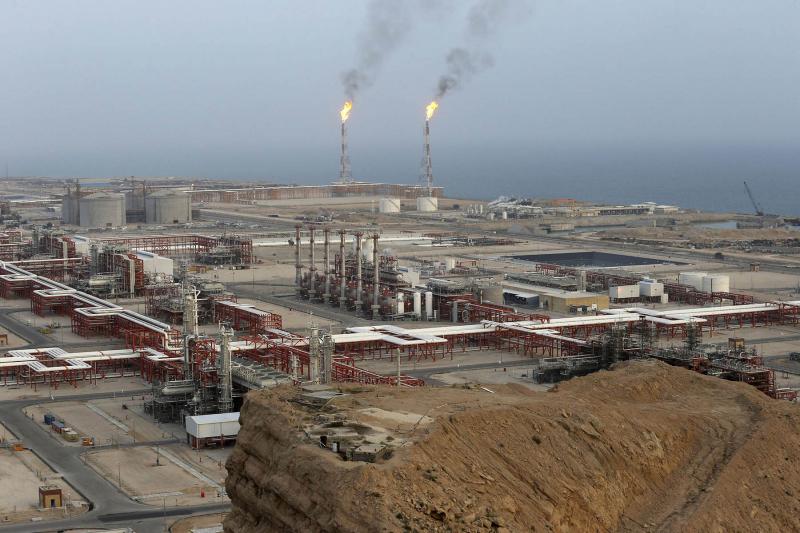
In a significant escalation in the Iran war, Israel attacked the South Pars gas field sparking Iranian missile strikes against Qatar and Saudi Arabia and prompting a pledge by US President Donald Trump that no such attacks by Israel will reoccur unless Iran retaliated.
Qatar’s state oil giant QatarEnergy reported “extensive damage” after Iranian missiles hit the Ras Laffan Industrial City that processes about a fifth of global gas supply.
Saudi Arabia also said it intercepted and destroyed four ballistic missiles launched towards Riyadh on Wednesday and an attempted drone attack on a gas facility in its east.
The UAE shut down its Habshan gas facility after it intercepted missiles fired in what its foreign ministry called a “terrorist attack” by Iran.
On Thursday, Iran again targeted Qatar’s gas facilities and its missiles also targeted the Saudi capital.
QatarEnergy “sizeable fires” and extensive damage at several of its liquefied natural gas (LNG) facilities targeted in missile attacks early on Thursday.
Qatar’s foreign ministry rebuked Israel for a “dangerous and irresponsible” attack on Iran’s South Pars facilities, and denounced Iran for what it called “a flagrant breach” of international law, expelling two senior Iranian diplomats.
Wednesday’s attack on Iran’s huge South Pars gas field drove oil prices higher and prompted a threat by Iran to attack oil and gas targets across the Gulf, while it fired missiles at Qatar and Saudi Arabia.
Iran listed several prominent regional oil and gas facilities it called “direct and legitimate targets” in neighbouring Arab countries: Saudi Arabia’s Samref Refinery and Jubail Petrochemical Complex, the UAE’s Al Hosn Gas Field and Qatar’s Mesaieed Petrochemical Complex, Mesaieed Holding Company and Ras Laffan.
It said the installations should be evacuated at once before its missiles fell.
The escalation heightens the unprecedented disruption of global energy supplies. The conflict could now bring lasting damage to the Gulf region’s energy infrastructure.
South Pars is the Iranian sector of the world’s largest natural gas deposit, which Iran shares with Qatar, a close US ally and host of the United States’ biggest military base in the Gulf.
Iran has already effectively shut the Strait of Hormuz, which handles 20 percent of global oil and liquefied natural gas supply, but consuming nations have hoped the disruption would prove short-lived as long as production infrastructure was spared.
Trump said the United States did not have advance knowledge of Israel’s attack, adding that Qatar had not been involved. Earlier, the Wall Street Journal said Trump had approved of Israel’s plan to attack Iran’s natural gas field.
“Israel, out of anger for what has taken place in the Middle East, has violently lashed out at a major facility known as South Pars Gas Field in Iran,” Trump posted on X on Wednesday.
“Unfortunately, Iran did not know this, or any of the pertinent facts pertaining to the South Pars attack, and unjustifiably and unfairly attacked a portion of Qatar’s LNG Gas facility.
“NO MORE ATTACKS WILL BE MADE BY ISRAEL pertaining to this extremely important and valuable South Pars Field unless Iran unwisely decides to attack a very innocent, in this case, Qatar.
“In which instance the United States of America, with or without the help or consent of Israel, will massively blow up the entirety of the South Pars Gas Field at an amount of strength and power that Iran has never seen or witnessed before.”
The escalation raises the political stakes for Trump, who joined Israel in attacking Iran nearly four weeks ago. It shows a divergence of US and Israeli objectives and methods in the conduct of the war. Analysts point out that Israel, contrary to the US, not willing to spare Iran’s energy infrastructure as it seeks the total collapse of the Iranian regime at any cost.
Diesel prices in the US have already risen above $5 a gallon for the first time since the 2022 inflation surge that eroded support for his predecessor, Joe Biden.
Since the start of the conflict, Tehran has targeted not just Israel, but US diplomatic and civilian and military facilities across the Gulf and warned its neighbours not to host attacks on Iran.
With de-escalation nowhere in sight, Trump is considering sending thousands more US troops to the Middle East.
Those troops could be used restore the safe passage of oil tankers through the Strait of Hormuz, a choke-point for a fifth of the world’s oil trade.
The foreign ministers of 12 Muslim-majority countries meeting in Riyadh denounced Iran’s strikes on Gulf neighbours and called for an immediate halt.
Iran’s targeting of residential areas and civilian infrastructure, such as oil facilities, airports and desalination plants, could not be justified under any circumstances, the ministers said in a statement.
“This pressure from Iran will backfire politically and morally and certainly we reserve the right to take military actions, if deemed necessary,” Saudi Foreign Minister Prince Faisal bin Farhan told a press conference after the diplomats met in Riyadh.
Interceptors were seen fired from near the Riyadh hotel where the conference was held around the time the ministers gathered for the consultative meeting on the Iran war.
France’s President Emmanuel Macron said he spoke to the emir of Qatar and Trump on Thursday and called for a “moratorium on strikes targeting civilian infrastructure”, especially water and energy facilities.