
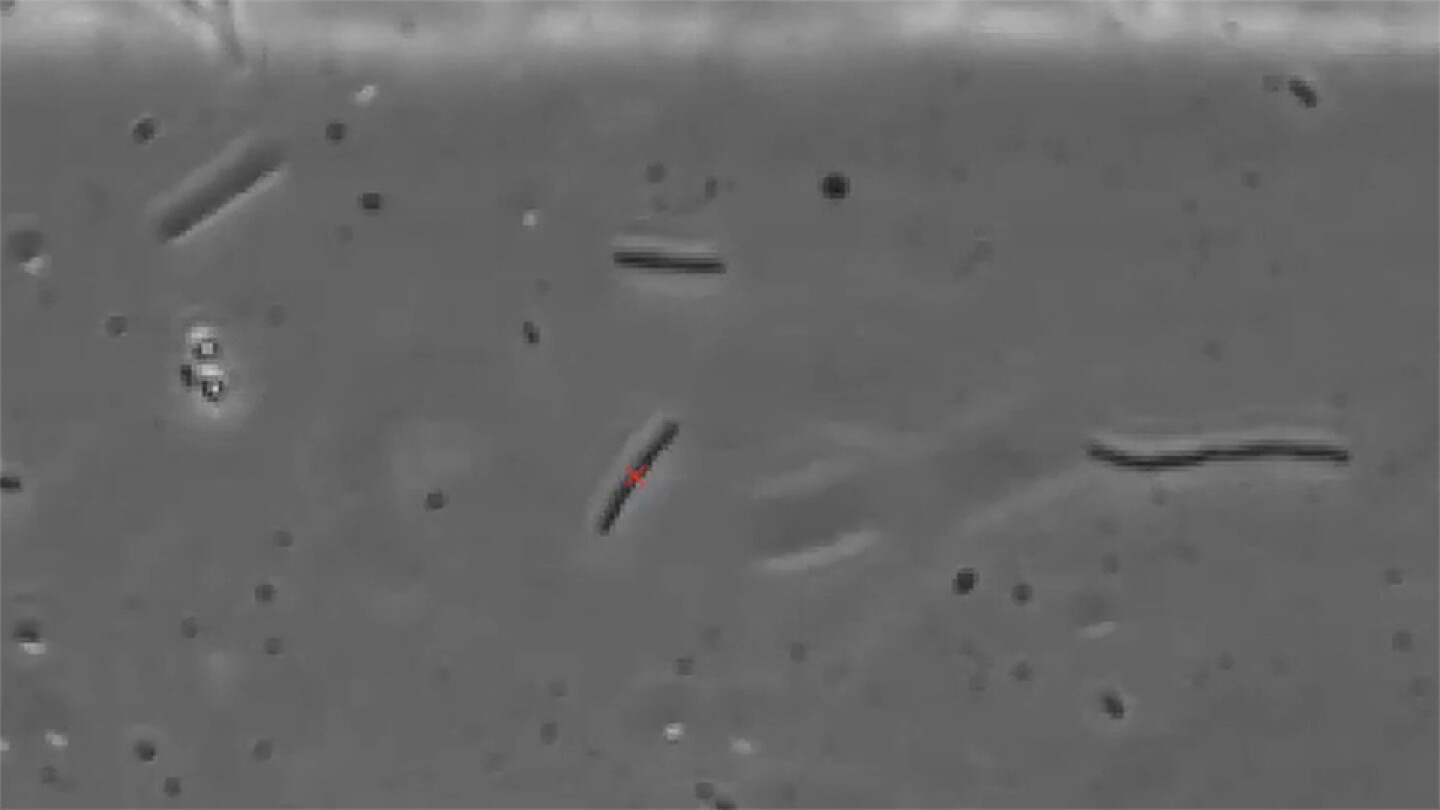
Stressed, elongated E. coli move differently through microchannels than their healthy counterparts.
Antibiotics are effective against bacterial infections, but antibiotic resistance arises from the few bacteria that survive the medication and pass on their genes. But when antibiotics are ineffective, some rod-like bacteria, such as E. coli, elongate as a stress response, lengthening without reproducing.
These long E. coli cells can swim their way into tubes, like catheters, so DeCurtis et al. studied the dynamics of elongated E. coli within microchannels to eventually determine a way to prevent infections like urinary tract infections.
“While many E. coli in our bodies are helpful, in the urinary tract, some can be pathogenic,” said author Jane Hill.
“Infection starts from bacteria sticking to walls, like in catheter tubes,” said author Sara Hashmi. “But before bacteria stick to a wall, they first have to get there — and even before we understand that step, we need to understand how they swim in microchannel flows in the first place.”
By tracking elongated E. coli swimming through tiny channels, they found that wiggling bacteria — a movement caused by rotation of the flagella and interaction with surrounding flow — move slower than surrounding fluid, meandering from one point to another.
“This may suggest an optimal window of flow rates facilitate wall adhesion,” Hashmi said. “If flow is too slow, the bacteria meander and might not get to the wall, but if the flow rate is too high, it could sweep bacteria away from the wall — something seen in previous work on normal E. coli.”
In the future, the researchers want to study phenomena of antibiotic-treated bacteria beyond wiggling, which could provide links between swimming behavior and bacterial death.
“We plan to use bacteria with fluorescently labeled flagella and live/dead assays to determine what’s happening with abnormal swimmers: Are flagella debundling, or are the bacteria dying?” Hashmi said.
Source: “Rigid body rotation and chiral reorientation combine in filamentous E. coli swimming in low-Re flows,” by Richard Z. DeCurtis, Yongtae Ahn, Jane E. Hill, and Sara M. Hashmi, Physics of Fluids (2026). The article can be accessed at https://doi.org/10.1063/5.0302523 .