
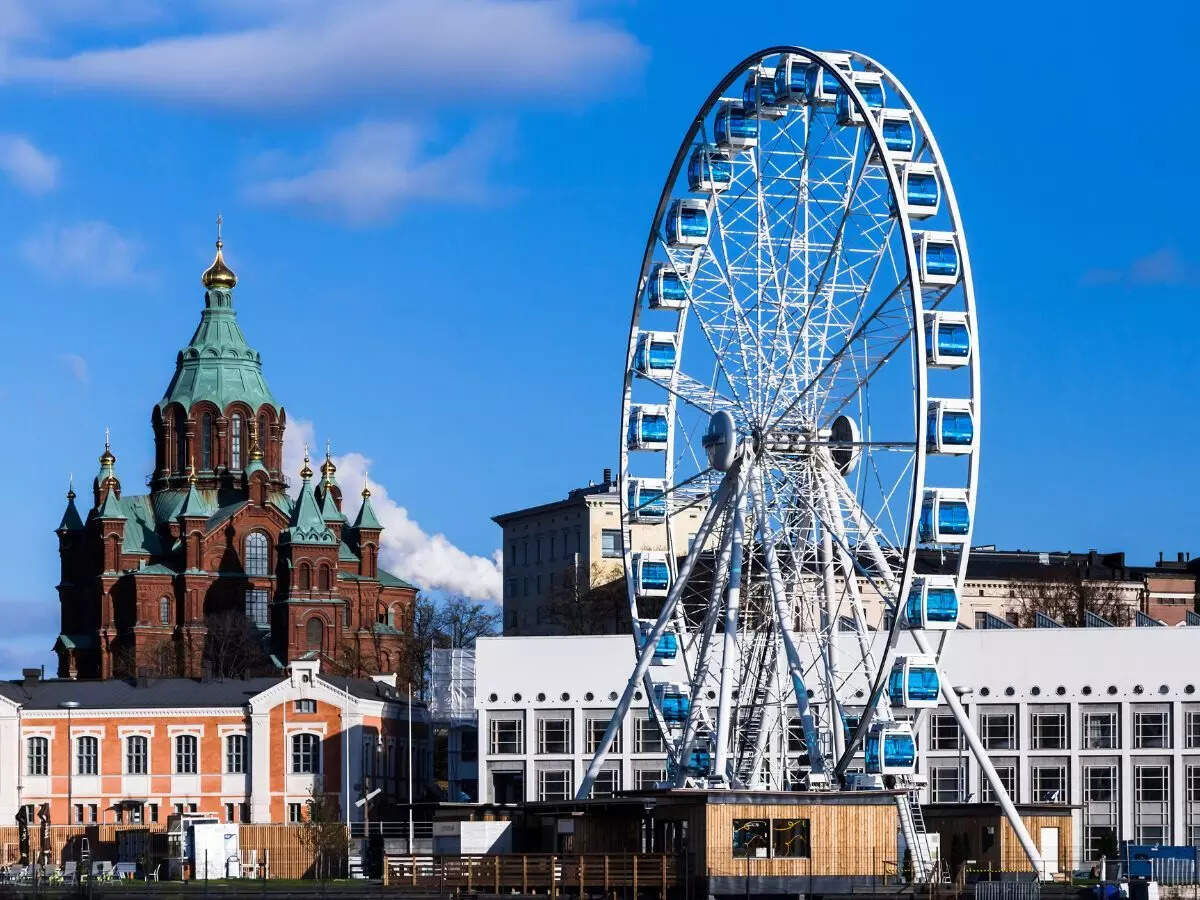
Finland has ranked as the world’s happiest country for the ninth consecutive year, according to the World Happiness Report 2026, even as the study flagged a decline in well-being among young people linked to heavy social media use.
The report, published by the Wellbeing Research Centre, shows Nordic countries continuing to dominate the rankings. Iceland, Denmark, Sweden and Norway are all placed within the top 10.
Nordic countries remain on top
As per the report, the consistent rankings of Nordic nations to factors such as wealth, equal distribution of resources, welfare systems, and life expectancy. It also notes the role of social support and stability in shaping overall life satisfaction.
Costa Rica entered the top five, climbing to fourth position from 23rd place in 2023. Researchers attributed this rise to strong family bonds and social connections.
“We think it’s because of the quality of their social lives and the stability that they currently enjoy,” said Jan-Emmanuel De Neve of the University of Oxford.
“Latin America more generally has strong family ties, strong social ties, a great level of social capital, as a sociologist would call it, more so than in other places,” he added.
At the lower end of the rankings, Afghanistan remained the unhappiest country, followed by Sierra Leone and Malawi.
Youth well-being declines
According to the report, there is a drop in life satisfaction among people under 25 in countries such as the United States, Canada, Australia and New Zealand over the past decade.
Researchers found that heavy social media use is a key factor. Life evaluation scores among young people in English-speaking and Western European countries have dropped by nearly one point.
The study stated that teenage girls are particularly affected. It said that 15-year-old girls who spend five hours or more on social media report lower life satisfaction compared to those with lower usage.
Young people using social media for less than one hour a day reported the highest levels of well-being, even higher than those who do not use it at all. On average, adolescents spend about 2.5 hours daily on social media.
“It is clear that we should look as much as possible to put the ‘social’ back into social media,” De Neve said.
Role of platforms and regional differences
According to the report, platforms with algorithm-driven feeds, influencer content, and visual-heavy formats contribute to lower well-being as they encourage social comparison. In contrast, platforms focused on communication show better outcomes.
However, the impact varies across regions. In parts of the Middle East and South America, youth well-being has not declined despite high social media use.