
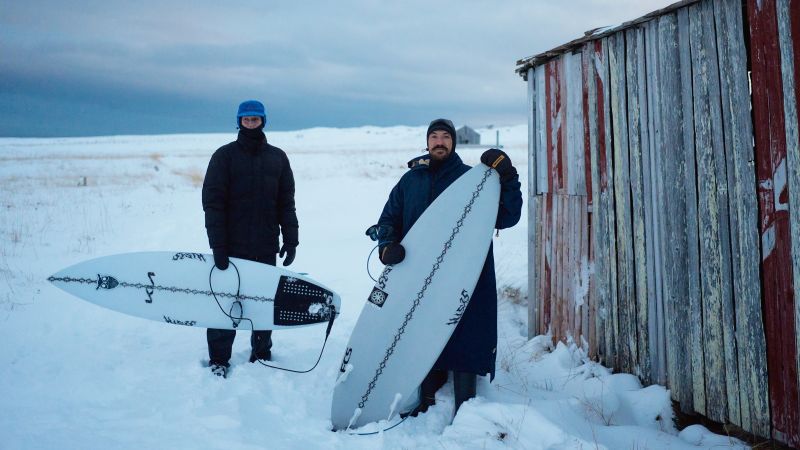
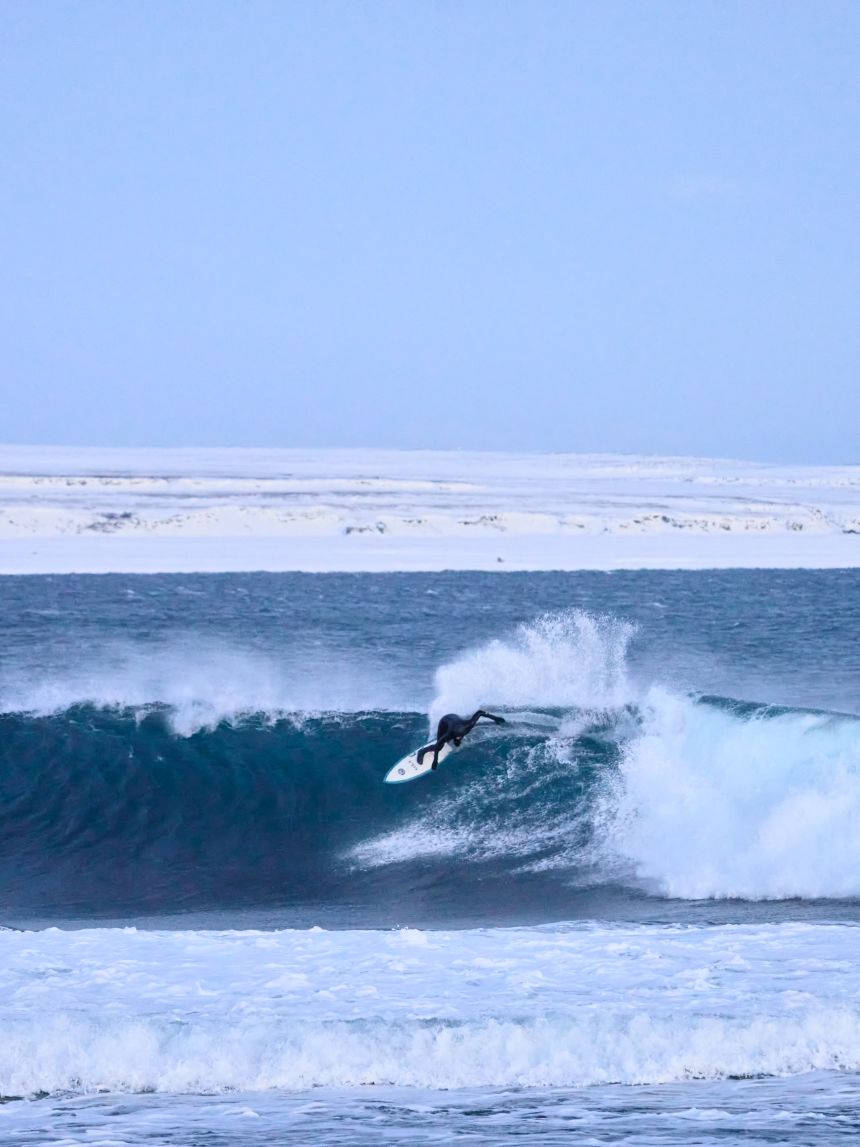
It was only after climbing out of the frigid Barents Sea, when he stopped to admire the icy tundra around him, that surfer Dylan Graves noticed the cold.
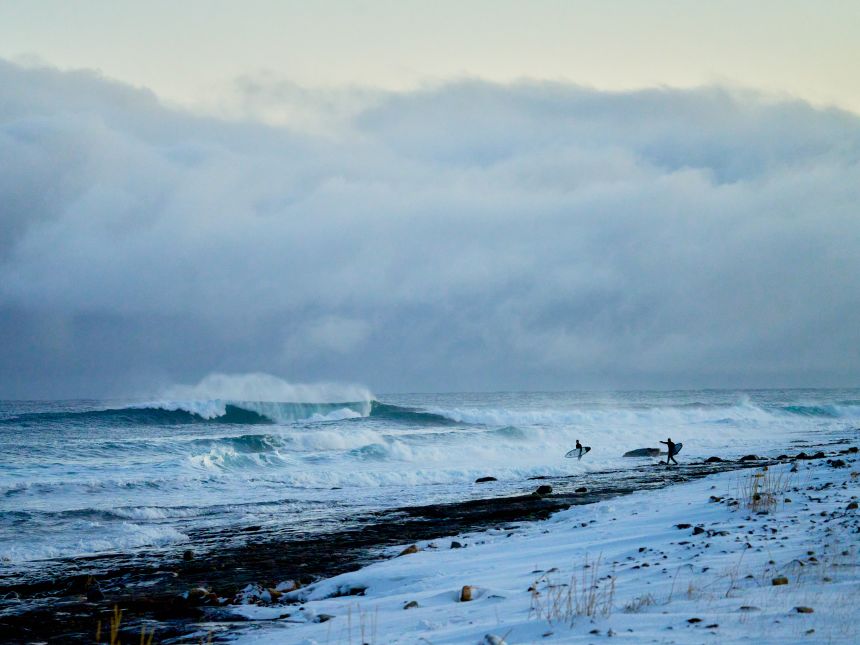
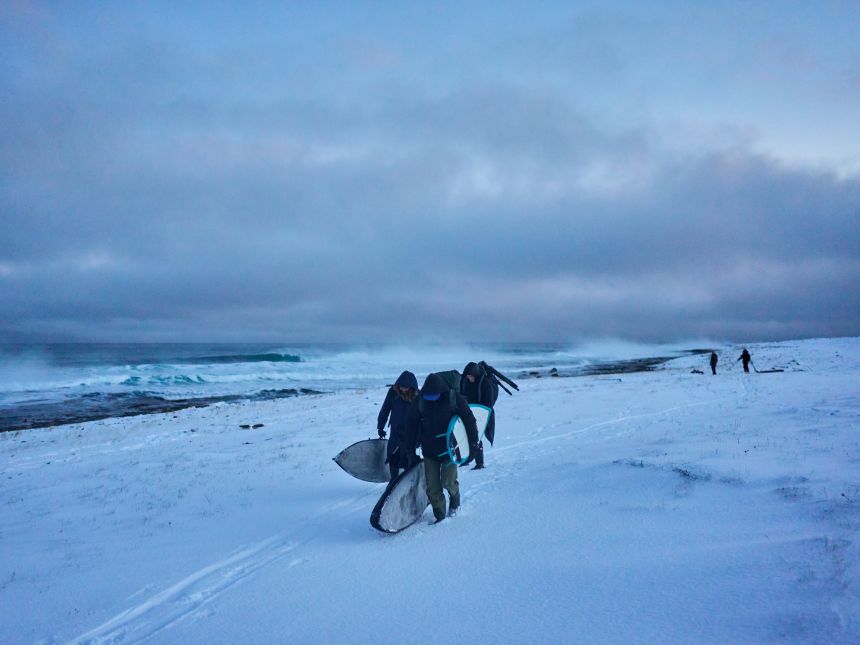
In hindsight, it had been obvious: Standing on a beach at the tip of northern Norway last December, surrounded by ice and snow, in a wetsuit, the chill was inevitable. Plus, he and his fellow surfers had walked for over an hour through the snow to even get to the ocean.
“It felt like I was on some ice planet from ‘Star Wars’ or something,” Graves told CNN.
The surfers were experiencing the effects of a polar vortex — a large area of low pressure and swirling cold air — and the air temperature had dropped from around minus 5 degrees Celsius (23 Fahrenheit) to between minus 15 and 20 (5 and minus 4 Fahrenheit) in just a couple of minutes. Distracted by the epic views and incredible surf, Graves had almost forgotten about the temperature. Now, out of the water, he realized he had lost feeling in his hands and his feet.
“I thought, that’s probably not good,” he said. Turning to his fellow surfer, Swede Tim Latte, he asked “‘Hey, so what’s the deal with frostbite’?” Graves recalled.
After he and his companions decided that they would have to head to the emergency room if he didn’t get the feeling back in 30 minutes, they started the hourlong walk back to the car. In Finnmark at that time of year, when the sun doesn’t rise above the horizon, you only get around three hours of light a day, and it was fading fast.
“If you could imagine a dry desert, it’s the same, but with snow and ice. When you’re in an extreme place like that it’s definitely another level of cold, because there’s nowhere to hide — the wind comes on and it’s just blowing straight through you, or there’s no protection,” Graves said.
“I started focusing on the walk, and then feeling came back, and it was all good, but it’s definitely the closest I’ve been to frostbite,” he added.
This might sound extreme to most, people, but for Swedish surfer Latte, the weather — and the waves that it produces — is one of the best things about Scandinavia.
Growing up in Stockholm, and getting hooked on the sport after trying it in on holiday in Fuerteventura, off the northwest coast of Africa, Latte didn’t live near great surfing spots, or many locals who shared his passion. Although now the sport has grown in popularity in Scandinavia, 20 years ago, “if you had a buddy to go surf with, you’d be stoked,” he explained.
Soon, like many surfers, he was traveling farther afield to contests around the world — often, in much warmer water than he was used to.
“I’m from Scandinavia, growing up surfing here, you’re kind of indoctrinated that you have to go abroad to surf — you have to go to Australia, the US, Portugal, and you’re always traveling,” he said. “Doing that year after year after year, you get kind of tired.”
After chasing waves in the Baltic, and spending more time on the coast Norway, where his mother is from, Latte realized Scandinavia was where he wanted to spend his time surfing and exploring, often away from the crowds that warmer waters attract.
“Everything’s so untapped,” he said. “You can do it all year round, but the best way is in the wintertime.”
This is exactly what Graves traveled 35 hours from his home in Australia to experience. As the host of the popular YouTube series “Weird Waves,” he explores and surfs the world’s most interesting coastlines and spotlights their communities. So, when he and Latte got talking about the prospect of surfing an Arctic Sea shelf, off Finnmark, which borders Finland’s Lapland region to the south, and Russian Murmansk Oblast to the east, he was all in.
The area is home to the largest population of the Indigenous Sámi people in Norway. There are an estimated 80,000 Sámi living across Sápmi, their ancestral homeland, which spans the northernmost parts of Scandinavia and Russia’s Kola peninsula.
Having grown up in Puerto Rico, and now living in Australia, Graves said that experiencing a culture where herding reindeer is so integral to everyday life was eye-opening.
“Our Airbnb was owned by a local so they left us a reindeer heart with a cool little note that’s like, ‘Welcome to your Airbnb. And here’s some reindeer heart. It’s good with beer and some chips.’ To me, that is so cool.”
“Being on a surf trip, [experiences like that] just warms me and and makes me super excited because that’s such a unique surf experience.”
With the cold and the spectacular waves, Graves said it was a perfect chance to test his limits.
“What other opportunity am I going to have to be able to experience really good waves with nobody around — because that’s a rarity in itself these days — and then to kind of feel completely out of my normal element?” Graves said.
“I was confronted with something super unknown to me,” he added. “Surfing in general is just a good teacher of that, because you are sort of in another world a lot of times. And I feel like it’s taught me a lot of lessons.”