
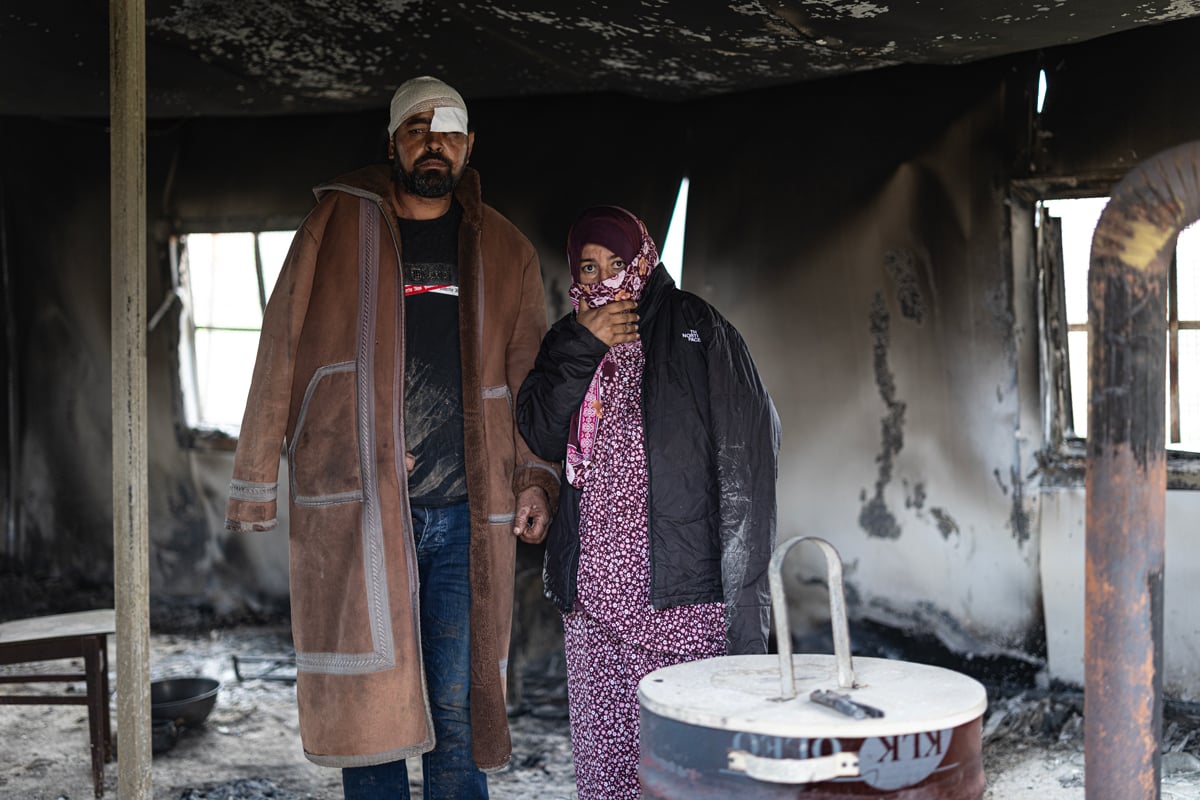
Life in Khallet a-Sidra, a Palestinian Bedouin hamlet in the central West Bank, had grown increasingly difficult after the government took office three years ago. Villagers described heightened harassment and violence by settler extremists, with the police and IDF failing to prevent the attacks.
Things began to turn even worse in October 2025. A series of violent assaults and other incidents over the following three months culminated with the depopulation of the hamlet, the 57th village to be emptied out by settler violence.
Now, the same settler violence that forced out Khallet a-Sidra is threatening the adjacent Palestinian town of Mukhmas, whose 1,000-plus residents fear for their safety and their livelihoods.
The former residents of Khallet a-Sidra not only blame the extremists but also accuse the government and the military of failing to clamp down on the violence and of taking steps that have made it practically impossible for them to ever return home.
“Life has become worse and worse every day. Not just over the last week or month, but for the last three years,” Yousef Zawahreh, 43, a former resident of Khallet a-Sidra, told The Times of Israel from Mukhmas earlier this month.
Get The Times of Israel’s Daily Edition
by email and never miss our top stories
By signing up, you agree to the terms
On the night of January 17, Zawahreh was at home with his wife when several dozen masked men descended on the dwelling. All told, the broader attack on the hamlet saw several dwellings burned down and a number of Palestinians, Israeli activists and foreign nationals injured, according to the IDF.
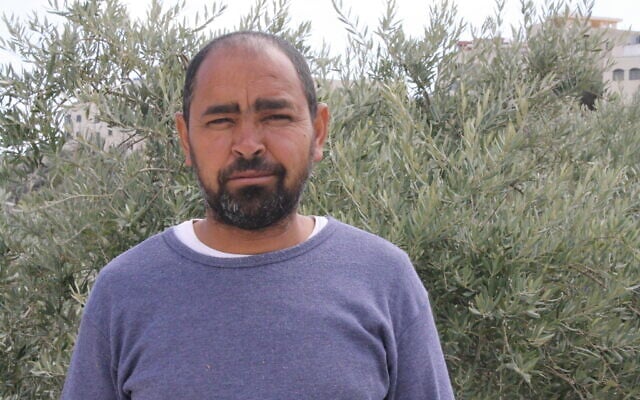
Youssef Zawahreh, a former resident of the displaced Palestinian Bedouin community of Khallet a-Sidra, speaks about the settler attack on his hamlet in January 2026 when his home was burned down, March 9, 2026. (Jeremy Sharon/Times of Israel)
Zawahreh said he and his wife were beaten with clubs by the attackers, who destroyed their water tank and then burned their house down. He suffered a gash to the top of his head, a cut to his eye, and severe bruising all over his body, while his wife sustained injuries to shoulder and leg.
“I lost everything. I escaped the house with just the clothes I was wearing. I have nothing now,” said Zawahreh.
Zawahreh had long ago moved his sheep to Mukhmas to prevent them from being stolen by settlers in the area; extremists have been repeatedly accused of sheep rustling as a form of intimidation. Following the attack, he and the other approximately 15 families that made up Khallet a-Sidra abandoned the village altogether.
In response to questions from The Times of Israel about the January 17 attack, the IDF said simply that a military force together with Border Police personnel was “dispatched to the Mukhmas area” on the night of the January 17 and discovered an abandoned, Israeli-owned car with clubs inside.
The IDF said responsibility for investigating the attack had been passed to the police and Shin Bet.
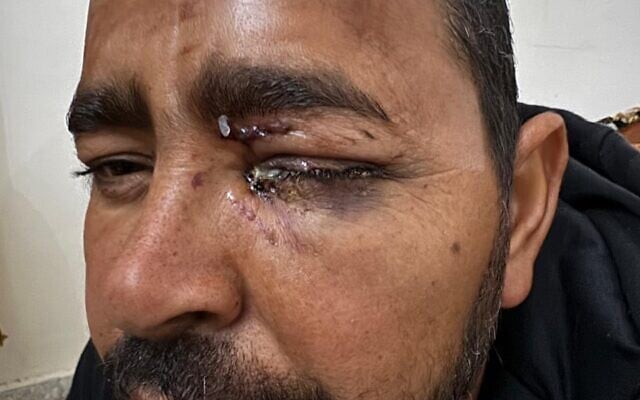
Youssef Zawahreh, a former resident of the displaced Palestinian Bedouin community of Khallet a-Sidra, following a settler attack on his hamlet in January 2026 when his home was burned down and he and his wife were violently assaulted. (Courtesy)
The police said that officers had been dispatched to the area to collect evidence and testimony, and that an investigation had been opened.
But Zawahreh said that police officers who questioned him said since he could not identify the assailants due to their face masks, it was not possible to investigate the incident.
The shepherd is currently living in makeshift accommodation in Mukhmas, but says he cannot take his sheep out to graze for fear of being attacked again.
Residents say the violence has emanated from a nearby illegal Israeli settlement outpost repeatedly demolished by the army, only to be rebuilt again.
The violence has not stopped with the depopulation of Khallet a-Sidra, and attacks are now targeting Mukhmas itself.
Days before The Times of Israel visited Mukhmas, settlers vandalized sheds belonging to Youssef Hammas Abu Ali, 37, a chicken farmer who keeps his birds on the outskirts of the village. Fortunately for him, he had already taken his latest batch of chickens to slaughter and was yet to bring new chicks to the sheds, so he suffered only slight economic damage from the attack.
“The settlers come from everywhere and every direction and attack us in the village. The people cannot live here because the settlers come every day,” Abu Ali said.
“I’m not going leave,” he added defiantly. “This is my village. I have my house [here], my land.”
Backed by the state
Like others, Mustafa Kanaan, 37, a herder and resident of Mukhmas who has also faced repeated settler harassment, blames the Israeli government as much as the extremist settlers themselves.
“The government supports the settler violence to displace the people here. Life is not possible like this,” he said.
The harassment and violence experienced by those in Khallet a-Sidra, and now Mukhmas, is a reality that has been repeated across the West Bank since the outbreak of war in Gaza following the Hamas invasion and atrocities of October 7, 2023.
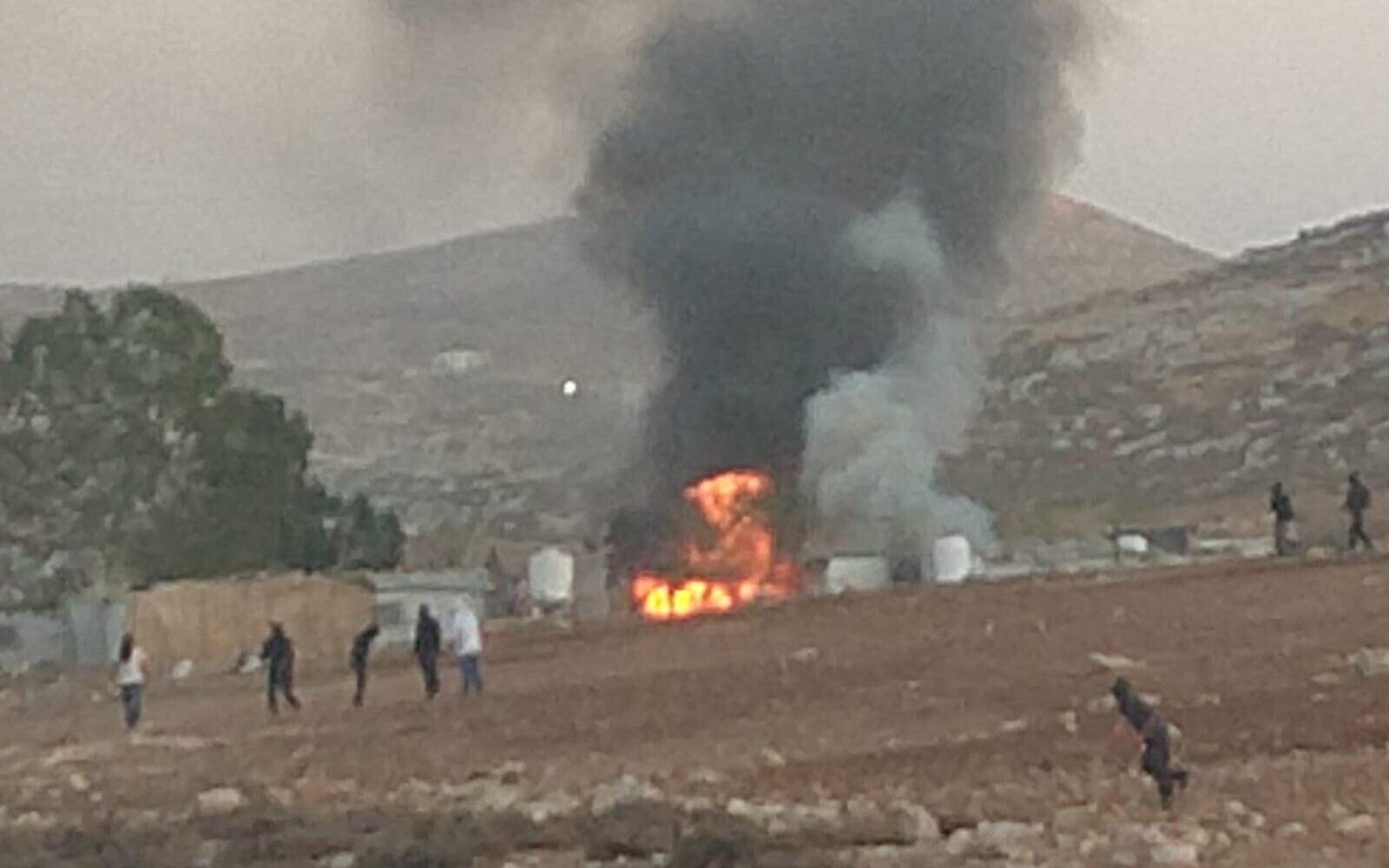
A burning home, allegedly torched by settlers, at the Bedouin community of al-Ara’ara, near Mukhmas, west of Ramallah, in the West Bank, October 25, 2025. (Courtesy/Torat Tzedek)
“The settlers plan to displace the Palestinian people from all the land, they don’t want to see any Palestinian on this land. They say this land belongs to them, not to Palestinians,” charged Zawahreh.
According to the B’tselem human rights group, 57 Palestinian communities, home to over 3,900 people, have been displaced since that date due to settler violence and harassment in Areas C and B of the West Bank. Another 530-odd Palestinians have been forced out of their homes in 17 partially displaced West Bank communities.
Under the Oslo Accords, Israeli authorities were given full military and civil control over 60 percent of the West Bank termed Area C, encompassing all Israeli settlements and home to some 500,000 people and a number of Palestinian villages and towns where around 200,000 Palestinians live. In Area B, the Palestinian Authority has civil control and shares military control with Israel.
B’tselem and others allege that the policies adopted by the state and the military towards these communities amid the reality of the settler violence amount to state-sponsored ethnic cleansing, largely focused on Area C.
Illegal settlement outposts are frequently cited as the source of violence against nearby rural Palestinian communities.
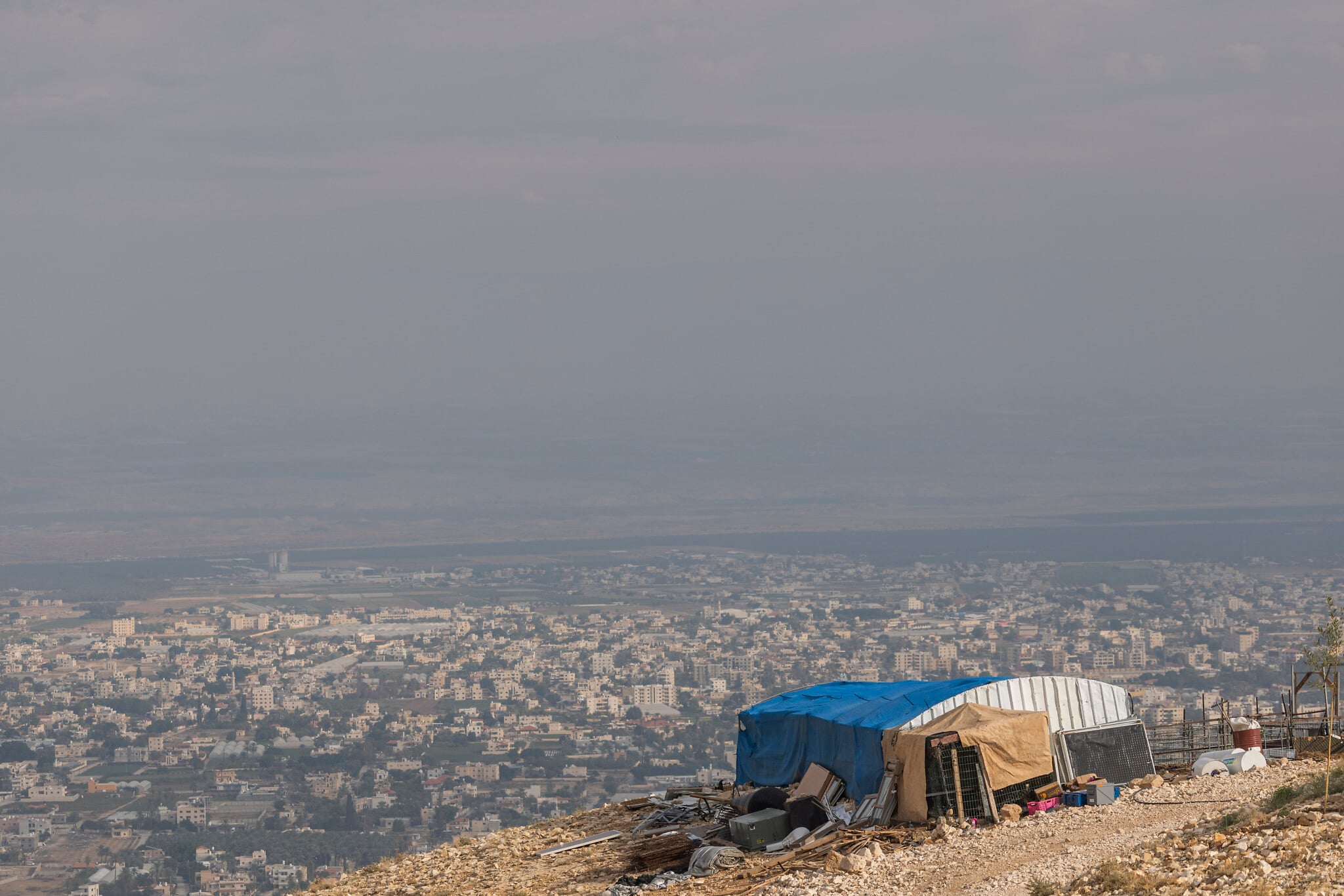
View of the Hasmonean Farm, an Israeli outpost near the city of Jericho, West Bank, December 21, 2025. (Chaim Goldberg/Flash90)
The ever-increasing level of state support for such outposts, which have mushroomed across the West Bank in the last three years, is another frequently cited example of how the government is actively backing the uprooting of Palestinian communities.
The government includes Religious Zionism party leader Bezalel Smotrich and Otzma Yehudit head Itamar Ben Gvir, both hardline nationalists who are outspoken supporters of settlement expansion. Both have outspoken say on Israel’s policies in the West Bank: Smotrich holds a ministerial role within the Defense Ministry giving him authority over the issue, while Ben Gvir’s position as National Security Minister allows him to set priorities for law enforcement bodies operating in the West Bank.
“This government, this Smotrich and Ben Gvir government, started problems with Palestinian people from day one of their government,” said Zawahreh. “This government supports the violence.”

Settlements and National Missions Minister Orit Strock (second from right) and Finance Minister Bezalel Smotrich (third from left) attend a ceremony at the illegal settlement farming outpost of Meitarim Farm, handing over ATVs to illegal settlements and farming outpost, April 3, 2025. (Freddy Barmi)
Several residents of Mukhmas and Khallet a-Sidra who have suffered from settler violence told The Times of Israel that their assailants had come from Kol Mevaser, an illegal settlement outpost on a hilltop opposite Mukhmas.
Rabbi Arik Ascherman — a veteran Palestinian rights campaigner whose Torat Tzedek organization organizes volunteer activists to assist vulnerable Palestinian communities around the West Bank, including Khallet a-Sidra — pointed to the imposition of a closed military zone over the Bedouin hamlet and other moves by the Israel Defense Forces as examples of the state bolstering settler violence and driving Palestinian dispossession.
The army imposed a 12-month closed military zone order on Khallet a-Sidra in December 2025 after previous settler attacks, including a particularly violent arson attack and assault on October 25. Such orders mean that only residents can enter.
Although this in theory could help protect villagers, in practice it makes them more vulnerable since it bars the presence of human rights activists.
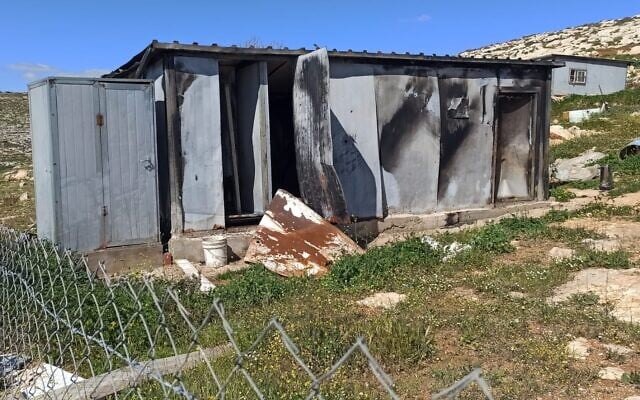
Burned out buildings in the Palestinian Bedouin community of Khallet a-Sidra whose residents have been displaced following repeated assaults and arson attacks by extremist settlers in the area March 8, 2026. (Courtesy Torat Tzedek)
While such orders are frequently enforced against activists who insist on continuing with their efforts, extremist settlers who enter the closed military zone rarely face any consequences.
The IDF told The Times of Israel that the closed military zone was put in place “in accordance with operational assessments in order to maintain security and to ensure that public order is not violated.”
Ascherman himself tried to enter the ruins of Khallet a-Sidra with Zawahreh on March 8 after further damage was done to the hamlet, but was chased away by two extremists who threw a rock at him and tried to pepper spray him.
The army has also refused to allow the residents of Khallet a-Sidra to rebuild their homes which were burned or otherwise wrecked in the January 17 assault.
The state considers the buildings in the Khallet a-Sidra illegal, since they were built without permits, which is why the military has refused to allow the residents to rebuild their homes.
“The settlers burned their homes, there’s no debate about that, and now the state is not letting them rebuild what was burned,” said Ascherman.
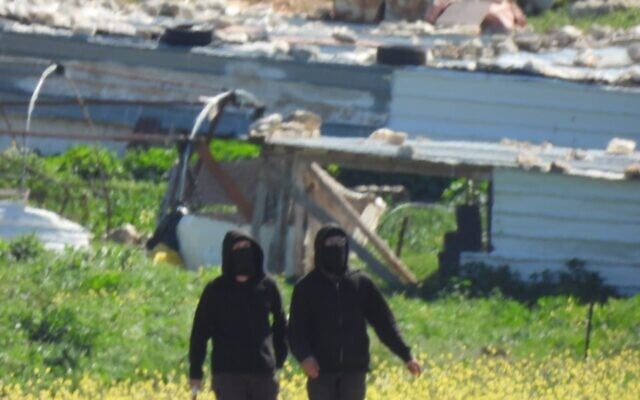
Jewish extremists walk among the ruins of the Palestinian Bedouin hamlet of Khallet a-Sidra, March 8, 2026 (Courtesy Torat Tzedek)
The army also blocked off the sole road into the hamlet.
“This is a death sentence for the community,” Ascherman said. “They survived the violence and pogroms but they can’t survive not having a connection to Mukhmas.”
The IDF said in response that “the placement, opening, and closing of roadblocks is done based on operational assessments and security considerations only. Their placement allows for operational control and effective defense.”
‘My roots are here’
In contrast to the residents of Khallet a-Sidra, the extremist settlers of Kol Mevaser, which also lies within the closed military zone, have managed to repeatedly rebuild the illegal outpost after the army demolishes it.
Last week, the rudimentary homes put up by the settlers were once again knocked down by the army. A day later they were back up.
On Wednesday morning, Israeli forces again removed tents that had been set up by Kol Mevaser residents on the hilltop hours earlier, though they left a wooden structure intact and made no arrests.
Following the demolition, Kol Mevaser settlers staged a fresh attack on Mukhmas, setting a fence on fire and attempting to burn a chicken coop, according to Torat Tzedek activists.
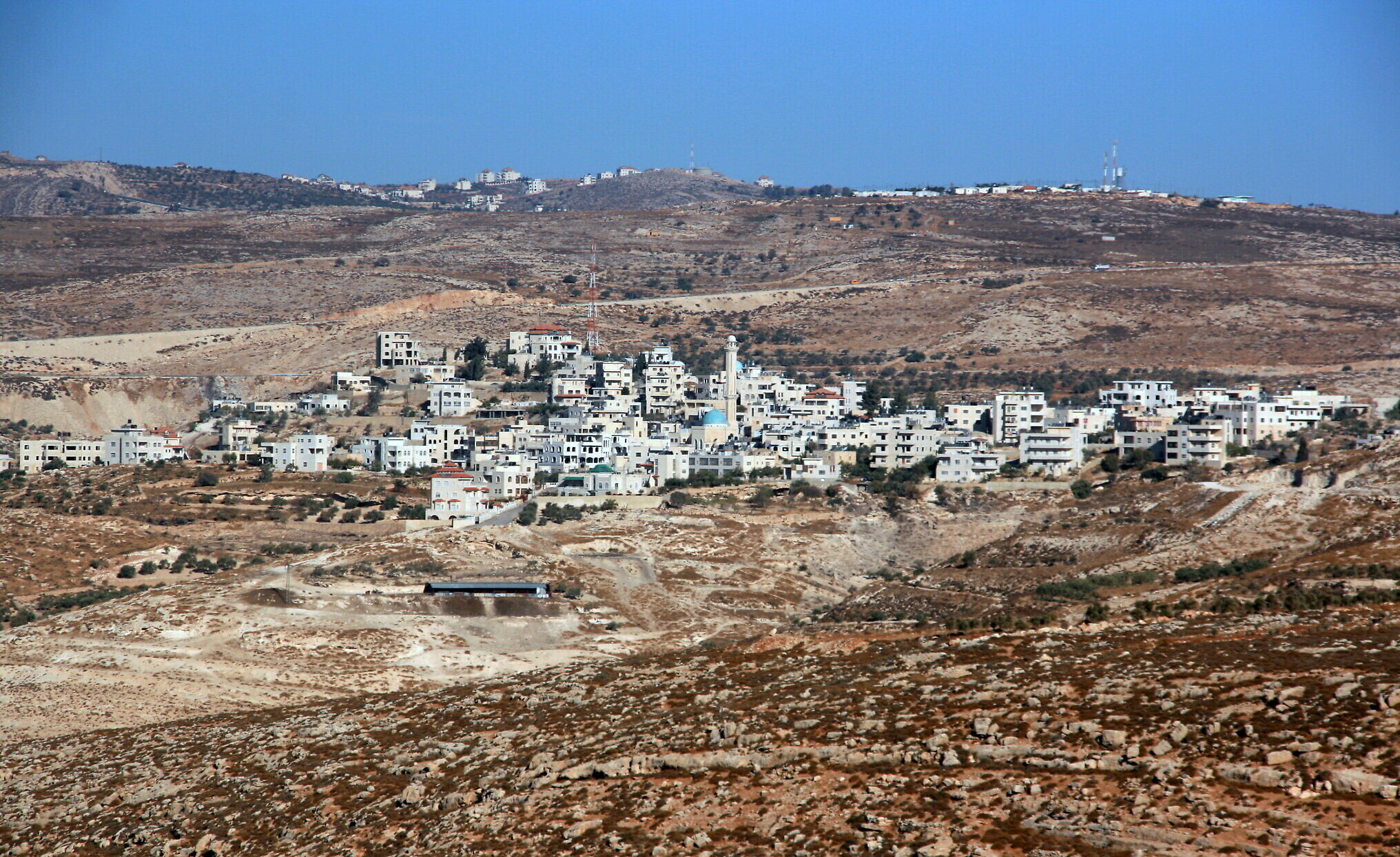
The village of Mukhmas (Zev Rothkoff)
“Despite the difficulty, we are not broken, and we will continue to build anew and to settle the Land of Israel,” read a message on a WhatsApp group for Kol Mevaser activists.
Ascherman suggested that the only way to guarantee the outpost’s permanent removal would be to impose the same measure Khallet a-Sidra was subjected to, by blocking access and erasing the access road illegally created by the settlers to reach the hilltop.
So long as the road remains, settlers are able to bring construction materials to the hilltop and rebuild.
The failure to arrest the settler activists and indict them for repeatedly violating the closed military zone orders means that there is also little to deter them from their activities, including launching attacks on Palestinians in the area.
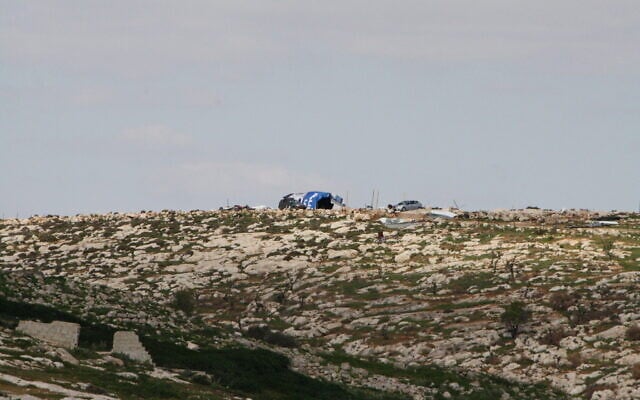
The illegal settlement outpost of Kol Mevaser located in the central West Bank close to the Palestinian town of Mukhmas, March 9, 2026. The outpost was demolished a day later, and then immediately rebuilt. (Jeremy Sharon/Times of Israel)
Kanaan, the Mukhmas herder, said he would not leave despite the unrelenting assaults from the hilltop extremists.
“I like the simple life,” he said of his pastoral livelihood. “This is why I stay here. This is my land, and that of my grandfather before me, and for a thousand years before that. My roots are here.”
Unlike Bedouin hamlets like Khallet a-Sidra, which are typically collections of rudimentary tents, huts, lean-tos and animal pens, Mukhmas is a long-established Palestinian town dating back to the Ottoman era.
So far, the attacks on Mukhmas have been concentrated on the outskirts of the village.
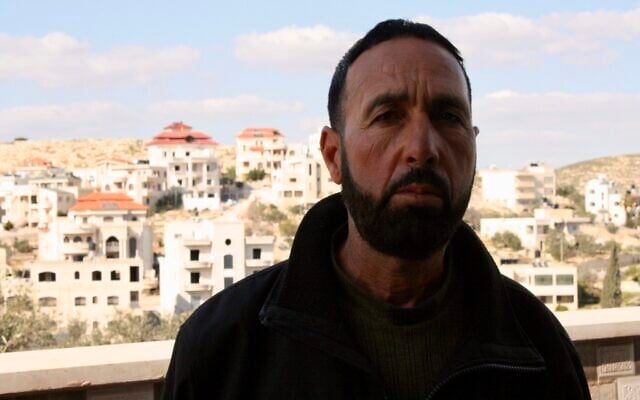
Aed Abu Ali, a resident of the Palestinian town of Mukhmas, speaks about a recent settler attack in which one resident was shot and killed, and 250 of his sheep stolen, March 9, 2026. (Jeremy Sharon / The Times of Israel)
On February 18, as many as 20 settlers from nearby outposts descended on a warren of sheep pens located at the edge of the town belonging to the family of Aed Abu Ali (no relation to Yussuf Abu Ali). Among the settlers was the security coordinator of a nearby illegal settlement outpost who was armed with a rifle, according to reports and witnesses to the attack.
Although an IDF force arrived at the scene, the soldiers forced villagers who had come to try and thwart the theft of sheep away from the area, Aed Abu Ali said.
He also alleged that he was beaten by the soldiers, and that they helped steal the sheep.
The IDF did not comment on the allegation that IDF soldiers beat Palestinians during the incident, or helped the Jewish assailants steal the sheep.
Security camera footage shows the settlers, most of whom had their faces masked, jumping the gate of the sheep pen, opening it from the inside and then releasing dozens of sheep which they herded out of the village and toward the local settlement outposts.
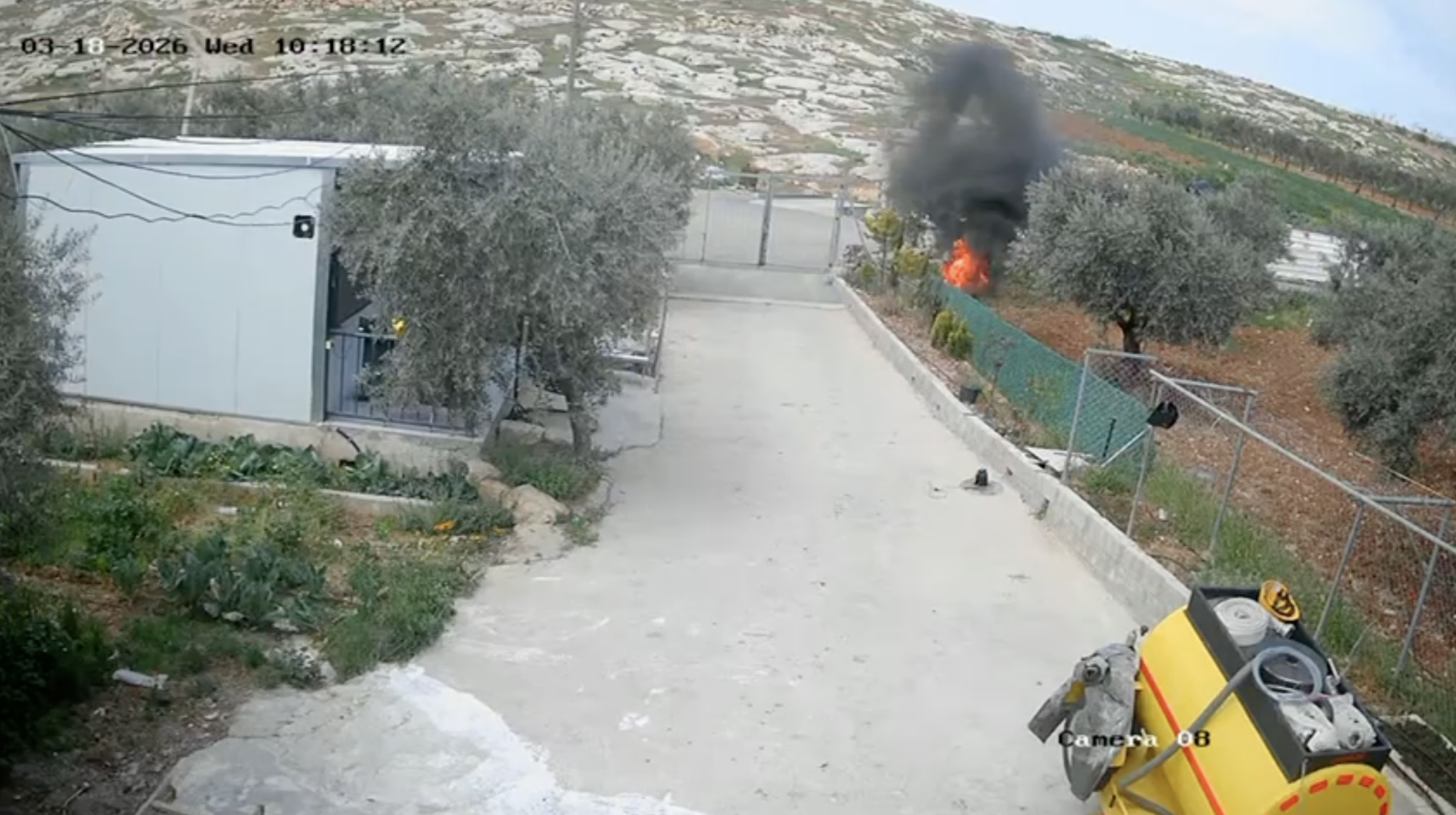
Screenshot of security camera footage showing the results of an arson attack by masked settler extremists against property in the West Bank Palestinian village of Mukhmas, March 18, 2026. (Courtesy)
During the incident, Nasrallah Abu Siam, a 19-year old Palestinian-American who was among the villagers who confronted the attackers in an effort to prevent the theft of the sheep, was shot and reportedly beaten. He died a day later of his injuries. Two other villagers sustained gunshot wounds in the attack.
Police, who are investigating the shooting, claimed that “it is not possible to know the identity of the shooter,” but added that according to a report by IDF forces who arrived in Mukhmas, a soldier and the security coordinator from the nearby settlement “fired into the air in order to restore order.”
Police said a joint investigation with an IDF investigative unit was ongoing.
“We view violence of any kind as grave and will continue to act resolutely together with the security forces to locate, arrest, and investigate those involved in these incidents until they are brought to justice,” a police spokesperson said.
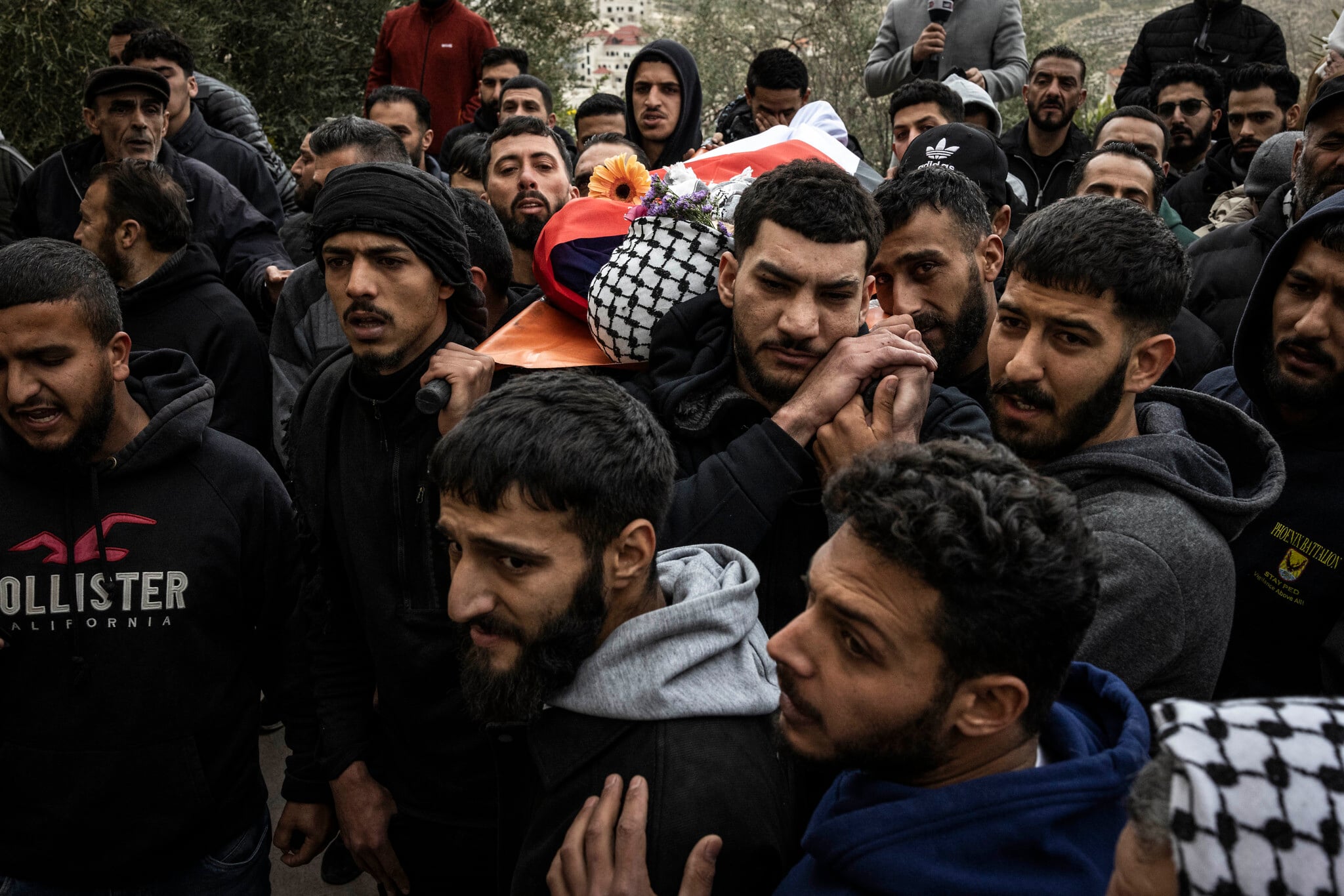
Mourners carry the body of Palestinian-American Nasrallah Muhammad Abu Siam, 19, February 19, 2026, who was allegedly shot by settlers, during his funeral in the West Bank village of Mukhmas, east of Ramallah. (Photo by JOHN WESSELS / AFP)
Samar Abu Ali, Ayed’s wife, was despondent about the reality of life in Mukhmas. She said the family now has no livelihood, save for the 16 sheep that wandered back to them in the days following the attack.
“We have no money. I have no expectation that we will get anything back,” Samar said. “We just want to live in safety.”
But Kanaan offered a more hopeful view, insisting that the majority of Israelis who abhor the extremist settler violence could push the government to reverse course.
“I believe there are good people in Israel. These people have to make a difference. They have to press the government to change, and to change this life,” he said. “The good people in Israel, the Jewish people, the good people who believe in peace — these kind of people can make a difference.”