
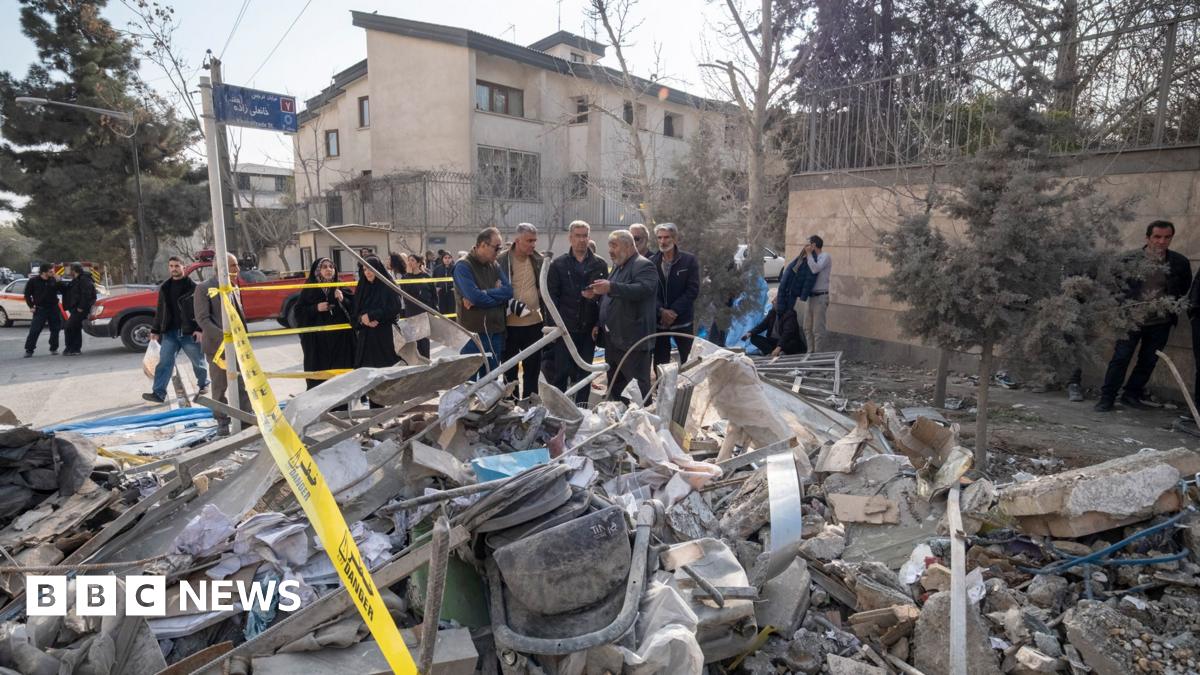
Damage to world’s largest LNG plant will cost Qatar billions – energy ministerpublished at 05:06 GMT
05:06 GMT
 Nick Marsh
Asia Business Reporter, Singapore
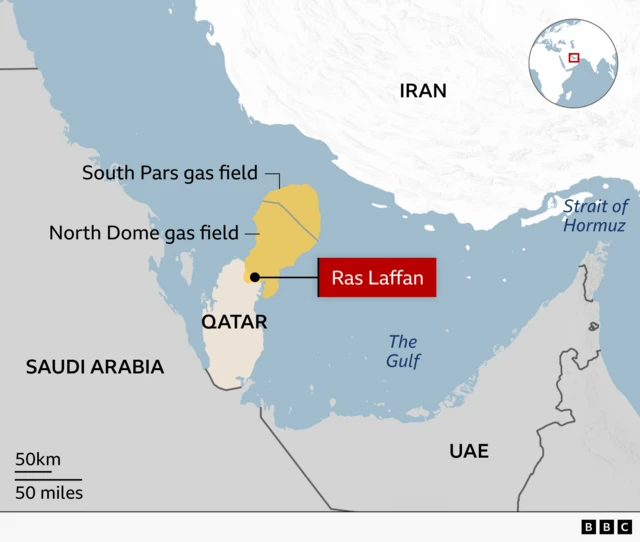
We knew Iran’s attacks on Qatar’s Ras Laffan facility were significant, but these are huge numbers being cited by the country’s energy minister.
He says Qatar’s liquefied natural gas (LNG) export capacity will reduce by 17% over the next five years, causing the country to lose $20bn in annual revenue.
LNG is created by cooling natural gas down to a very low temperature using a large industrial processing unit known as a train. The minister says the Iranian attacks on damaged two of the plant’s 14 trains.
Iran’s attack on Ras Laffan was in response to an Israeli attack on Wednesday to its South Pars gas field, which is located just north in the Persian Gulf.
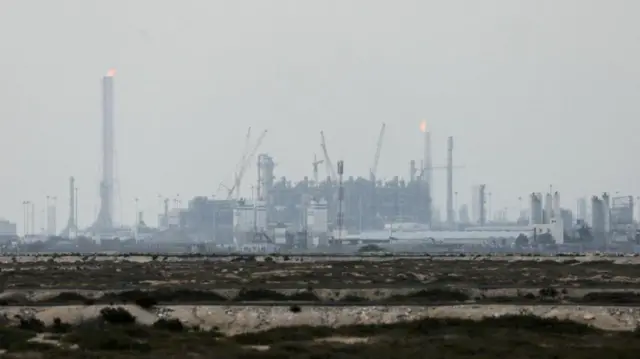 Image source, ReutersImage caption,
Ras Laffan LNG production facility in Qatar
“Five years isn’t a repair,” Ciaran Roe, chief commercial officer at HySights, a clean fuels market intelligence provider based in Singapore, tells the BBC. “It’s a full rebuild”.
Countries in Asia are the most reliant on Qatari LNG, especially Japan, South Korea, India and China. In Europe, Italy and Belgium are already big customers – but the continent as a whole is becoming increasingly reliant on Middle Eastern gas, having turned away from Russian imports in the wake of the Ukraine war.
Qatar is one of the leading, if not the leading player, in the global natural gas market.
“Fear may be embedded in the market for several months, if not years,” says Roe. “This will change governments’ thinking towards LNG imports”.
LNG is a crucial energy source needed to heat people’s homes, cook food and even power ships and factories. It’s also needed to make fertiliser to grow food.