
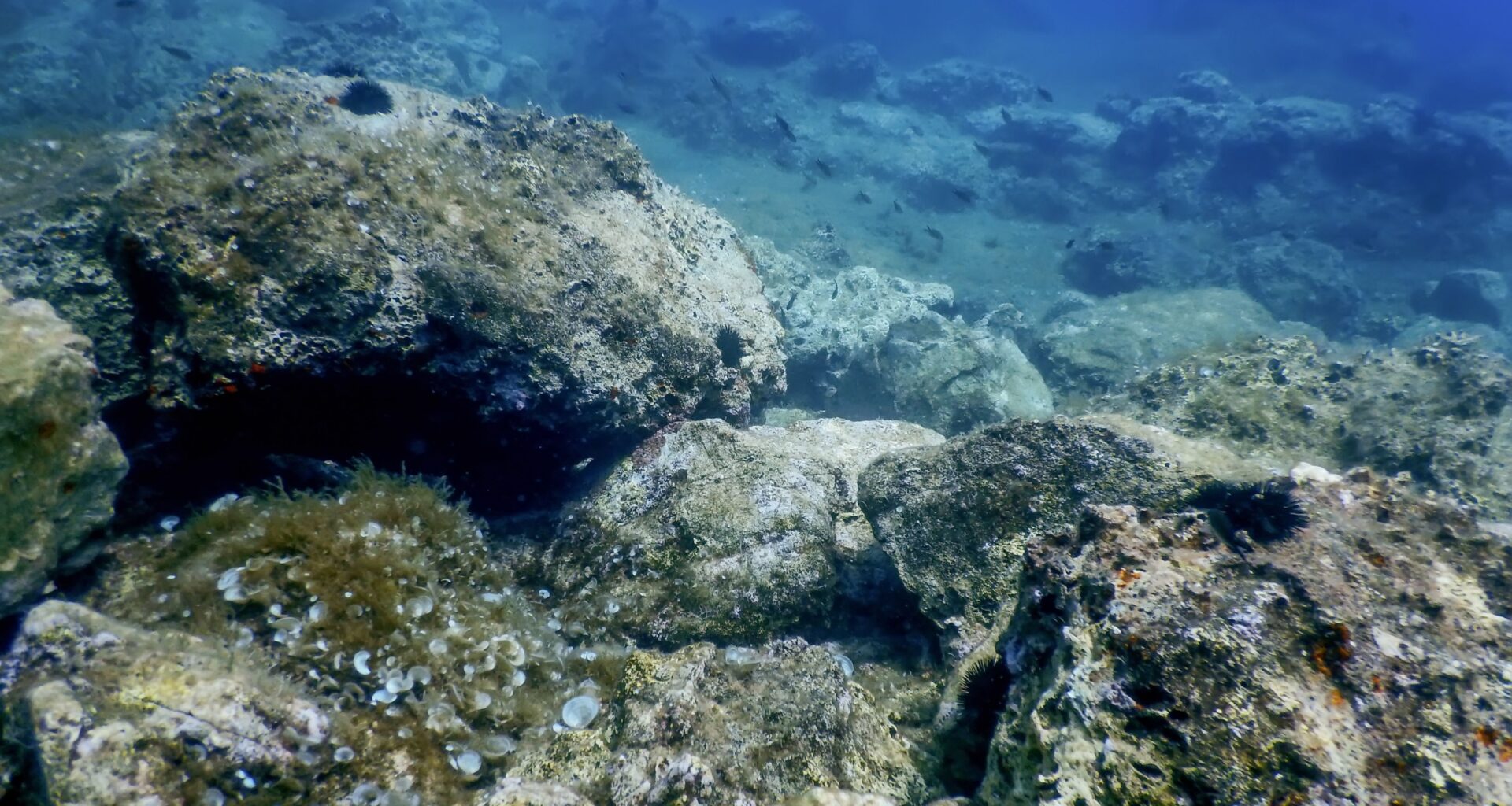
A half-billion-year-old stretch of seafloor is giving scientists something they’ve long been missing: a reliable clock for the Cambrian world.
New research shows that layered rocks in southern Sweden preserve a detailed timeline of a major climate disruption, allowing fossils and chemical signals from distant regions to finally line up in time.

That shift could reshape how researchers understand one of the most important periods in the history of life.
Rocks that kept time
Within a continuous sequence of ancient seafloor sediments in southern Sweden, thin layers record both fossil remains and shifting chemical signals across millions of years.
By tracking those patterns, Damien Pas and colleagues at the University of Lausanne (UNIL) connected the layered record directly to the timing of the climate disturbance.
Because the sequence accumulated without major breaks, the record preserves the full rise and fall of the event in its original order.
That continuity sets clear limits on when the disruption began and ended, opening the way for broader comparisons across the Cambrian world.
Why timing changed everything
During the Cambrian, about 539 to 487 million years ago, marine animals diversified rapidly, yet their environmental timeline remained fuzzy.
Much of that uncertainty came from sedimentary rocks that preserve life and climate clues but rarely carry minerals that are easy to date directly.
Without a dependable clock, a carbon spike or extinction in one basin could line up loosely, or not at all, elsewhere.
As long as that gap persisted, researchers argued over sequence instead of cause, and global comparisons remained shakier than they should.
Reading Earth’s orbital rhythm
Earth’s orbit never stays perfectly fixed, and those small changes can pace climate in repeating, predictable patterns over long stretches.
Geologists call the rock record of that pacing cyclostratigraphy, reading climate rhythms written into layered rock.
In the Swedish core, the team tracked repeating chemical rises and dips that matched the tempo expected from orbital cycles.
Once that pattern held across the section, rock depth stopped being just thickness and started marking elapsed time directly.
Carbon leaves a clear mark
One target in that new timeline was carbon isotopes, slightly different forms of carbon that move through air and water differently.
When the global carbon cycle changes, those proportions shift, leaving a chemical marker that can appear in rocks worldwide.
Here, that marker was the Drumian Carbon Isotope Excursion (DICE), a sharp dip in marine carbon signals.
Dating DICE tightly gives geologists a rare fixed point for aligning rock records that formed oceans apart.
Sweden’s unique rock record
Southern Sweden offered something unusual: a long, fossil-rich seafloor archive that built up steadily instead of vanishing into repeated gaps.
Earlier work in the Alum Shale Formation had already shown that southern Scandinavia preserves a continuous carbon record useful for global matching.
That continuity meant fossils, sediment changes, and chemical signals remained in the same physical order instead of being scrambled by erosion.
Because the section stays so complete, it can serve as a reference when less perfect records from other places disagree.
Matching rocks across continents
With the Swedish timeline in hand, researchers could compare rock layers from different continents without relying only on fossils.
The DICE signal had been spotted in widely separated basins, but its exact timing remained frustratingly loose.
A tighter age lets those scattered sections line up by event, which can expose whether biological changes were simultaneous or regional.
Seen that way, local geology becomes a global story about climate, timing, and early ecosystems.
Climate was always moving
The new clock also showed that the climate in this warm ancient world pulsed with orbital changes rather than wandering randomly.
As Earth’s tilt and orbital shape varied, sea level and dust delivery changed, because wind and water moved sediment differently.
Related middle Cambrian patterns had already appeared in Utah in earlier work from UNIL, suggesting orbital pacing was not confined to one basin.
Across more than one basin, that broader pattern strengthens the case that early Paleozoic climates could respond quickly.
Fossils finally make sense
Fossils become more informative when their surrounding rocks carry exact ages, because sequence starts to reveal cause instead of coincidence.
If a climate disturbance arrives before an ecological turnover, that order hints the environment helped drive the change.
For the Cambrian seas, that sharper order matters because many key animal groups appeared while oceans and chemistry were changing fast.
Better dates will not solve every evolutionary puzzle, but they narrow the window where real causes can hide.
Next steps for the timeline
No single core can capture every shoreline, ocean depth, or local disruption from a world that lasted tens of millions of years.
Local chemistry can blur a global signal, and even a strong clock works best when other sections agree with it.
Future work will test the new timeline against more cores, while UNIL and partner teams look for matching dates elsewhere. If those pieces align, the Cambrian could gain the kind of shared timetable later periods already enjoy.
Even so, confirmation from other records remains essential, because early animal history cannot rest on one surviving archive.
For now, however, this half-billion-year-old seafloor record already functions as a “rock clock,” linking fossils, chemistry, and climate rhythms on common terms.
The study is published in the journal Nature Communications.
—–
Like what you read? Subscribe to our newsletter for engaging articles, exclusive content, and the latest updates.
Check us out on EarthSnap, a free app brought to you by Eric Ralls and Earth.com.
—–