
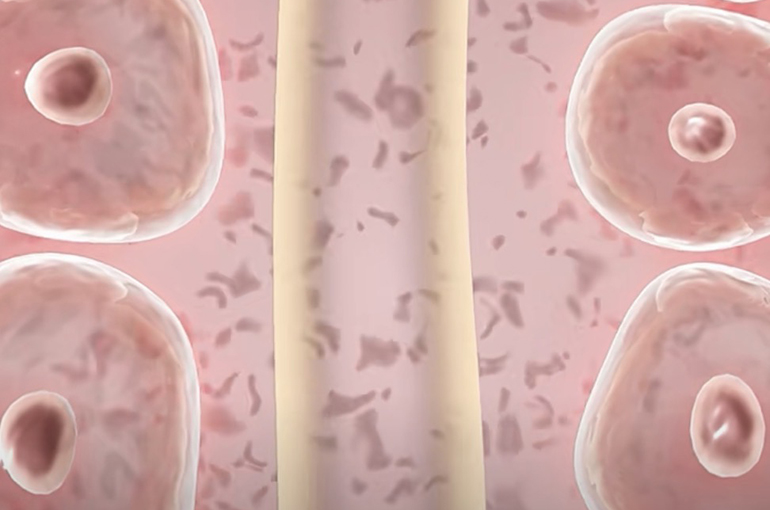
(Yicai) March 20 — Chinese researchers have developed a mitochondrial capsule that can safely and efficiently deliver the tiny energy-producing organelles into cells and tissues, opening a new therapeutic avenue for diseases, including Parkinson’s disease, that are caused by mitochondrial dysfunction.
The technique, developed by researchers at the Guangzhou Institutes of Biomedicine and Health under the Chinese Academy of Sciences and Guangzhou Medical University, encloses mitochondria in vesicles derived from red blood cell membranes, according to a study recently published in Cell. The method significantly improved transplantation success in animal experiments.
Mitochondria are known as the powerhouses of human cells. About one in 5,000 people worldwide is affected by congenital mitochondrial genetic diseases. Mitochondrial dysfunction is also a major cause of neurodegenerative and metabolic disorders, including Parkinson’s disease, Alzheimer’s disease, and diabetes.
For years, mitochondrial dysfunction has not been repairable at its source. One way to achieve a therapeutic effect has been to transplant healthy mitochondria into diseased cells or tissues.
The success rate for transplanting exposed mitochondria is less than 5 percent, but that rises to 80 percent when mitochondrial capsules are used, the research team said. After entering cells, the capsules actively integrate with the cells’ existing energy supply network and continue to provide functional compensation.
In a mouse model of Parkinson’s disease, mitochondrial capsules delivered to affected brain regions effectively prevented the continued death of neurons, restored normal mitochondrial function in those areas, and significantly improved the animals’ motor ability to nearly normal levels, the study said.
In a mouse model of mitochondrial genetic disease, the capsules also significantly prolonged lifespan and rescued multiple organs from dysfunction, the study added.
Large-scale production and quality control of mitochondrial capsules will be key to future clinical translation, Zhu Hongming, a doctoral supervisor at Tongji University School of Medicine, told Yicai. If clinical translation succeeds, the technology could help treat not only neurodegenerative and metabolic diseases, but also play an important role in interventions for heart failure and organ aging, he added.
Editors: Dou Shicong, Emmi Laine