
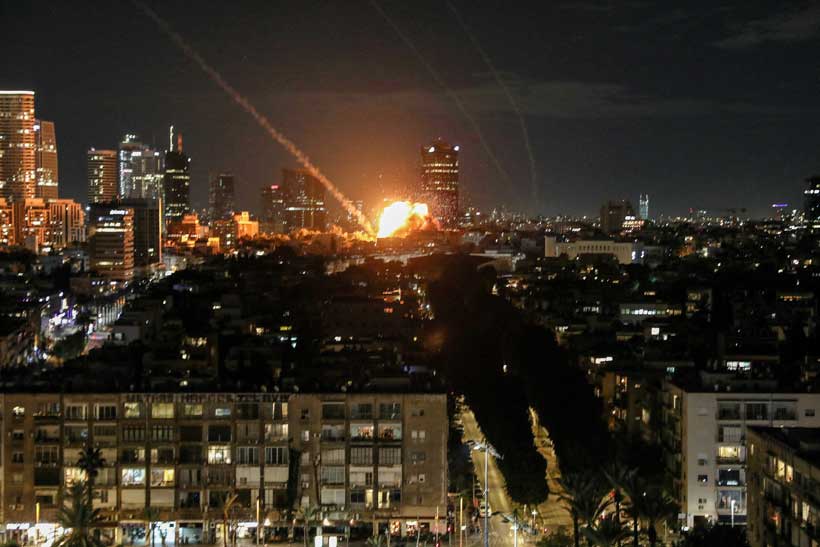
Fresh strikes between Israel and Iran mark a dangerous escalation in a war that has already spread across the region and shaken the global economy.
The latest exchange comes a day after Iran hit an Israeli oil refinery, and amid warnings from Donald Trump urging Israel to avoid further attacks on a key Iranian gas field shared with Qatar.
The conflict, which began on February 28 with a joint U.S.-Israeli assault, has killed thousands, mostly in Iran and Lebanon, and triggered instability across the Middle East.
Latest Strikes
Israel launched new attacks on Tehran, targeting what it called the infrastructure of the Iranian regime.
In response, Iran fired a barrage of missiles toward Israel, setting off air raid sirens in Tel Aviv and prompting interceptions that lit up the sky with explosions.
The violence also spilled into the Gulf. The United Arab Emirates reported a missile threat, while Kuwait said a drone strike hit one of its oil refineries.
Energy Shock Spreads
The conflict has increasingly centered on energy infrastructure, raising fears of a prolonged global crisis.
Iran struck Qatar’s Ras Laffan Industrial City, a facility responsible for around one fifth of the world’s liquefied natural gas, causing damage expected to take years to repair.
Saudi Arabia’s main Red Sea export route was also targeted, as the war disrupts alternative pathways meant to bypass the Strait of Hormuz, through which about a fifth of the world’s oil normally flows.
Although oil prices dipped slightly on Friday after Western nations and Japan pledged to help secure shipping routes and boost output, the broader risk of a global energy shock remains high.
Political Strains and Mixed Signals
Trump said he had warned Israeli Prime Minister Benjamin Netanyahu against targeting energy infrastructure again, insisting such strikes would not be repeated.
Netanyahu, however, stated that Israel had acted alone in a previous attack on Iran’s South Pars gas field, highlighting possible gaps in coordination between Washington and its closest ally.
U.S. intelligence chief Tulsi Gabbard acknowledged that the United States and Israel are pursuing different objectives in the war, underlining strategic divergence.
Global Response
Major powers including Britain, Canada, France, Germany, Italy, the Netherlands and Japan have expressed readiness to help secure safe passage through the Strait of Hormuz and stabilise energy markets.
However, European leaders have made clear they are reluctant to be drawn into the conflict. French President Emmanuel Macron stressed that de escalation and adherence to international law remain the priority, while Germany signaled any role would come only after fighting ends.
A New Phase of War
Iran has warned that attacks on its energy infrastructure mark a turning point.
A military spokesman said the conflict has entered a “new stage,” with Tehran now targeting energy assets linked to the United States and its allies. He warned that further strikes on Iran would trigger sustained retaliation against regional infrastructure.
Despite heavy strikes, Iranian officials insist their missile production remains intact and operating at full capacity.
Analysis
The war is shifting from a military confrontation to an economic one.
By targeting energy infrastructure across the Gulf, Iran is demonstrating its ability to impose global costs, even under sustained attack. The strikes on major facilities highlight both the reach of its capabilities and the vulnerability of critical supply networks.
For Israel, the campaign may be delivering tactical gains, but it risks widening the conflict geographically and economically.
For the United States, the situation is becoming more complex. Trump is trying to limit escalation while avoiding political fallout from rising fuel prices, yet the conflict is exposing divisions with Israel and reluctance among allies to get involved.
The hesitation from Europe and other partners reflects a deeper concern: this is a war with unclear goals and no obvious exit.
As attacks intensify and energy markets remain on edge, the conflict is entering a phase where its global consequences may outweigh its original military objectives.
With information from Reuters.