

Lately, everything just feels so expensive. When I leave the grocery store after shopping for my family of five, my receipt looks like a sash marking me the queen of the supermarket.
Everything from gas and groceries to quick errands, book fairs and even field trips add up much faster than they used to. For a while, I chalked it up to inflation and threw my hands up, thinking there was nothing I could do.
Article continues below
You may like
I was making decisions on autopilot — going to the same gas station, buying the same brands, choosing whatever was closest instead of realizing that small changes could make a huge difference.
1. I check gas prices before I leave

(Image credit: Future)
This was the easiest win. Instead of pulling into whatever station is closest, I now take 10 seconds to check gas prices using Google Maps or ask AI something simple like: “Where’s the cheapest gas within 5 minutes of me?”
Most of the time, the difference is small — but not always. And over a week or two, it adds up.
The habit shift: From “I’ll deal with it when I get there” to “quick check before I leave.” It doesn’t take much time and the savings really adds up.
2. I ask AI for the “better version” before I buy
(Image credit: Future)
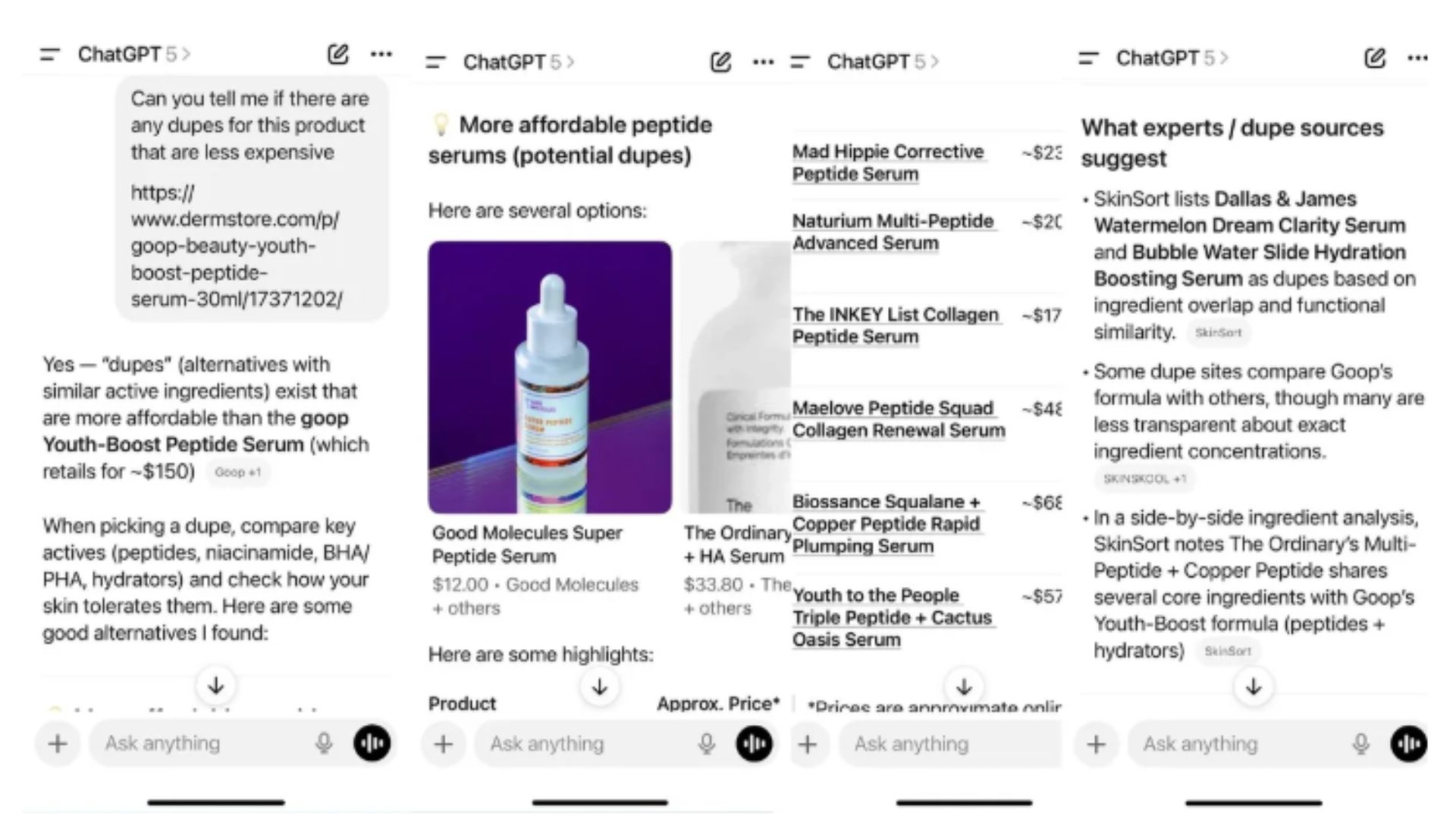
This is one of the simplest habits I’ve picked up — and it’s saved me from a lot of unnecessary spending. Before I buy something, I’ll quickly ask:
“Is there a better value version of this?”
“What’s a cheaper alternative that’s still good quality?”
What to read next
The habit shift: I recently did this with my skin care routine and have gotten incredible results with much less expensive products. All I do is run the ingredients of the luxury products by ChatGPT and ask it to find dupes.
Other times when using this hack, AI points out:
a similar product that costs lessa larger size that’s a better deala reminder that I don’t need it right now3. I use AI to set expectations before we even walk into the store
(Image credit: Future/Amanda Caswell)
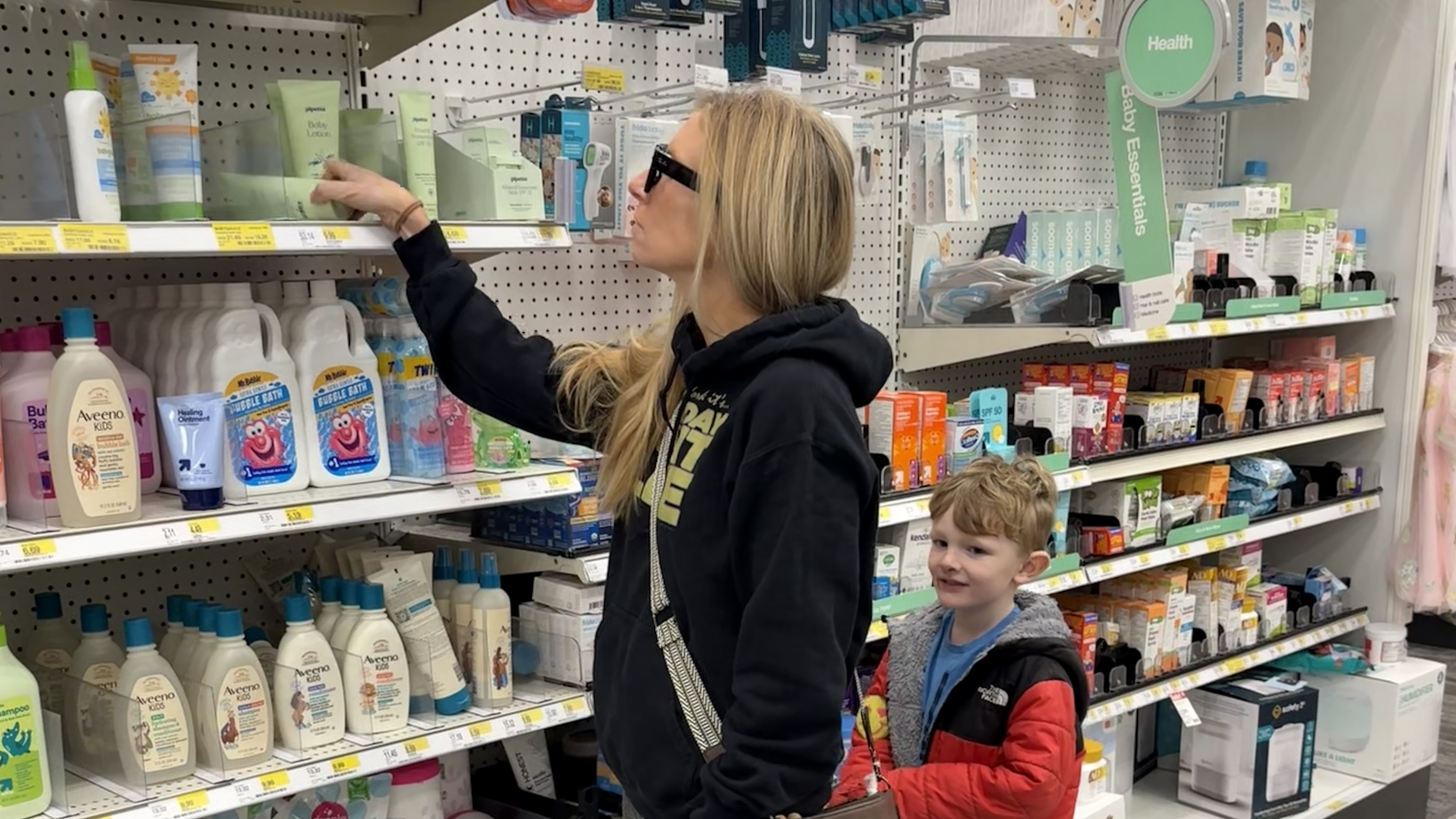
If you have kids, you already know — every store trip can turn into a negotiation.
Snacks. Toys. “Can I get this?” on repeat. And most of the time, I’d either say yes just to keep things moving or say no and deal with the meltdown. Either way, it usually meant spending more than I planned.
The habit shift: Now, before we even go in, I use ChatGPT for a quick reset.
I’ll ask something like: “Give me a simple way to explain to kids that we’re not buying extras today” “What’s a fair rule for kids asking for things at the store?”
In seconds, I got useful tips such as:
Have you child take their picture with the item to add to the wish list.Provided games to distract and avoid meltdownsA useful script when “no” doesn’t work.
I know what you’re probably thinking, “You have to rely on AI to parent your kids?” The short answer is “No” — I’ve done it for ten years without it, but it makes it far easier in pinch. Instead of deciding in the moment (when it’s chaotic), I walk in with a rule — and the kids know what to expect.
4. I stopped running errands randomly — and started grouping them with AI

(Image credit: Norton)
This was one of those habits I didn’t realize was costing me money. I used to run errands whenever I thought of them — a quick trip here, another one later, maybe one more after school pickup. It didn’t feel like a big deal, until I realized how often I was getting back in the car, wasting both time and money.
The habit shift: Now, before I head out, I’ll open ChatGPT or use voice and list out what I need to do: “I need to go to Target, the grocery store and the pharmacy — what’s the most efficient order to do this?” “What errands can I combine into one trip so I’m not driving back and forth?”
AI organizes the plan, suggests the best order, flags what can be grouped together and helps me avoid unnecessary backtracking. Instead of three separate trips, I’m usually making one — which means less gas, fewer “I’ll just grab this while I’m here” purchases and a lot less time wasted.
5. I sanity-check purchases before I buy

(Image credit: Shutterstock)
This is one of the most underrated uses. Before buying something, even something small, I’ll ask:
“Is this a good price for [item]?”
“Are there cheaper alternatives to this?”
Sometimes it confirms I’m making a good choice. Other times, it nudges me toward something better (or reminds me I don’t really need it).
The habit shift: AI turns purchases away from impulse to validation (if the price is right).
Bonus: I stopped relying on habit
This is the biggest one. AI didn’t magically lower prices. It just made it easier to pause and choose differently in real time. Using ChatGPT or Gemini, I can make smarter purchases. And once I started doing that, I realized how many of my spending habits could help me save.
After doing this consistently, a few things became clear.
What worked:
Quick checks before leaving the houseComparing options within a small radiusUsing AI for simple, real-life questionsMaking slightly better decisions more often
What didn’t matter as much:
Rather than prompting, I spoke to AI like a shopping assistant.I didn’t try to optimize anything, just let the AI make good suggestions.I didn’t spend much time researching.I didn’t always take AI’s advice, but it was good to have another opinion.The bottom line
With Ray-Ban Meta smart display glasses, the ChatGPT app and Gemini Live, I have plenty of AI at my fingertips. Diving into AI to save money in the same way I use it in my life to save time and boost productivity made a big difference.
Now, instead of defaulting to whatever’s easiest or closest, I take a few moments to check, compare and choose. I’m not saving hundreds with each trip to the grocery store, but over a month, I sure do. And right now when everything feels out of my budget, that small shift makes a huge difference.

Follow Tom’s Guide on Google News and add us as a preferred source to get our up-to-date news, analysis, and reviews in your feeds.
More from Tom’s Guide