
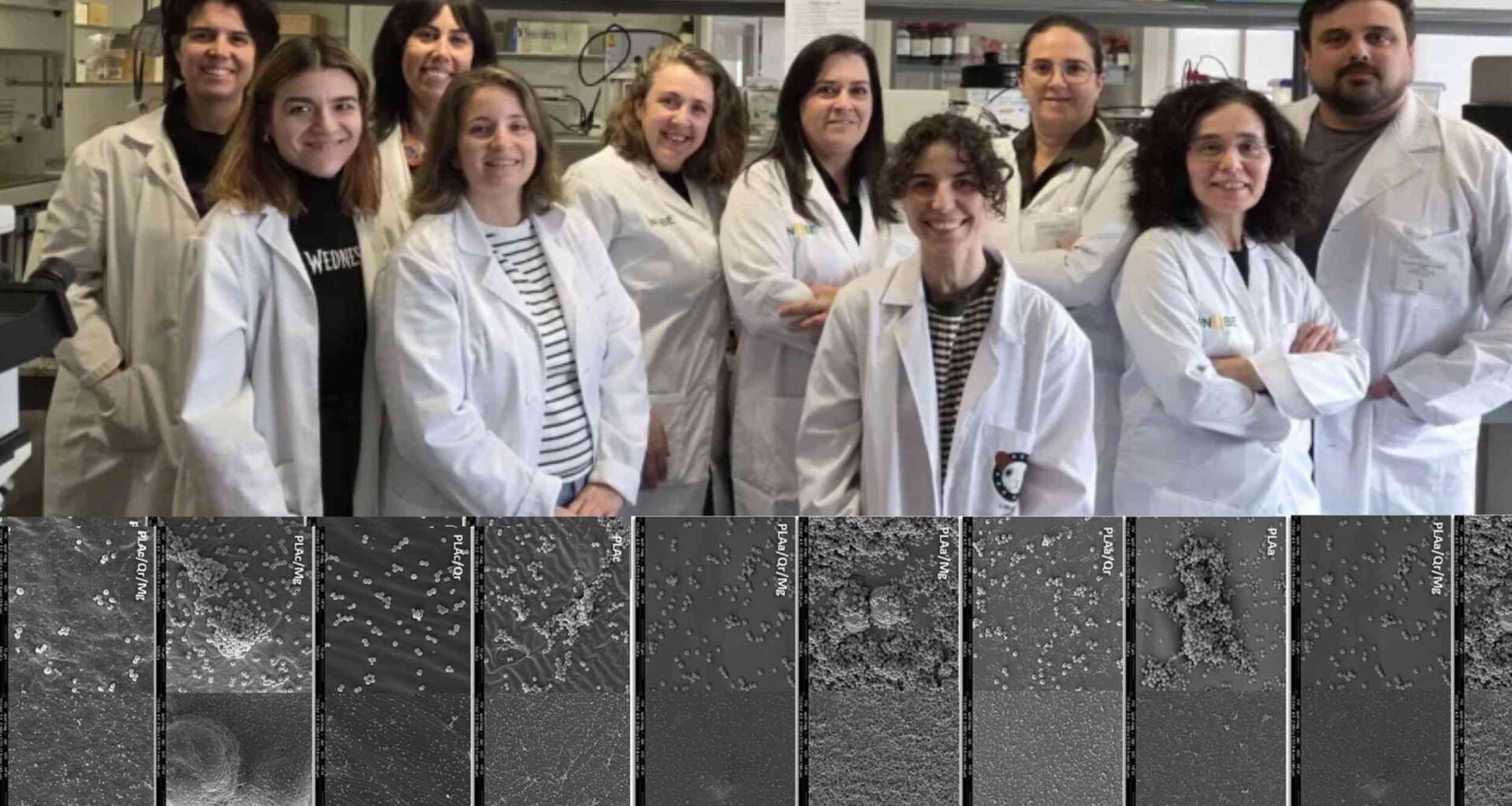
Researchers have demonstrated that adding quercetin, a plant-derived compound, to a magnesium-reinforced biodegradable implant prevents the surge in bacterial growth that typically emerges after 24 hours.
The finding reframes a widely used design tradeoff by showing that strength and infection resistance can be sustained together rather than undermining each other over time.
How bacteria take hold

On the surface of the material, bacteria gather and organize into dense layers that anchor infections and resist treatment.
Working with magnesium-reinforced films, researchers at the University of Extremadura (UEx) showed that introducing quercetin directly altered how those layers formed.
Instead of allowing bacterial growth to rebound after an initial decline, the modified material kept colonization suppressed as conditions evolved.
That persistence defines the advance and sets up the need to understand why the original material fails after early success.
Why magnesium backfires
Inside these films, polylactic acid, a biodegradable plastic used in medicine, carries magnesium particles that make the implant stronger.
Once water reaches that metal, corrosion drives up local pH and floods the surface with magnesium ions.
Years earlier, magnesium in the same plastic reduced early biofilm, then fed a stronger one by the 24-hour mark.
This boom-and-bust response explains why a reinforcing metal can still leave an implant vulnerable by the end of day one.
What quercetin changes
Quercetin, a plant chemical found in many fruits and vegetables, entered the film for a quieter kind of antibacterial work.
Rather than acting like a long-lasting drug, it breaks down in wet conditions and releases derivatives that still disrupt colonization.
A separate study found that quercetin lowered surface adhesion and cut production of the sticky material between cells.
As a result, the new films performed best when the compound could keep acting as the surface changed.
Biofilm numbers fall
When magnesium stood alone, biofilm rose again after 24 hours, confirming the flaw that had haunted this material.
Adding quercetin reversed that direction and reduced bacterial colonization on both film types in the lab.
In the more ordered version, the drop reached about 34 percent, while the less ordered film fell only about six percent.
Such a gap pointed the team toward a deeper answer than simple killing power because film structure clearly changed the outcome.
Structure controls release
Semicrystalline films performed best, partly ordered rather than fully glassy, and that structure moved active ingredients toward the surface.
Because of that layout, the material released more of both quercetin and magnesium as it sat in fluid.
Tests showed that the more ordered version of the material released noticeably more of the active compound than the less ordered one.
Greater release helps explain why the more ordered film did more than slow bacteria; it kept them from settling in.
Surfaces stop cooperating
Water also pushed the films through hydrolysis, a slow chemical breakdown, which changed how welcoming the surface was to bacteria.
As the material aged, its surface chemistry and roughness shifted enough to discourage new cells from getting comfortable.
Quercetin did not just ride along in that process; it helped modulate degradation and the release of active compounds.
Those changes matter on an implant because bacteria read chemistry and texture long before an infection becomes obvious.
Strength without sacrifice
A useful implant still has to hold together, and the quercetin films did not achieve this by turning soft or fragile.
Magnesium supplied the extra mechanical support, while the more ordered plastic kept that response steadier over time.
Semicrystalline samples changed less as they degraded, so hardening and release stayed under better control.
Here, the real advance is the combination because infection resistance matters little if the implant fails mechanically.
Bacteria cannot adapt
Quercetin did not behave like a standard antibiotic, and the isolated compound needed fairly high concentrations to slow free-swimming bacteria.
Yet inside the composite, its breakdown products and nearby magnesium ions seemed to work as a team against colonization.
Current implant research shows why non-antibiotic surface treatments matter when biofilms shrug off conventional drugs.
Instead of chasing bacteria only after attachment, the new film tries to make attachment itself less rewarding.
Future of implant design
These films matter most for implants that should disappear after healing, especially devices meant to support new bone.
Earlier UEx work on magnesium-polylactic acid films had already shown tissue-regeneration promise in a bioabsorbable form.
The new result tackles a missing piece because a material that encourages repair still needs protection from early colonization.
For surgeons and patients, that could mean fewer infections from temporary implants if later testing backs the lab evidence.
Next steps in testing
UEx researchers have now tied together chemistry, surface behavior, and mechanical stability into one formula that looks tougher on bacteria.
Animal studies, longer aging tests, and more complex microbial communities still need to show that the same balance survives in living tissue.
The study is published in the International Journal of Biological Macromolecules.
—–
Like what you read? Subscribe to our newsletter for engaging articles, exclusive content, and the latest updates.
Check us out on EarthSnap, a free app brought to you by Eric Ralls and Earth.com.
—–