
Earlier this week, the Centers for Disease Control and Prevention (CDC) issued a travel notice (Level 2 – Practice Enhanced Precautions) for Venezuela, as an increased number of cases have been reported throughout the country.
This year through February 21, six confirmed cases of yellow fever were reported, including one death (CFR: 17%). The probable place of exposure for the cases was the states of Aragua (n= 2 cases), Barinas (n= 1 case), Lara (one death), and Monagas (n= 2 cases).
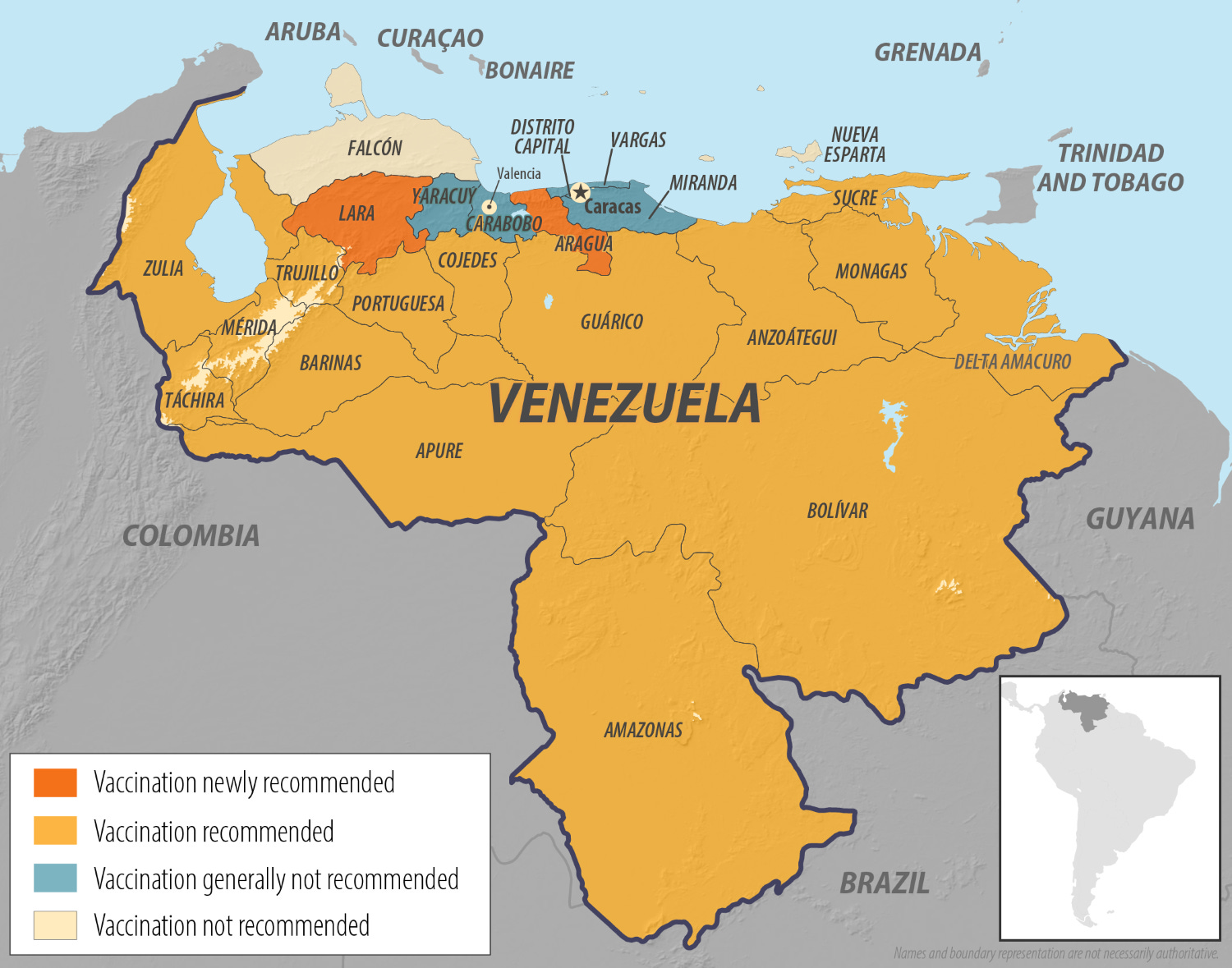 Image/CDC
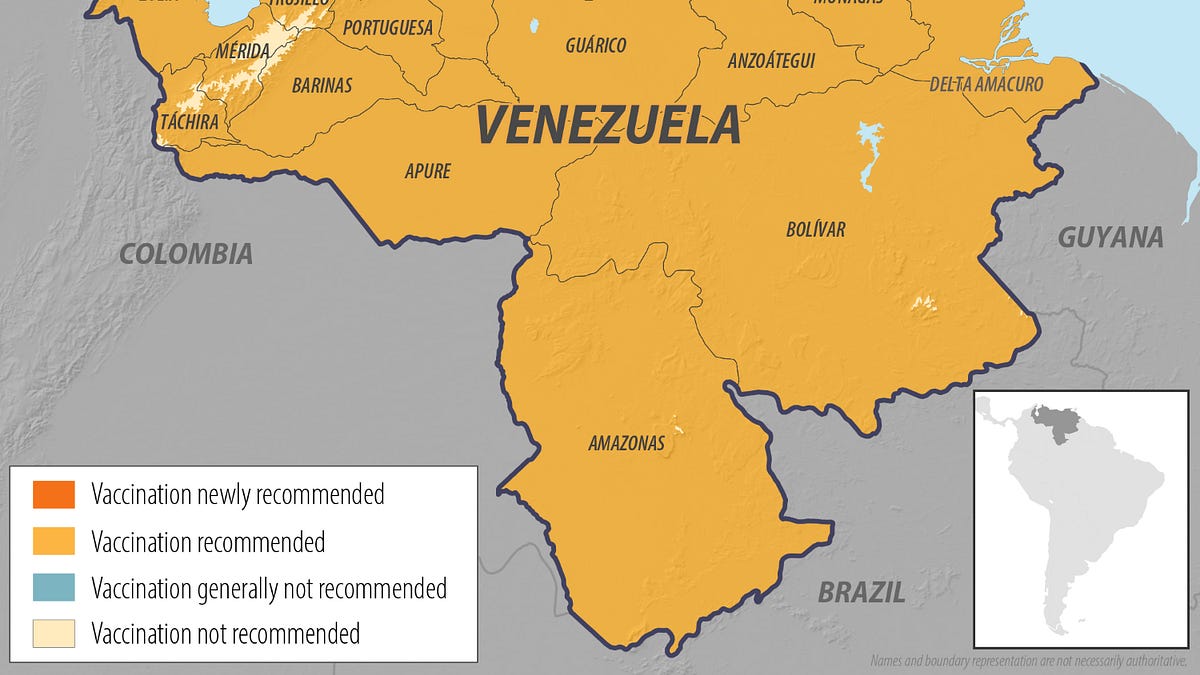
Some of these cases have been reported in areas where vaccination has not historically been recommended, including Aragua and Lara States. Travelers to these newly affected states (see map) are now recommended to get vaccinated.
In 2025, 32 confirmed cases of yellow fever in humans were reported, including 19 deaths (CFR: 59%).
CDC recommends the following for travelers:
Travelers getting vaccinated should:
Get vaccinated at least 10 days before travel.
Contact a yellow fever vaccine provider well in advance of travel. Not all providers carry yellow fever vaccine.
Talk with a healthcare professional if they have questions about yellow fever vaccine. Yellow fever vaccine is not recommended for some people.
A booster dose may be given to certain travelers or travelers who received their last dose of yellow fever vaccine at least 10 years previously and who will be in a higher-risk setting, such as areas in Venezuela where cases have been reported.
Travelers to any affected areas should take steps to prevent mosquito bites.
Travelers should seek medical care if they develop fever, chills, headache, backache, or muscle aches, during or after travel in an affected area. Travelers should let their healthcare providers know that they’ve been to an area where yellow fever cases have been reported.
Yellow fever is a severe viral disease with jaundice and hemorrhagic manifestations that is spread through the bites of infected mosquitoes.
Symptoms of yellow fever include fever, chills, headache, backache, and muscle aches, and develop 3–6 days after infection. About 15% of people infected with yellow fever virus will develop severe illness that can lead to liver disease, bleeding, shock, organ failure, yellowing skin and eyes (jaundice), and sometimes death.
Diagnosis is based on symptoms, laboratory testing, and travel history. There are no medications to treat or cure yellow fever.