
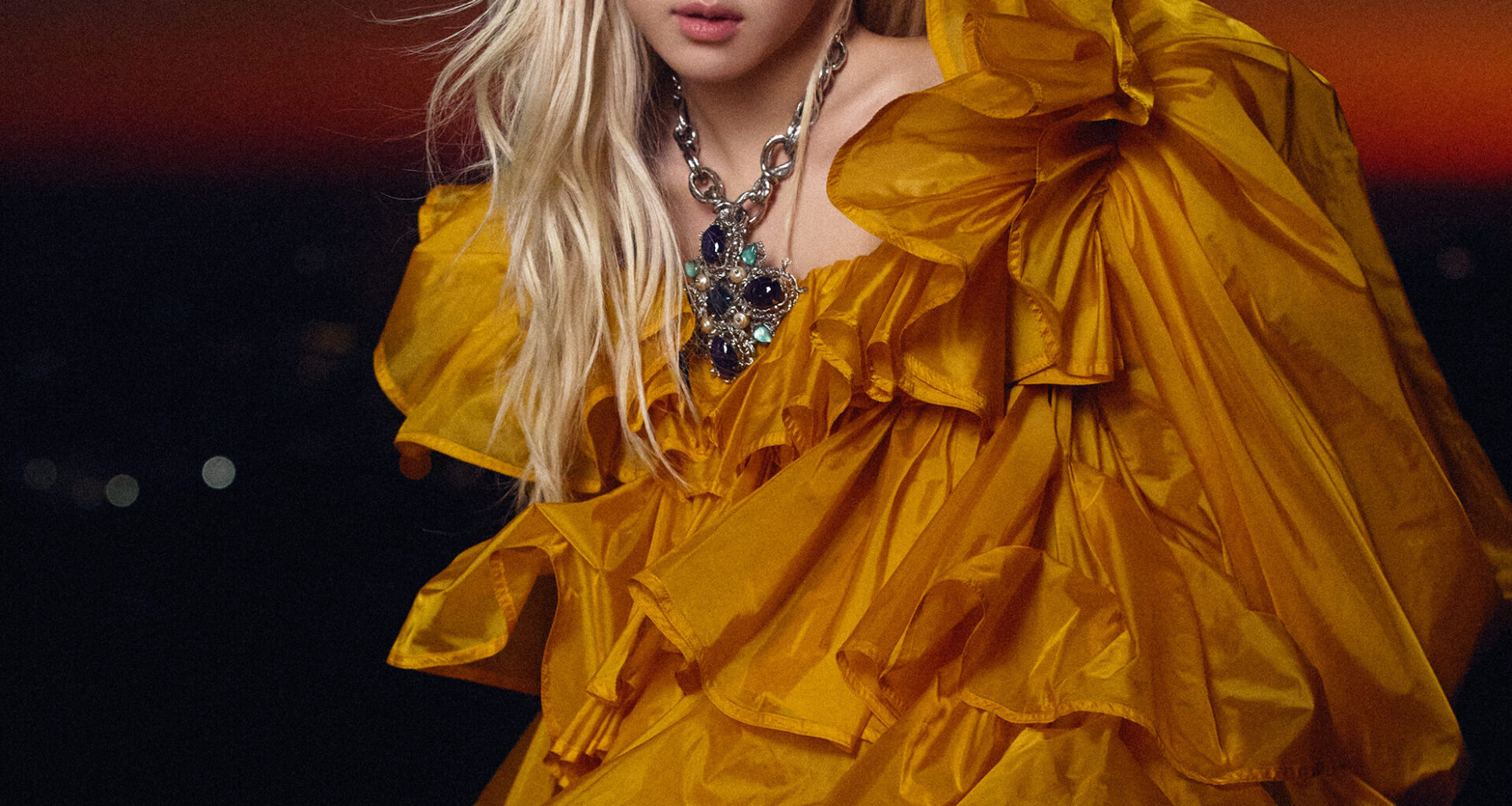
Ten years into a career that has redefined global pop, Rosé stands
illuminated — precise, composed, unmistakably Saint Laurent. Yet
behind that light lies a decade of discipline, heartbreak, evolution, and
relentless work. Stadium tours, festival headlines, Grammy stages, and
fashion’s front rows are the roses. The emotional labor, the private
doubts, the healing written into her music — those are the thorns.
Since 2016, Rosé has been one quarter of the most successful K-pop girl
group in history, alongside Jennie, Lisa, and Jisoo. Since the release of
their first EP in 2018, there hasn’t been a year in pop culture without
Blackpink breaking a record. On February 20, one week ahead of the
arrival of their new album, Blackpink became the first artist to surpass
100 million subscribers on YouTube — another milestone in a decade
defined by scale. And that wasn’t even Rosé’s first milestone in a year
that had only just begun. In January, she was nominated in three
Grammy categories and became the first K-pop solo artist to perform on
the Grammy stage with “APT,” extending her reach beyond the group
without ever stepping outside its orbit.
Released in October 2024, “APT,” her collaboration with Bruno Mars,
marked the beginning of her solo era. The track moved swiftly across
charts and territories, becoming one of the most-streamed global
releases of the year and the kind of song that settles into your head for
days, comfortably and persistently. In December, her first solo album,
Rosie, followed — more intimate in tone, more exposed in writing, a
project that allowed her to recalibrate the narrative around her. Even
visually, it signaled a shift: on the cover, she appeared with a curled
blonde bob, subtly rewriting her own image. In 2025, she returned to
Blackpink for “Jump,” a track built for scale. An instant hit. Oh, and they
also performed in sold-out arenas worldwide that same year, continuing
a pace few artists sustain.
And yet, beyond the milestones and the numbers, something quieter
defines this chapter for Rosé. What makes her compelling now is not
just her success, but her awareness of both. She speaks openly about
tending to every version of herself: the performer, the perfectionist, the
young woman still learning. She understands that growth is not
perpetual bloom but constant cultivation.
In a world that worships polish, Rosé embraces complexity. She accepts
the roses. She acknowledges the thorns. And in doing so, she becomes
something stronger than either — enduring, deliberate, and entirely her
own.