
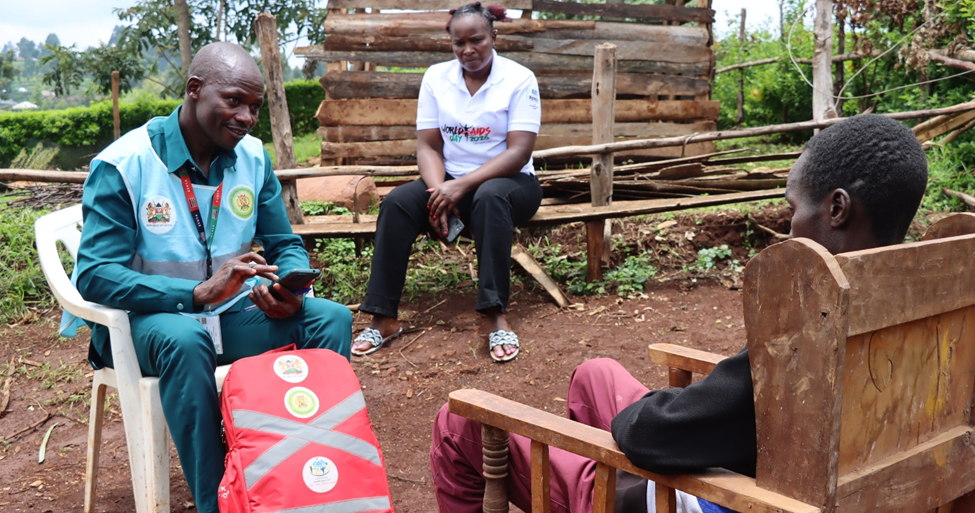
Nyamira County in western Kenya ranks among counties with the country’s highest tuberculosis (TB) burden, with an estimated incidence of 426 cases per 100,000 people according to data from the Kenya National TB Program. This is compounded by a high HIV/TB coinfection rate, which was 22 percent in 2024.
Nyamira County offers free integrated TB services in 140 of its 200 active health facilities, with a coverage rate of 70 percent. Despite this, 40 percent of expected TB notifications are missed annually. This is due to many factors: delays in seeking care, lack of awareness about TB, TB/HIV-related stigma, and long working hours for laborers that make it difficult to seek care during health facility open hours.
“People fear going to the hospital when they suspect they could be suffering from TB because they often closely associate it with HIV,” says Joshua Migosi, a community health promoter (CHP) in Nyamira County.
Joshua is among the 1,379 CHPs empowered to deliver community TB services under a PATH-led project in Nyamira County, funded by the Astellas Global Health Foundation. This project is working to increase early TB identification through community-level screening. Those with TB symptoms are referred to health facilities for follow-on diagnosis and treatment or prevention.
Through the project, CHPs were trained and mentored on TB detection and care during household visits. This included training on screening for symptoms and making referrals to health facilities for follow-on diagnosis and care. Additionally, training covered health education for communities, enabling CHPs to share how TB is transmitted as well as the importance of completing treatment and prevention regimens.
CHPs also learned about stigma and how it often prevents people from seeking care.
As part of the project, CHPs were provided smartphones that they use to collect, manage, and report community TB data through Kenya’s digital electronic Community Health Information System (eCHIS) platform. Through the eCHIS application, CHPs in Nyamira can now register households, screen individuals for TB symptoms, and make referrals to health facilities in real time. The system also guides them through the screening process and generates follow-up tasks, helping ensure that people with TB symptoms are linked to further evaluation and treatment if needed.
Equipped with this new knowledge and digital tools, CHPs returned to their communities with a renewed sense of confidence. They began integrating TB screening into every household visit, paying closer attention during conversations with families and community members.
CHPs also began conducting health education sessions during community outreach sessions and household visits, helping to counter myths and misconceptions about TB that often prevent people from seeking services at health facilities.