
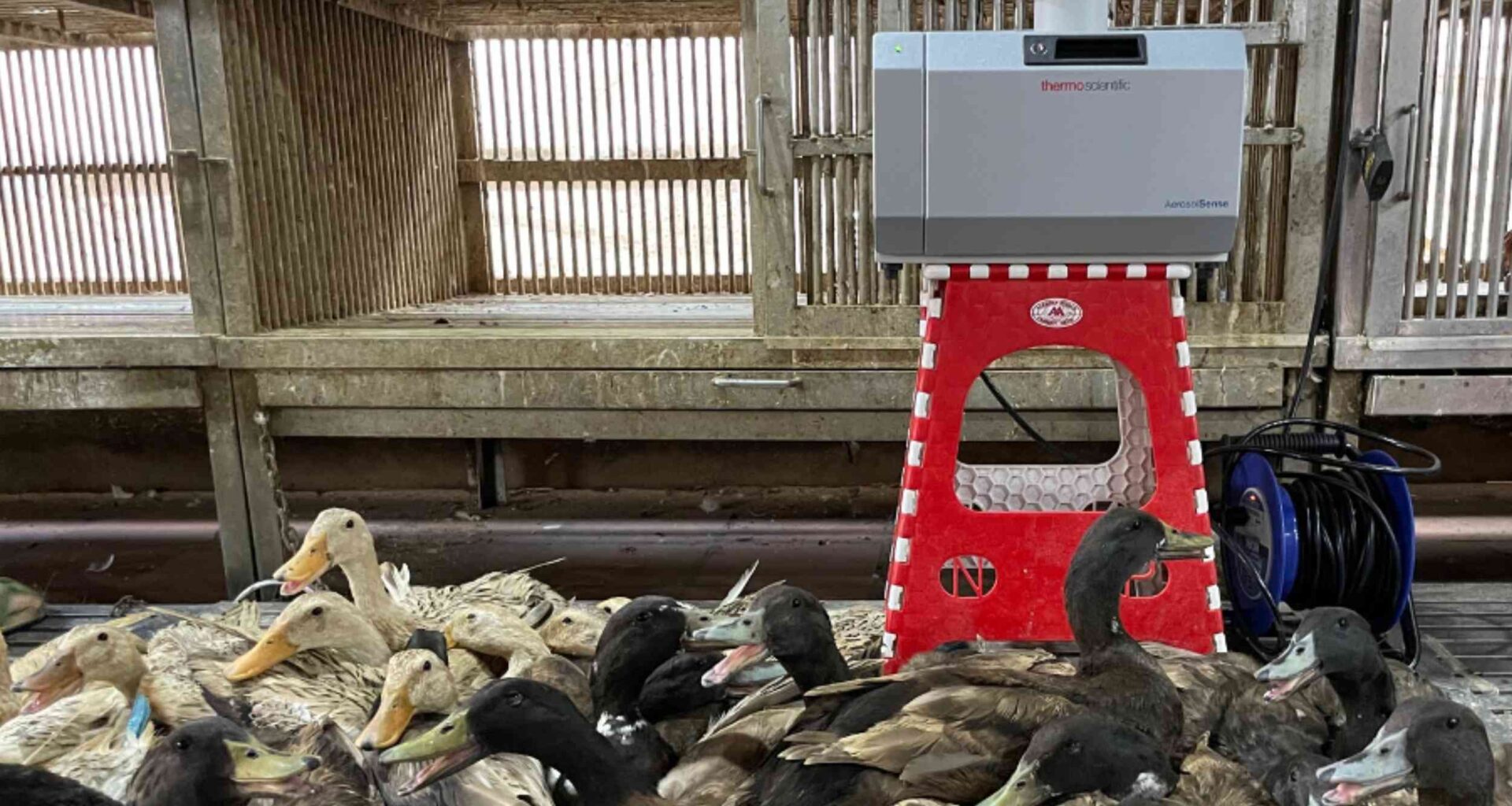
Researchers have found that testing air and surfaces in live poultry markets detects dangerous viruses more reliably than testing the birds themselves.
That shift reveals hidden viral circulation earlier, reshaping how outbreaks can be recognized before they escalate.
Inside the markets

Across 12 visits to two Cambodian live poultry markets, air, cages, and wash water captured what birds had shed.
Working from Duke-NUS Medical School (Duke-NUS) Dr. Peter Cronin tied those traces to viruses moving through markets.
Cronin’s team still swabbed chickens and ducks, but the surrounding environment often picked up more than the birds revealed.
This happens because infected birds shed virus into droplets, feces, and water before a sampler reaches the right animal.
What the air found
Among market samples, the air carried the broadest viral mix, especially near holding stalls and slaughter tables.
Using metagenomic sequencing, a way to read mixed viral genetic material, the team found 40 poultry viruses across the comparison.
“We showed that direct animal testing is not always necessary to detect pathogenic viruses in live-bird markets,” said Dr. Cronin.
Because shared air pooled what many birds released, it offered a practical early signal instead of a narrow readout from one cage.
Why birds get missed
Traditional surveillance depends on catching the right bird at the right moment, and markets rarely make that easy.
A chicken or duck can test negative even while nearby birds have already spread virus onto cages, water, and work surfaces.
“Instead, sampling air, water, cages and surfaces can reveal a wide range of poultry viruses, including avian influenza, even when those same viruses are not detected in the birds at the time,” Cronin said.
That is why the method works best as an earlier warning, not as a final answer about which bird carried what.
Danger in circulation
On several visits, the most worrying find was H5N1, a severe bird flu subtype, turning up in air or water alone.
For people, environments contaminated by infected birds matter because viruses can reach humans during slaughter, handling, or processing.
Historically, human H5N1 infections have killed around half of known patients, a measure of danger that makes earlier warnings valuable.
Finding those lineages outside the birds suggests a market can look quieter than it really is, which affects every control decision.
Where exposure builds
Near slaughter stations and holding areas, the samples repeatedly picked up several pathogens at once, not just a single flu type.
Earlier Cambodian air samplers worn by workers detected genetic traces of avian flu in every device during a high-circulation period.
Half of those devices even yielded live flu virus, so the concern is not only leftover genetic debris.
That pattern makes ventilation, separation, and cleaner workflow matter long before anyone knows which bird started it.
What sampling can miss
Environmental testing did not catch everything, and ducks were the clearest example of what could slip through.
When fewer ducks were present, their viruses left a weaker signal across the market, so direct swabs still found signals the environment missed.
Chicken viruses dominated the shared residue because more chickens passed through the markets and shed into common air and waste.
That imbalance is exactly why the authors argue for a hybrid system instead of replacing bird testing outright.
Genes match closely
Beyond detection, environmental genetic traces matched the birds closely enough to show the market samples were not random noise.
Most of those genetic fragments came within 1% of the bird samples, so the outside traces were basically the same viruses.
Air from slaughter areas and cage swabs returned the richest mix of viral genes, while drinking water usually lagged.
That close match gives health teams more confidence that environmental monitoring can guide real decisions instead of vague suspicion.
How markets can respond
Once viruses appear in cages or in air, market managers can act without waiting to catch every infected bird.
An Indonesian study found that daily waste removal and work-area zoning lowered environmental H5N1 contamination in live-bird markets.
In practical terms, that means cleaner slaughter lines, better airflow, and less mixing between live birds, carcasses, and shoppers.
Environmental sampling can then check whether those changes actually cut viral spread, rather than assuming a new rule worked.
Limits of the method
Even this broader view has hard limits, because detecting genetic material does not prove a virus is still infectious.
Environmental samples pool residue from many birds and surfaces, so they cannot show which stall started the problem.
They also tell little about how common infection was in the flock at that moment, which outbreak planners still need.
For that reason, the strongest program combines broad environmental screening with targeted bird swabs when a suspicious signal appears.
Next steps in detection
Across these markets, air and surfaces provided a fuller record of circulating viruses, often catching threats sooner than birds alone.
The same approach could sharpen outbreak preparedness in other high-risk animal settings, especially where rapid, low-contact surveillance matters most.
The study is published in Nature.
—–
Like what you read? Subscribe to our newsletter for engaging articles, exclusive content, and the latest updates.
Check us out on EarthSnap, a free app brought to you by Eric Ralls and Earth.com.
—–