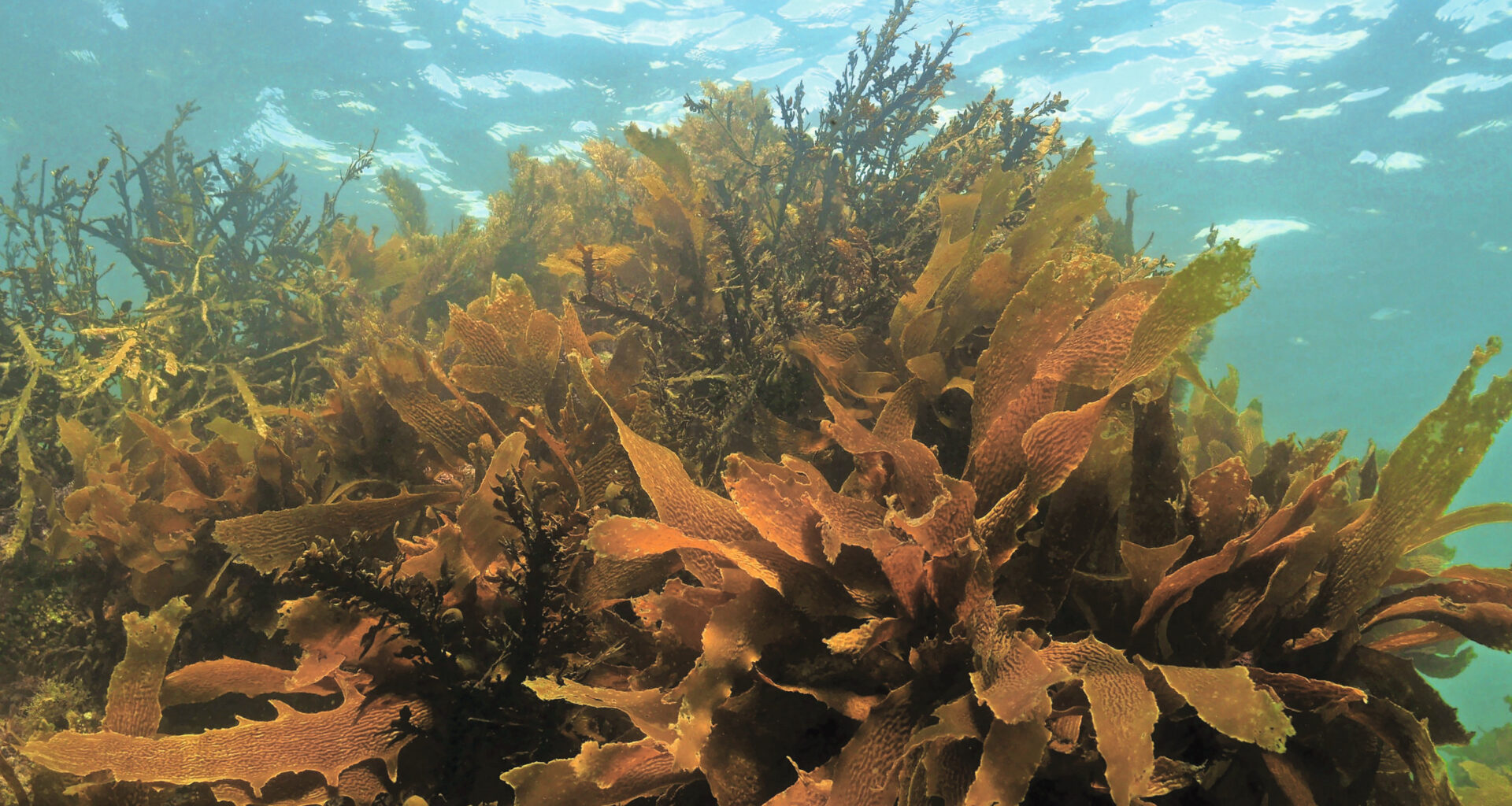
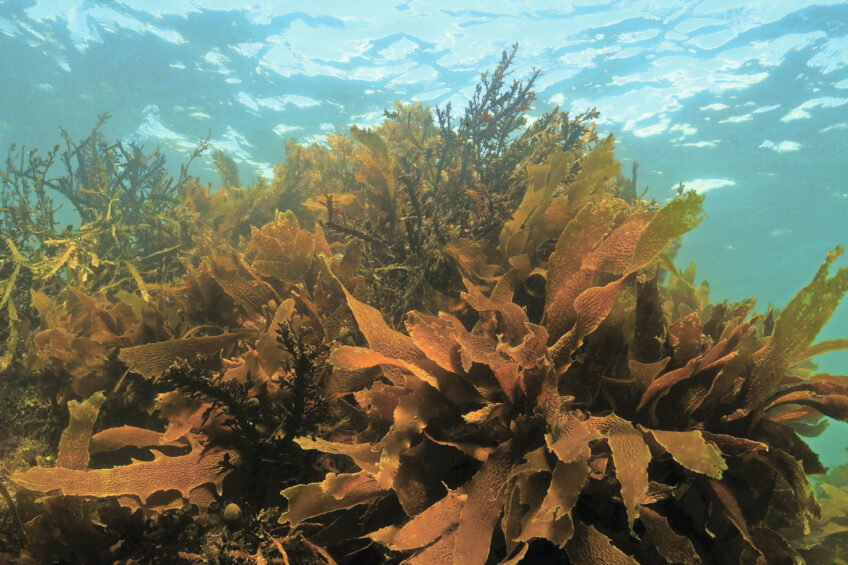
 Photo: Nuqo
A dual in vitro and in vivo study reveals promising effects of Ascophyllum nodosum and Fucus vesiculosus on oxidative stress modulation.
As livestock production systems evolve under the dual pressures of sustainability and performance, the use of functional feed additives derived from marine sources is gaining ground. Among these, brown algae – long recognised for their nutritional and bioactive properties – are emerging as promising candidates for enhancing resilience and health in animals.
A recent scientific study, published in Marine Drugs (2025), provides compelling new evidence for the antioxidant potential of 2 brown algae species commonly found in feed applications: Ascophyllum nodosum (AN) and Fucus vesiculosus (FV). The research combines in vitro assays on intestinal epithelial cells and in vivo testing using Caenorhabditis elegans (a recognised biological model for oxidative stress and healthspan) to assess how these seaweed extracts mitigate oxidative stress and support physiological function.
This dual-model approach offers a comprehensive look at the cellular and systemic effects of these marine-derived ingredients and reinforces their potential as valuable tools for gut health management and stress mitigation in animal nutrition.
This research was led by Lea Karlsberger at the University of Wels (FH Wels, Austria), with the support of FFoQSI (Austrian Centre for Innovation) and NUQO, represented by Dr. Stéphanie Ladirat. NUQO is a pioneer in research on marine algae for feed additive applications.
Why antioxidant modulation matters in animal nutrition
Oxidative stress, driven by an imbalance between reactive oxygen species (ROS) and the body’s antioxidant defences, plays a critical role in animal health. In the gastrointestinal tract, where epithelial cells are constantly exposed to microbial metabolites, immune signals, and dietary challenges, oxidative stress can impair barrier function, reduce nutrient absorption, and trigger inflammation – ultimately compromising animal performance.
Natural antioxidants have long been considered an alternative to synthetic antioxidants and antibiotic growth promoters (AGPs), which are increasingly restricted in many markets. However, identifying effective, reliable, and safe sources of antioxidant compounds suitable for integration into commercial diets remains a challenge.
“Our findings confirm that brown algae extracts offer potent, multifaceted antioxidant protection—making them valuable candidates for supporting animal health and resilience in modern feed systems.” — Lea Karlsberger, Lead Author, University of Wels
Brown algae: Bioactive reservoirs from the ocean
Brown algae are known to contain a rich array of bioactive compounds, including polysaccharides, polyunsaturated fatty acids, vitamins, minerals, and – notably – phlorotannins, a class of polyphenolic antioxidants unique to marine macroalgae.
Among the most studied species for feed applications are Ascophyllum nodosum and Fucus vesiculosus, both harvested along the North Atlantic coasts. These seaweeds have shown promise in previous in vitro studies for their antioxidant and antimicrobial properties and are already used in several commercial feed formulations. However, in vivo validation, particularly under controlled and mechanistic conditions, remains limited.
This study addresses that gap by exploring not only the antioxidant activity of these algae in epithelial cells but also their broader biological impact in an established whole-organism model, diving to the gene-expression level to better understand the pathways to improved oxidative status.
Study design: From cell culture to whole-organism insights
To assess the antioxidant potential of AN and FV extracts, researchers conducted a 2-tiered investigation:
In vitro: Extracts were applied to intestinal epithelial cells (Caco-2 and IPEC-J2), and intracellular ROS levels were quantified after induction with AAPH, a pro-oxidant compound.In vivo: The nematode C. elegans was used to model oxidative stress and physiological function. Worms were exposed to paraquat (a ROS-generating agent), and effects on motility, oxidative stress markers, and gene expression were evaluated. Both unstressed and stressed conditions were analysed.
The extracts were chemically characterised using LC-HRMS/MS for their phlorotannin content and antioxidant capacity via TEAC and FRAP assays. This allowed correlation between molecular composition and biological activity.
Main findings
1. Both algae showed strong phenolic profiles and antioxidant capacity
FV and AN both contained substantial amounts of phlorotannins, with structural differences observed in the degree of polymerisation (DP). FV showed a slightly broader range (DP 2–9) compared to AN (DP 2–7). These differences may influence solubility, cellular interaction, and antioxidant capacity, but both extracts demonstrated robust activity in chemical assays.
2. In epithelial cells, extracts reduced oxidative stress
In both human and porcine intestinal cell models, AN and FV extracts significantly reduced AAPH-induced ROS levels. The magnitude of reduction was dose-dependent and consistent across both cell lines, supporting the relevance of these algae in gut-related oxidative stress mitigation.
3. In C. elegans, extracts supported motility and healthspan
Exposure to oxidative stress via paraquat reduced worm motility – a proxy for overall health. Pretreatment with AN and FV mitigated this effect, improving motility compared to control groups. Under non-stressed conditions, both extracts also extended the healthspan of the worms, with effects observed at relevant dosages.
Notably, while differences were observed in the conditions under which each extract performed best, both algae displayed beneficial effects, reinforcing their relevance in feed applications where animals face both acute and chronic stressors.
4. Gene expression analysis confirmed modulation of antioxidant pathways
Both extracts influenced the expression of genes related to antioxidant defence, such as gst-4, especially under oxidative conditions. Reduction in GST-4::GFP reporter activity confirmed that both algae modulated molecular pathways associated with stress resilience.
Complementary bioactivity
Rather than suggesting one species outperforms the other, the study highlights how AN and FV may offer complementary benefits in feed formulation. Differences in structure, composition, and biological effect suggest that combining or strategically using both could allow for tailored antioxidant support depending on the animal’s physiological state or production phase.
This aligns with the broader concept of precision nutrition, where specific bioactive molecules are chosen based on their demonstrated function and compatibility within a nutritional matrix.
Refining applications: From research to commercial relevance
While the study reinforces the relevance of Ascophyllum nodosum and Fucus vesiculosus as antioxidant agents, the transition from research to commercial feed application remains complex. Several previous publications have pointed to the potential of marine algae in animal nutrition yet results often show variability – largely due to inconsistencies in raw material characterisation, formulation practices, and processing methods.
Recent research has made it increasingly clear that the effectiveness of brown algae extracts in supporting animal health and performance depends on a combination of tightly controlled parameters:
Precise sourcing of algae species with verified origin and harvesting conditionsStandardisation of bioactive content, especially phlorotannin concentration and profileAdvanced processing techniques, such as optimised drying and micronisation, to preserve active compoundsFormulation with complementary actives, including other plant-based ingredients, to synergistically support gut functionProtection technologies, such as micro-encapsulation, to ensure bioactive compounds reach the gut intact and remain effective during digestion
Implementing these strategies has allowed for more consistent results in recent studies and practical field trials. Nevertheless, more research is needed to fully understand the in vivo bioavailability and mode of action of individual phlorotannin compounds, as well as to evaluate new processing methods that could enhance stability and efficacy.
In particular, future investigations should focus on how different extraction methods, drying techniques, and encapsulation approaches influence not only stability but also the bioactivity of algae-based ingredients across species and production conditions.
Conclusion
This study contributes valuable data to the growing body of evidence supporting brown algae as functional feed additives. Both Ascophyllum nodosum and Fucus vesiculosus demonstrated clear antioxidant effects in vitro and in vivo, with potential to protect the intestinal environment and enhance stress resilience in livestock.
The nuanced differences observed between the 2 algae highlight the importance of detailed characterisation and a formulation strategy that accounts for specific bioactive profiles. When properly sourced, processed, and formulated, brown algae extracts can serve as effective components of advanced nutritional programs – especially in systems moving toward reduced reliance on synthetic additives.
As the animal nutrition industry continues its shift toward natural, science-backed solutions, brown seaweeds represent a sustainable, potent, and increasingly well-understood tool for modulating oxidative stress and supporting animal performance. Ongoing innovations in raw material processing, bioactive preservation, and formulation will be key to unlocking their full potential.
Authors:
Dr Stephanie Ladira / R&D Director NUQO
Lea Karlsberger / PhD student, University of Applied Sciences Upper Austria