
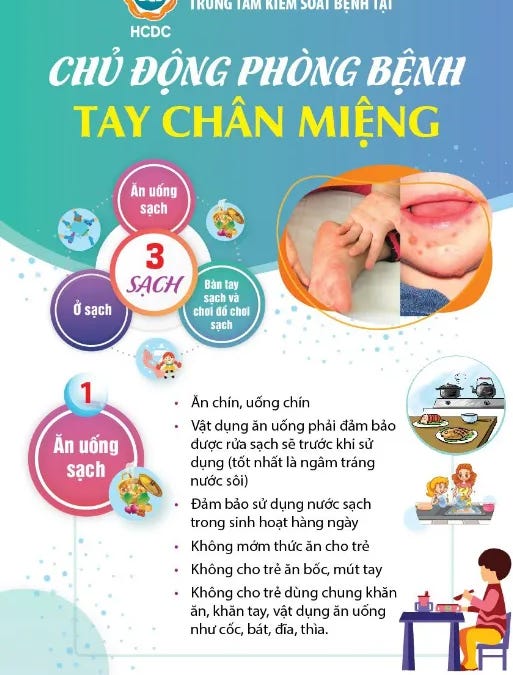
Recently, hand, foot, and mouth disease (HFMD) has been rapidly increasing. According to records from the National Children’s Hospital in Hanoi, in just the first two months of 2026, nearly 3,000 children contracted the disease, with about one-third requiring hospitalization.
Compared to the same period in 2025, the number of cases increased by 56% and the number of inpatients doubled, indicating the disease is entering its peak season.
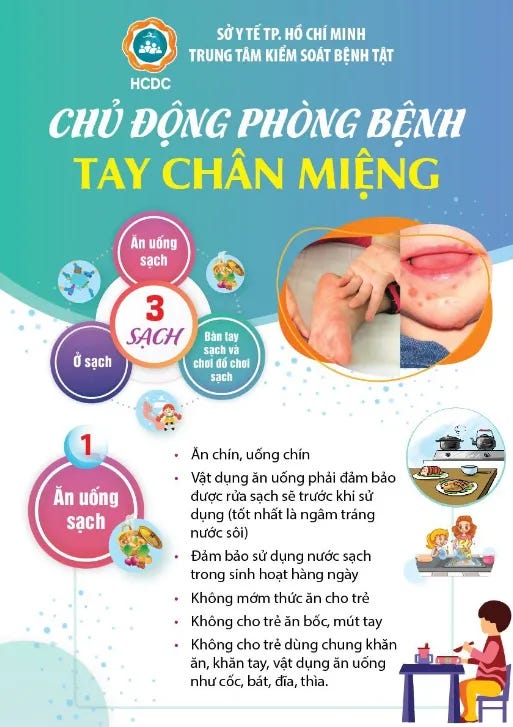
Hand, foot, and mouth disease is an acute infectious disease caused by enteroviruses, commonly affecting young children under 5 years old. The disease spreads primarily through the digestive tract, via direct contact with secretions, feces, or contaminated surfaces. In daycare and preschool environments – where children have close contact and share toys – the virus has favorable conditions for rapid spread. While most cases are mild and resolve spontaneously, experts warn that some cases can quickly become severe, leading to dangerous complications if not detected and treated promptly. One notable point is that children can contract hand, foot, and mouth disease multiple times in their lives.
Subscribe to Outbreak News TV on YouTube
According to Dr. Nguyen Van Lam, Director of the Center for Tropical Diseases, Electronic Information Department, Institute of Child Health Training and Research, National Children’s Hospital, the disease is caused by many different strains of viruses. Therefore, after infection, the body only develops immunity to a specific strain and does not have long-lasting protection against others. Most cases will resolve spontaneously after about 7 to 10 days if properly cared for. However, some cases can progress rapidly and cause dangerous complications such as encephalitis, meningitis, myocarditis, or acute pulmonary edema. These are serious complications that can be life-threatening if not detected early.
In the early stages, the disease typically manifests as a mild fever, fatigue, sore throat, or loss of appetite. Later, children develop mouth ulcers and blister-like rashes on the palms, soles, buttocks, or knees. Because the initial symptoms are nonspecific, many parents easily mistake it for a common illness and neglect to closely monitor the progression of the disease.
Currently, there is no specific cure for hand, foot, and mouth disease; treatment mainly focuses on symptom relief and monitoring the disease’s progression. Therefore, proper home care is crucial for mild cases. Children need rest, soft, easy-to-swallow foods, sufficient fluids, and good oral and skin hygiene. Parents should also follow their doctor’s instructions and avoid self-medicating.
Prevention of HFMD includes frequent handwashing with soap, cleaning toys and household items, preventing children from sharing personal items, and isolating sick children are simple but crucial measures in limiting the spread of the disease.