
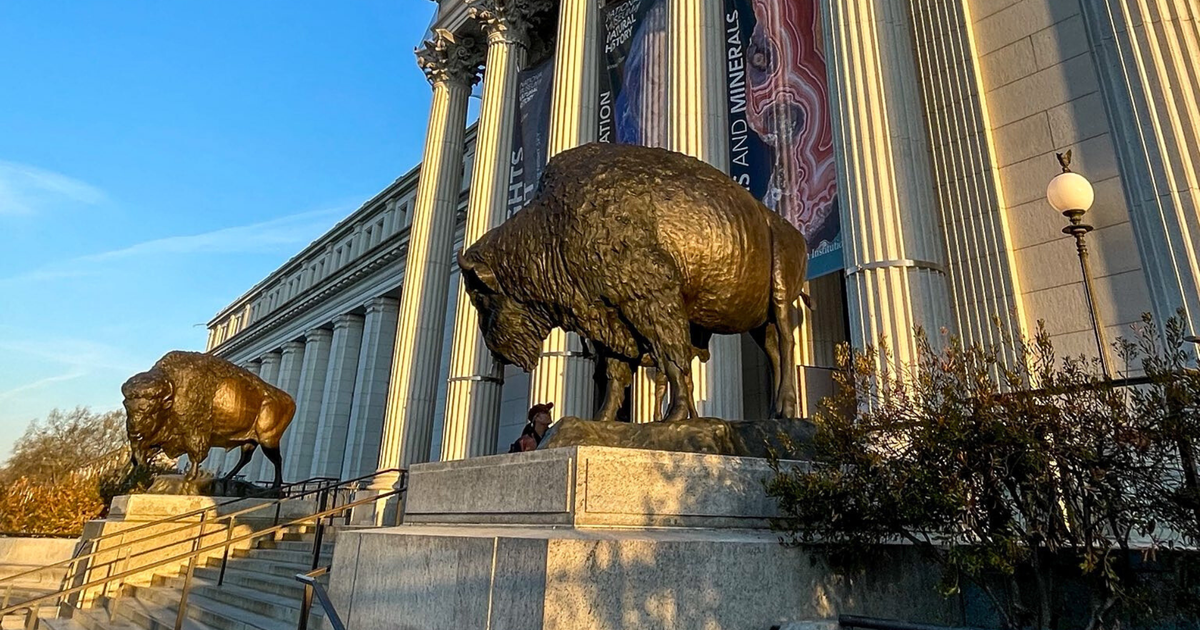
Two statues from a foundry in Northern Colorado have completed a tour across the country that lasted over a week and are now installed in front of the Smithsonian National Museum of Natural History.
The bronze bison were created by paleoartist Gary Staab at the Art Casting Foundry in Loveland and made their first stop on their road trip at the Denver Museum of Nature and Science on March 11. Staab, a paleoartist for over 30 years, says he created the massive statues over 14 months.
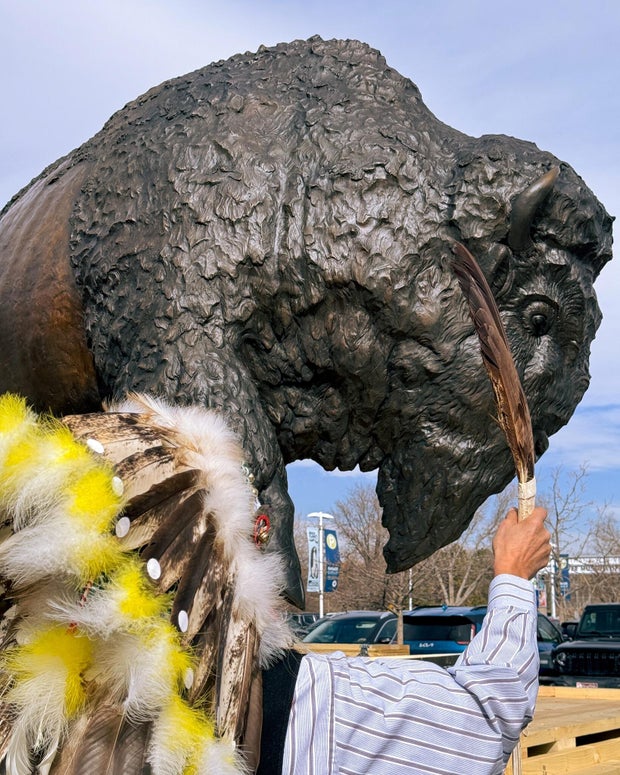
Chief Calvin Standing Bear (Sicangu and Oglala Lakota) speaks a prayer over the bronze bison.
Smithsonian National Museum of Natural History
“The American Bison is a fascinating project because it has an incredible story, and it’s a story that is part of America’s history. To be included in it is a really humbling experience,” Staab said in a video announcing the bronze bison road trip.
Bison, America’s national mammal and the largest mammal in Colorado, once lived nearly statewide, Colorado Parks and Wildlife says. The Fort Garland Museum & Cultural Center says the animals have played an integral role in the state’s history and ecology and served as a staple food source for people living in the region as far back as the Paleo-Indian period. They’re seen as spiritually and culturally vital to many Native American Tribes of the Western Great Plains, they added.
Plains bison were nearly driven to extinction in the late 1800s, but collaboration among conservationists, organizations, and Native American communities has helped protect and conserve the species. The U.S. Fish and Wildlife Service says the species is no longer threatened with extinction, and estimates there are currently around 445,500 Plains Bison in conservation and commercial herds.

An American Bison grazes in fields on the Southern Plains Land Trust Heartland Ranch Nature Preserve on September 23, 2022 near Lamar, Colorado.
Helen H. Richardson/MediaNews Group/The Denver Post via Getty Images
CPW said bull bison can grow to approximately six feet tall, 10 feet long, and can weigh over a ton.
Staab says each of his bison statues weighs 2,500 pounds, and the tallest of the pair stands at nine and a half feet tall.
After a presentation by NMNH Director Kirk Johnson and postdoctoral fellow Sarah Johnson, representatives of the Sicangu and Oglala Lakota saw the statues off on their journey. Chief Calvin Standing Bear spoke a prayer over the bronze bison. Chasing Hawk Standing Bear also sang a buffalo prayer song, and Jeff Iron Cloud burned sage next to the statues.
The bronzes made stops at the University of Nebraska, the University of Iowa and the Field Museum in Chicago on their long journey to Washington, D.C.

Bronze statues of a bull bison and cow with a calf flank the Smithsonian National Museum of Natural History’s National Mall entrance.
Smithsonian National Museum of Natural History
They finished the nearly 1,800-mile trip on March 19 and were installed in their permanent home in front of the museum that night. Now they stand on either side of the stairs leading to the museum’s National Mall entrance to greet visitors.
An exhibit at the museum detailing the bison’s resilience titled “Bison: Standing Strong” is scheduled to open on May 7. The “Imagining Bison Display Cases,” which will explore artistic and scientific depictions of Bison through books, maps, and other materials, is set to open on May 21.