
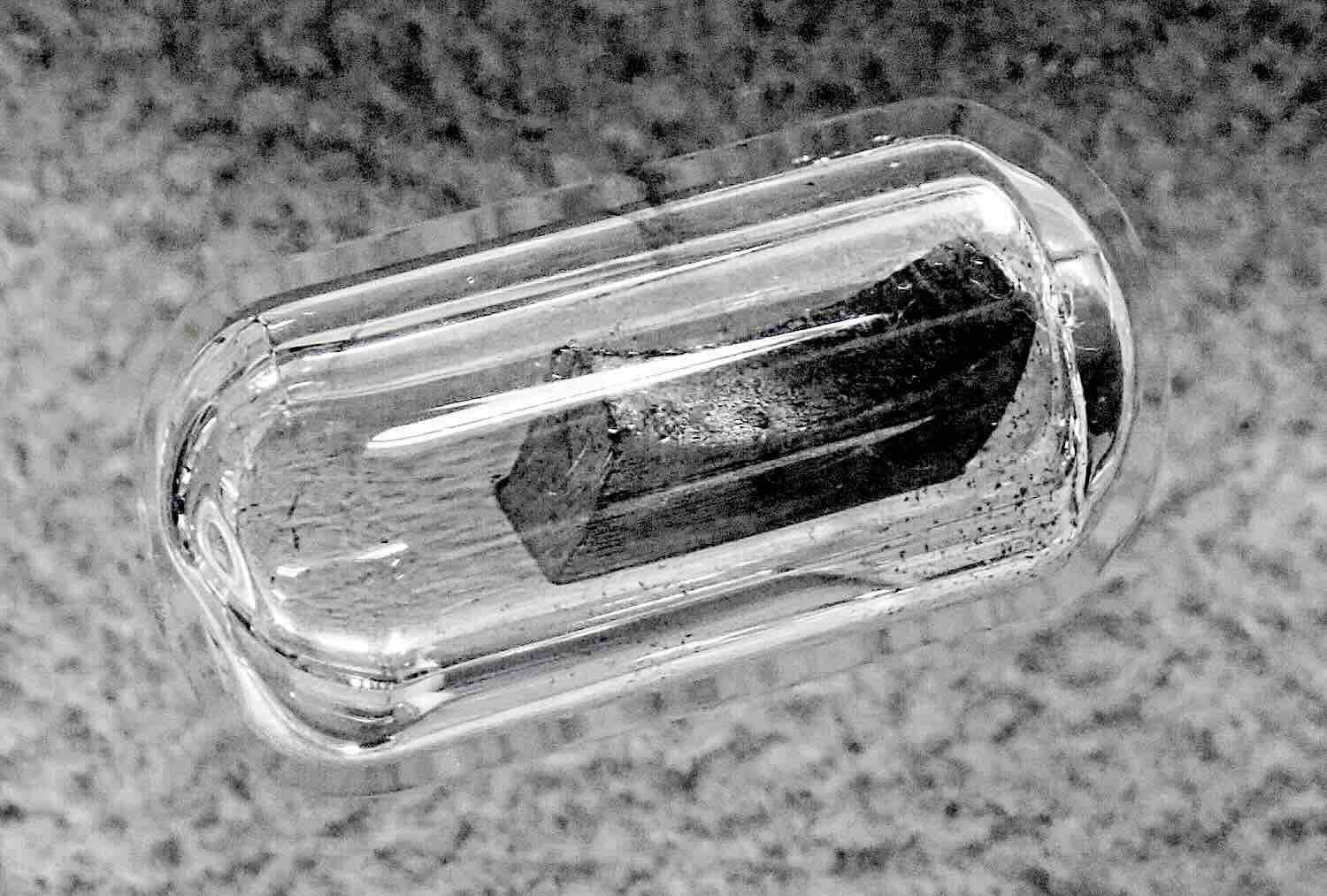
The natural world is full of curiosities. That’s one reason why, in the 1970s, a discovery seemed so out of place—a sample of uranium ore from an ancient African mine that didn’t match the signature of natural material—that scientists were briefly faced with having to consider the unthinkable: could there have been an earlier civilization that harnessed the power of the atom on planet Earth?
Such questions were among those the French scientist Francis Perrin and his colleagues may have considered in 1972, before realizing they had uncovered evidence of something nearly as remarkable. Thanks to a quirk of nature, a nuclear reaction occurred on Earth two billion years ago, under what had been entirely natural circumstances.
A Remarkable Discovery in Africa
It began with the discovery of an anomaly in uranium ore from a mine near Oklo, Gabon. Perrin’s team noticed that one sample of the material contained slightly less uranium-235 than would be expected in natural deposits.
The existing scientific information available to researchers at the time clearly detailed the constant ratio of radioactive uranium within ore. Yet the peculiar sample from the Oklo mine seemed to point to something else entirely.
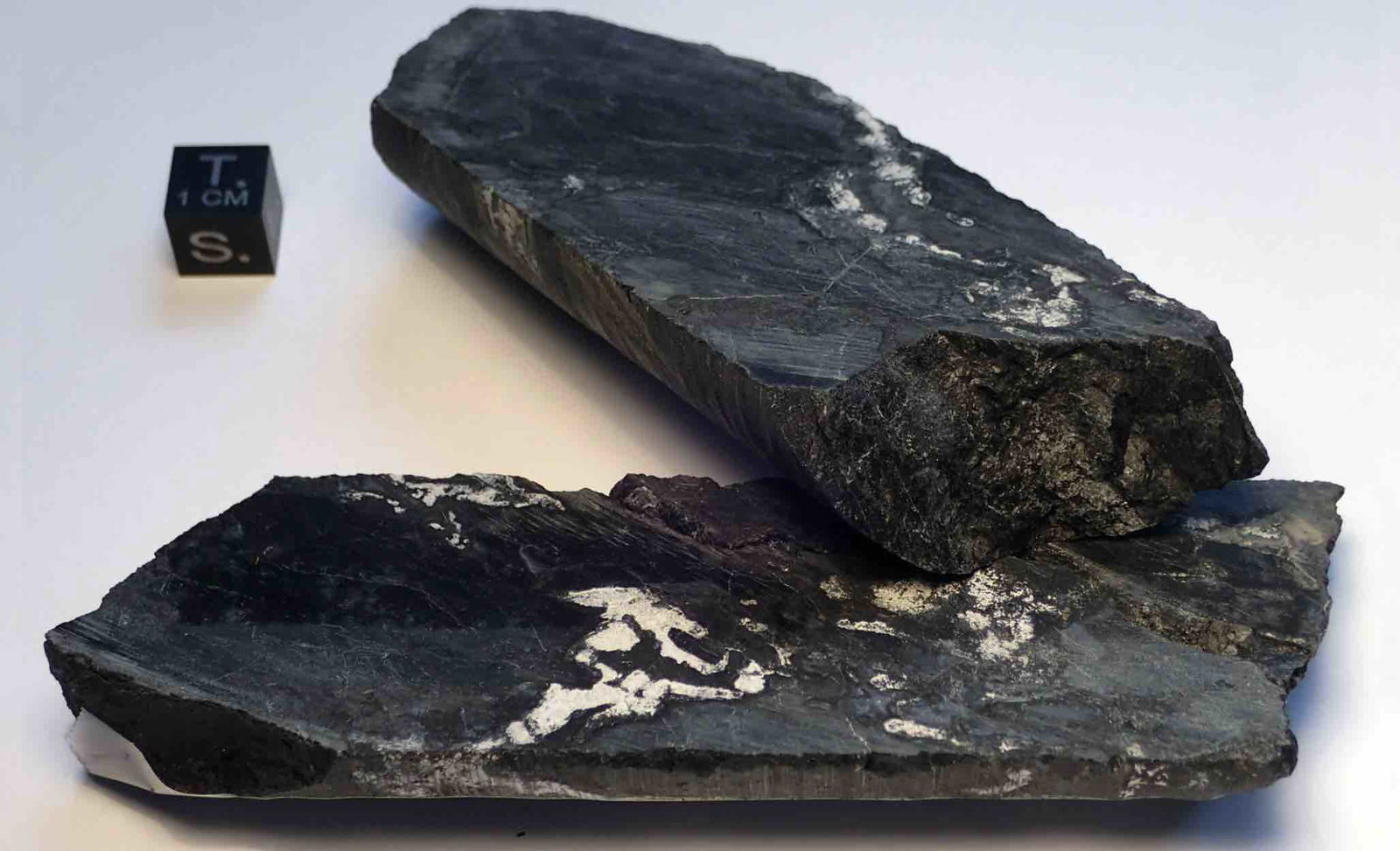 Above: Samples of deposits collected from the Oklo mine in Gabon, which were donated to Vienna’s Natural History Museum in 2019 (Image Credit: Ludovic Ferrière/Natural History Museum/IAEA)
“This cannot be possible,” Perrin thought at the time, pondering the odd discovery. Even a minuscule amount of missing uranium-235 seemed to indicate that some of the isotopes had been forced to divide, which, under modern conditions on Earth, can occur only one way: through a nuclear reaction.
The implications were obvious, and meant one of two possibilities—one of which was so remarkable that it, very much like the anomalous sample now in the possession of Perrin and his colleagues at a nuclear fuel processing plant in France, seemed impossible. Yet how could this be explained naturally, if all examples of natural uranium known to exist—even those present on the lunar surface, or in ancient meteorites—contain precisely 0.720% of this isotope?
Perrin and his colleagues were left to consider not only the possibility that the uranium ore had undergone artificial fission, but also how some natural version of the same process might work. With time and further analysis, the latter proved true, and Perrin and his team’s conclusion revealed one of the most remarkable discoveries ever made in the natural world.
Fingerprints of Ancient Natural Fission
In their findings, Perrin and his colleagues discovered evidence of fission products in the ore—the veritable fingerprints of a natural sample of uranium ore that had undergone fission.
“There was no other explanation,” said the noted French geologist Ludovic Ferrière, curator of the meteorite collection and of the impactite collection at the Natural History Museum in Vienna, Austria, in a statement in 2019.
“After more studies, including on-site examinations,” Ferrière said, Perrin and his colleagues had proven that “the uranium ore had gone through fission on its own.” But what did this all mean?
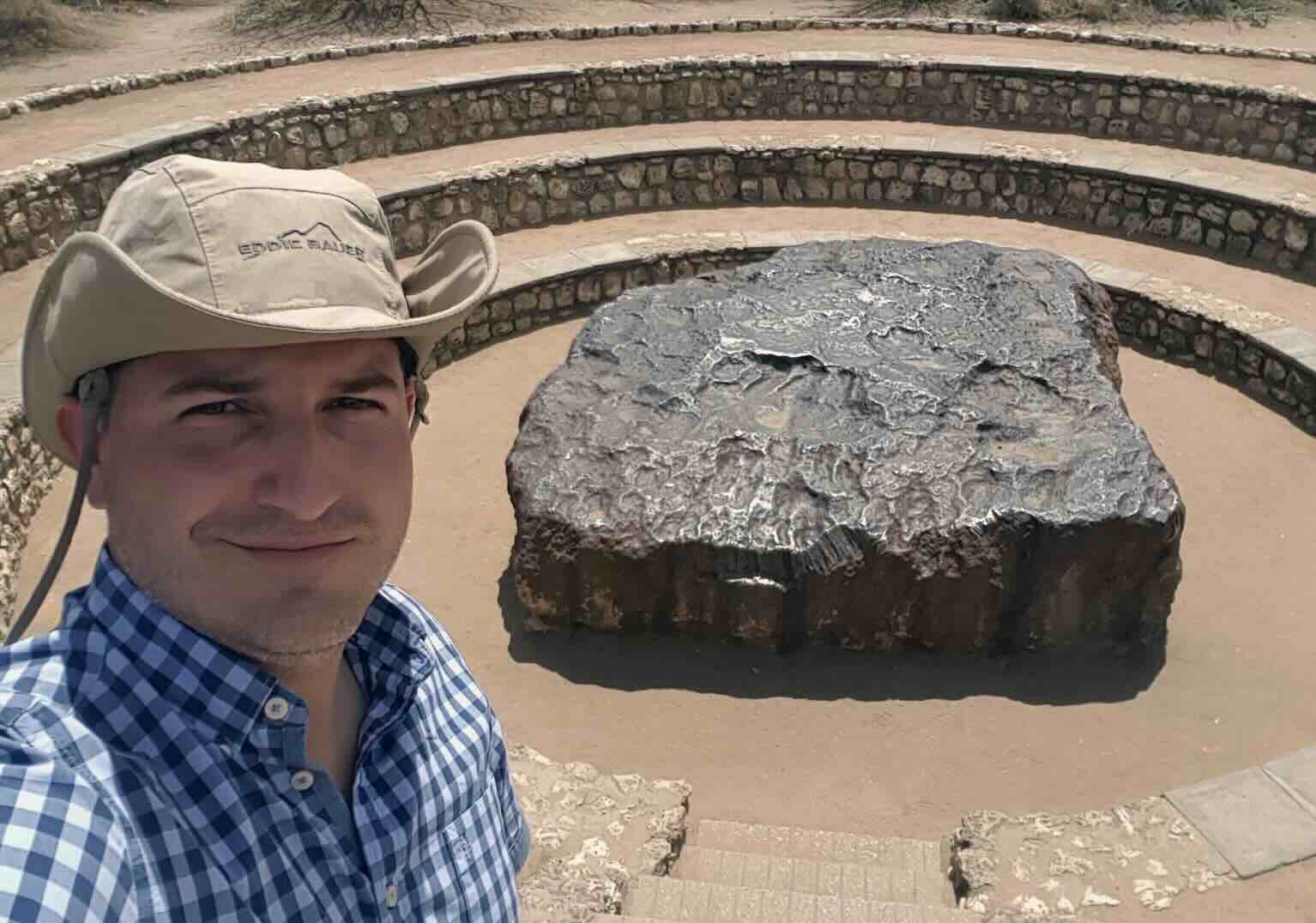 Ludovic Ferrière, pictured in 2019 alongside Namibia’s famous Hoba meteorite (Image Credit: Epigraphie12/CC 4.0)
Fundamentally, the conditions required for this to occur meant that, at some point around two billion years ago, uranium deposits in western Africa near modern-day Gabon would have had to contain enough uranium-235 to achieve critical mass. Add to this another key component—the presence of water, which would have been needed as a cooling agent, slowing neutrons, allowing atom splitting to take place, and facilitating controlled fission.
Peter Woods, an Australian geoscientist who formerly led uranium production at the International Atomic Energy Agency (IAEA), compared the natural processes at Oklo two billion years ago to a modern, human-built light-water nuclear reactor.
“The water acted in Oklo as a moderator, absorbing the neutrons, controlling the chain reaction,” said Woods, who is now an Environment Approvals Manager at OneSteel Mining in Adelaide, South Australia.
A Geological Enigma
At the time the natural fission would have occurred, there would have been enough uranium to produce thick, large deposits that would have facilitated the process and preserved the ancient natural reactor. Having occurred once, it is possible that other natural reactors existed in various parts of the world under similar environmental conditions, although they were either destroyed over time or remain undiscovered.

Today, samples from the Oklo mine are preserved at the headquarters of the Orano renewable energy company in France and at Vienna’s Natural History Museum. Standing within centimeters of one of the samples, the radiation emitted is comparable to the dose of cosmic radiation received by a passenger on an eight-hour flight.
For geologists like Ferrière, studying ancient samples from Earth’s geological past is comparable to reading a ledger detailing events from deep in the planet’s prehistory.
“Rocks are like books,” Ferrière said in 2019. “You can look at the cover and get some basic information, but it’s when you open them that you get the full story.”
Woods also acknowledged the story the Oklo samples have managed to convey through time, calling it “fascinating,” and adding that the samples—once an anomaly in the geological data—are now understood as another example of nature’s remarkable surprises.
“The detective story has been successfully solved,” Woods said.
Micah Hanks is the Editor-in-Chief and Co-Founder of The Debrief. A longtime reporter on science, defense, and technology with a focus on space and astronomy, he can be reached at micah@thedebrief.org. Follow him on X @MicahHanks, and at micahhanks.com.