
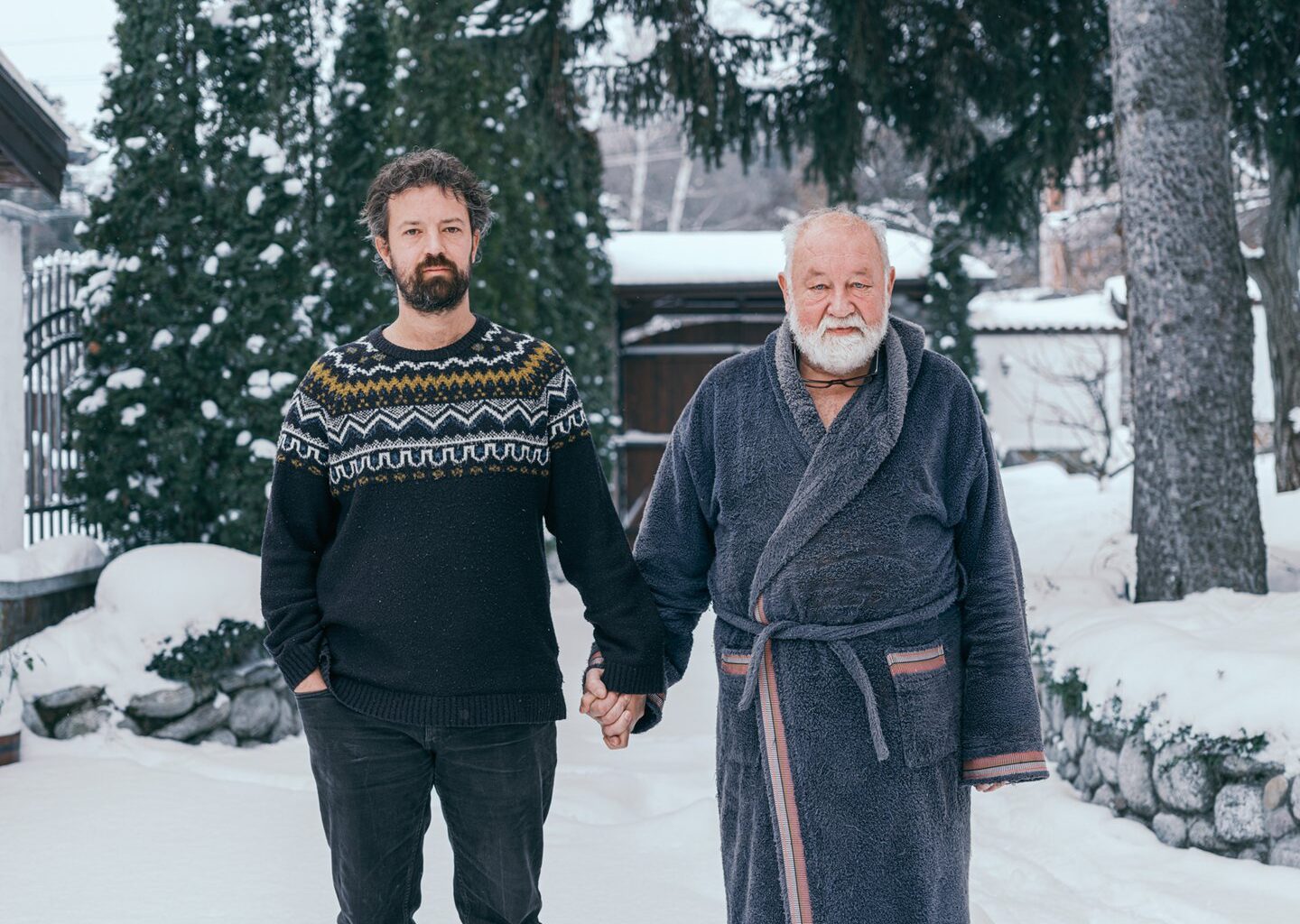
Some appear resolute, as if given a task they don’t want to take part in but will. Others look actively uncomfortable at the contact, keen to get it over with as soon as possible. The odd pair appear content, perhaps not unaccustomed or averse to such intimacy. Of course, anything we may personally try to gauge from the scenes is pure speculation. Valery is intent on keeping things open to interpretation – he never shares personal stories or facts about the sitters, in part to protect their privacy but also to keep the images “universal”. He continues: “The viewer isn’t told what to think – they’re invited to finish the narrative and, in a way, find their own story inside the gesture.”
One place the photographer does include some contextual clues is the background of each image, carefully selected to reflect the cultural identity of the fathers and sons; for Valery the project is as much a study of heritage as it is one about familial ties. “The background is part of that story, so I choose it based on what is true for them – their work environment, their home territory, or a place that reflects what they share,” says Valery. “As the project grows country by country, the portraits start to function like visual anthropology: personal stories that also describe a wider cultural identity.” A portrait taken in Midyat, Turkey shows a father and son standing before a whitewashed wall, laden with woven mats, pottery and family photographs, a decorative rug beneath their feet. Another particularly joyful portrait, taken in Anzio, Italy, shows a father and son dressed in the same royal blue outfit, standing proudly outside a colourful tent, suggesting a family connection to the circus.
It was recently that Valery realised the project had enough “cultural breath” to constitute a new format – a photobook. Named after the series, the book’s blue clothbound front cover features a drawing by Valery: a heart filled with two faces. “I rejected the ‘perfect’ solutions – photo or clean typography – and drew a simple, childish heart,” ends Valery. “It says what the project says: we don’t outgrow the longing for connection. We need to hold someone’s hand all the way to the end.”