
March 24, 2026
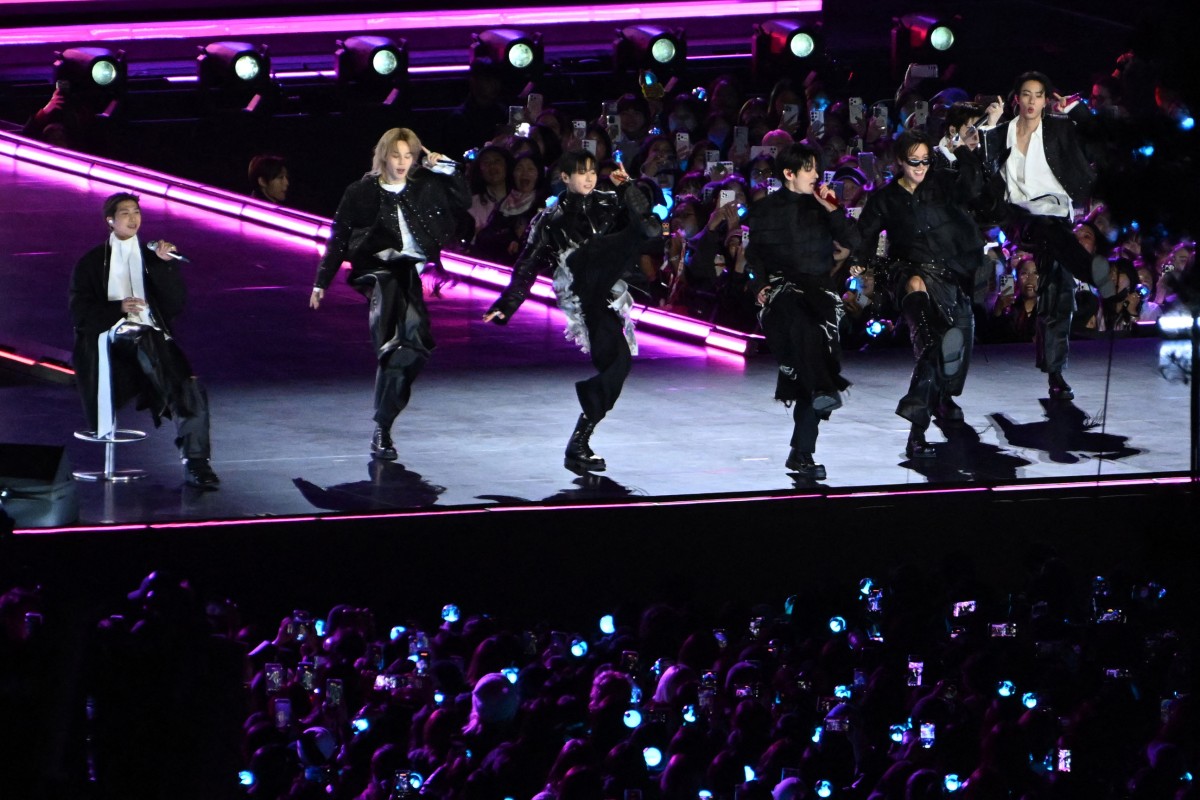
SEOUL – As K-pop supergroup BTS wrapped up its comeback concert Saturday at Gwanghwamun Square in central Seoul, the event left behind not only excitement among fans but also a broader debate over crowd control, public disruption and allegations of excessive state mobilization.
“Why are they checking everyone who isn’t even attending the concert?” one user wrote on X. “Isn’t this a nuisance? People who have no idea what’s going on must be shocked.”
Others defended the heavy precautions as necessary to prevent accidents.
“How can anyone say that after what Korea went through with the Itaewon crowd crush?” another X user wrote. “What if the authorities had done nothing, allowed people to gather in huge numbers, and then an accident happened? Who would have taken the blame?”
Police adopted what they described as a “complete seal-off” plan based on projected attendance. Authorities and organizers estimated that as many as 260,000 fans would gather, and prepared to manage crowds across a 2-kilometer stretch of central Seoul, from Gwanghwamun Square to Sungnyemun.
Organizers later said about 104,000 fans actually attended, while city data put the number much lower, at around 48,000.
The discrepancy prompted criticism that authorities had mobilized an excessive number of personnel based on inflated projections. According to officials, some 6,700 police officers and 10,000 public officials were deployed for the event. BTS agency Hybe also hired more than 4,800 safety personnel.
The scale of the mobilization also raised questions about the use of public money and possible safety gaps elsewhere. Based on average overtime pay for public officials, conservative estimates suggest overtime wages related to the concert may have cost taxpayers an additional 400 million won ($265,000).
Local media also reported that fire authorities brought in emergency vehicles from neighboring regions, including Incheon, Gyeonggi Province and Gangwon Province, raising concerns that those areas could face slower emergency responses.
However, fire authorities denied allegations that more firefighters were dispatched to the BTS concert than to Friday’s factory fire in Daejeon. The National Fire Agency said 733 firefighters were dispatched to respond to the Daejeon fire, which killed 14 and left over 60 injured, saying the 200 firefighters mentioned in media reports are just those deployed in the earliest stages of the incident.
Meanwhile, the Korean Government Employees’ Union criticized what it called a growing practice of mobilizing large numbers of public workers for private-sector events.
“Mobilizing large numbers of public officials even for events run by private companies amounts to an abuse of administrative power,” the union said. “Excessive reassignment can lead to gaps in public services and worsen working conditions for civil servants.”
Others said the restrictions felt excessive for people who had visited the area for reasons unrelated to the concert.
In an unusual move, guests attending weddings at venues near Gwanghwamun were reportedly required to board police buses to be shuttled to their wedding halls. Some alleged that their belongings were searched once they were on board.
There were also accusations that the event infringed on freedom of expression exercised through rallies and protests. Police issued restriction notices for assemblies that had been taking place in the square area from July 16 through the day of the concert.
The event also disrupted nearby businesses and office workers. Many employees in the area were reportedly asked to use a vacation day on Friday, while some merchants said road closures kept customers away.
“They blocked off all the main access routes, so customers didn’t even try to come,” one merchant said. “Far from coexistence, it felt like even our right to make a living was under threat.”
The government, however, said the measures were unavoidable given the risk of large crowds and broader security concerns.
“Given the global profile of the performance, there was a strong possibility of a large influx of overseas visitors, and in light of the recent international situation, we also needed to prepare for unexpected scenarios such as terrorism,” a Ministry of the Interior and Safety official said.
“The fact that the event concluded without a major accident was the result of preemptive safety management.”
Some also argued that the public money spent was minor compared with the wider economic impact BTS concerts are believed to generate.
According to an analysis by the Korea Culture and Tourism Institute, a single BTS concert can create as much as 1.2 trillion won in economic impact.
Experts noted police and Seoul city’s decision to impose sweeping access controls around the concert appeared to be shaped in part by lessons from the 2022 Itaewon crowd crush, with authorities preparing crowd management systems to prevent bottlenecks or crush-like situations in areas of high concentration.
That context also shaped public opinion online, where many said it was better to err on the side of overreaction than risk another preventable disaster.
A father who said they had attended the concert with their daughter, a BTS fan, wrote on an online community that safety should be handled without compromise, even if the response seems excessive.
“Didn’t we learn from the Itaewon crowd crush? Safety must not be compromised and must be ensured even if it means excessive measures,” said the father.
RM, BTS’ leader, also thanked authorities and locals after the event.
In a Weverse livestream, he said, “I bow my head in gratitude (to public officials) for working to ensure that the concert remained safe, without accidents, despite the huge crowds.”
“I also sincerely apologize to and thank the citizens who endured traffic controls, small inconveniences and noise, as well as the merchants and office workers in the Gwanghwamun area,” he added.