
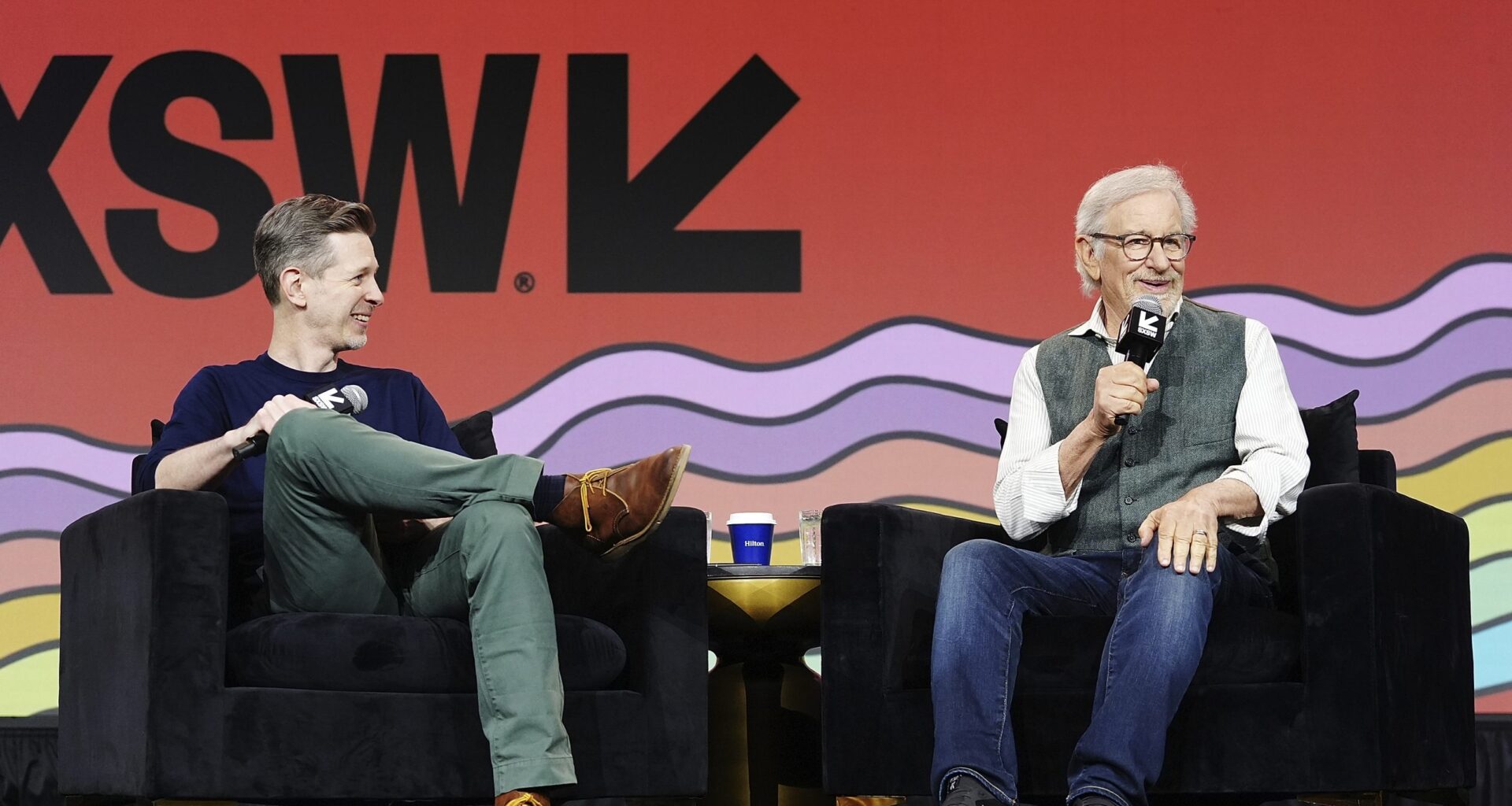
When speaking with someone of that stature, how do you balance being a fan of the work with being a critic and interviewer?
I try not to overthink that. I’m making the show as a fan of movies, but I’m trained as a critic and worked as a journalist for many years. The show is built around enthusiasm for the craft, and I try to bring that energy and perspective to every conversation.
But I also take the responsibility of speaking to Steven Spielberg in a public setting seriously. What matters most is having a good talk—one that keeps the guest engaged and makes it clear that I know their work and want to have a substantive conversation about it.
I’ve watched a junket-fueled, game-show-style environment grow around movies over the past 10 years as traditional media has shrunk. I love playing games and doing goofy things on the podcast, but I try to keep that separate from guest interviews. Ideally, those discussions become part of the record of an artist’s work and how they were feeling at the time.
Your conversations on The Big Picture feel very natural, even at this level. What are you paying attention to in the moment to keep things both thoughtful and conversational?
I write dozens of questions and make a lot of notes ahead of time, but I try not to spend too much time looking at them during a discussion. I’m not good at many things, but I have figured out how to make talking about what I love a career, so I just default to that. I’ve been watching Spielberg’s movies since I saw E.T. at six years old. I’m naturally and ecstatically interested in what he has to say about movies, his view of the world, what he had for breakfast.
In the moment, the most important thing is listening and being willing to throw out your plan when you get a surprising answer that demands a follow-up. If you’re not listening, why ask the question?
These conversations reach a highly engaged audience. Do you think about the listener while you’re in the interview, or are you fully focused on the person across from you?
I’m very focused on the guest, but I go in with a plan. I try to set the table with clear questions for the listener at home, and most guests in a promotional environment understand they’re serving the movie they’re there to talk about.
But when a conversation turns technical or philosophical, I’ve found it’s best to frame it around my own ignorance and hope the guest can shed light. We recently had the Academy Award-winning cinematographer Autumn Durald Arkapaw on the show to discuss her work on Sinners, which is not only beautiful, but also highly technical—lenses, light, historical documents, color, etc. During that conversation, I acted slightly more ignorant about my knowledge of cinematography, because it’s less useful to rely on shorthand the audience may not know. It’s better to explain things clearly and specifically. That’s how the guest, the listener, and I all stay locked in.
Any advice for creators looking to sharpen their interview skills?
Practice off mic. Interviewing is an unnatural way of communicating—it’s often more formal, leaves less room for shortcuts and insinuation, and requires a higher level of engagement than a typical conversation. How do you enunciate? When is the right time to interrupt, if ever? When is a follow-up required? You won’t know it until you do it, and start feeling out the guest.
And if you’re not genuinely curious about the answers, don’t ask the questions. Listeners can tell when they’re being BS’d or participating in a perfunctory promo-cycle interview. Also, be prepared. There’s nothing worse than hearing an interviewer fumble through a mistake in a question and a guest lose interest in real time. You won’t need all the research, but there’s nothing wrong with knowing more than you need.
Watch Sean’s Big Picture conversation with Spielberg on Spotify.