
March 24, 2026
By Karan Singh
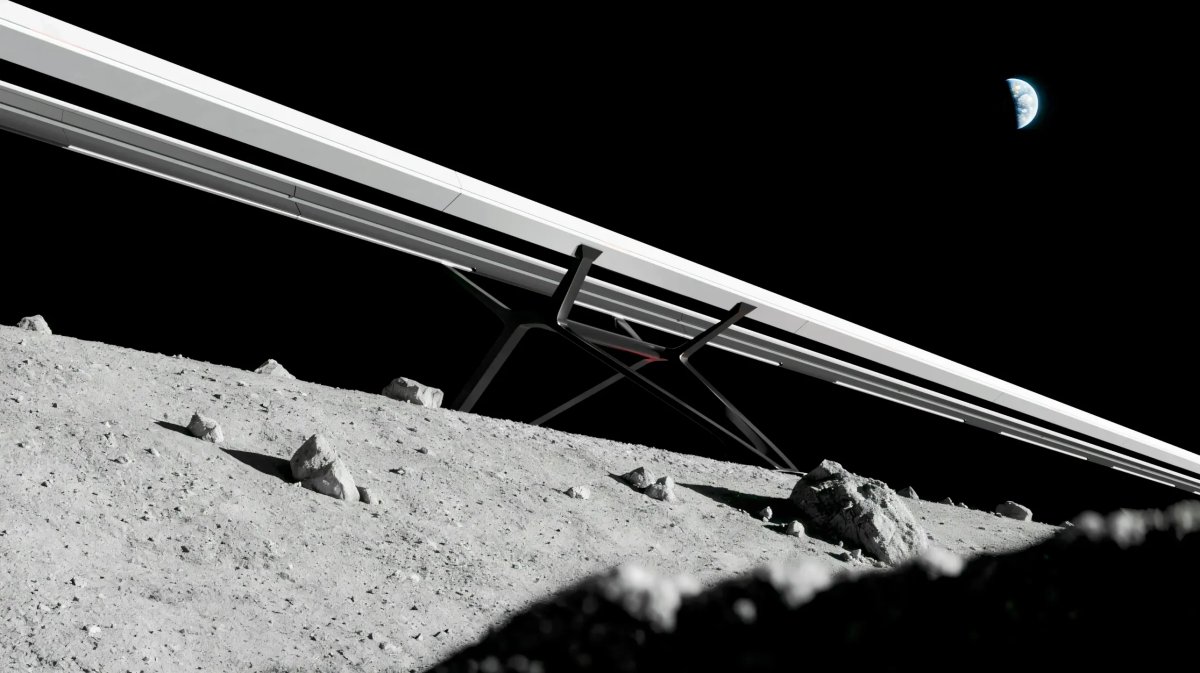
During the recent TERAFAB launch event, Elon Musk outlined a vision for the future of human computing. To scale artificial intelligence to a petawatt of power, Musk detailed a plan to manufacture compute infrastructure on the Moon and launch it into deep space, not using rockets, but a lunar mass driver.
While it sounds like pure science fiction, the mass driver is a deeply rooted aerospace concept that could completely revolutionize the economics of the solar system. Let’s take a look at exactly what makes this concept so useful once we escape Earth’s gravity.
Mass drivers on the Moon!
pic.twitter.com/fqMVuYwEi9
— Elon Musk (@elonmusk) March 22, 2026 What is a Lunar Mass Driver?
A mass driver, sometimes referred to as an electromagnetic catapult, is essentially a massive, stationary launch track built directly on the surface of a celestial body.
Instead of burning chemical rocket fuel to blast a payload into space, a mass driver operates much like a hyper-advanced maglev train or a railgun. It utilizes a long line of sequentially fired superconducting coils to generate a powerful magnetic field.
This field accelerates a payload-carrying sled down the track at incredibly high speeds. Once the sled reaches the required escape velocity, the payload is released and hurtles into the vacuum of space entirely on its own momentum, while the sled decelerates and is recycled for the next launch.
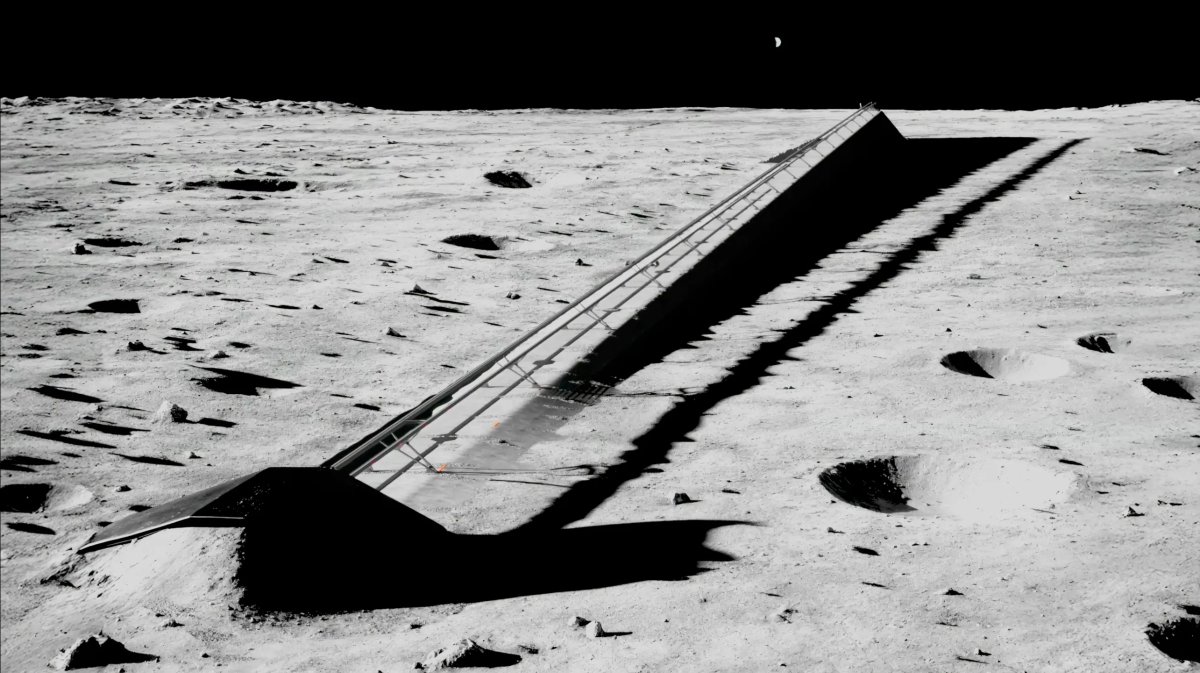 The Moon is the Perfect Launchpad
Building a mass driver on Earth is essentially impossible with current technology. Earth’s gravity is incredibly strong, requiring a massive speed of 7 miles per second (11.2 km/s) to escape. This would be roughly 25,000 mph. More importantly, though, Earth has a thick atmosphere.
If you accelerated a payload to Mach 33 on a ground-based track, the sheer friction of the atmosphere would instantly incinerate the cargo before it ever reached orbit.
The Moon, however, provides the perfect physics for a mass driver. First, lunar gravity is only one-sixth of Earth’s, meaning the escape velocity is a highly manageable 1.48 miles per second (2.38 km/s), or 5,320 mph (8,560 km/h). Second, the Moon has no atmosphere.
With zero air resistance to create drag or heat friction, a mass driver can launch delicate cargo, like the space-hardened AI computer chips Musk detailed, directly from the surface into the cosmos without a single drop of fuel.
Beyond Compute
While Musk is currently focused on using a lunar mass driver to launch orbital data centers, the infrastructure would fundamentally open up the rest of the solar system.
The most valuable commodity in space is water, which can be separated into hydrogen and oxygen to create rocket fuel. A lunar mass driver could continuously launch massive blocks of lunar ice into Earth orbit or out to Mars, acting as a permanent, automated supply line for interplanetary refueling depots.
Additionally, a mass driver could be used to export raw materials mined from the lunar regolith, such as iron, aluminum, or titanium. By moving heavy, resource-intensive manufacturing off Earth and onto the Moon, a mass driver becomes the primary export highway for a fully industrialized lunar economy.
The Ultimate Engineering Challenge
While the physics of a lunar mass driver are perfectly sound, constructing one would arguably be the greatest engineering feat in human history.
The primary hurdle is the sheer scale of the up-front infrastructure. A mass driver requires a perfectly aligned track stretching for several kilometers, meaning construction crews and humanoid robots like Tesla’s Optimus would need to do heavy civil engineering in a hostile vacuum.
In addition, the superconducting electromagnets require an immense amount of electricity, necessitating acres of solar panels or a dedicated nuclear reactor just to power the launch mechanism.
However, the arrival of SpaceX’s Starship makes this feasible for the first time. Because Starship can deliver over 100 metric tons of cargo to the lunar surface in a single trip, humanity finally has a vehicle capable of transporting the heavy construction equipment, track segments, and power grids required to build the driver.
The Best Alternative
When looking at how to move cargo off the Moon, there are a few alternatives to the mass driver, but none offer the same long-term economic dominance.
The most obvious alternative is traditional chemical rockets. However, rockets are trapped by the rocket equation – you have to carry heavy fuel to lift your heavy fuel. Even if you manufacture methane and oxygen on the Moon, a rocket requires complex engines, refurbishment, and massive energy expenditure for every single flight. A mass driver, by contrast, requires zero chemical propellant and only costs whatever the local solar electricity costs to charge the magnets.
Another alternative is a space elevator, which uses a massive tether extending from the surface into orbit. However, space elevators require materials with a tensile strength that humanity has not yet figured out how to manufacture at scale, such as carbon nanotubes.
The mass driver wins because it relies on existing, well-understood physics and technologies we already possess today. It requires a monumental up-front capital investment, but once it is turned on, the marginal cost of launching a payload into deep space drops effectively to zero.
The concept of a mass driver has been a staple of aerospace theory and science fiction for decades, but Elon Musk is the first person with the industrial capacity and willpower to actually build one.
By uniting the heavy-lift capabilities of SpaceX, the robotics of Tesla, and the compute demands of xAI, the lunar mass driver represents the critical bridge between humanity’s Earth-bound present and its multi-planetary future.
Subscribe to our newsletter to stay up to date on the latest Tesla news, upcoming features and software updates.
March 24, 2026
By Karan Singh
After proving they can build some of the most technologically advanced (and expensive) electric vehicles on the planet with the Lucid Air and Gravity, Lucid Motors is finally getting prepared to enter the high-volume EV arena.
During the company’s 2026 Investor Day in New York City last week, Interim CEO Marc Winterhoff and his executive team laid out the roadmap to profitability.
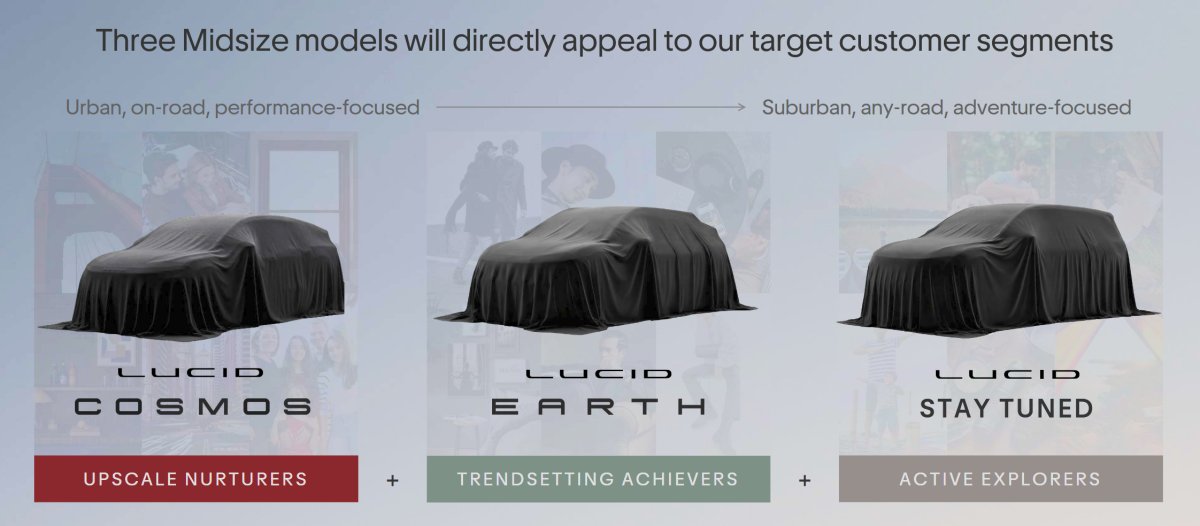
The cornerstone of that strategy? A brand-new midsize platform designed to go head-to-head with the Tesla Model Y and Rivian R2 (compare the Model Y to the R2). Lucid plans to launch three distinct consumer SUVs on this new architecture, all starting under the critical $50,000 price point. Here is a breakdown of everything Lucid revealed to investors.
Meet the Cosmos, Earth, and Lunar
Rather than taking a one-size-fits-all approach to the midsize segment, Lucid is building three distinct SUVs that will share up to 95% of their underlying components to keep manufacturing costs drastically low.
The first to arrive will be the Lucid Cosmos. Slated for full reveal this summer, with production beginning late this year, the Cosmos is a sleek, aerodynamic five-seater directly targeting the Model Y. It features a sloping roofline and is geared toward buyers seeking maximum efficiency and everyday performance.
Roughly a year after the Cosmos hits the streets, Lucid will launch the Earth. While built on the exact same platform, the Earth takes on a much bolder, more upright, and adventurous style. It is more like a scaled-down version of the Gravity, intended for off-roading and adventure, similar to the Rivian R2.
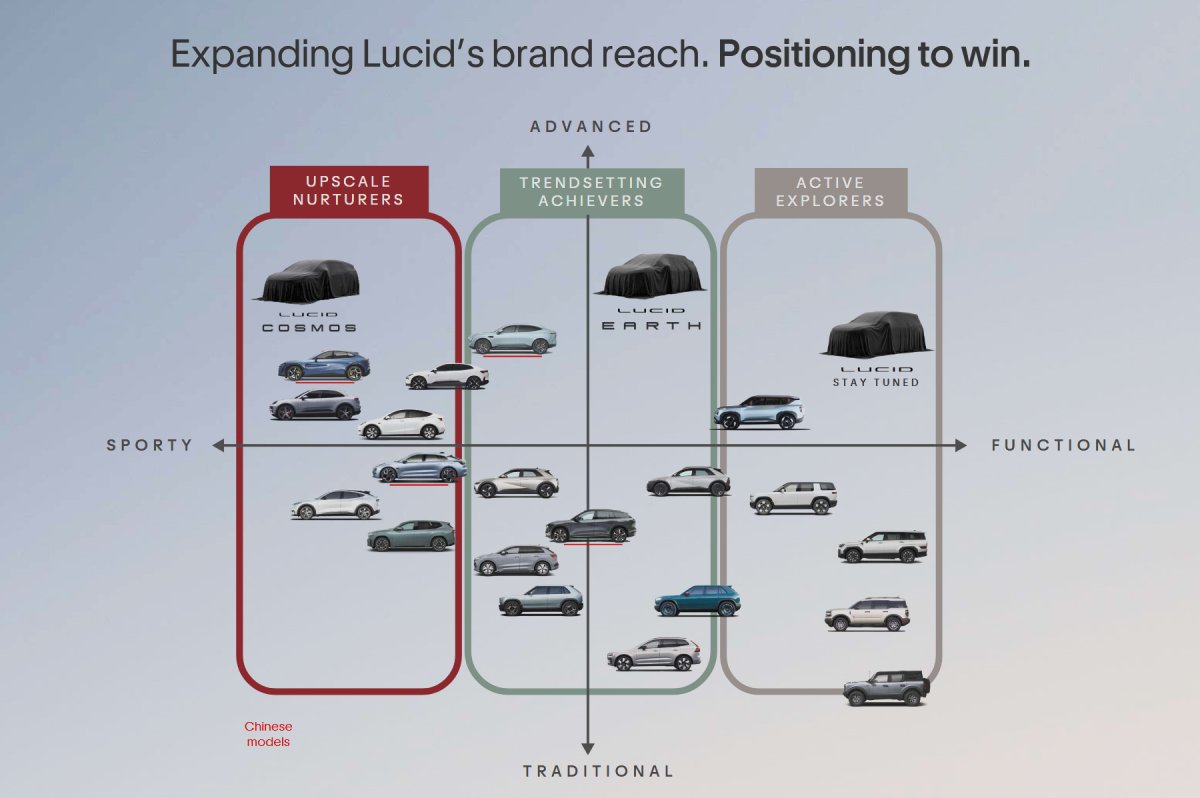
But consumer vehicles weren’t the only hardware on display. Lucid also surprised investors by unveiling the Lucid Lunar, a purpose-built, two-seat robotaxi concept built on the same midsize architecture, intended to rival the Cybercab and likely sporting Nuro’s autonomy hardware.
The New Powertrain
To hit that sub-$50,000 price tag without sacrificing the driving dynamics Lucid is known for, the engineering team completely redesigned the powertrain.
The midsize platform will debut Lucid’s next-generation electric drive unit, dubbed Atlas. Compared to the motors currently powering the Air, the Atlas unit is 23% lighter, has 30% fewer parts, and costs 37% less in materials.
Because the Atlas motor is so incredibly efficient, Lucid claims it will achieve an industry-leading 4.3-4.5 miles per kilowatt-hour. This means the Cosmos will only require a relatively small 69-kWh battery pack to achieve 300 miles of range. By using a much smaller battery to achieve the same range as its competitors, Lucid expects to save roughly $2,000 in battery costs per vehicle over the industry average.
Meeting in the Middle
Inside the cabin, the midsize SUVs will feature a sweeping 36-inch cockpit screen positioned high on the dash. However, Lucid is also listening to customer demands by retaining traditional analog controls.
The new SUVs will feature physical, analog door handles on the inside, rather than electronic release buttons. They are also retaining hard buttons for audio volume, tuning, and specific climate controls, appealing to drivers who are fatigued by touchscreen-only interfaces.
Robotaxi & Uber
Lucid is making it very clear that selling cars to consumers is only one part of its revenue strategy. During the event, Uber President and COO Andrew Macdonald joined Lucid executives on stage for a fireside chat to discuss the future of autonomous ride-hailing.
The two companies confirmed they are finalizing a massive agreement to deploy Lucid’s midsize vehicles, including the future Lunar, on the Uber network. This builds on their existing partnership, which currently utilizes the Gravity SUV for autonomous testing in San Francisco, positioning Lucid as a direct competitor to Tesla’s upcoming Cybercab network.
The Financial Reality of Lucid Motors
All of this highly optimized engineering serves one ultimate purpose: saving the company money. Lucid’s CFO noted that the unit cost for these new midsize vehicles is projected to be 60% to 70% lower than Gravity’s baseline cost.
By scaling this radical efficiency and expanding its total addressable market with a $50,000 crossover, Lucid believes this new midsize platform is the key to finally achieving positive free cash flow by the end of the decade.
March 24, 2026
By Nehal Malik
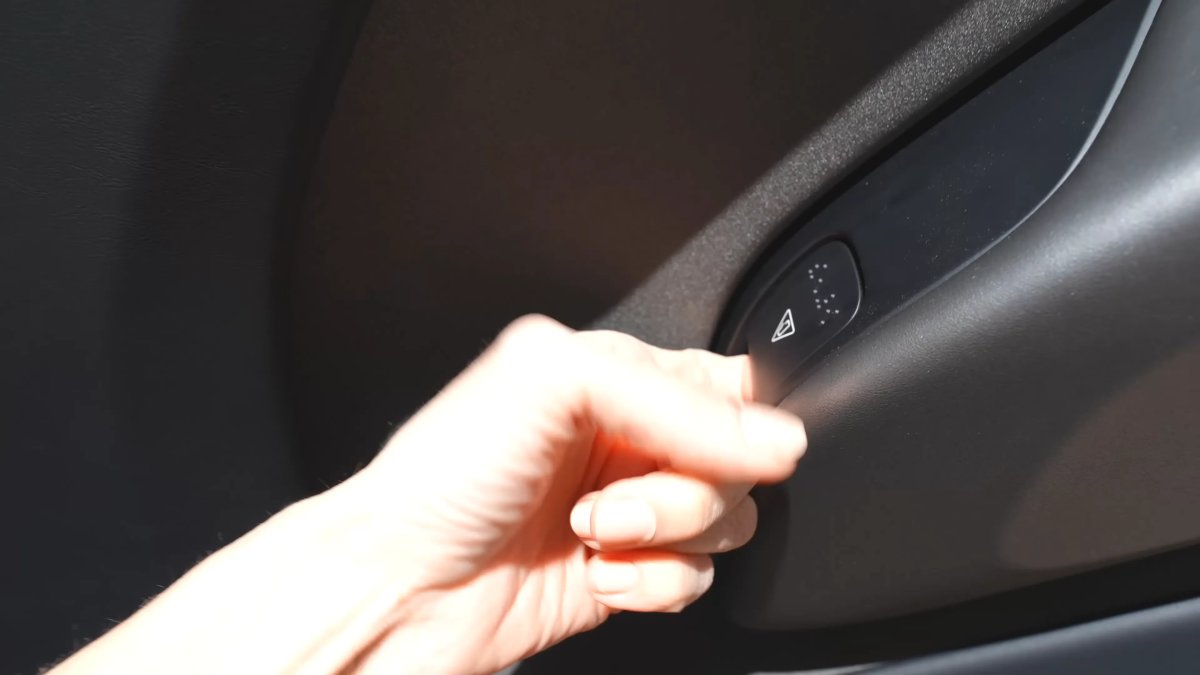
Tesla is preparing to debut a long-rumored interior hardware change with the upcoming Cybercab. Recent production unit walkthroughs have revealed a completely redesigned door handle system that solves one of the most persistent safety criticisms of Tesla’s current vehicle lineup.
The new design, showcased in recent Cybercab walkthrough videos from Kim Java and Out of Spec Reviews, simplifies the exit process by combining the electronic and manual door releases into a single interface. Currently, Tesla owners have to use a button for normal exits and hunt for a separate, often hidden mechanical lever during emergencies.
 How the One-Button Solution Works
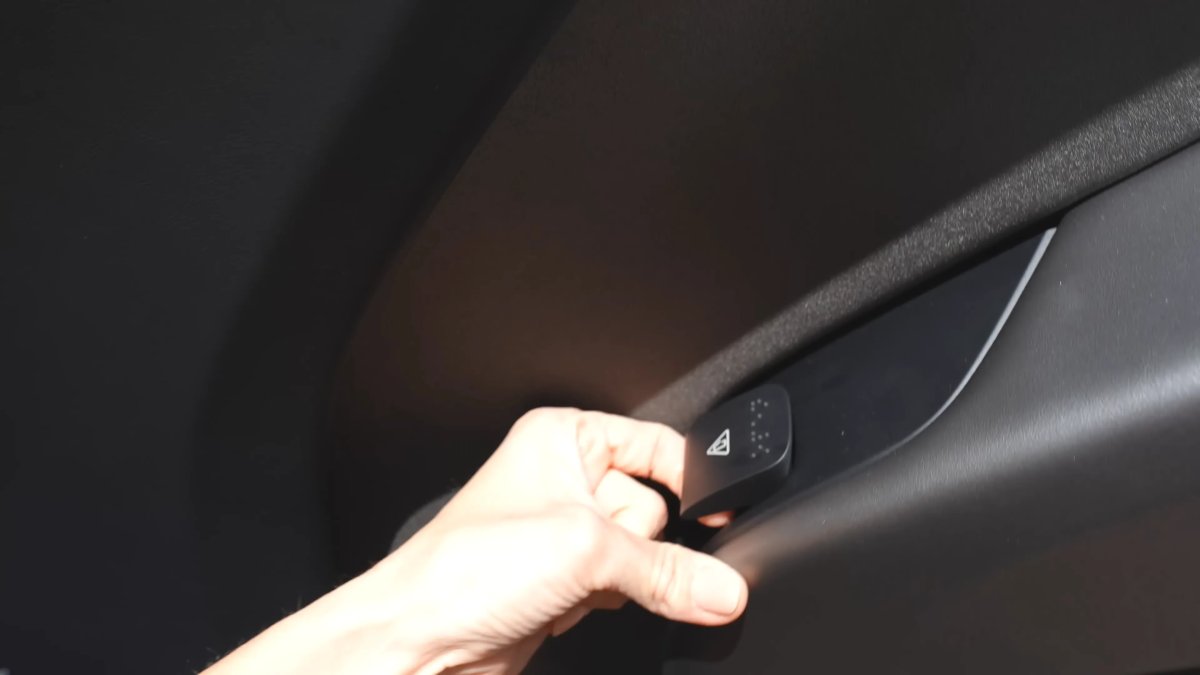
The Cybercab’s interior features a pull-style switch on the doorframe that handles both powered and manual unlatching. As demonstrated in the videos, if you pull it up lightly, it’s electronic. If you continue to pull on it deeper, it triggers the manual emergency release.
This dual-action travel is a major safety upgrade. If the car has power, a light tug triggers the electronic actuator, and the door pops open. However, if the vehicle loses power, pulling that same handle deeper engages the mechanical cable to physically unlatch the door. This ensures that even a panicked passenger who has never sat in a Tesla before can exit the vehicle instinctively without needing to read a manual.
Regulatory Pressure and Global Redesigns
This shift in design isn’t just about convenience; it is a response to mounting international pressure. In the United States, the NHTSA recently opened an investigation into Tesla’s emergency releases after incidents where occupants struggled to exit vehicles quickly.
The pressure is even more intense in China, where regulators announced a ban on cars equipped solely with electric handles. Starting next year, all vehicles sold in China must have easily accessible mechanical releases on both the inside and outside. This is already forcing Tesla to redesign the latches for the Model 3 and Model Y. Tesla’s Head of Design, Franz von Holzhausen, previously acknowledged the issue, promising a “really good solution” was in the works. The Cybercab appears to be the first product to officially ship with that solution.
The Cybercab and the Robotaxi Network
The Cybercab is designed to be the backbone of Tesla’s autonomous ride-hailing network, and mass production is slated to begin in April. Because this vehicle is meant for the general public, every detail has been refined for ease of use, maximum utility, and accessibility.
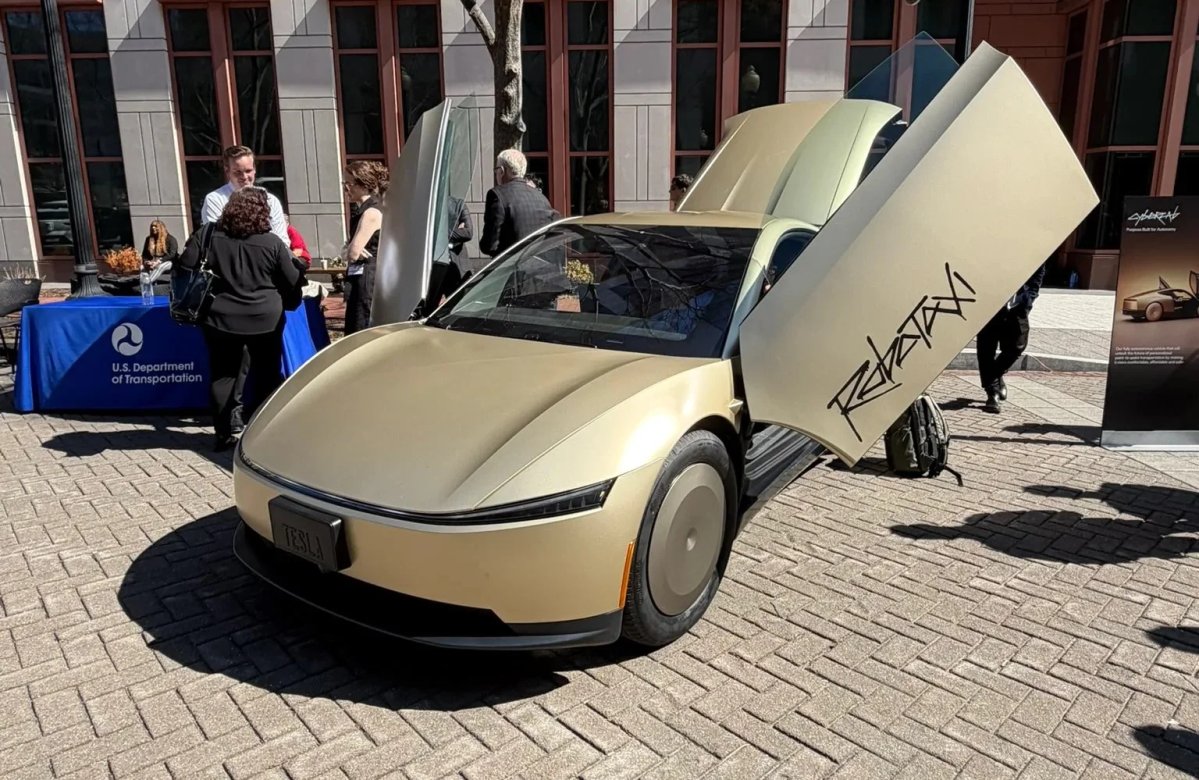
Recent sightings have confirmed the Cybercab features wheelchair-height seats and larger front-facing cameras to support its “unsupervised” Full Self-Driving (FSD) software. The interior is incredibly minimalist; there is no steering wheel or pedals (although Tesla has said it is willing to ship the Cybercab with them at first if lawmakers require), and almost everything is controlled through a massive 21-inch touchscreen. Aside from the new door pulls, the only other physical inputs are window switches and a hazard button that doubles as an emergency stop.
As Tesla prepares to ramp up production next month, the unified door handle design represents a significant step forward in safety. It likely won’t be long before we see this “pull for power, pull harder for manual” logic make its way into every new Tesla model globally.