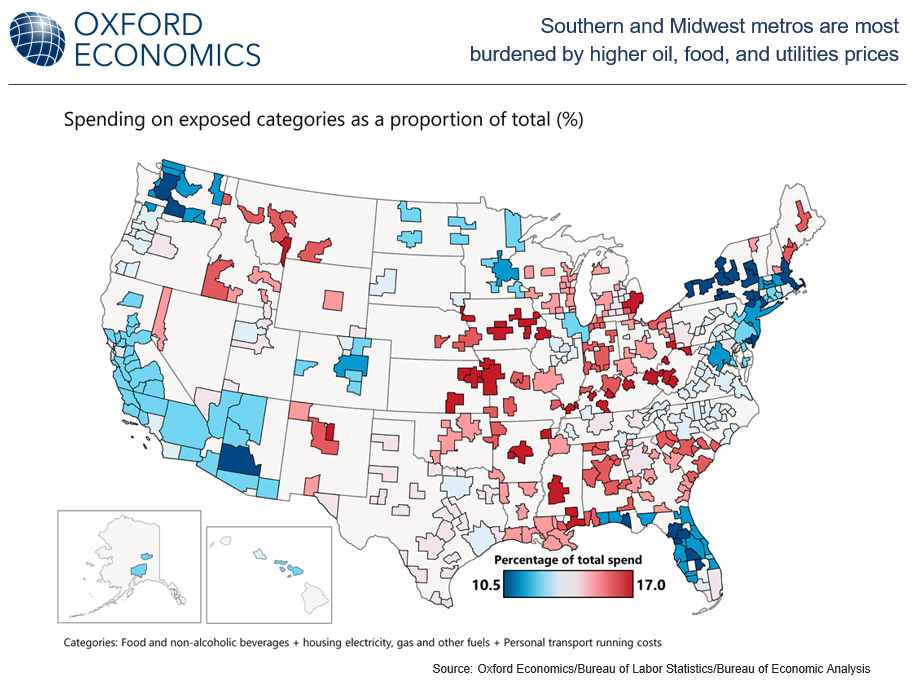
The disruption in oil prices due to the Iran conflict will have a disproportionate impact on low-income households, as they spend a larger share of their household budgets on fuel, food, utilities, and related necessities—the prices of which have already increased due to the war.
Metros where households spend the highest share on these commodities are largely in the South, in West Virginia, or scattered across the Midwest.
Although we are lowering our GDP growth forecasts due to the war’s impact on consumer spending, some sectors—namely, oil and gas mining and petroleum products manufacturing (refining)—will see a bump in GDP due to the sharp increase in oil prices.
Although these sectors have a high GDP per job and have seen robust growth since the start of the shale boom of the 2010s, employment has declined and is unlikely to increase much, even during this period of heightened activity.