
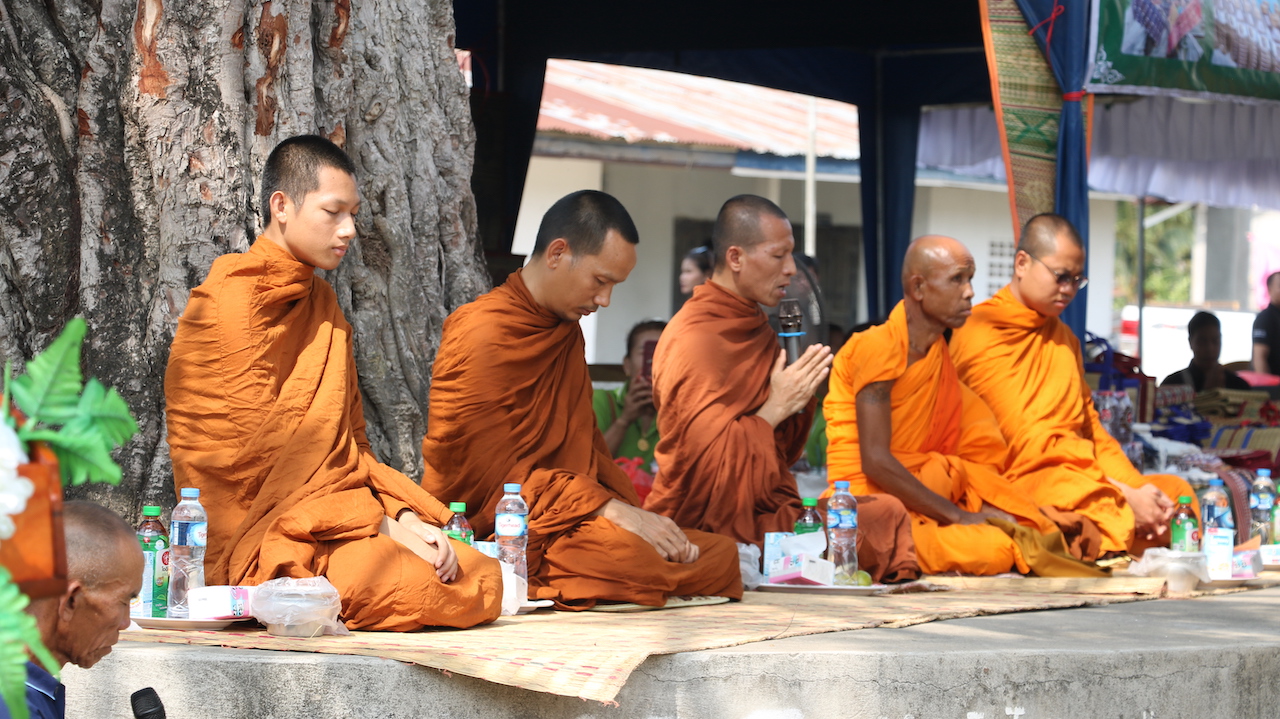
A decade-long conservation program built around local culture is restoring a globally significant population of a critically endangered crocodile species to the Xe Champhone wetlands of central Laos.Of the world’s 27 crocodilian species, the Siamese crocodile is among just four classified as critically endangered, with fewer than 1,000 thought to survive on Earth.This month, 56 crocodiles were released back to the Xe Champhone wetlands and the program has released 294 individuals since it began in 2013.The locals’ spiritual connection to crocodiles, upheld for generations in a landscape stripped of most large wildlife, may be the single most important reason this species still exists here.
See All Key Ideas
When village conservation teams find a Siamese crocodile nest in the Xe Champhone wetlands of central Laos, they move fast, collecting eggs within 24 hours before poachers, predators or floods can reach them.
But before they touch the eggs, there’s a ritual, and offerings are made to the spirits. With the spirits appeased, villagers carry the eggs to hatch in the village, where the baby crocs’ chances of hatching are nearly five times higher than in the wild.
Oudomxay Thongsavath, program manager at Wildlife Conservation Society and a native of the region, has been involved with the program since its start. He told Mongabay that locals make an offering and explain to the spirits, “We collect the egg, we incubate it in the village, and we return your children back to your area … Please take care of them. Make sure they are safe in the future when they go back to their habitat.”
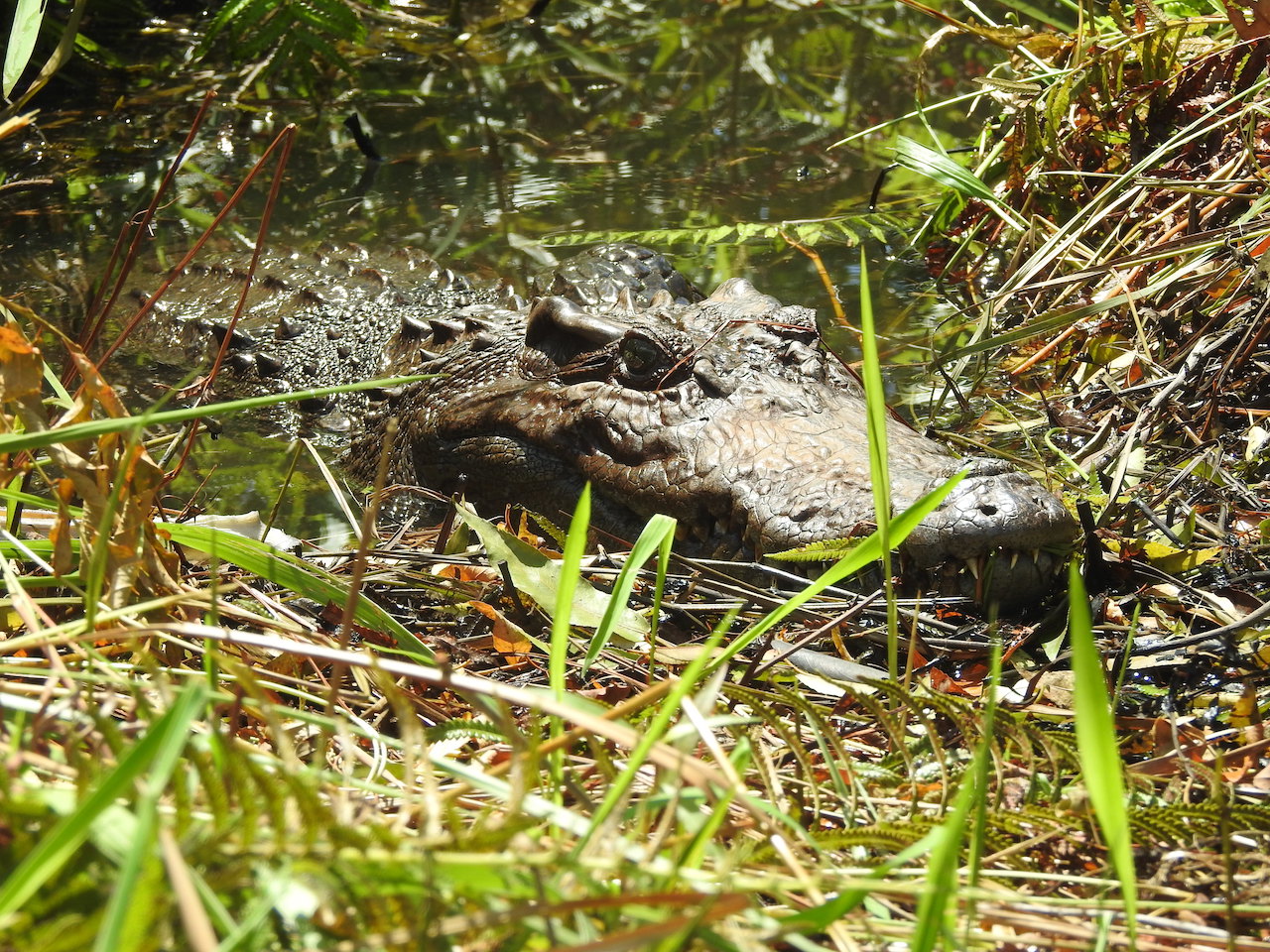 Fewer than 1,000 though Siamese crocodiles (Crocodylus siamensis) are estimated to survive on Earth. Photo courtesy of WCS
Of the world’s 27 crocodilian species, the Siamese crocodile (Crocodylus siamensis) is among just four classified as critically endangered. Fewer than 1,000 are thought to survive on Earth.
Locals say that to harm a Siamese crocodile is to risk illness, misfortune or death. Not because the crocodiles are particularly dangerous (as crocodiles go), but because these scaly beings are the living embodiment of their ancestors.
That spiritual connection to crocodiles, upheld for generations in a landscape stripped of most large wildlife, may be the single most important reason this species still exists here. A decade-long conservation program built on the cultural bedrock of that belief is restoring a globally significant population of this critically endangered crocodile species to central Laos.
The heart of the conservation initiative is its head-starting program, in which village conservation teams are paid what WCS calls a “modest stipend” to collect wild eggs, hatch them in village facilities, and raise the young crocs past their most vulnerable stage before releasing them back into the wetlands.
On March 19th, the conservation team released 56 juvenile Siamese crocodiles back to the Xe Champhone wetlands. The program has released 294 individuals since 2013. Another 191 are being reared for future release.
“This species is very strong for the culture in the area,” Oudomxay said. “They believe it protects the wetland and protects the community. If you do bad behavior in the wetland or speak not nicely, something can happen to that person. Can get sick. In big cases, can die.”
“The people there still believe and they take this very seriously,” said Steve Platt, associate conservation herpetologist with WCS, who has helped lead the project since 2011. “That’s why those crocodiles are still there.”
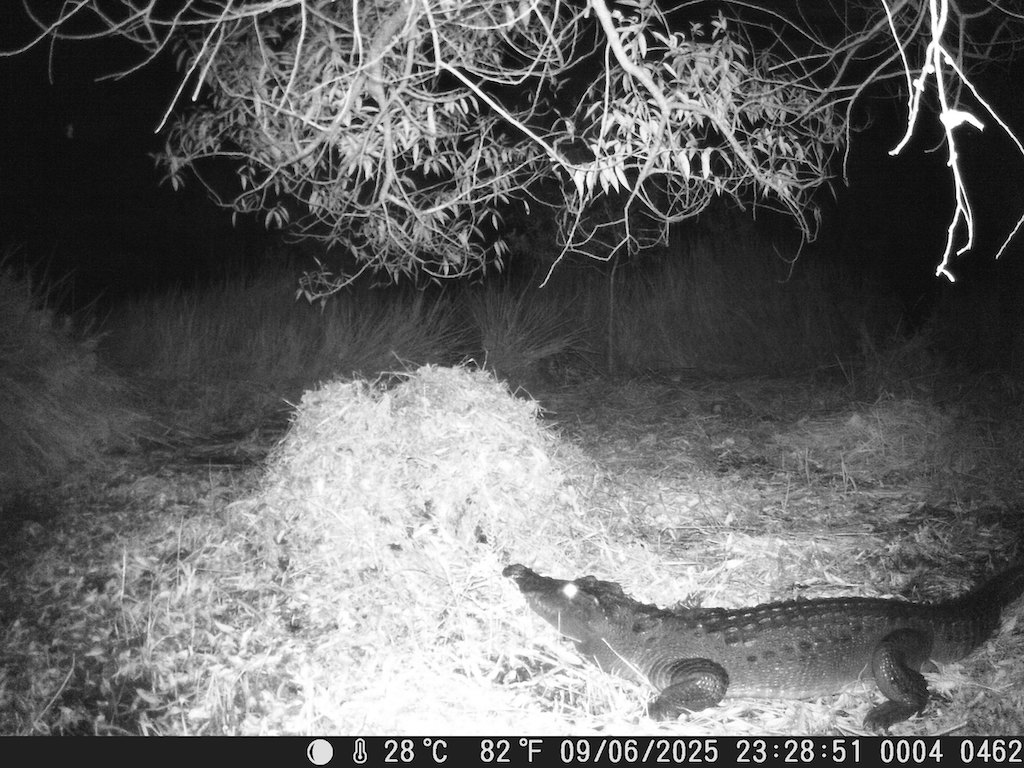 A camera trap shows a Siamese crocodile visiting its nest in the night. Photo courtesy of WCS
It’s very hard to count crocodiles in the wild, but nest surveys from 2022 to 2024 suggest between 60 and 225 individuals inhabit the area, making this likely the largest remaining wild population in mainland Southeast Asia, according to a special report by the Crocodile Specialist Group at the IUCN, the global wildlife conservation authority.
Once widespread across mainland Southeast Asia, the Siamese crocodile was driven to the brink of extinction by illegal hunting for its skin and meat, government extermination campaigns, habitat loss, and mass collection for commercial farms. Now, the species occurs in very small populations in Thailand, Cambodia, Laos, Vietnam and Indonesia.
“When I was a child, I thought this species was already gone, already extinct. I only heard stories from my parents, don’t go to the deep water, something might be there,” Oudomxay said.
One night, he recalled, while working with WCS, he saw glowing eyes in the dark. “I saw the eyes in the night and thought: this is still here.” Since then, he has dedicated his life to bringing this species back from the brink.
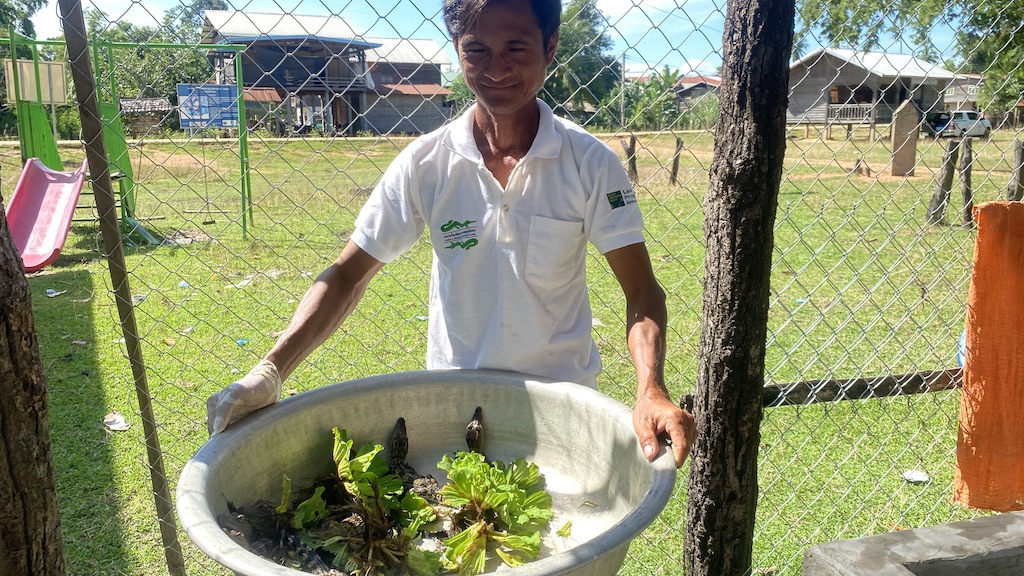 Juvenile Simaese crocodiles are raised in the village to give them a headstart. Here, they are safe from predation and poachers. Image courtesy of WCS Laos.
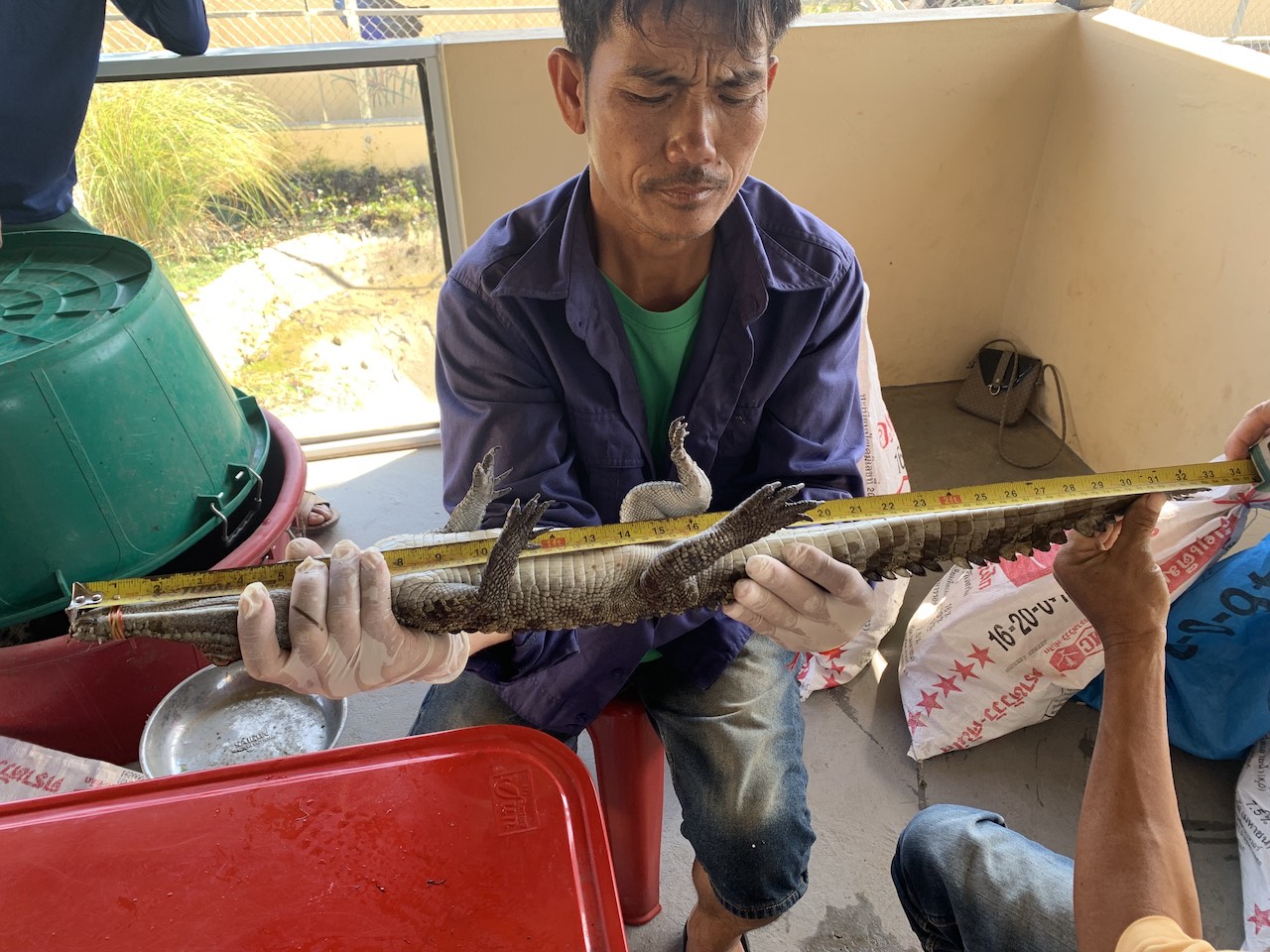 Village conservation team member measures a young Siamaese crocodile to monitor growth. Photo courtesy WCS Laos.
Head-starting: From nest to wetland
From mid-May through early August, village conservation teams, each comprising five to 20 local recruits, search for crocodile eggs. They examine microsites used by nesting females in years past and search for other suitable nesting habitats. Many nests are also found by team members engaged in their day-to-day lives while fishing, harvesting snails, or cultivating rice fields.
Drones, deployed since 2022, have made nest surveys much more effective. “We can see the whole landscape and identify if the grass starts to dry or if a mound has been made,” Oudomxay said. “The drone is very good because it doesn’t disturb the crocodile, the sound is not very loud, so we can identify the mother and the nest clearly.”
Clutch sizes average around 27 eggs, and the village teams often leave a small number of eggs, up to five, in the nest mound to “avoid offending the attending female crocodile,” according to the report. In 2025, the teams collected half of each clutch from a total of seven nests.
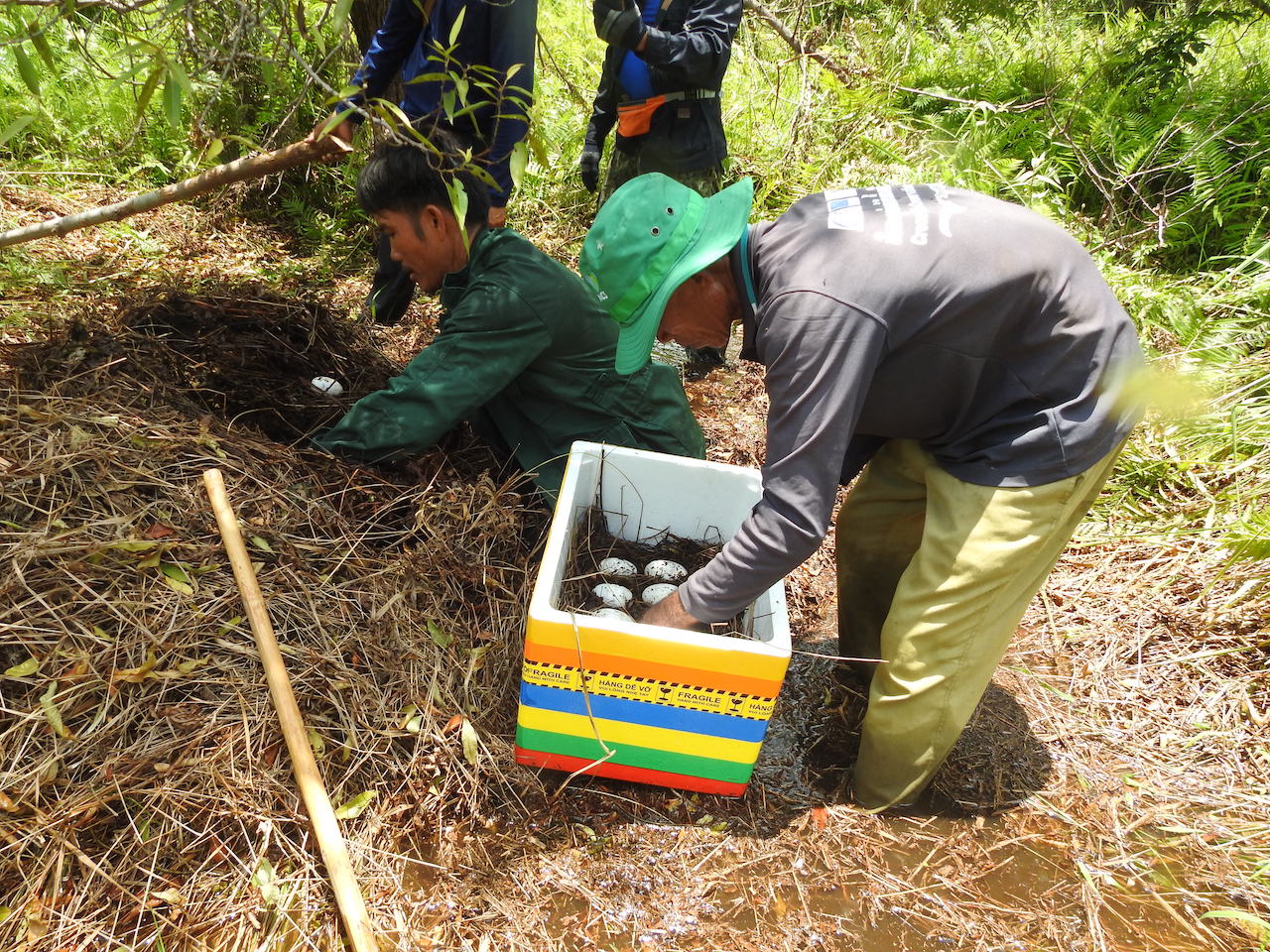 Village conservation teams are paid to collect crocodile eggs and transport them to be incubated in the safety of the village. Photo courtesy WCS Laos.
Once they locate the eggs, workers alert the main office, which quickly sends out research techs. At the site, they mark each viable egg and pack them in Styrofoam boxes with sand and nest material, and transport them to incubation facilities in the villages of Tan Soum and Dongyanong.
The eggs incubate in ambient conditions for about 75 days. An estimated 53% of collected eggs hatch — a much higher rate than the 13% in the wild, where flooding and predators are the main causes of eggs failing to hatch. In 2025, the teams collected eggs from nine nests, incubated 114 viable eggs, and hatched 61.
After hatching, the juvenile crocs grow in village pens for roughly 30 months, where they’re hand-fed fish, eels, frogs, and crushed golden apple snails. Once they reach about 75 centimeters (2.5 feet) in length, big enough to avoid most predators, they’re ready for release into the water. Here, they stay in submerged acclimation pens to adjust to their surroundings and have a safe retreat as they explore their new home. Gradually, over the course of weeks, they disperse to live out their lives in the wetlands.
Releasing the young crocodiles back into the wetland is a significant event for the community. They hold a ceremony attended by government officials and members of neighboring communities, during which Buddhist monks bless the small reptiles as they enter the water.
This year, on March 19th, 56 crocodiles were moved into bamboo-and-netting acclimation pens and gradually released. Another 191 await release, once they are big enough.
“[The ceremony] focuses government attention on this, and they realize the significance of what they’re doing,” Platt said. “For the communities that house the facilities, it lets them see that the work they’re doing is important.”
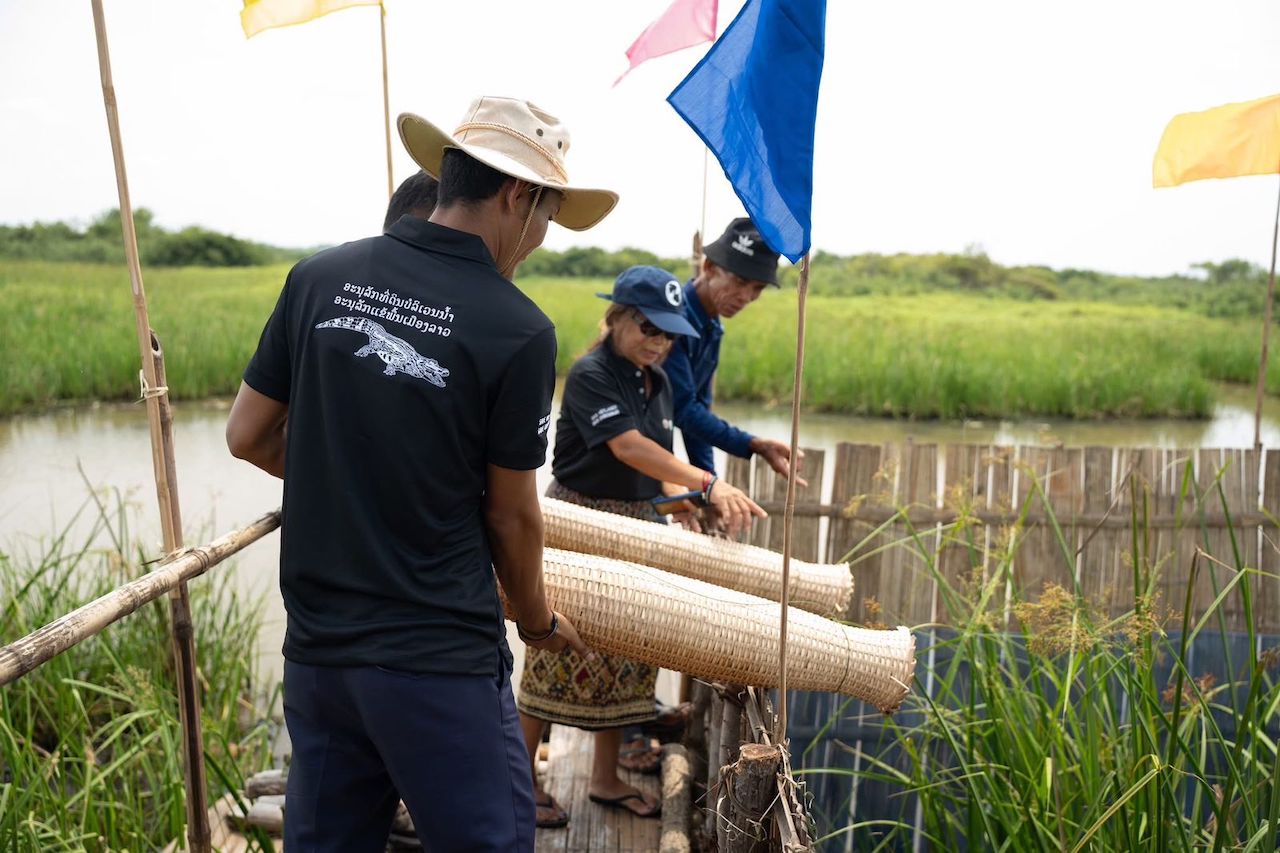 In a ceremony, head started crocodiles are released into a pen where they can acclimate to the wetlands. Photo courtesy WCS Laos.
Parallel efforts, led by a mix of NGOs and government agencies, are also seeing promising results in Cambodia and Thailand. In 2025, conservationists released 10 captive-bred Siamese crocodiles into Cambodia’s Virachey National Park. And 15 crocodiles were released in Khao Ang Rue Nai Wildlife Sanctuary in eastern Thailand.
“Reintroduction efforts in Vietnam and Thailand are greatly restricted by habitat availability, and the ability to establish large populations is also restricted,” Charlie Manolis, co-chair of the IUCN’s Crocodile Specialist Group, who isn’t involved with the Laos project, told Mongabay. “In Cambodia and Laos, where habitat is still available, these countries are thus very important in a regional context for conservation of the species.”
In Laos, one of the program’s most significant milestones, Platt said, came in 2022. A female crocodile, hatched from an egg collected in 2013, head-started and released in 2015, was found defending her own nest. It was the first confirmed breeding by a known-age, captive-reared Siamese crocodile there. She returned to the same nesting site in 2024 and again in 2025.
“We’ve gone full circle. Which is great!” Platt said. “It took 10 years for that to happen. But when you work with long-lived animals, you don’t expect immediate results.”
“For the Siamese crocodile, the work being carried out by WCS and its partners in Laos is significant for the long-term conservation of the species and its habitats,” Manolis said. “The relationship between WCS staff … and local people is of course important to the success of the program, and from what we have observed, it has been a successful partnership, even having survived a period when funding was not available to the program.”
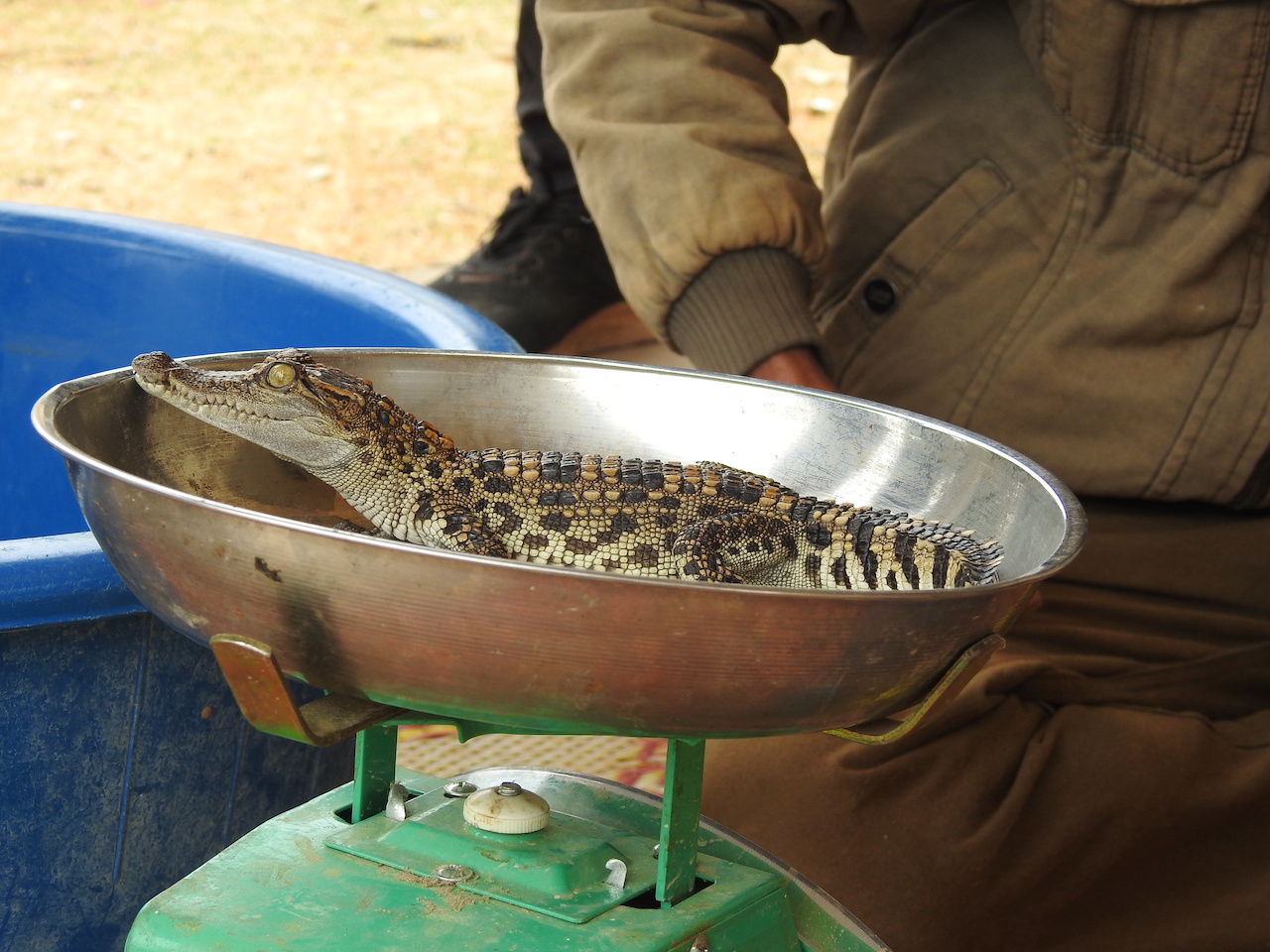 A juvenile Siamese crocodile weighs in before release. Photo courtesy of WCS Laos
Threats remain
Despite these successes, significant threats remain to the species and the wetland ecosystem in Laos. Dry-season rice cultivation has expanded into the floodplain over the past 15 years, with farmers pumping water from lakes where crocodiles nest.
The Xe Champhone wetlands are a 45,000-hectare (111,200-acre) landscape of seasonally flooded lakes, oxbow wetlands, forests, scrublands and rice fields. In 2010, approximately 12,400 hectares (30,600 acres) of this area was designated as a Ramsar Site — a wetland recognized by UNESCO as being of international importance. Despite this designation, development and water extraction continue to damage the wetlands.
“The two main threats are land encroachment and water extraction from the key wetlands where crocodiles lay their eggs,” Oudomxay said. “We have completed land-use planning, creating core zones and buffer zones, but we still face challenges. Some years, new expansion reaches the wetlands.”
Hunting has largely ceased, likely because of the spiritual protections that kept the crocodiles alive in the first place. But accidental mortality from fishing gear remains a hazard. In 2025, one crocodile died in a fishing net.
Funding is also a struggle. “Crocodiles are not charismatic megafauna. People don’t really like them,” Platt said. “If you’re working with tigers or elephants, finding money is not difficult. But crocodiles? It’s difficult.”
Today, WCS Laos works with 18 communities on fisheries conservation, land-use planning, livelihoods and ecotourism, with crocodile conservation at its core.
“As apex predators, [Siamese crocodiles] almost certainly have profound ecosystem-level effects,” Platt said. “But ultimately, the cultural beliefs of the people there are really important in preserving this species. And because of that, because of the people, not just the science, these crocodiles are still there.”
Banner Image of monks blessing the release of Siamese crocodiles back to their home wetland in Laos. Photo courtesy of WCS.
Liz Kimbrough is a staff writer for Mongabay and holds a Ph.D. in ecology and evolutionary biology from Tulane University, where she studied the microbiomes of trees. View more of her reporting here.
Siamese crocodile release into the wild marks conservation milestone in Cambodia
FEEDBACK: Use this form to send a message directly to the author of this post. If you want to post a public comment, you can do that at the bottom of the page.
