
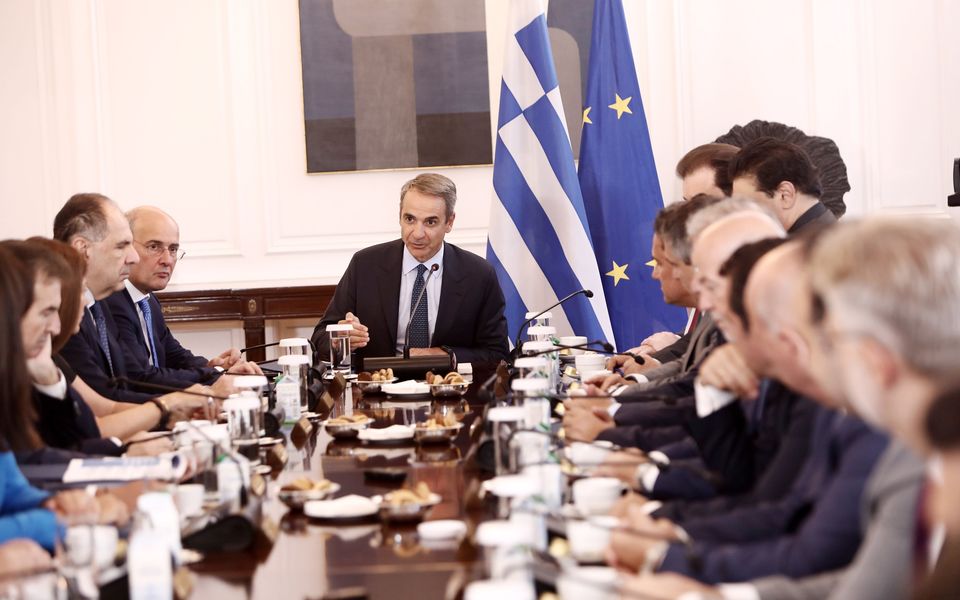
The cabinet convenes Thursday amid a heavy political climate, focusing on a minimum wage increase to bring the monthly total to more than €900, and on foreign policy developments, officials said.
Foreign Minister George Gerapetritis will brief ministers on international developments and war-related risks affecting the economy. Labor Minister Niki Kerameus will present the wage proposal, part of a government plan to reach €950 a month by 2027.
The meeting takes place as the wiretapping case returns to prominence and the trial over the Tempe rail disaster begins amid tensions.
The government seeks to project a “positive narrative,” signaling it is delivering on commitments despite uncertainty.
Officials say two labor targets set for 2027 have already been met: Unemployment has fallen below 8% to 7.7%, and the average salary has surpassed €1,500 a month.
The government is moving cautiously, balancing higher wages with business capacity to absorb costs without layoffs.
Looking ahead, officials aim for further reductions in unemployment and continued wage growth before the 2027 elections.
“At the end of the day, everything will be judged by the economy and the government’s ability to support the so-called middle or lower class,” a government source told Kathimerini.
Ministers are also expected to review progress on Recovery and Resilience Fund milestones due by August 31, and a digital governance bill implementing EU Regulation 2024/1309 to reduce costs for developing gigabit electronic communications networks.
The wage increase is seen as central to boosting household income and reinforcing economic stability, while officials stress gradual implementation to avoid shocks to businesses. The broader agenda reflects an effort to balance growth, social support and fiscal discipline in a volatile environment. The bottom line, officials emphasize, is continuity and resilience.