
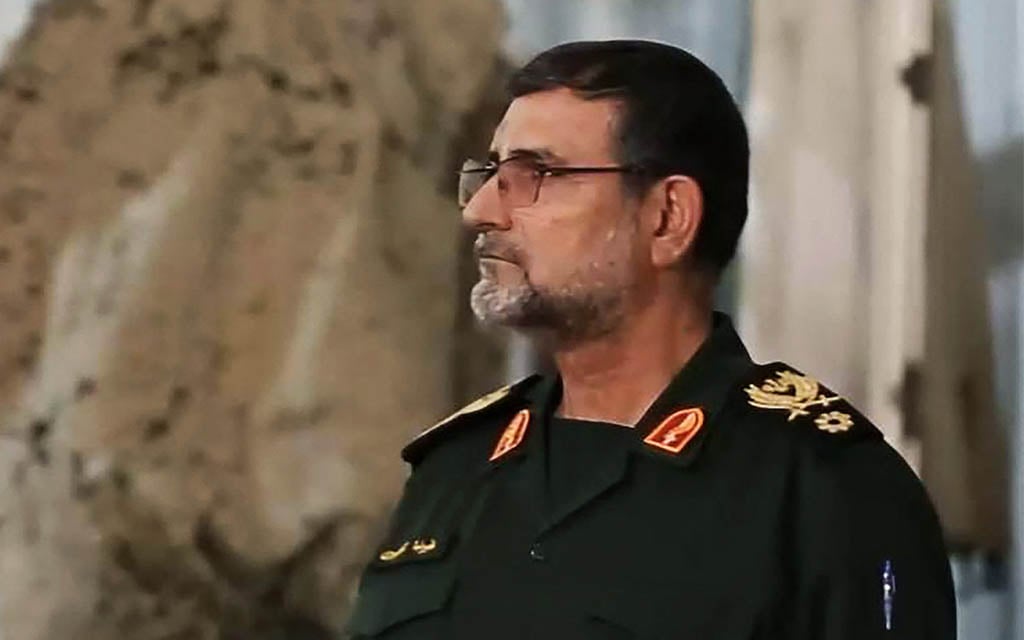
Israel said Thursday that the commander of the Islamic Revolutionary Guard Corps Navy, Adm. Alireza Tangsiri, had been killed in an airstrike, the latest senior Iranian official targeted in a relentless hunt-and-kill campaign. The Israel Defense Forces later said all of the IRGC Navy’s key commanders had been killed in the strike.
However, Israel took Iranian Foreign Minister Abbas Araghchi and Parliament Speaker Mohammad Bagher Qalibaf off its hit list after Pakistan requested that Washington not target them, a Pakistani source with knowledge of the discussions told Reuters. Qalibaf is reportedly the “top man” with whom US President Donald trump said Monday he has been indirectly negotiating on terms for ending the conflict.
“The IDF eliminated the commander of the IRGC Navy, the person directly responsible for the terror operation of mining and blocking the Strait of Hormuz to maritime traffic,” Defense Minister Israel Katz said during a morning assessment with military officials.
Katz said the strike was a “message” to the IRGC: “The IDF will hunt you down and eliminate you one by one.”
“We will continue to operate in Iran with full force to achieve the objectives of the war,” he added.
Get The Times of Israel’s Daily Edition
by email and never miss our top stories
By signing up, you agree to the terms
Later, the IDF confirmed the killing and said that in addition to Tangsiri, the strike also killed the IRGC Navy’s intelligence chief, Behnam Rezaei, and the rest of the navy’s top leadership. The military did not immediately name other top commanders killed in the strike.
Tangsiri was targeted in the Iranian port city of Bandar Abbas while meeting with senior commanders of the IRGC Navy, according to the military.
“Over the years, Tangsiri was responsible for attacks on oil tankers and commercial vessels and personally threatened the freedom of navigation and trade in the Strait of Hormuz and the international maritime domain,” the IDF said.
During the current war, the IDF said he “led efforts to close the Strait of Hormuz and advanced terror attacks in the maritime domain, one of the primary figures responsible for disrupting the global economy.”
The IDF said the killing of Tangsiri and the IRGC Navy leadership “constitutes an additional significant blow to the command-and-control arrays of the IRGC and its abilities to orchestrate terror activities in the maritime domain against countries in the region.”
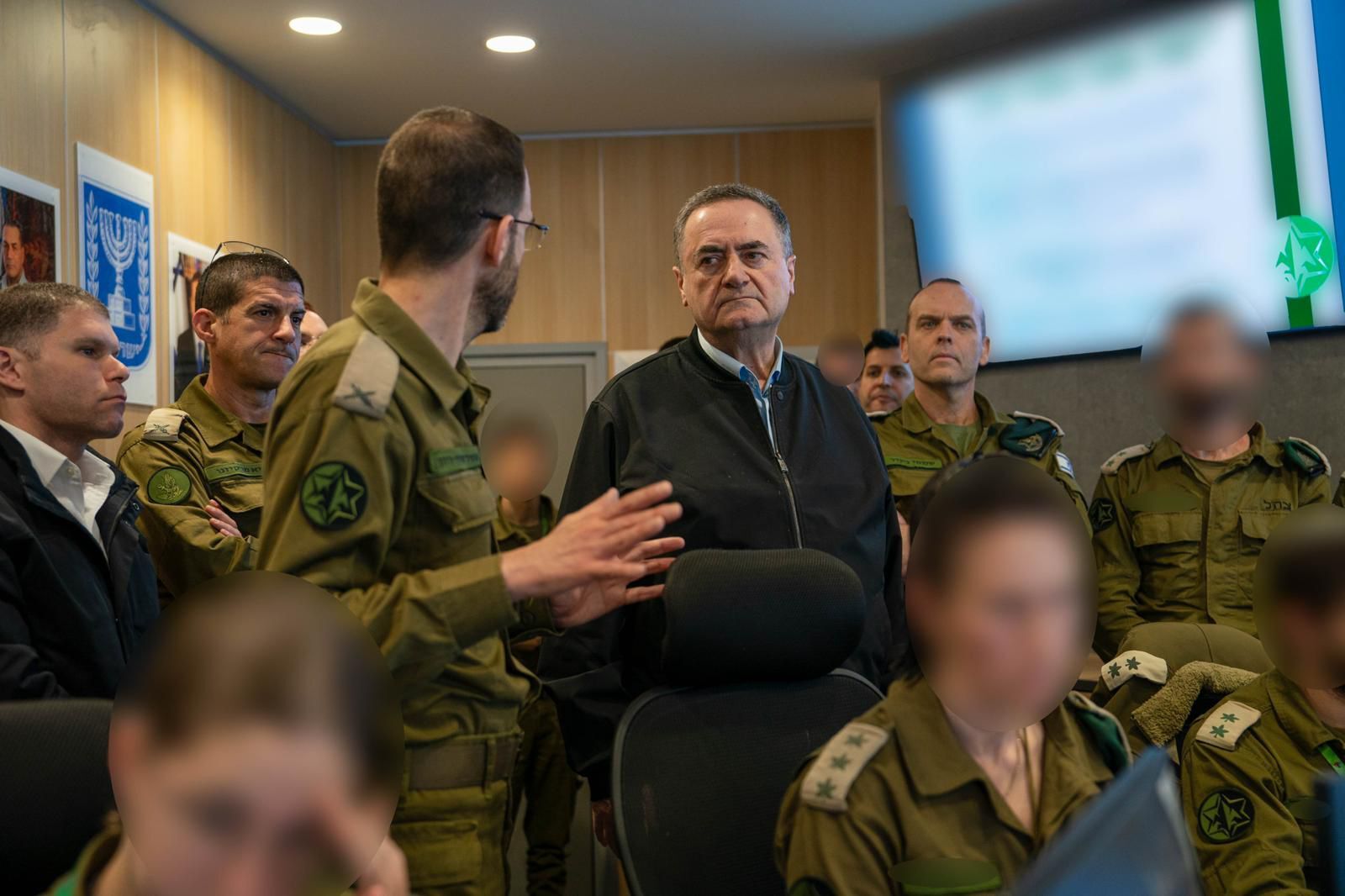
Defense Minister Israel Katz, center, visits the IDF’s Intelligence Directorate during Operation Roaring Lion, March 4, 2026. (Defense Ministry)
Tehran has largely blocked the vital Strait of Hormuz oil route in retaliation for the US-Israeli attacks, pushing up global energy prices.
Prime Minister Benjamin Netanyahu also hailed Tangsiri’s death in a brief video message.
“We are continuing to strike, with full force, targets of the Iranian terror regime,” Netanyahu said.
“Last night, we eliminated the commander of the Islamic Revolutionary Guard Corps’ navy. This individual has a great deal of blood on his hands, and he was also responsible for leading the closure of the Strait of Hormuz,” Netanyahu continued.
He called this “yet another example of the cooperation between us and our ally, the United States, in pursuit of our shared war objectives.”
Last week, Katz said that he and Netanyahu had “authorized the IDF to [eliminate] any senior Iranian figure… without the need for additional approval.”
Nonetheless, Israel took top envoy Araghchi and speaker Qalibaf off its hit list after Pakistan requested that Washington not target them, the Pakistani source told Reuters.
“The Israelis had their coordinates and wanted to take them out, we told the US if they are also eliminated then there is no one else to talk to, hence the US asked the Israelis to back off,” the source said.
Pakistan’s military and foreign office did not immediately respond to requests for comment.
The Wall Street Journal earlier reported that the two top Iranian officials had been temporarily removed from Israel’s list of officials to eliminate as they explore possible peace talks. The two officials have been removed from the list for up to four or five days, the Journal said, citing US officials, but did not mention any Pakistani role in it.
Israel has been hunting down Iranian officials, including taking out supreme leader Ali Khamenei on the first day of the campaign.

Iranian Foreign Minister Abbas Araghchi speaks during an interview on CBS on March 15, 2026. (Screenshot/CBS)
Israel and the US launched their campaign against Iran on February 28 in a bid to destabilize the regime and destroy its nuclear and ballistic missile capacities. Iran has responded with missile and drone strikes across the region, and its proxies in Iraq and Lebanon have also carried out attacks, with Israel launching massive airstrikes in Lebanon in response to the Hezbollah terror group’s rocket barrages.
Pakistan, Egypt, and Turkey are playing the role of mediators between Tehran and Washington to end the war.
Pakistan’s Foreign Minister Ishaq Dar said Thursday that indirect negotiations were being held to end the war in Iran, using Islamabad as an intermediary.
Dar, who is also deputy prime minister, described speculation about “peace talks” as “unnecessary,” adding: “In reality, US-Iran indirect talks are taking place through messages being relayed by Pakistan.
“In this context, the United States has shared 15 points, being deliberated upon by Iran. Brotherly countries of Turkiye and Egypt, among others, are also extending their support to this initiative,” he wrote on X.
Two officials from Pakistan described the 15-point US proposal broadly, saying it included sanctions relief, a rollback of Iran’s nuclear program, limits on missiles and reopening the Strait of Hormuz, through which a fifth of the world’s oil is normally shipped.
Iran issued its own five conditions via state TV — recognition of Tehran’s “natural, legal right” over the Strait of Hormuz; the end of the war against Iran and all of its proxies; “guaranteed” war reparations; concrete guarantees to prevent the resumption of hostilities; and “an end to aggression by the enemy.”
Iran has also reportedly demanded the closure of all US bases in the region and the removal of all sanctions against it, and an end to fighting against Hezbollah, and rejected limitations on its missile program.
Islamabad has maintained direct contact with both Washington and Tehran at a time when such channels are frozen for most other countries. Islamabad has also been seen as a likely venue if peace talks are held.
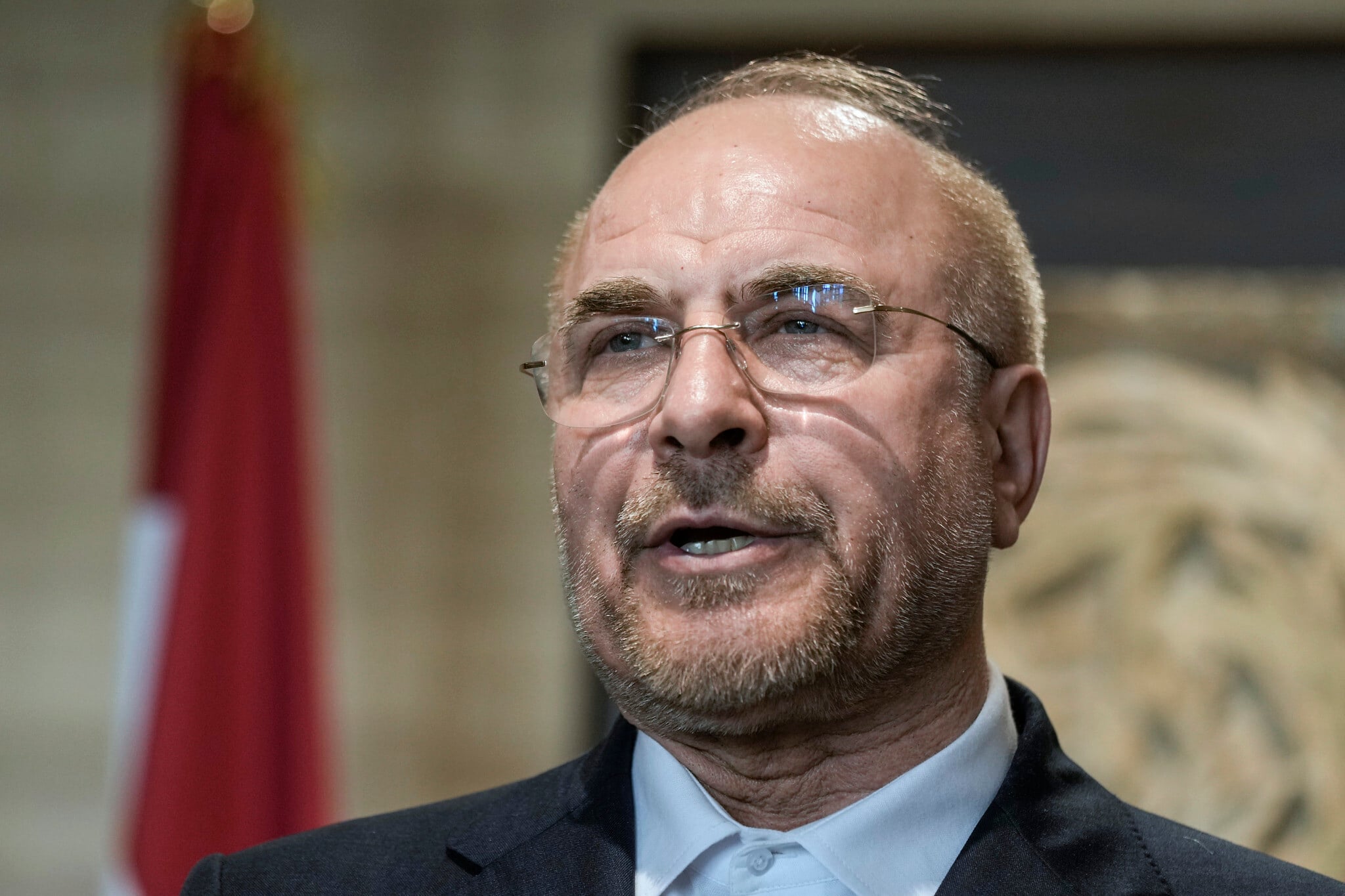
Iran’s parliament speaker Mohammad Bagher Qalibaf, speaks during a press conference in Beirut, Lebanon, October 12, 2024. (AP Photo/Bilal Hussein)
Trump said Iranian negotiators were “begging” for a deal after what he described as their country having been “militarily obliterated,” rejecting Tehran’s public stance that it is only reviewing Washington’s proposal.
“They better get serious soon, before it is too late, because once that happens, there is NO TURNING BACK, and it won’t be pretty,” he said in a Truth Social post on Thursday.
But the Islamic Republic’s top diplomat flatly denied any “negotiations” with Trump’s administration late Wednesday — conceding only that messages were being exchanged through “friendly countries.”
“At present, our policy is the continuation of resistance,” Araghchi said on state TV, adding: “We do not intend to negotiate — so far, no negotiations have taken place.”
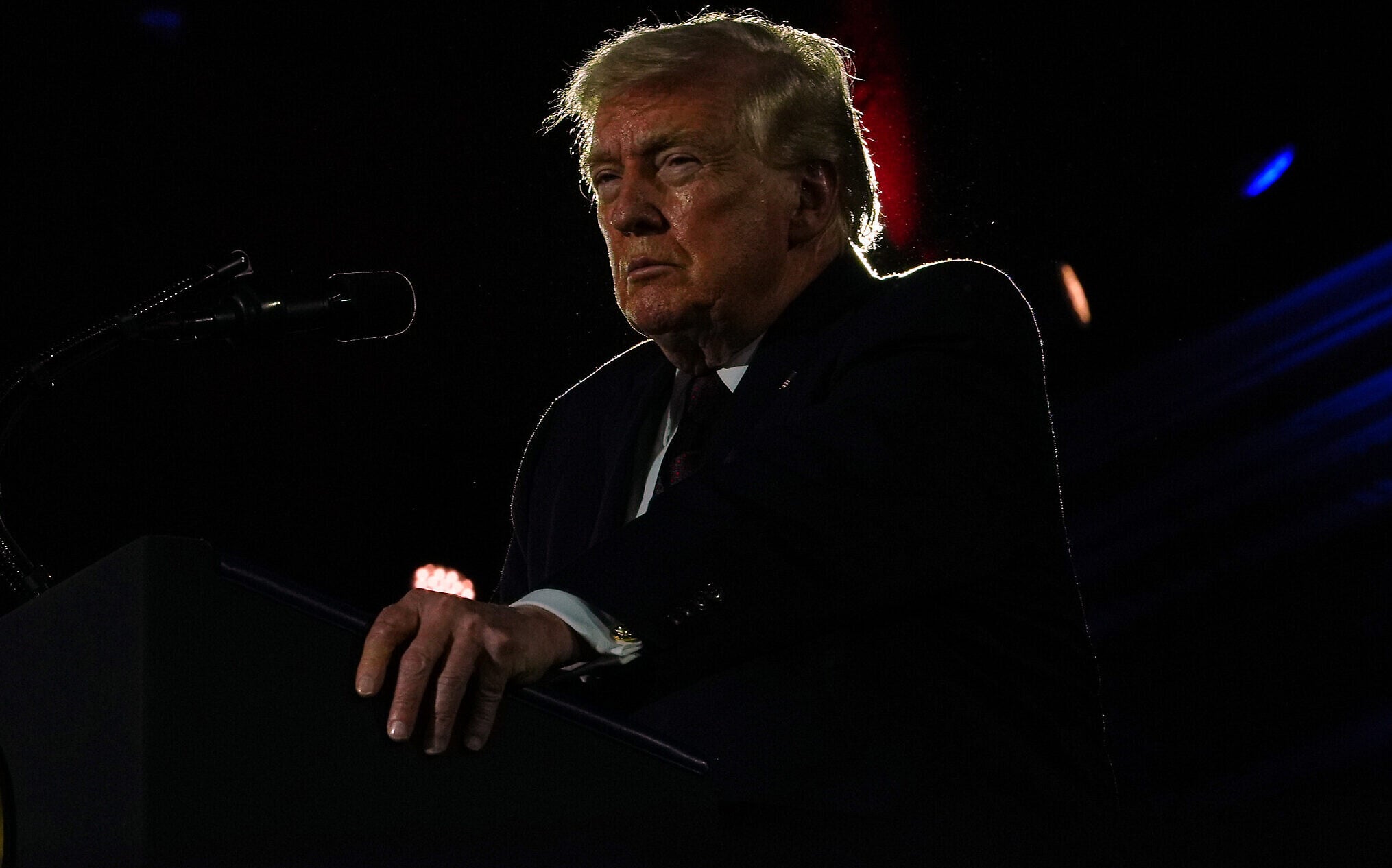
US President Donald Trump speaks at the National Republican Congressional Committee’s (NRCC) annual fundraising dinner, at Union Station in Washington, March 25, 2026. (Julia Demaree Nikhinson/AP)
The US president said Wednesday Iran is desperate to make a deal, while Araghchi said Tehran was reviewing the US proposal but had no intention of holding talks to wind down the conflict.
Iran has targeted Gulf nations it accuses of serving as launchpads for US strikes, notably with hits on energy sites that have sent markets into a tailspin, threatening lasting damage to the global economy.