
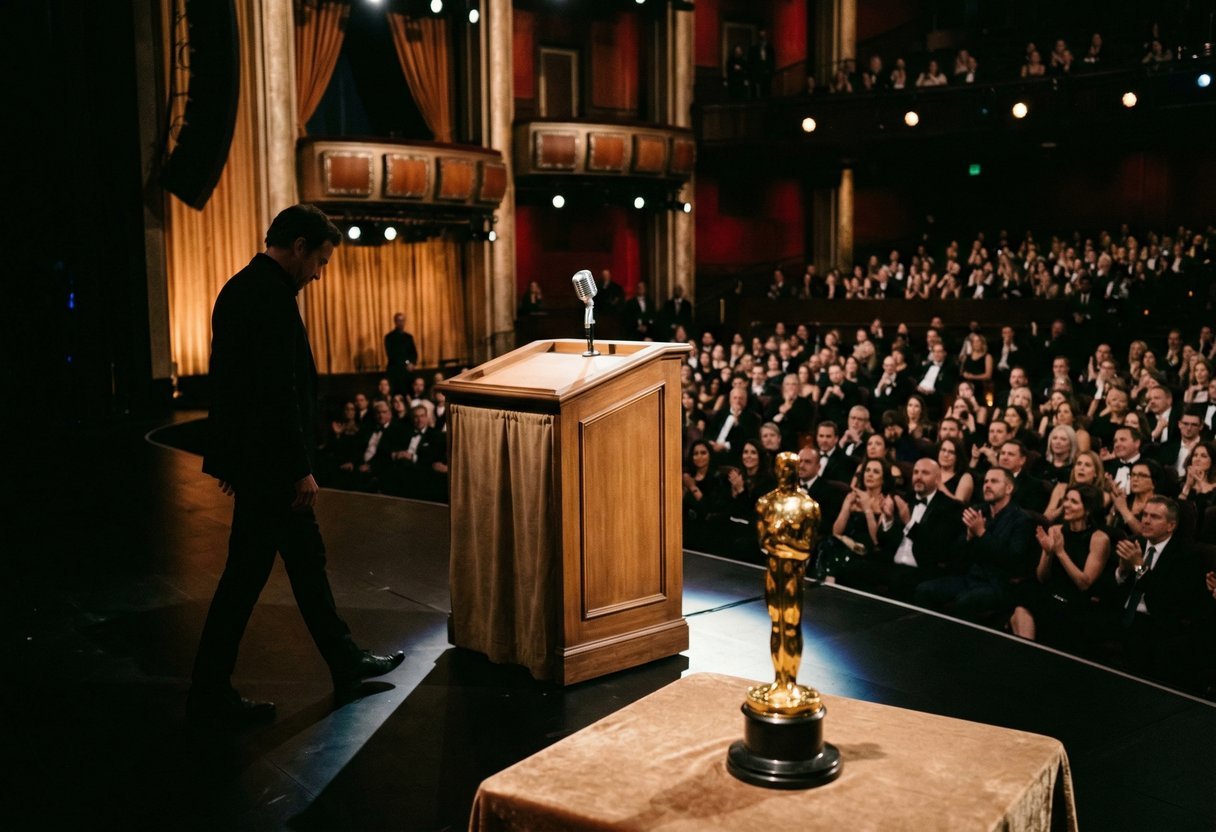
The envelope opened on their names, and they said no. What makes a Hollywood legend turn away from the trophy everyone else dreams of? The answer cuts deeper than any acceptance speech.
In Hollywood, an Oscar is the pinnacle, yet a handful of winners have declined it outright. Dudley Nichols did so in 1935 amid a battle for the Screen Writers Guild, George C. Scott rejected Best Actor for Patton in 1970, and Marlon Brando sent Sacheen Littlefeather in 1972 to denounce how the industry treated Native American peoples. Their refusals still unsettle the red carpet’s certainties, forcing a fresh look at what the statuette truly stands for.
The unspoken power of an Oscar refusal
Every season, the golden statuette glows like a finishing line. Careers crest there, reputations harden, and studio legends are minted. Yet a few artists have stepped back at the crucial moment and said no. Their refusals—rare, visible, and fiercely personal—prompt fresh questions about what awards really honor (only 3 outright refusals so far) and who gets to define value in Hollywood.
Marlon Brando’s protest in 1972
Brando’s win for The Godfather rewired cinema mythology, then he boycotted the celebration. On his behalf, Sacheen Littlefeather took the stage to spotlight the mistreatment of Native Americans on screen and off. The hall froze. Viewers argued for weeks. Decades later, that speech still reads like a primer on how an entertainment platform can be repurposed for social change.
Dudley Nichols and solidarity with writers
In 1935, screenwriter Dudley Nichols became the first to reject an Oscar, turning down Best Screenplay for The Informer in solidarity with the Screen Writers Guild. He argued the Academy had sidelined writers during pivotal labor disputes. The gesture stung, then stuck, nudging talks forward. He accepted the statuette in 1938 (per Academy archives), after progress on guild recognition.
George C. Scott’s artistic stance
George C. Scott declined Best Actor in 1970 for Patton, objecting not to peers, but to the premise. Ranking art, he said, converts craft into a “meat parade.” Scott prized process over podiums and kept distance from ceremony. The physical statuette’s whereabouts remain unclear, which suits his posture: let the work speak, let the trophy wander.
What these refusals mean for the Oscars
What does saying no to an Oscar really signify? Indeed, the reasons diverge, but the message rhymes: prestige is negotiable. These refusals expose pressure points—labor, representation, competition—and remind the industry that recognition without reflection can ring hollow (this tension resurfaces whenever awards face scrutiny).
Dudley Nichols: labor rights and Screen Writers Guild solidarity (accepted in 1938)
Marlon Brando: platform used to spotlight Native American mistreatment
George C. Scott: rejection of competition and pageantry in art
In addition to their personal convictions, each decision reframed the night’s script. The Academy still confers status, yes, but these stories linger because they stress a deeper point: the symbolic weight of an Oscar depends on who lifts it—and who, purposefully, does not.