
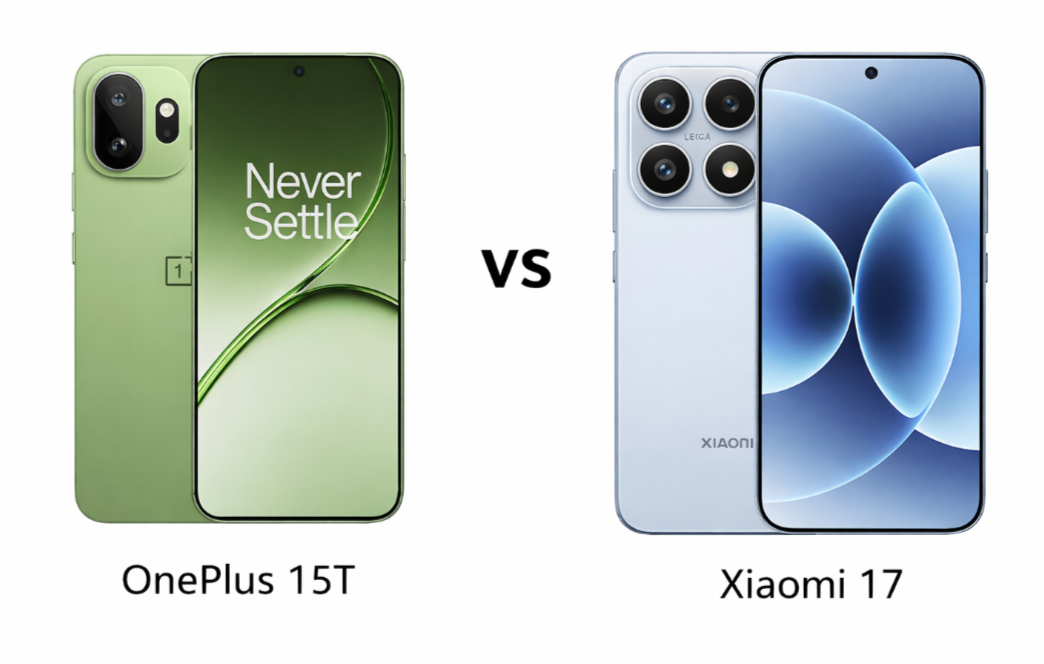
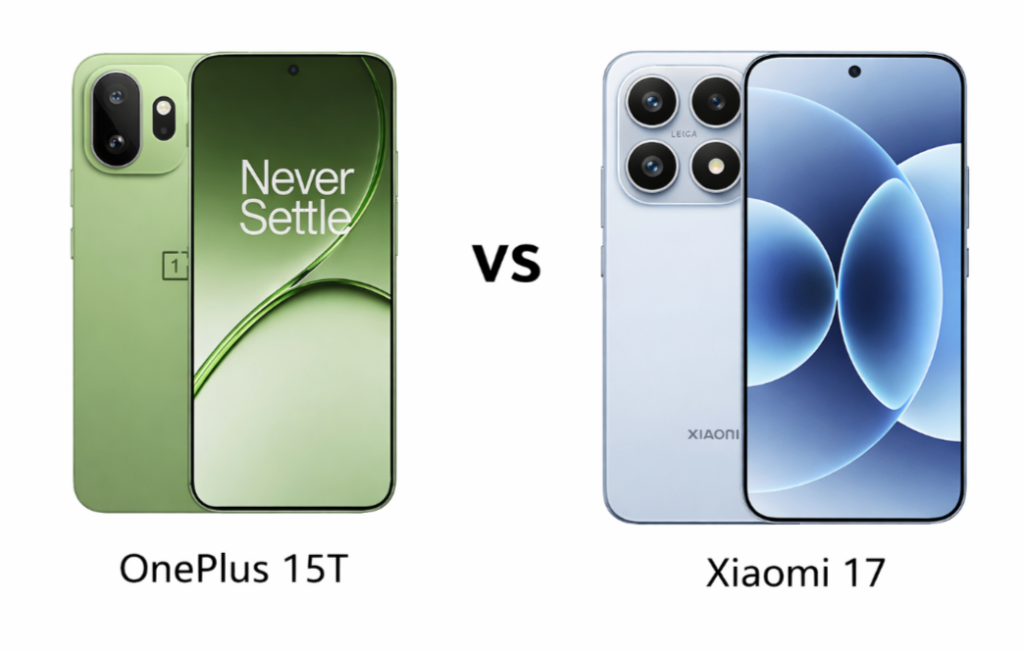
Flagship smartphones are no longer just about raw power; they’re about how that power is packaged, priced, and experienced daily. The OnePlus 15T and Xiaomi 17 take two very different approaches despite sharing the same core chipset. One pushes boundaries with battery and smoothness, while the other leans into premium design and camera versatility. This comparison breaks down where each device truly stands, and more importantly, which one actually makes more sense depending on what matters most.
Please Note: When you buy something using the links in our articles, we may earn a small commission at no cost to you.
FeatureOnePlus 15TXiaomi 17WinnerBuild QualityIP68/IP69K, fiber backIP68, glass backoneplus – better durabilityDisplay Refresh Rate165Hz AMOLED120Hz LTPO AMOLEDoneplus – smoother scrollingDisplay Quality1B colors68B colors, better HDRxiaomi – richer visualsBrightness3600 nits peak3500 nits peakoneplus – slightly brighterPerformanceSnapdragon 8 Elite Gen 5Sametie – identical chipsetSoftwareOxygenOSHyperOSoneplus – cleaner UIBattery7500mAh6330/7000mAhoneplus – bigger capacityCharging100W + 50W100W + 50Wtie – same speedsReverse Charging10W wired22.5W wired + wirelessxiaomi – more versatileMain CameraDual 50MPTriple 50MPxiaomi – more flexible setupTelephoto3.5x zoom2.6x zoomoneplus – better zoomSelfie Camera16MP50MP (4K)xiaomi – sharper selfiesVideoDolby Vision10-bit, LOG, HDRxiaomi – more pro featuresAudioStereoHi-Res, Snapdragon Soundxiaomi – better audio techUSBUSB 2.0USB 3.2, Display outxiaomi – faster & more capablePrice$600 / ₹58K$1000 / ₹90Koneplus – much cheaper
1. Design and Display
Build and Feel
The OnePlus 15T focuses on durability with its IP68/IP69K rating and a practical fiber-reinforced back that prioritizes toughness over premium shine. It feels built for long-term use and harsher conditions. The Xiaomi 17, on the other hand, leans into flagship elegance with a glass back and refined finish, giving it a more premium in-hand feel. It looks and feels more luxurious, though slightly less rugged on paper.
Display Quality
OnePlus delivers a 165Hz AMOLED panel with aggressive brightness scaling and excellent motion smoothness, making it ideal for gaming and fast UI interactions. Xiaomi counters with an LTPO AMOLED panel featuring richer color depth, better HDR handling, and more efficient adaptive refresh. While OnePlus feels smoother, Xiaomi’s display appears more refined and visually cinematic.
Verdict
OnePlus 15T is the practical, durability-first choice with ultra-smooth visuals. Xiaomi 17 feels more premium and polished, especially for content consumption.
2. Specifications Including Battery
Performance
Both phones run the same Snapdragon 8 Elite Gen 5 chip, so raw performance is virtually identical. Daily tasks, gaming, and multitasking feel equally fast. However, software tuning differs; OxygenOS feels lighter and snappier, while HyperOS leans toward feature richness. One tends to feel cleaner, the other more versatile.
Battery and Charging
This is where the gap becomes obvious. OnePlus packs a massive 7500mAh battery, making it a clear endurance leader. It’s built for heavy users who want fewer charging cycles. Xiaomi’s 6330mAh (global) is still solid but less impressive in comparison. Both offer 100W wired and 50W wireless charging, but Xiaomi adds faster reverse charging options, which is a practical bonus.
Verdict
Performance is a tie, but the OnePlus 15T dominates battery life. Xiaomi 17 adds versatility with better reverse charging features.
3. Camera
Main and Secondary Lenses
Xiaomi 17 clearly targets photography enthusiasts with its triple 50MP setup, including an ultrawide and Leica tuning. It delivers more flexibility and richer image processing, especially in varied lighting. OnePlus 15T keeps it simpler with a dual-camera setup but still offers strong results, especially with its telephoto lens and consistent color science. Xiaomi feels more complete, while OnePlus feels more focused.
Selfie Camera
The difference is significant. Xiaomi’s 50MP selfie camera supports 4K video and produces sharper, more detailed shots. OnePlus sticks with a basic 16MP sensor, which is fine for casual use but lacks flagship appeal. This makes Xiaomi more suitable for content creators and video calls.
Verdict
Xiaomi 17 wins decisively with a more versatile camera system and a much stronger selfie experience.
4. Pricing
The OnePlus 15T is priced at around ₹58,000, while the Xiaomi 17 sits much higher at approximately ₹90,000. This creates a substantial gap, placing them in slightly different buyer segments despite similar core performance.
Is the price justified?
OnePlus delivers flagship-level performance, massive battery life, and a high-refresh display at a much more accessible price. It feels aggressively priced for what it offers. Xiaomi justifies its premium with a superior camera system, more refined display tuning, and flagship-grade build quality. However, the price jump is noticeable and may feel steep unless those extras are truly valued.
Verdict
OnePlus 15T offers significantly better value for money. Xiaomi 17 justifies its price, but only for users who prioritize cameras and a premium feel.
5. Conclusion
OnePlus 15T stands out with its massive battery, ultra-smooth 165Hz display, and rugged durability, making it ideal for power users and gamers. Xiaomi 17 differentiates itself with Leica-tuned cameras, a high-end display experience, and premium build quality that feels closer to ultra-flagship territory. One focuses on practicality and endurance, while the other leans toward refinement and imaging excellence.
Verdict
OnePlus 15T is the smarter buy for most users, offering flagship performance at a much lower price with unmatched battery life. Xiaomi 17 feels more premium and complete, but its higher price makes it a niche choice for those who truly value its camera and display advantages.
Read More: