
Key Takeaways:
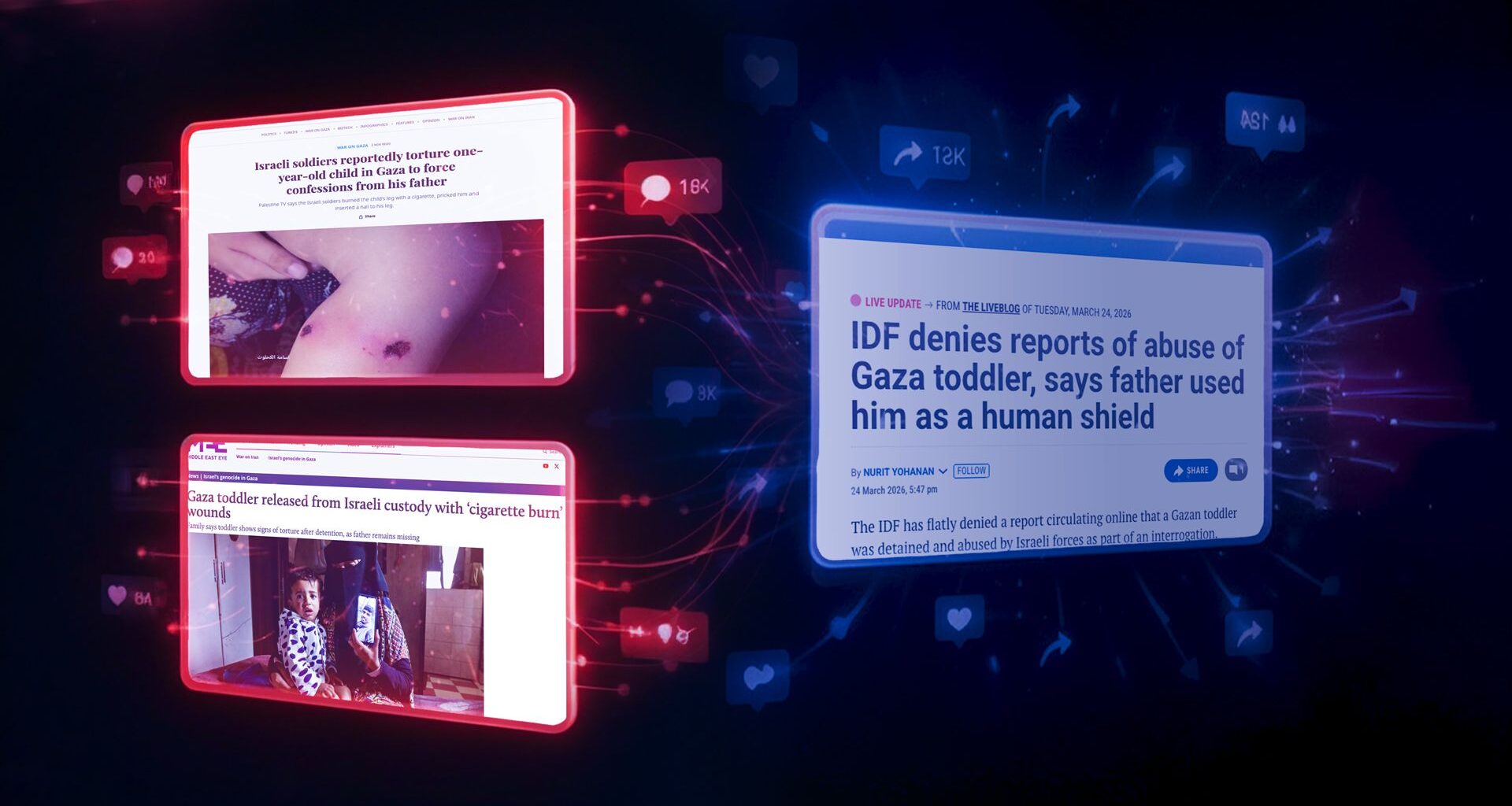
A viral claim that IDF soldiers tortured a Gaza toddler spread quickly across regional outlets before being publicly denied by the IDF.
When the IDF presented a contradictory account, including video evidence, the correction was ignored.
The episode shows how emotionally charged claims can spread rapidly without verification, and how debunking rarely travels as far as the original story.
A story accusing Israeli soldiers of torturing a one-year-old toddler in Gaza circulated widely this week across Hamas affiliated media, social media and regional outlets. It was emotive, shocking, and designed to provoke outrage.
It was also false.
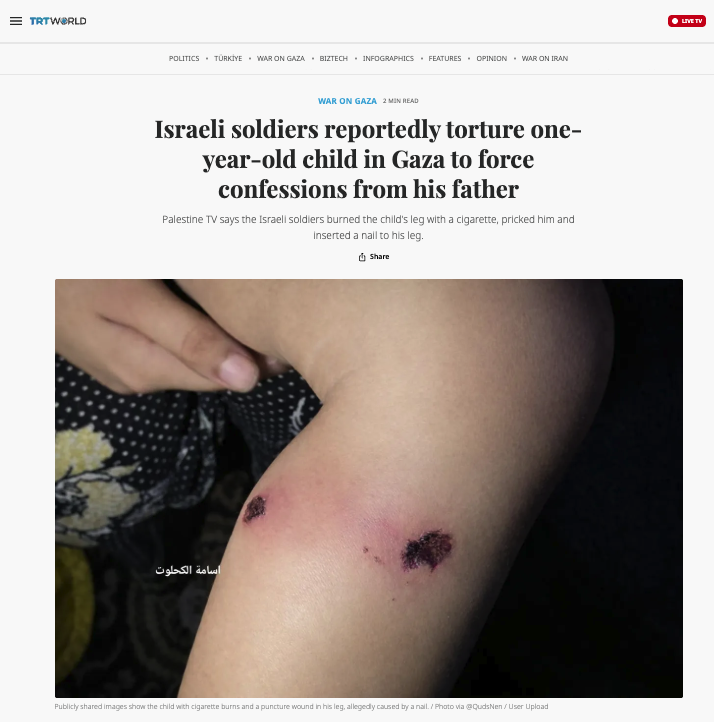
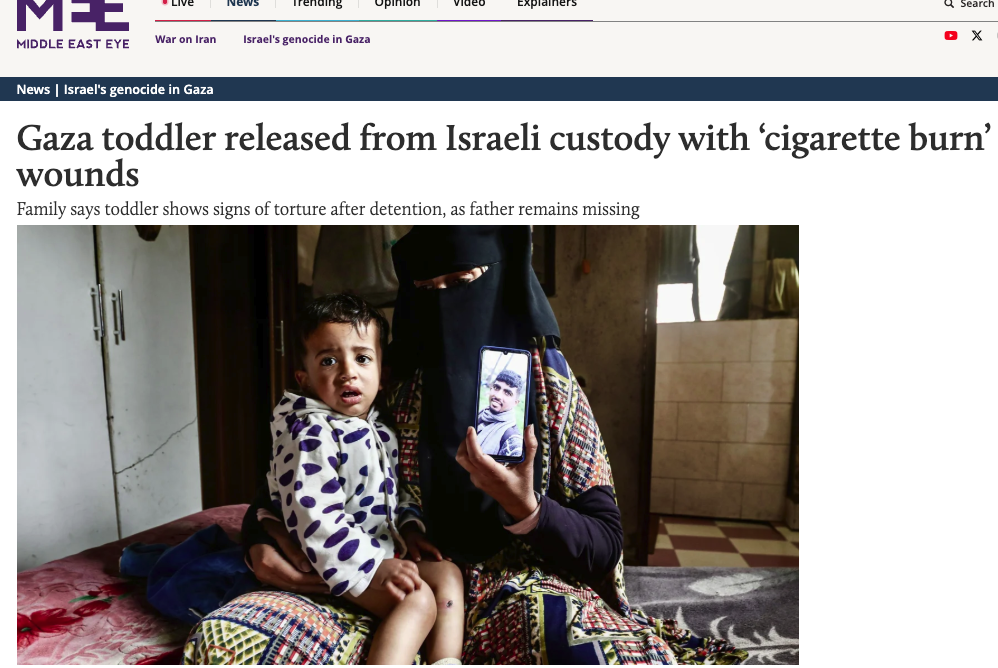
The claim seems to have appeared in reporting carried by TRT World, the Turkish public broadcaster, which alleged that a Palestinian toddler had been abused in Israeli custody, including claims of cigarette burns used to pressure his father during interrogation.
The framing was clear. Israeli soldiers were portrayed as deliberately harming a baby.
As soon as we saw the TRT report, we showed the photo to a medical professional who pointed out that a cigarette burn would appear as a much more regular-shaped circle than the wounds in the photo, which have more irregular borders. In addition, if a nail had been used to puncture the skin significantly, as was alleged, the degree of redness and swelling would be far worse.
Within days, the Israel Defense Forces issued a direct and detailed denial. According to reporting by The Times of Israel, the military rejected the allegations outright and provided an alternative account of the incident.
The IDF stated that the toddler’s father had approached Israeli troops near Gaza’s Yellow Line while holding the child. Soldiers fired warning shots when he failed to stop. According to the IDF, the toddler’s injuries were caused by fragments from those warning shots.
The army further said the father later identified himself as a Hamas terrorist who participated in the October 7, 2023 massacre. He also admitted that he had used his son as a human shield when approaching the forces.
The IDF also released video footage showing the child being transferred to the Red Cross after receiving medical care. This detail stands in sharp contrast to the initial allegations of abuse in custody.
But none of it appeared in the sources that originally reported the fake story.
This is hardly surprising. Because this is how the industry of lies works: An emotionally charged claim is published. It spreads quickly. It assigns clear moral blame. And then, when a contradictory version emerges, supported by additional details and visual evidence, the correction fails to travel with the same force.
The Anatomy of a Lie
The story appears to have originated from Gazan independent photojournalist, Osama Al Kahlout. It then spread to Palestine TV, TRT World, Middle East Eye, Palestine Chronicle, and Al Jazeera — all pro-Hamas. It was also amplified by pro-Palestinian social media accounts. They all relied on material provided by Kahlout, who documented the child’s injuries and interviewed the mother, who blamed Israeli forces.
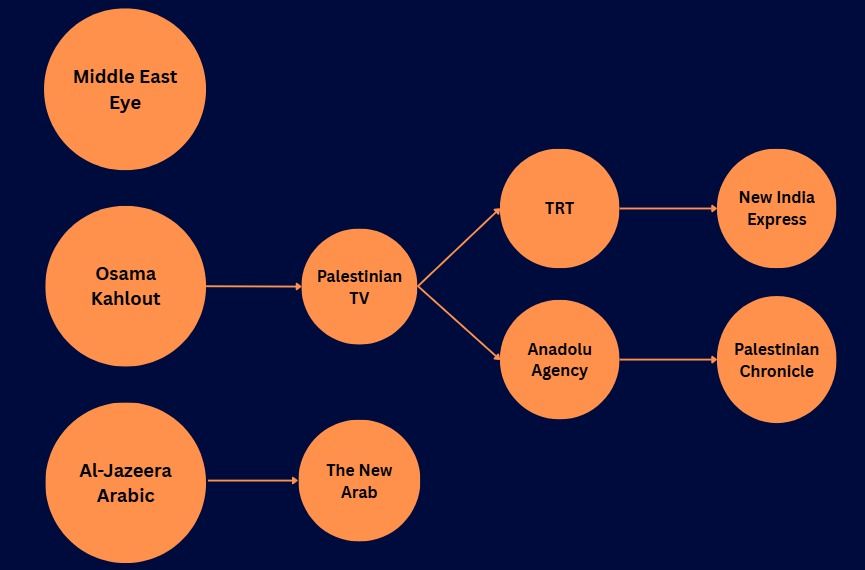
But this is not verification.
Photographs of injuries do not establish causation. Testimony collected in a conflict zone, particularly one controlled by Hamas, requires careful scrutiny. That scrutiny was largely absent in the initial wave of coverage.
To be clear, this story did not gain traction in major Western mainstream outlets. That matters. Editorial standards are still held in those newsrooms.
But the episode still offers a revealing case study.
It shows how quickly a narrative can take shape when it aligns with existing assumptions. It shows how allegations involving children are particularly potent. And it shows how difficult it is for corrections, even when backed by official statements and supporting evidence, to catch up.
This is the anatomy of a lie in the digital age.
Not every false story becomes global news. But every false story that spreads unchecked contributes to a wider erosion of trust.
The responsibility lies not only in debunking such claims, but in asking harder questions before amplifying them in the first place.
Liked this article? Follow HonestReporting on Twitter, Facebook, Instagram and TikTok to see even more posts and videos debunking news bias and smears, as well as other content explaining what’s really going on in Israel and the region. Get updates direct to your phone. Join our WhatsApp and Telegram channels!