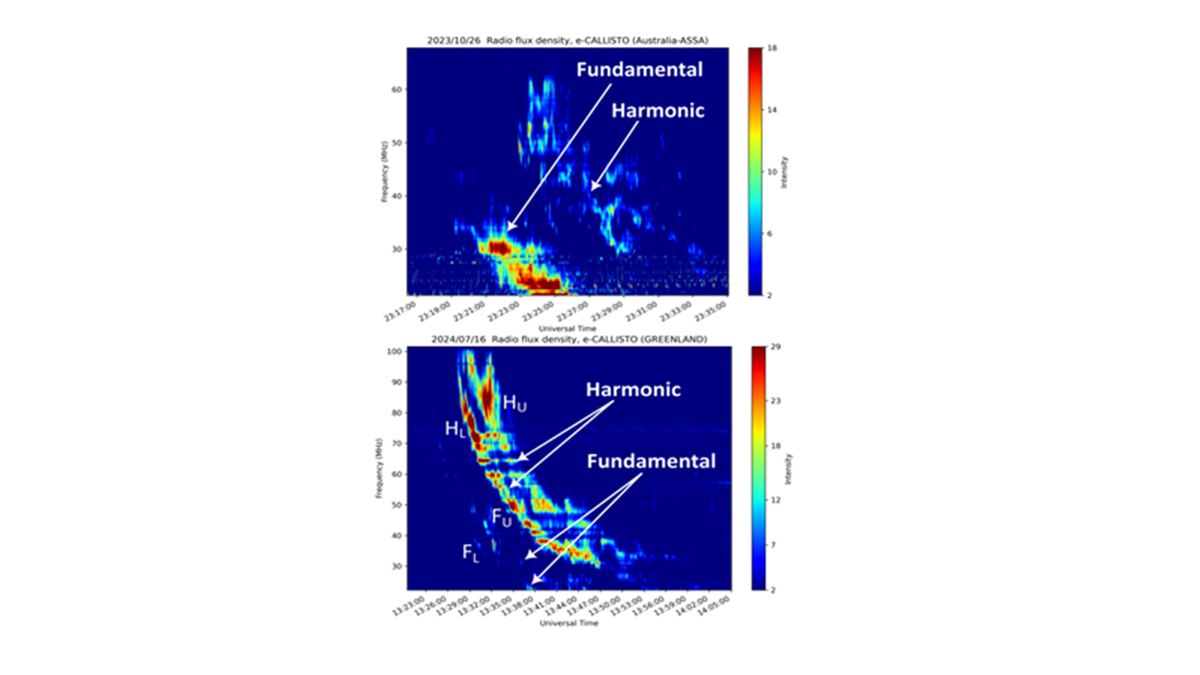
Researchers from the Indian Institute of Astrophysics (IIA) has investigated solar coronal shocks triggered by solar flares. They analyzed 58 type II solar radio bursts using global CALLISTO data. Type II bursts drift at about 1000 km/s and move from high to low frequencies. The study examined variations between fundamental and harmonic radio emissions. Events beyond 75° heliographic longitude showed stronger harmonic emissions. Data from Gauribidanur Low Frequency Solar Spectrograph supported the findings. The study, published in Solar Physics, may improve solar weather forecasting models.