
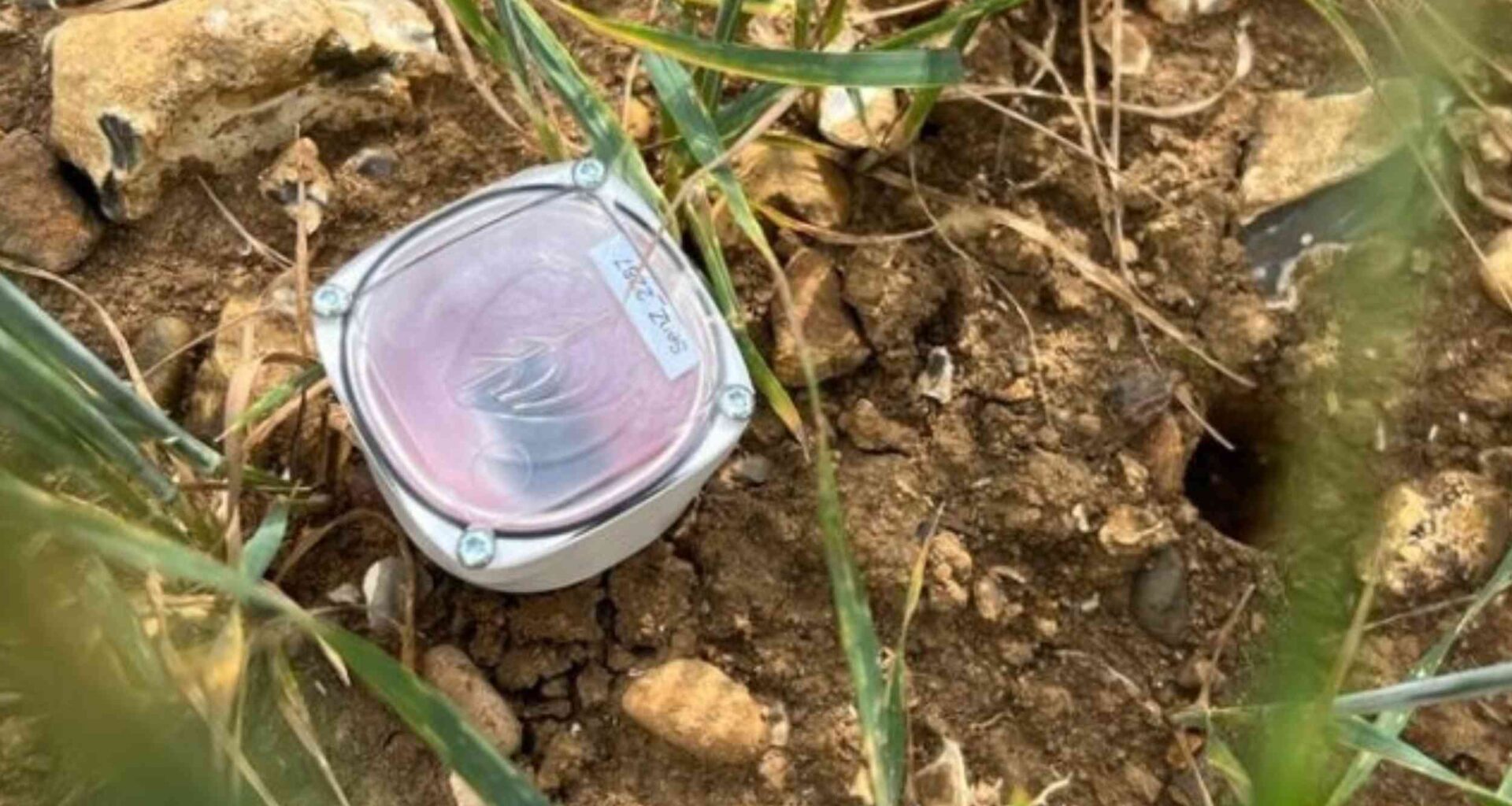
A new analysis has revealed that plant-derived cellulose has emerged as a working platform for sensors that measure soil moisture, nutrients, stress, and disease directly in the field.
That reframes crops and soils as continuous sources of usable data, where early chemical changes can guide decisions before visible damage appears.
From lab to field

Across years of field and greenhouse evidence, plant-based materials formed into paper, films, and fabrics carried these sensing functions directly on soil and crop surfaces.
Working through that evidence, Dr. Firat Guder at Imperial College London showed how cellulose, the tough material in plant cell walls, underpin sensors that translate chemical changes into practical field signals.
Those devices track shifts in moisture, nutrients, and stress as they happen, rather than after conditions have already worsened.
Such reach introduces a practical limit, because multiple signals must be interpreted together, setting up the need to understand how each sensing approach performs under real farm conditions.
Cellulose as a soil sensor
At the center sits cellulose and it brings useful traits before any electronics are added. Its fibers pull liquid along on their own, while their chemical groups hold dyes, antibodies, or conductive inks in place.
Paper stays cheap and easy to cut, regenerated fibers behave more uniformly, and microbe-made cellulose offers purer, highly tunable films.
Those tradeoffs let engineers match a sensor to wet soil, a leaf surface, or a disposable strip meant to disappear.
Soil nitrogen clues
Fertilizer decisions often fail because soil nitrogen changes quickly after rain, heat, microbes, and plant uptake pull it in different directions.
One paper device from the Imperial group used one nitrogen reading plus weather data to estimate the rest and predict 12 days ahead.
“Much of our food comes from soil – a non-renewable resource which we’ll lose if we don’t look after it,” said Dr. Guder, in earlier soil-sensor work.
That release tied the problem to fertilizer use rising sharply over decades while large areas of farmland have become too damaged to grow crops.
Reading soil acidity
Soil acidity changes what roots can absorb, because it alters how tightly key nutrients stay locked in the ground.
A paper card tested across 22 acres sorted soil acidity into three useful classes with 97 percent accuracy.
Its phone software corrected lighting, stored location, and exposed nine times more variation than standard composite lab sampling.
That made acidity a map instead of an average, although evaporation and damaged cards still weakened field performance.
Following water movement
Water stress rarely spreads evenly, so a single probe can miss the damp pocket beside a dry root zone.
A biodegradable wireless moisture sensor answered that problem by printing electrodes on cellulose paper and reading the soil’s electrical response.
The device still worked after 113 days in soil and could be read wirelessly from as far as 4 inches away.
That points toward dense moisture maps across a field, though swelling paper and shifting humidity still threaten consistency.
Watching living plants
Leaves and stems change chemistry before damage becomes obvious, releasing clues about drought, salt, heat, and nutrient strain.
Cellulose wearables sit close to those surfaces, where flexible films or printed electrodes turn tiny chemical changes into measurable signals.
Because the material bends, breathes, and wicks moisture, it can monitor leaves without rigid hardware that disturbs growth.
That opens a path to earlier stress detection, but most plant wearables still remain prototypes rather than farm-ready tools.
Catching disease earlier
Plant disease sensors matter most before yellowing or rot appears, when microbes or enzymes first betray an infection.
Paper platforms can read those signals through color or electrical change, often from a small leaf, root, or stem sample.
The review also highlighted newer paper tests that use gene-cutting enzymes to flag pathogen sequences before damage is visible.
Those tools could catch infections earlier than the eye can, although fully cellulose versions still remain technically hard to build.
Watching harvest quality
Cellulose sensors are not limited to soil and leaves; they also check crop surfaces and the gases harvested produce releases.
One plant-wearable platform printed on a cellulose-based film detected pesticide residue directly on lettuce and tomato skins.
Elsewhere, cellulose films tracked ripening gases, giving growers and shippers a quieter read on timing.
That wider reach could cut waste and exposure at the same time, though many current formats still depend on added conductive particles.
Limits before scale
Field conditions punish delicate devices, and cellulose still swells in humidity, drifts in water, and varies from sheet to sheet.
The review notes that better coatings, more uniform regenerated fibers, and reusable readers may keep disposable parts simple while stabilizing signals.
Another limit sits outside the paper itself, because silver inks and other electronic add-ons can dominate cost and environmental impact.
Even so, the path ahead looks practical if farms reuse the electronics and leave cellulose to do the cheap sensing.
What farms gain
Across these examples, cellulose turns ordinary farm surfaces into data points, making chemistry visible where water, fertilizer, and crop decisions happen.
If durability improves and the clean-up burden from nonpaper components falls, these sensors could make precision farming cheaper and more local.
The study is published in Nature Communications.
—–
Like what you read? Subscribe to our newsletter for engaging articles, exclusive content, and the latest updates.
Check us out on EarthSnap, a free app brought to you by Eric Ralls and Earth.com.
—–